


The useful checks happen before you enter a vehicle, accept a service or send a deposit—and again when you pay. Knowing where that decision sits makes the different scams easier to recognize without treating every invitation, street seller or unfamiliar charge with suspicion.
Airport taxis: verify the driver and the booking
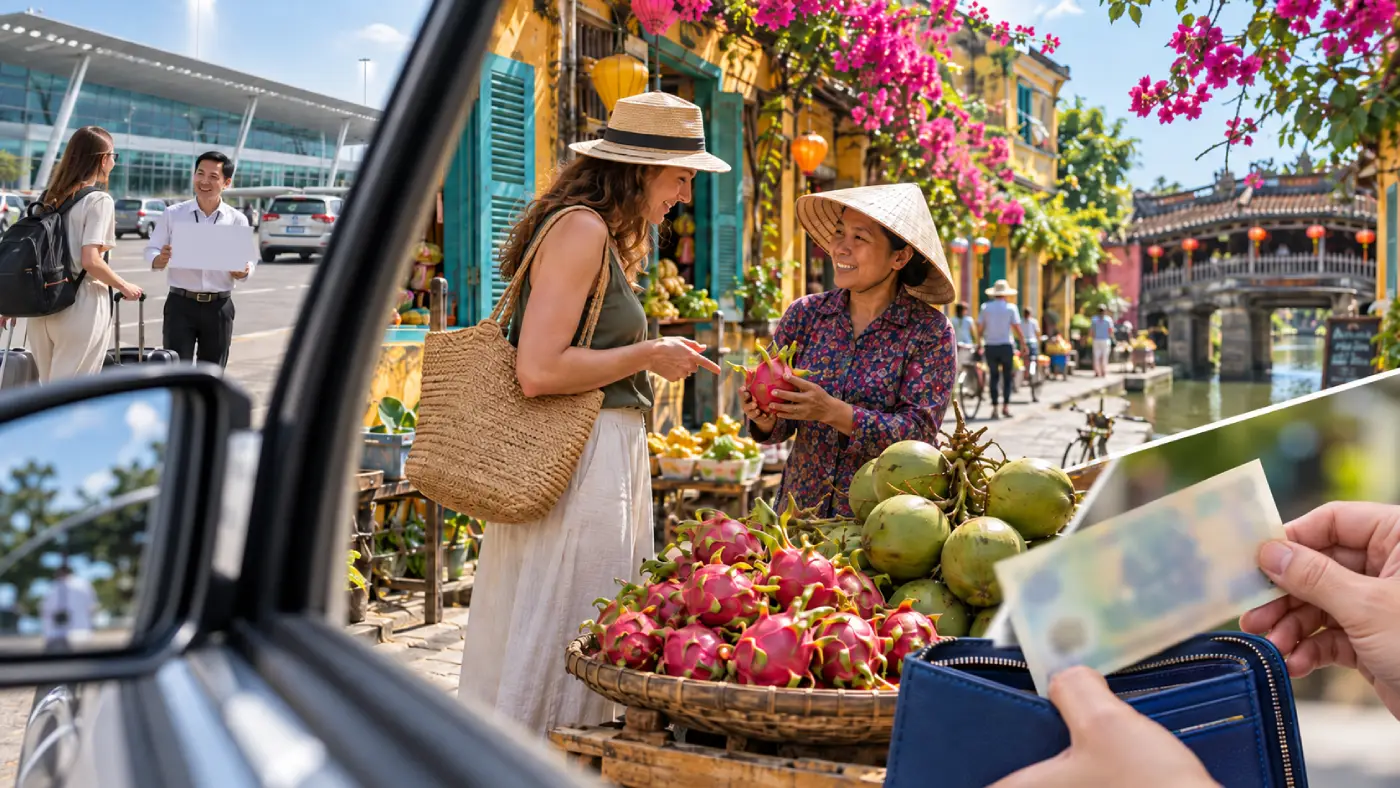
At Hanoi's Noi Bai airport, criminals posing as taxi drivers have targeted arriving visitors. Some travelers have also been robbed after meeting someone holding a sign with their name on it. That makes a name board something to check against your booking, rather than proof of identity by itself. Canada's airport guidance specifically warns about both situations.
Before a hotel transfer, obtain the pickup arrangements through the accommodation contact you already used. At arrivals, check the driver's details and vehicle against that confirmation. If someone announces a replacement, confirm it through the original contact before following them.
With a ride-hailing booking, use the driver and vehicle details shown in your own app. Someone else's screen, logo or jacket does not establish that they are collecting your booking. Keep your phone in your hands while checking.
Grab's Noi Bai pickup guide explains how to book and follow the pickup directions in the app. Its upfront-fare statement excludes GrabTaxi, so check which service you selected before assuming the price is fixed.
Before leaving an official taxi rank, establish whether the journey uses the meter or an agreed total. Get a fixed quote written in Vietnamese dong, with any stated extras included. If the amount changes, compare it with that agreement and ask for an explanation; a confusing charge alone does not establish fraud.
Before departure, compare the best eSIMs for Vietnam if you need mobile data for ride bookings. Set up your booking app and save your hotel address before the airport pickup becomes urgent.
The banknote switch: “You gave me the smaller note”
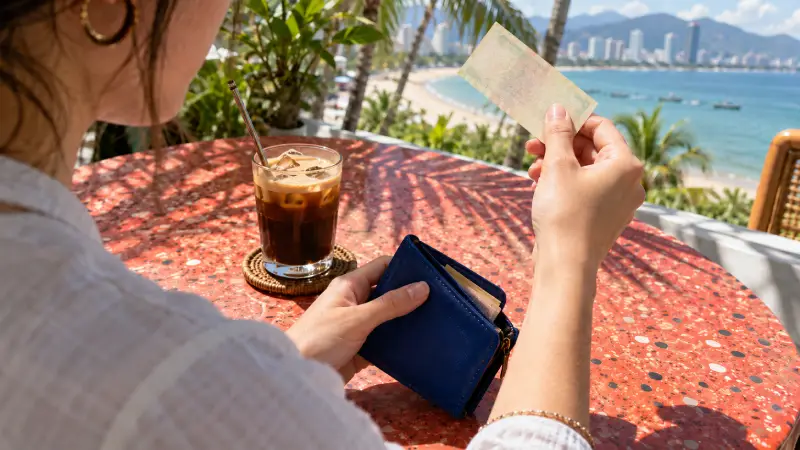
Here, the trick happens after the ride. You hand over a larger banknote; the recipient produces a smaller and insists that it is what you gave them. The accusation puts you under pressure to pay again.
This is more than a hypothetical warning. In January 2026, VnExpress reported a Nha Trang case in which police said a driver admitted switching a visitor's VND 200,000 note for VND 10,000. The incident itself happened in November 2025.
Read the printed denomination before handing over cash. Keep the payment separate from the rest of your money and state the amount as you give it. Smaller notes or the exact fare can make the exchange easier to follow.
If someone immediately claims you paid less, pause before reaching for another note. Check the cash still in your hand and calmly clarify what happened. Avoid letting anyone sort through your wallet to “help.”
Paying through an app removes that particular cash exchange, but it does not replace checking the booking and final charge. If the situation becomes threatening, prioritize getting to a safe place over recovering the note.
Agree before a street service starts
Shoe cleaning and photographs with a fruit seller's carrying pole need a clear agreement just as a taxi ride does. The warning sign is a service or purchase being treated as accepted before you have agreed to it.
Shoe cleaning and repairs: if someone starts brushing or handling your shoes without permission, decline clearly before the work continues. If you do want the service, settle the total first, including any proposed laces, insoles or repairs. Keep those additions separate from the price of a basic clean.
Fruit-basket photos and coconuts: clarify whether there is a charge for the photograph and whether a purchase is expected. If you do not want a drink, say so before a coconut is opened. An invitation to pose should not leave the price of an unrelated purchase unresolved.
Consent and an agreed total are what matter. Street services can be entirely legitimate, and a price you consider high is a reason to decline before accepting it. If payment pressure turns into intimidation, step toward a staffed public place and seek help.
Fake hotel bookings and requests to pay again

The hotel may exist; the person collecting the deposit may have no connection to it.
Police warnings reported by VietNamNet describe fake social-media pages copying hotel names, photographs and branding, including properties in Da Nang and other destinations. Attractive offers draw people into private messages, where they are persuaded to send a deposit.
Verify the payment instructions through a contact obtained independently from the hotel's official website or your existing booking account. Reusing the phone number supplied by the suspicious page simply sends you back to the same person.
Watch especially for a second payment request. After receiving money, the supposed hotel may claim that you used the wrong payment reference or that another transfer is necessary to verify or refund the first. This repeated-payment method appears in a May 2026 report of Hanoi police advice.
Stop sending money while you verify the situation independently. Save the payment request, account details, messages and any confirmation you received.
Deposits and direct hotel bookings can be legitimate. What needs checking is who receives the money, what reservation it secures and whether the request matches the terms you accepted. Even a polished confirmation document cannot answer those questions on its own.
Visa services that misrepresent what you are buying
Before paying for a Vietnam visa service, establish whether you are using the government application channel or hiring a private agent.
Australia's Vietnam visa-scam warning records travelers being scammed by visa services and travel agents. Its current guidance links to the official Vietnam e-visa portal.
Check the website address before uploading passport information or paying. Government-looking graphics and a prominent search result are insufficient evidence of an official connection.
If you use an agent, ask what the service fee covers, how you will receive your application details and what happens if the application is unsuccessful. Charging a disclosed agency fee is different from pretending to be the government or taking payment without providing the promised service.
Keep application records and check any issued visa against your passport and intended journey before departure. You need the issued visa itself, beyond an agent's payment receipt.
Friendly invitations that turn into rigged card games
In Hanoi and Ho Chi Minh City, visitors have been drawn into gambling scams after accepting invitations to private homes. The opening conversation may involve a relative interested in visiting your home country. While waiting to meet them, you are invited to play cards for a small wager.
The small initial stake can make it easier to agree before the financial pressure escalates. The useful boundary is the proposed gambling: decline the game and leave while you can do so safely.
Knowing someone socially does not give you a way to verify that a private card game is fair. Check the local laws in Vietnam before assuming an informal gambling invitation is lawful, either.
If you are threatened or prevented from leaving, seek help as soon as you safely can. Do not keep playing in an attempt to win back a loss.
Card skimming and unauthorized payments
Card fraud involves a different loss from an overpriced purchase: your card information is taken and used for transactions you did not authorize.
Keep your card in sight during payment and cover the keypad when entering your PIN. At an ATM, avoid equipment with a loose, damaged or unusual-looking reader. Prefer a machine inside a bank or another staffed location, while remaining alert to its condition.
Check the amount and currency displayed before approving a payment, then retain the receipt. Turn on transaction notifications if your bank provides them.
If an unfamiliar charge appears, use your bank's own app or verified contact number to report it and ask about securing the card. Explain whether you authorized the payment or believe someone used your details without permission.
ATM withdrawal fees and currency-conversion offers should be assessed as costs. Their presence alone does not make the transaction fraudulent.
Souvenirs sold as something they are not
Treat claims such as “genuine designer” as something to verify before paying a premium. In May 2025, Reuters reported the seizure of imitation branded goods in Ho Chi Minh City.
Brand packaging and a convincing sales pitch are weak evidence of authenticity. If authenticity matters to your purchase, use an authorized seller you can independently identify and retain an itemized receipt.
The deception is selling a replica as an original. Buying an openly described imitation is a different decision; neither a busy market nor a familiar logo authenticates an individual product.
What to do if you are scammed in Vietnam
Your immediate response depends on whether you are facing a payment disagreement, a suspected fraud or a threat.
-
Get somewhere safe. If someone becomes aggressive, move toward hotel reception, airport staff or another staffed public place when you can. Avoid escalating a confrontation to collect evidence.
-
Preserve what you already have. Save messages, booking references, receipts and transaction records. Note the location, time and vehicle details while they are fresh.
-
Contact the relevant provider independently. Use the ride or booking entry in your own app, the hotel's verified contact or your bank's official channel. Avoid further payment requests from the suspected fraudster.
-
Report the incident to local police. Ask for documentation of your report, particularly if a bank or insurer may need it. In an immediate police emergency, the published number is 113.
Bank investigations, booking-platform assistance and police reports serve different purposes; none guarantees repayment.
Keep your accommodation's address and contact details available offline. With a compatible phone, a Vietnam eSIM can provide mobile data for maps and messaging your accommodation; Roafly's data-only plans do not include ordinary phone calls. If you need help making a call or explaining an incident, ask staff at your accommodation to assist.
Our Vietnam travel safety guide covers the wider trip, including traffic, theft and other risks.