Download the App and manage your eSIMs easily
Create your order quickly
See your eSIM details
Track your remaining data
Download the App and manage your eSIMs easily
Create your order quickly
See your eSIM details
Track your remaining data
Paying in Panama starts with US dollars, but your route determines how much cash to carry. Understand balboa coins, card payments, ATM charges and the extra preparation island trips need.

Sophie Callahan
Updated Oct 23, 2026
8 min read
Save 15% on your Roafly eSIM
Stay connected on your next trip. Use the code below at checkout.
View All DestinationsJump to section
👇Save 15% on your Roafly eSIM
Stay connected on your next trip. Use the code below at checkout.
View All Destinations
Manage your eSIM in the app
Install, top up and track data.
Use cards for larger purchases where they are accepted, and carry small US-dollar bills for everyday spending. Panama City’s established hotels, restaurants and shops generally accept cards, while markets, smaller businesses and some taxi journeys call for cash.
San Blas, also known as Gunayala, needs a different approach: arrange your cash before leaving the mainland. Even if you pay for a tour online, drinks, souvenirs and charges excluded from your booking can still require cash on the islands.
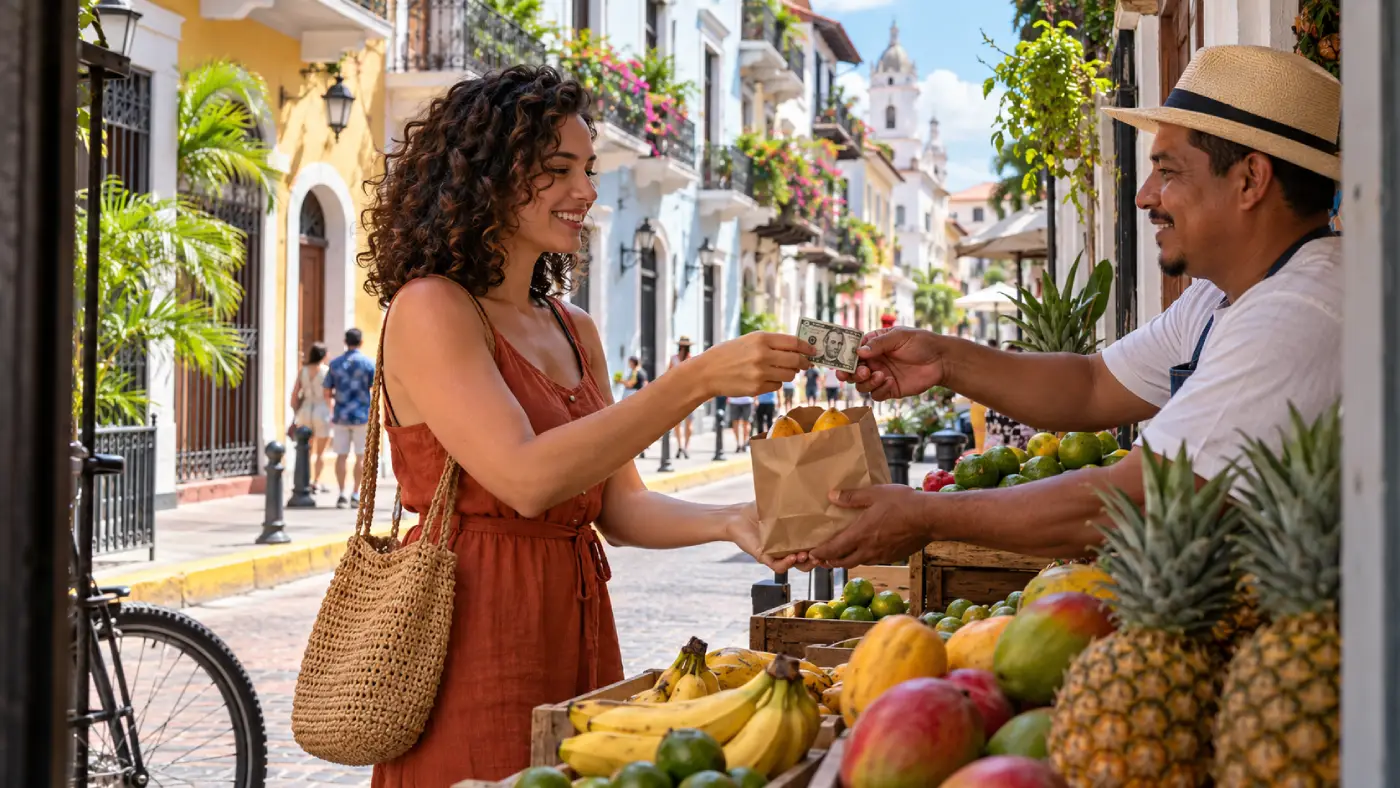
Panama’s national currency is the balboa, fixed at one balboa to one US dollar. The country does not issue its own banknotes; US-dollar bills are used for paper money. Panamanian balboa coins circulate alongside US coins.
Prices marked B/.10 and US$10 represent the same amount. If you already have US dollars, you do not need to exchange them into a separate currency for ordinary purchases in Panama.
Bring some smaller notes, especially $1, $5 and $10 bills. They are easier to use for modest purchases and island expenses where change can be limited. Avoid making a large banknote your only way to pay for a small purchase.
The one-to-one relationship applies to balboas and dollars. If your bank account is in euros, pounds or another currency, paying in Panama can still involve currency conversion and your card issuer’s fees.
Payment options depend on the business and the journey. Use this as a planning guide, then arrange any large outstanding payment directly with the provider.
| Situation | Practical payment approach | What to prepare |
|---|---|---|
| Established city hotels, larger restaurants and shops | Card is generally convenient | A physical backup card and access to your banking app |
| Markets, street-food stalls and small businesses | Carry cash | Smaller US-dollar notes |
| Taxis and independently arranged boat transfers | Agree the fare and payment method before departure | Enough cash if card payment has not been arranged |
| Metro and MiBus journeys | Use the payment method supported by that service | A funded transport card where needed; see the transport section below |
| San Blas/Gunayala island spending | Prepare cash before leaving the mainland | Unpaid charges, personal spending and a reserve for changes |
Keep your main spending card and backup separately. If a transaction fails, check your banking app for an approval request or restriction before repeatedly trying the same payment. Ask for a receipt and retain it if the charge looks incorrect.
Before paying a tour deposit or accepting a changed fare, establish the total and what it includes. Our guide to payment and booking scams in Panama covers the warning signs worth checking.
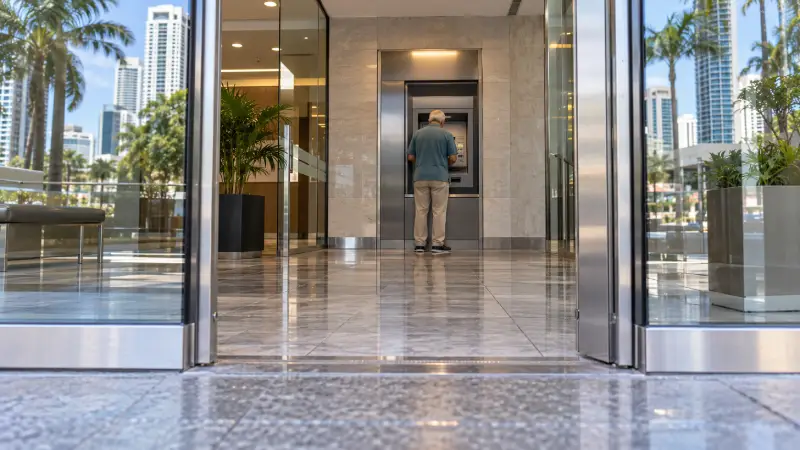
ATMs in Panama dispense US dollars. Withdraw during the city portion of your trip rather than leaving the task until you are heading to an island or somewhere with limited banking services. Prefer a machine at a bank or another staffed location, and keep your card in sight throughout the transaction.
The cost of a withdrawal can have several parts:
ATM operator fee: Any charge shown by the machine for using it.
Card issuer fee: Any withdrawal or overseas-use charge imposed by your own bank.
Currency conversion: The exchange rate and any applicable markup when the transaction is converted into your account currency.
Read the fee screen before accepting, and review your card’s overseas withdrawal terms before travelling. An ATM’s advertised terms for its own bank customers may differ from the terms that apply to a foreign-issued card.
If the machine charges a fixed fee, several small withdrawals can multiply that cost. Balance the cash you actually need against the amount you are comfortable carrying; withdrawing your entire holiday budget at once is rarely necessary for a city-based trip.
If your account uses another currency, a card terminal or ATM may offer to convert the payment into your home currency. This is dynamic currency conversion, or DCC, and the offer can include its own exchange-rate markup and fees.
Keeping the transaction in USD leaves conversion to your card’s normal arrangements. Compare those terms with any on-screen offer rather than assuming that a familiar currency means a better price. Visa’s currency-conversion guidance explains the information you should be shown and your right to decline the conversion.
Declining DCC does not remove a separate ATM fee or your bank’s own charges.
If you are bringing cash in another currency, compare the final number of US dollars you will receive after all exchange charges. Do the same comparison against the total cost of an ATM withdrawal. A “no commission” sign alone does not establish the better deal.
Already carrying USD? Keep it for spending. There is no additional balboa banknote exchange to arrange on arrival.
Calculate cash around the payments that remain outstanding. A stay with prepaid accommodation and card-friendly restaurants creates a different requirement from an island trip with cash balances due.
Use this calculation:
Cash needed = unpaid cash-only bookings + transport and entrance payments + small purchases + a personal reserve.
During a city stay, carry enough for smaller purchases and journeys between opportunities to withdraw. Before San Blas, calculate the whole island portion: the remaining tour balance, excluded charges, drinks, souvenirs and a reserve for changes.
Ask the operator for a clear list of what has already been paid and what is payable locally. Online payment for the main booking and cash spending at the destination are separate decisions. San Blas has no ATMs, so plan to arrive with the dollars you need, including small notes.
Panama’s entry guidance lists a minimum financial-solvency requirement of US$500, with higher amounts possible for some nationalities. This can be demonstrated through several forms of evidence, including cash, a credit card or a bank reference; it is not a blanket instruction to carry $500 in banknotes.
The accepted forms appear in the official financial-solvency requirements. Review the wider Panama entry requirements alongside your return or onward travel arrangements.
If you intend to carry a substantial amount of money, also review Panama’s cash declaration rules before departure. Proof of funds and customs declarations serve different purposes.
Yappy is an account-linked payment service used to send money and pay businesses in Panama. Its registration requirements include an active deposit account at a participating bank, with debits enabled, and completion of the bank-account connection process.
Visitors who only have a foreign-issued card should arrange another payment method. Downloading Yappy does not supply the required bank account. Someone who already holds an eligible account may be able to register through the normal process; nationality alone is not the deciding factor described in these requirements.
Paying with a card stored in a phone wallet is a separate arrangement. It depends on your card, wallet and the merchant’s terminal. Carry the physical card as well, particularly if your phone’s battery is low or the terminal cannot complete the wallet transaction.
Mobile data is useful for opening your banking app, approving supported transactions and retrieving payment confirmations. Panama eSIM provides data for those tasks on a compatible, unlocked phone. Roafly’s plan is data-only, so keep access to your usual number if your bank sends verification codes by SMS.
Panama City’s Metro supports contactless bank-card payments on Lines 1 and 2, and the transport card remains another option. MiBus also uses the MetroBus transport card, which must have credit loaded before use. Cash can be used to recharge it at authorised outlets; carrying cash and paying directly aboard a bus are different things.
Use the guide to getting around Panama when combining city transport with intercity buses, flights or boats. Payment arrangements should follow the service you are actually taking, rather than an assumption that one card works across every mode.
At restaurants, review the total and any suggested tip before approving the payment. Tipping is voluntary for ordinary restaurant service in Panama. A separate exception applies to services contracted in advance with an agreed gratuity charge. Keep taxes and suggested tips distinct when reading the bill.
If you prefer to leave a tip in cash, smaller dollar notes make that easier without needing change from a larger payment.
Review your card terms. Know the overseas purchase fee, withdrawal fee and relevant limits.
Carry a backup payment method. Store a second card separately from the first.
Set up bank access before departure. Make sure you can sign in and complete the authentication your bank requires.
Prepare your connection. Compare internet options in Panama if you will need banking apps and booking confirmations away from Wi-Fi.
Separate prepaid costs from cash still due. This matters especially before an island transfer or tour pickup.
Save essential information offline. Keep booking details, payment receipts and your card issuer’s contact details available if your phone loses service.
Before leaving Panama City for an island stay, make the final cash check against your booking: what is paid, what is still due, and what you will want to buy once you arrive.
