Download the App and manage your eSIMs easily
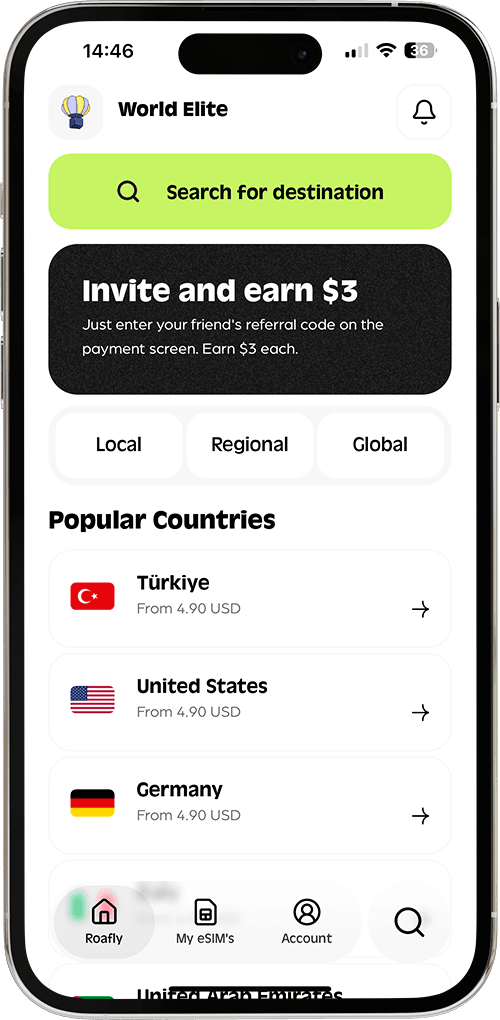
Create your order quickly
See your eSIM details
Track your remaining data
Download the App and manage your eSIMs easily
Create your order quickly
See your eSIM details
Track your remaining data
Panama's entry rules depend on your passport, any qualifying foreign visa or residence permit you hold, and whether you will enter the country or remain in airport transit. Many nationalities can visit without a visa for up to three months; US and Canadian citizens have a separate allowance of up to 180 days.

Lena Hartley
Updated Sep 30, 2026
9 min read

Save 15% on your Roafly eSIM
Stay connected on your next trip. Use the code below at checkout.
View All DestinationsJump to section
👇Save 15% on your Roafly eSIM
Stay connected on your next trip. Use the code below at checkout.
View All Destinations
Manage your eSIM in the app
Install, top up and track data.
The distinction matters most if you hold a visa-required passport. You may qualify for a 30-day exemption through another country's visa, while a short connection at Tocumen can involve a different set of conditions.
Start with the nationality on the ordinary passport you will use. Your country of residence becomes relevant when you are relying on a qualifying residence permit or arranging a consular application.
| Tourist entry route | Examples of ordinary passport holders | Stay or next step |
|---|---|---|
| Visa-free nationality with the longer allowance | United States, Canada | Up to 180 days |
| Visa-free nationality under the general allowance | United Kingdom, Germany, France, Spain, Australia, Japan, Mexico, Costa Rica, Türkiye | Up to three months |
| Stamped visa required unless another exemption applies | India, Philippines, Dominican Republic, Venezuela | Obtain the visa before travel; follow the stay granted |
| Authorized visa required unless another exemption applies | Pakistan, Bangladesh, Nepal, Nigeria | Complete the required approval process before travel |
| Exemption through a qualifying foreign visa or residence permit | Eligible holders of otherwise visa-required passports | Up to 30 days under this route |
These examples cover ordinary-passport tourism and were checked on 30 September 2026. Use the official visa classifications and exemptions for your exact nationality and document type.
The periods above are maximum allowances. On arrival, establish the departure deadline attached to your admission and make sure your passport receives an entry stamp.
Panama's exemption names visas or residence issued by Canada, the United States, Australia, South Korea, Japan, the United Kingdom, Singapore and European Union member states. Valid US permanent resident cards are expressly recognized in the embassy's guidance.
The tourist-entry visa exemption changed on 28 October 2024. Executive Decree 196 replaced the previous requirement that the foreign visa be multiple-entry, already used and valid for at least another six months. The revised provision requires a valid visa from one of the named countries when entering Panama.
Some consular pages still display the older conditions. Read any amendment beneath the original wording before deciding that an unused visa disqualifies you.
Check the issuing country and exact document you hold. The decree names EU member states, so “European visa” is too broad a description. If relying on residence, establish that your particular permit is accepted.
The separate restricted-nationality airport transit rules retain their own conditions, including a multiple-entry visa option. Apply the tourist-entry exemption to an actual visit and the transit rules to your connection.
If neither your nationality nor another qualifying document gives you an exemption, arrange the appropriate stamped or authorized visa through the Panamanian consulate responsible for your application.
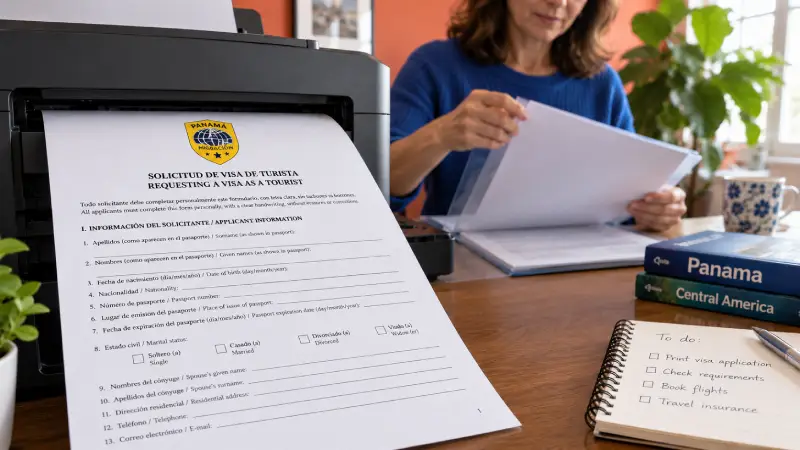
The usual document package includes:
Completed application and passport copies.
Travel itinerary or flight reservation.
Evidence of residence where you are applying.
Photographs and proof that you can fund the trip.
Accommodation details or an invitation, where applicable.
Document translations, appointments, fees and processing arrangements vary between consulates. Allow time for approval before committing to non-refundable travel.
Applying in India: the Panama Consulate in Mumbai's notice checked on 30 September 2026 states that visa services are temporarily suspended. Indian passport holders who need a stamped visa should establish whether applications have reopened before making travel commitments. Anyone relying on the foreign-visa exemption must assess that separate route.
Panama's National Immigration Service gives a general minimum of three months' passport validity. US government guidance specifies three months beyond arrival.
British citizen passport holders face conflicting published guidance: the UK Foreign, Commonwealth & Development Office says the passport should remain valid for six months after the planned departure from Panama, with at least one blank page. If your British passport falls between those thresholds, obtain clarification from the Panamanian consulate and your carrier before travelling.
Visa applications can also have stricter passport requirements than the general entry minimum. Use the requirements for your actual application when a visa is needed.
Have a confirmed departure booking within your permitted stay. A flight into Panama alone leaves the onward-travel requirement unanswered.
Keep the booking confirmation accessible, with your name, destination and travel date visible. If leaving by land, obtain a genuine transport reservation and establish with your carrier or consulate whether that evidence is acceptable for your itinerary.
The National Immigration Service's general minimum is US$500 or equivalent financial means, with enough money to support the length of stay. Proof can include suitable bank or credit-card evidence; this is not a requirement to carry the entire amount as cash.
Panama's tourism authority notes that some nationalities may be asked to demonstrate more. UK travel advice specifies US$1,000 or a credit card. Prepare evidence that comfortably covers your trip rather than treating the lowest published figure as sufficient for every traveller.
Keep your accommodation address and contact telephone number ready, together with your itinerary and booking confirmations. If your route is still taking shape, settle your first base before departure; our guide to where to stay in Panama compares the main areas.
Save your passport copy, bookings and onward ticket offline. Planning your internet access in Panama also helps with hotel messages and transport changes after arrival, while the saved copies remain available without a connection.
Complete any passenger information requested by your airline or immigration officers. Keep immigration clearance and customs declarations as separate steps: a customs QR code records a declaration of goods or money and does not establish visa eligibility.
The declaration requirements for cash, restricted items and purchases belong to Panama's customs rules. Follow the instructions for what you are carrying instead of assuming every online “arrival form” is a travel authorization.
Panama's Ministry of Health said in its 8 July 2025 clarification that arriving travellers were not being required to present a yellow fever vaccination card. The country's official tourism guidance reflects that position.
However, UK and US travel guidance still describe a certificate requirement for arrivals from yellow-fever-risk countries. If your itinerary includes an affected country, use the Panamanian health authority's clarification when seeking route-specific confirmation from your carrier and the Panamanian consulate.
Vaccination for your own protection is a separate medical decision. Discuss your itinerary with a travel-health professional, particularly if visiting areas where vaccination is recommended.
Leaving Tocumen's international transit area to visit Panama City or sleep in a hotel requires eligibility to enter Panama. Build a stopover around the tourist entry route that applies to your passport and supporting documents.
Even an airside connection needs attention for certain nationalities. The restricted-nationality rules include passports from India, Pakistan, Bangladesh, Nigeria and Egypt, among others. Qualifying circumstances can include a Panamanian visa or residence, certain foreign residence permits or multiple-entry visas, or an appropriate visa, residence or nationality for the final destination.
The Mumbai consulate describes a maximum 12-hour transit allowance for the listed nationalities when the required conditions are met. A short layover alone is insufficient.
Cuban and Haitian nationals have separate transit arrangements. Use the immigration service's current transit rules and exceptions for the applicable nationality rather than applying one rule to every passenger.
Before booking a connection, establish:
Whether your bags will be checked through.
Whether you must pass immigration to collect baggage or check in again.
Whether you can remain airside for the entire connection.
Whether the documents for your final destination satisfy Panama's transit conditions.
Once an airport exit is part of the plan, arrange arrival logistics too. Compare Panama eSIM plans if you want to organize data before flying, or review Tocumen Airport SIM options if you prefer to buy after landing.
Crossing from Costa Rica still requires the Panama entry permission and supporting documents appropriate to your passport. Keep your onward booking, accommodation address and financial evidence accessible at the border.
Use an official immigration crossing and complete the formalities on both sides. Check your Panama entry stamp and permitted stay before continuing.
Plan the journey after border clearance as well: transport options in Panama cover buses, domestic flights and boats. Roafly's Panama eSIM can provide mobile data for accommodation messages and onward transport coordination on a compatible, unlocked phone.
Private-boat arrivals can involve additional immigration procedures and fees. Cruise visits also have their own operational arrangements. Obtain the relevant instructions from the vessel operator and Panamanian authorities before applying the airport or land-arrival process to a sea journey.
Panama has an extension procedure for some visitors issued tourist visas for less than 90 days. An application must be made before the existing permission expires, and approval can bring the total stay to a maximum of 90 days.
This procedure should not be read as an automatic extension of every visa-free admission, the 30-day foreign-visa exemption or the US/Canadian allowance. Ask the National Immigration Service which procedure applies to the permission you were actually granted.
Keep your departure within the approved period unless an extension has been granted. A brief trip to a neighbouring country should not be treated as an approved way to extend your stay.
The 180-day allowance applies to US and Canadian citizens. Someone travelling on another country's passport and using a US permanent resident card for the foreign-document exemption falls under that separate route, generally limited to 30 days. If their passport independently qualifies for visa-free entry, assess that nationality-based route first.
Panama's published tourist guidance directs visa-required visitors to obtain their stamped or authorized visa before travelling. Establish whether you qualify for an exemption or need advance approval before departure.
The National Immigration Service's FAQ exempts children under 18 from showing separate economic solvency. Their passport, visa eligibility and any applicable family travel documents still need attention.
Leaving the transit area for a city visit requires permission to enter Panama. If your connection involves collecting baggage landside, changing arrangements outside the transit area or staying at an outside hotel, assess the full tourist entry requirements before booking.
