Download the App and manage your eSIMs easily
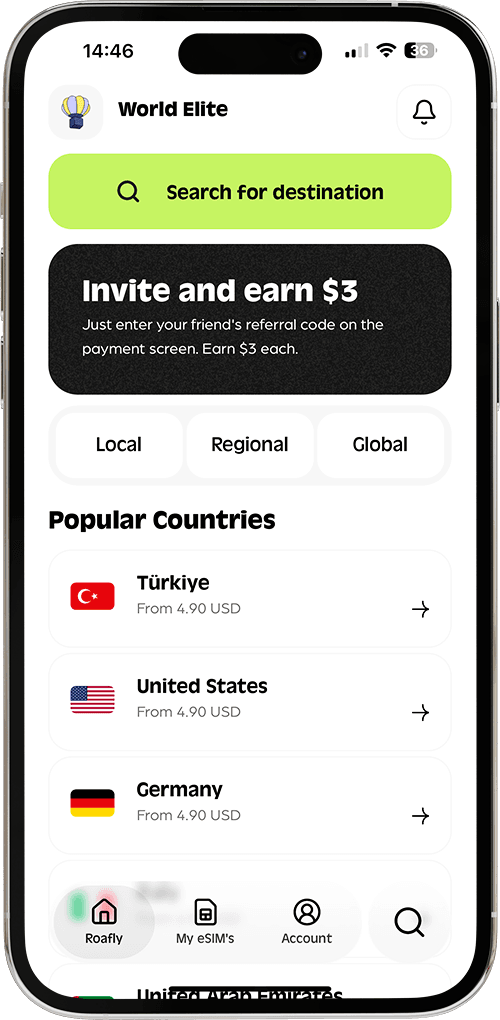
Create your order quickly
See your eSIM details
Track your remaining data
Download the App and manage your eSIMs easily
Create your order quickly
See your eSIM details
Track your remaining data
Italy’s entry requirements depend on your passport, any qualifying residence permit and the days you have already spent in the Schengen area.

Sophie Callahan
Updated Nov 4, 2026
10 min read
Save 15% on your Roafly eSIM
Stay connected on your next trip. Use the code below at checkout.
View All DestinationsJump to section
👇Save 15% on your Roafly eSIM
Stay connected on your next trip. Use the code below at checkout.
View All Destinations
Manage your eSIM in the app
Install, top up and track data.
Many visitors can travel visa-free for a short holiday; others need a Schengen visa before departure. Moving from France, Spain or another Schengen country into Italy does not start a fresh allowance.
As of 4 November 2026, EES border registration is operating, while ETIAS is not yet in operation and is not accepting applications. These systems serve different purposes, so start with your visa eligibility, then prepare for the border procedure that applies to your journey.
The following groups cover common short tourist visits. Country names are examples, and the nationality rows refer to ordinary passports.
| Your passport or status | Route for a short holiday in Italy | Main condition |
|---|---|---|
| EU, EEA or Swiss citizen | Travel under free-movement rules with a valid passport or accepted national identity card | These rules are separate from the visitor allowance for non-EU nationals |
| United States, United Kingdom, Canada, Australia, Japan or Singapore passport | Visa-free tourism | Up to 90 days in any rolling 180-day period across the Schengen area |
| India, China, South Africa or Türkiye passport | Obtain a short-stay Schengen visa before travelling, unless a specific exemption applies | Follow the visa’s permitted stay, validity dates and entry allowance |
| Non-EU national with a valid residence permit issued by another Schengen country | Short visits to Italy generally do not require a separate Italian visa | Carry your passport and residence permit; visits to other Schengen countries remain subject to the 90/180-day limit |
Use the official Visa for Italy checker with your nationality, country of legal residence, trip length and purpose. It also identifies the responsible Italian consular office and the documents for your application.
Nationality and residence answer different questions. Someone travelling on an Indian passport while living in the UK generally still needs a Schengen visa, but normally applies through the Italian consular office responsible for their UK residence. Holding a UK or US residence permit is not the same as holding a Schengen residence permit.
Diplomatic and special passports, qualifying family members of EU citizens and other protected categories can have different arrangements. Use the rules for the document and status you actually hold.
The usual short-stay limit is 90 days in any rolling 180-day period across the Schengen area, rather than 90 days in each country. Both the arrival and departure dates count as days of stay.
Spending 20 days in France followed immediately by 15 days in Italy uses 35 Schengen days. Earlier visits within the relevant 180-day window also count. Calculate the allowance against every day of the proposed trip, especially if you have travelled in Europe recently.
Leaving for a few days does not reset the calculation. Likewise, a train journey from Switzerland to Milan stays within the Schengen area.
Read the visa’s validity dates, permitted duration of stay and number of entries together. If it allows 30 days within a three-month validity window, you can use only those 30 days. Even a multiple-entry visa valid for a year operates within the applicable short-stay limits.
Leaving Schengen during the trip also matters: a single-entry visa may not let you return for the remaining Italian leg. Check this before adding a side trip outside the area.
Tourist extensions are reserved for justified exceptional circumstances and are handled by the local Questura, the provincial police headquarters. Arrange the appropriate long-stay route before travelling if your plan requires more than a short visit.
Non-EU visitors travelling under the ordinary short-stay rules should have a passport issued within the previous ten years on arrival, with validity extending at least three months beyond their planned departure from the Schengen area.
Use the date you leave Schengen, not necessarily the date you leave Italy. If Rome is followed by another week in France, the French departure is the relevant endpoint. Schengen visa applicants also need at least two blank passport pages.
EU, EEA and Swiss citizens use their applicable free-movement document rules; the three-month residual-validity rule above is not a universal requirement for every visitor.
Keep these documents accessible in your hand luggage:
Your passport and any required visa or qualifying residence permit.
Accommodation bookings, or the relevant host details and invitation documentation.
A return or onward itinerary showing how you intend to leave the Schengen area.
Evidence that you can support yourself during the trip and cover your return journey.
Travel medical insurance documents when required for your visa.
Border officers can ask about the purpose and conditions of the visit even when you hold a valid visa or qualify for visa-free entry. Your bookings and explanation should match the trip you are making.
Italy’s financial-support thresholds vary by trip length and whether you travel alone or with others. Solo trips lasting six to ten days have a published benchmark of €44.93 per day: €314.51 for seven days. Accommodation and return travel must also be accounted for. Use your consulate’s checklist for the evidence it accepts.
Schengen tourist visa applicants generally need medical insurance covering the full visit throughout the Schengen area, including emergency treatment, hospitalisation and repatriation, with at least €30,000 of cover. Visa-free visitors should arrange suitable travel insurance too, while keeping the distinction between a visa requirement and a travel recommendation clear.
Save copies separately from the originals. Our guide to avoiding pickpockets and scams in Italy is useful when deciding how to carry your passport and valuables during transfers and sightseeing.
Apply through Italy when it is your only Schengen destination or the main destination of your holiday. On a multi-country tourist itinerary, this normally means the country where you will spend the most time; equal-length stays generally point to the first country visited.
Flying into Rome does not by itself make Italy the right country for your application if most of the holiday is elsewhere.
The application process normally involves an appointment, supporting documents and biometric collection where required. Completing an online form is one part of that process; do not treat it as an issued eVisa or plan to obtain a routine tourist visa on arrival.
The standard short-stay visa fee is €90 for adults, with a reduced fee for children and exemptions or different rates for certain applicants. Authorised application centres may add a service charge.
Applications can generally be lodged up to six months before travel and should be submitted at least 15 calendar days before departure. Normal processing is 15 days, but individual cases can take up to 45 days. Appointment availability comes before that processing period, so the minimum deadline is a poor planning target.
The EU’s Schengen visa application guidance explains the common process. Follow the responsible Italian consulate’s local checklist for evidence, appointments and submission arrangements.
The Entry/Exit System began its phased introduction on 12 October 2025 and became fully operational on 10 April 2026. It records the entry and exit of non-EU nationals visiting for short stays who fall within its scope, including both visa-required and visa-exempt visitors.
Expect passport details and biometric information to be recorded or checked at the external Schengen border. This can include a facial image and, where required, fingerprints. Registration is handled as part of border control; EES is not a separate tourist visa application.
Allow time for the process when arranging an onward connection. If your journey enters Schengen in Paris before continuing to Rome, the external-border procedure takes place in Paris.
On 4 November 2026, the official ETIAS status notice still states that the system is not operating and applications are not being collected.
Once launched, ETIAS will be a travel authorisation for eligible visa-exempt visitors. It will not replace a Schengen visa for people who need one. The planned launch period should not be treated as an application-opening date.
If your departure is later, revisit the official status before travelling. There is no ETIAS application to complete while the system remains closed.
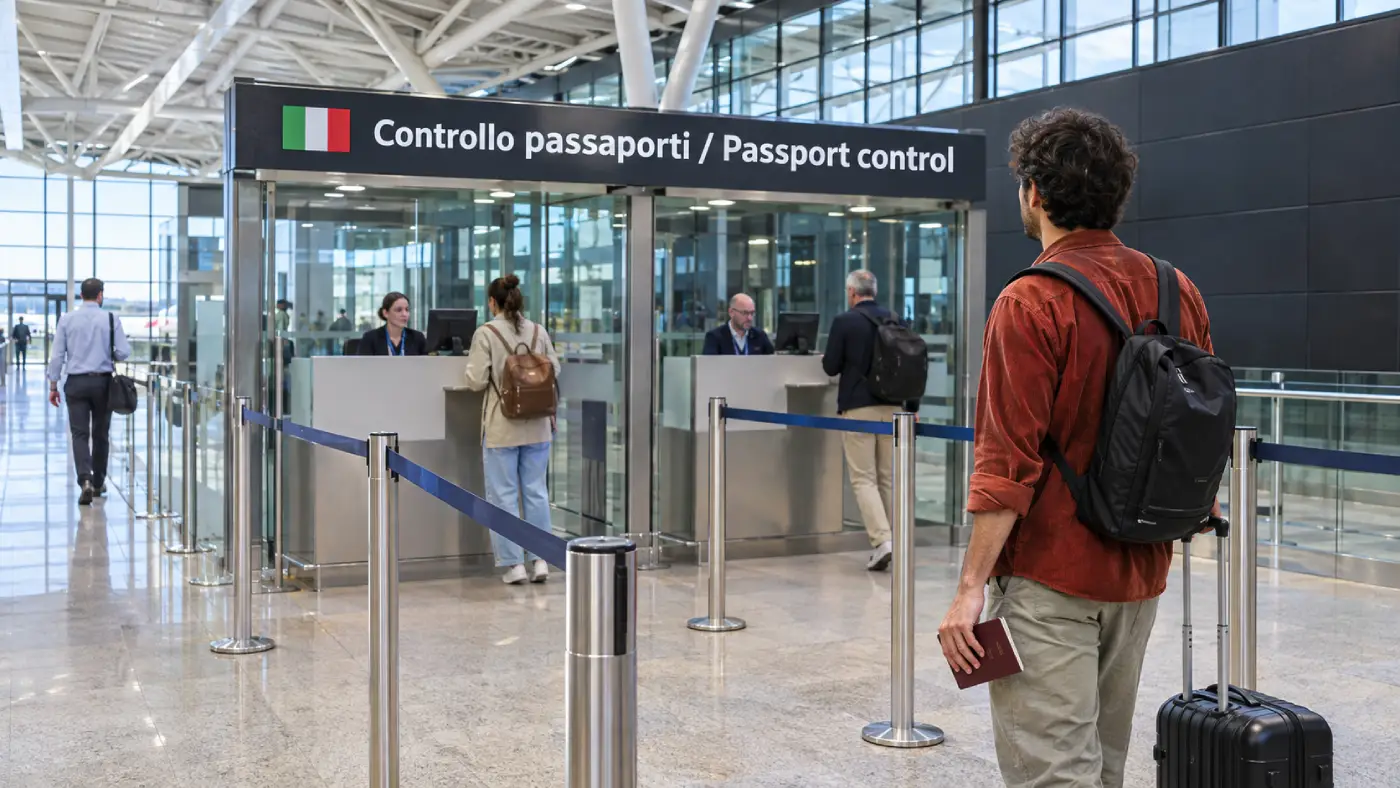
Your itinerary determines where you cross the external border. Flying directly from outside Schengen to Rome normally puts that check in Italy; a flight through another Schengen airport usually puts it at the first Schengen arrival.
Keep your travel documents with you on trains, ferries and internal flights too. Temporary internal-border controls and identity checks can still take place.
Remaining in an airport’s international transit area is different from entering Italy. Some nationalities, including Pakistan, Nigeria and Sri Lanka, can require an airport transit visa even without leaving that area, unless an exemption applies.
Airport transit permission covers the international transit area, excluding a sightseeing trip into Rome or an onward flight within Schengen. If the connection requires you to pass immigration, collect and recheck baggage landside, change airports or continue on a Schengen flight, you need the entry permission appropriate to that journey.
Existing visas and residence permits can affect transit exemptions. Match the check to your actual passport, documents and connection, rather than relying on the word “transit” on a booking.
Non-EU visitors arriving in Italy from another Schengen country for a short tourist stay should also account for Italy’s declaration-of-presence requirement.
Hotel guests can meet it through the signed declaration made to the hotelier; obtain and retain a copy. If you are staying privately and that hotel procedure does not apply, the declaration must be submitted to the relevant Questura within eight days of entering Italy.
Immigration checks and baggage rules are separate parts of arrival. Review Italy’s customs rules for the food, alcohol, tobacco, cash or other goods you intend to carry.
Download your accommodation address, onward tickets and document copies before flying. Keep essential information available offline so you can retrieve it during arrival.
Decide how to get internet in Italy before you need live transport updates or directions to your accommodation. Roafly’s Italy eSIM provides mobile data for those arrival tasks on a compatible phone.
If you are collecting a rental car, prepare the driving documents separately from your entry paperwork. Our guide to driving and renting a car in Italy covers that next decision.
Once your entry documents and dates are settled, review the local rules for tourists in Italy that affect sightseeing and everyday conduct. Those rules apply during the holiday, alongside the conditions governing how long you may stay.
