

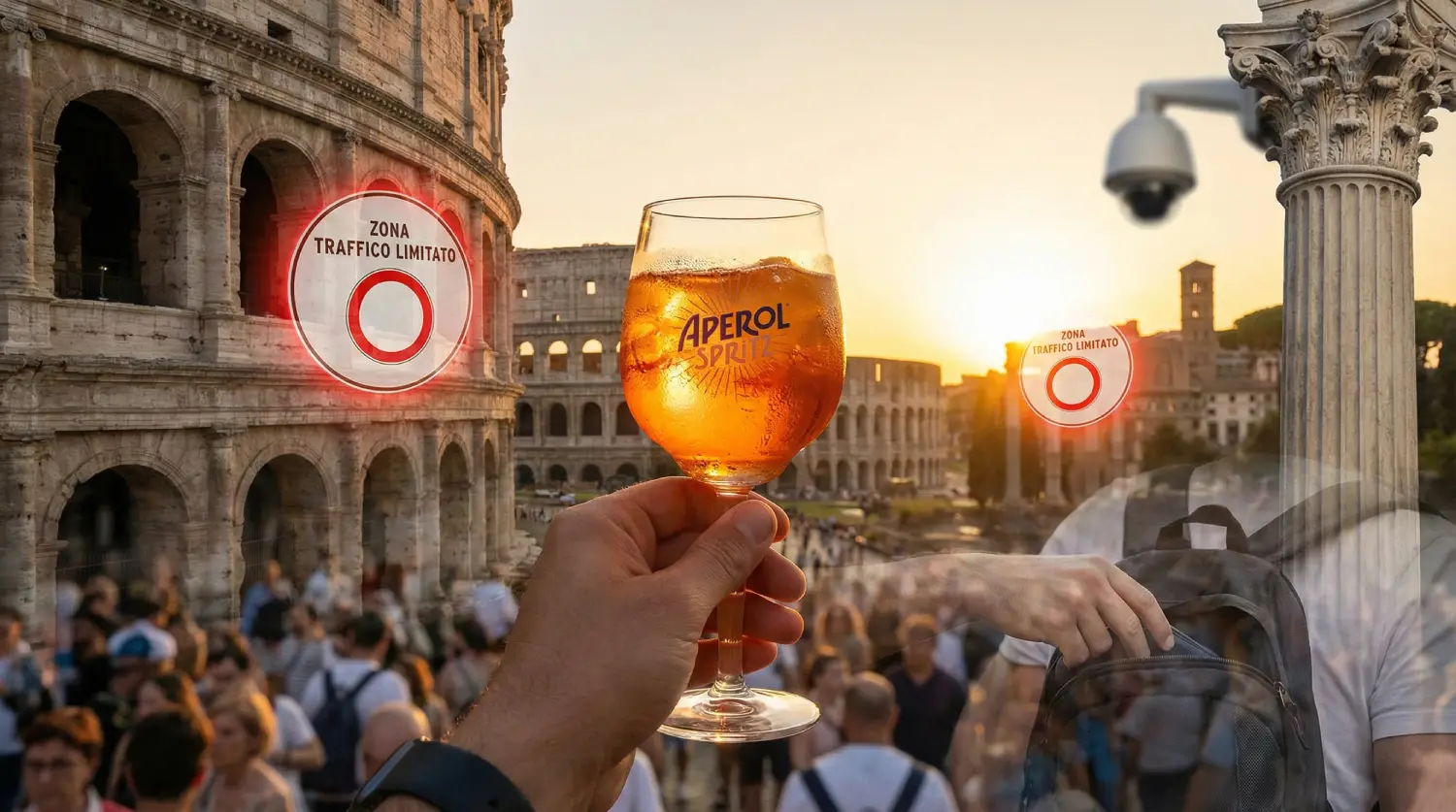

Because it is a top-tier Western European destination, most travelers assume Italy is perfectly safe.
Is that assumption correct? Yes and no.
If you are asking about violent crime—shootings, muggings, or cartel violence—Italy is incredibly safe. You can walk through most major cities at midnight without fearing for your life. The homicide rate is among the lowest in the world.
However, if you are asking about the safety of your wallet, your rental car deposit, or your general sanity, the answer changes. Italy is the undisputed European champion of crimes of opportunity and bureaucratic traps.
From the viral "Attenzione Pickpocket!" warnings on TikTok to the hidden cameras of the dreaded ZTL driving zones, the threats here will not put you in the hospital, but they will absolutely ruin your vacation and drain your bank account.
This is your definitive, 1500+ word survival guide to navigating Italy in 2026. We are stripping away the Instagram filters to show you exactly how scammers operate in Milan, why driving in Florence is a financial hazard, and how to protect yourself on a crowded Roman train.
1. Violent Crime vs. The Mafia Myth
Let’s address the elephant in the room first. Many North American tourists genuinely Google: "Is Sicily safe? Will the Mafia bother me in Naples?"
The 2026 Reality: The Italian Mafia (Cosa Nostra, Camorra, 'Ndrangheta) absolutely still exists. However, they are multi-billion-dollar international corporate syndicates focused on drug trafficking, construction contracts, and money laundering. They do not care about tourists. You have a zero percent chance of having a run-in with the mob while eating pizza in Naples or touring Taormina. In fact, areas with heavy syndicate presence often have lower street crime rates because disorganized crime is not tolerated by the bosses.
Your physical safety is virtually guaranteed. Your biggest enemy in Italy is a teenager with fast hands on a crowded bus.
2. The Pickpocketing Epidemic: "Attenzione Pickpocket!"
Pickpocketing is the number threat to tourists in Italy. It is not an amateur operation; it is a highly organized, generational profession.
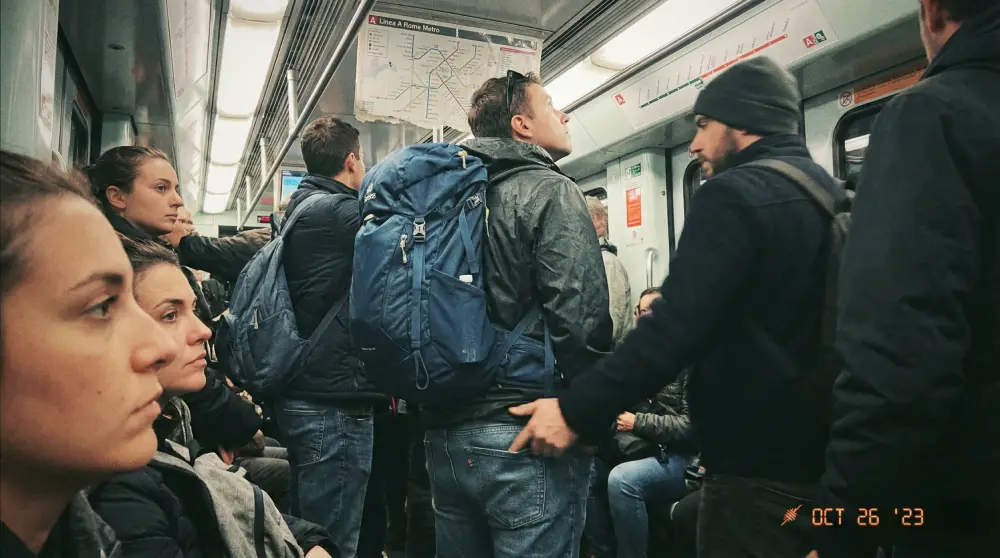
The Hotspots:
-
Rome: The area around Termini Station, the Trevi Fountain, the Colosseum, and the infamous Bus 64 (which runs from Termini to the Vatican and is nicknamed the "Pickpocket Express").
-
Milan: The Piazza del Duomo and the Central Train Station.
-
Venice: The Rialto Bridge and the Vaporetto (water bus) boarding areas.
The Tactics They Use in 2026:
-
The Train Station "Helper": You are struggling to use the automated ticket machine at Milano Centrale. A friendly, well-dressed local steps up to "help" you navigate the English menu. While you are distracted by the screen, their accomplice is emptying your backpack.
-
The Artificial Crush: As you board a train, two people will suddenly stop directly in front of you, causing a bottleneck. The person behind you pushes into you, apologizing. In that split second of body contact, your phone is gone.
-
The "Accidental" Spill: Someone bumps into you and spills a drink or drops mustard/ketchup on your jacket. They profusely apologize and start frantically wiping it off you. While they clean your jacket, they clean out your pockets.
The Defense Strategy: Never put your phone or wallet in your back pocket. Never leave your phone resting on a café table while you eat. Wear a cross-body bag and keep it securely in front of you, with your hand resting on the zipper when in dense crowds.
🗓️ Strategic Planning: Pickpockets thrive in massive crowds. If you want to lower your risk of theft (and heatstroke), timing your trip is everything. Read our detailed guide on the Best Time to Visit Italy to plan a safer, quieter vacation.
3. Classic Tourist Scams: The Art of the Hustle
If they can't steal your money secretly, they will trick you into handing it over willingly.

The Friendship Bracelet (Milan & Rome)
You are walking near the Duomo or the Spanish Steps. A man approaches you, smiling broadly, and asks where you are from. Before you can answer, he forcefully ties a woven string bracelet around your wrist, claiming it is a "free gift for African solidarity" or "a symbol of friendship." it is tied, his demeanor instantly changes. He aggressively demands 10 or 20 Euros, and his "friends" may suddenly appear to intimidate you into paying.
-
Defense: Keep your hands in your pockets when walking through major plazas. If someone approaches you with strings, say a firm "No, grazie" and do not stop walking.
The Fake Petition (Deaf & Mute Scam)
Often orchestrated by young teenagers holding clipboards, they will approach you asking for a signature for a charity supporting deaf/mute children. While you are holding the clipboard and trying to read it, another person is picking your pockets underneath the board.
-
Defense: Ignore anyone with a clipboard on the street.
The "Coperto" & Unpriced Menus
This is a legal scam. You sit down at a restaurant near a major monument. The waiter brings you bread you didn't order. When the bill comes, there is a €15 charge for the bread, a €20 "Coperto" (cover charge), and the "Market Price" fish you ordered was €100 per 100 grams.
-
Defense: Never eat at a restaurant that has pictures of the food on the menu or a waiter standing outside begging you to come in. Always check the menu for the Coperto fee (usually €2-€4 is normal; anything higher is a tourist trap).
4. Driving in Italy: The ZTL Nightmare & Traffic Terorr
Many tourists rent a car to drive through the hills of Tuscany or the Amalfi Coast. The physical driving is aggressive—Italians treat speed limits as loose suggestions and lane markers as abstract art—but the real danger is bureaucratic.
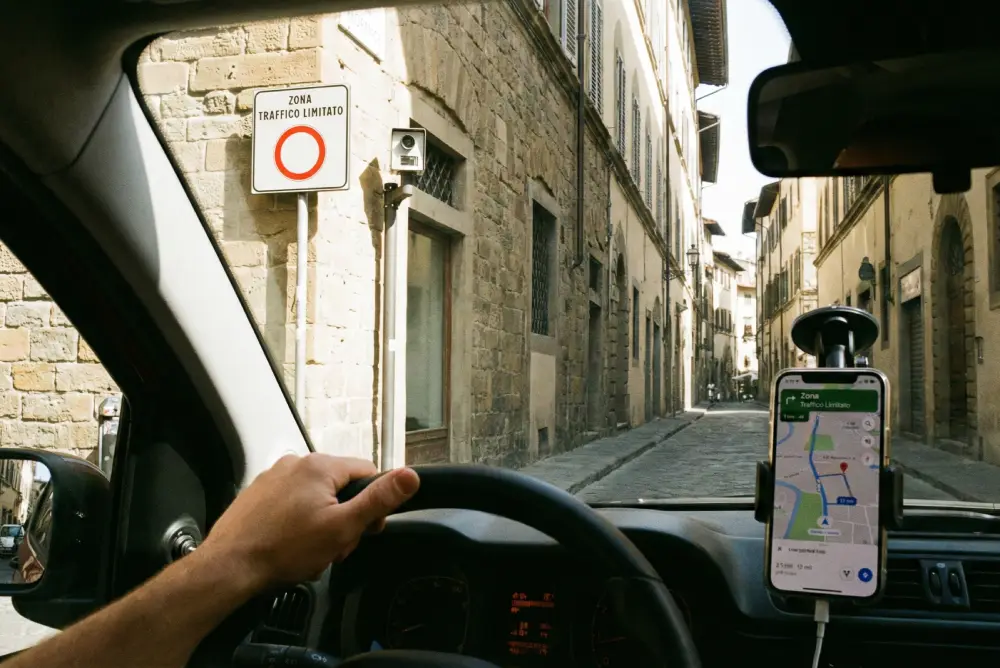
The ZTL (Zona a Traffico Limitato)
This is how Italian cities protect their historic centers, and it is the ultimate tourist trap. ZTLs are restricted driving zones. residents with special permits can drive into them.
-
The Trap: The boundaries are marked by small, easily missed signs featuring a white circle with a red border. There are no toll booths; just hidden cameras.
-
The Consequence: If you accidentally drive into a ZTL looking for your Airbnb in Florence, the camera snaps your license plate. You will not be pulled over. Six months later, your rental car company will charge your credit card a €50 "admin fee," and the Italian police will mail you a fine for €100 to €300. If you circle the block and pass the camera three times, you get three separate fines.
-
Defense: Never drive into the historic center of any Italian city. Park your car in a designated garage on the outskirts and take a taxi or walk to your hotel. You absolutely need a live GPS app like Waze to warn you about ZTL borders.
5. Train Travel: The Validation Trap
Italy’s train network (Trenitalia and Italo) is fantastic, but it holds a massive financial pitfall for the unaware tourist.
If you buy a regional train ticket at a machine (a physical paper ticket without a specific assigned seat or time), you must validate it before boarding. There are small green and white machines on the platforms. You must insert your ticket to get it time-stamped. If you board the train with an unvalidated ticket, the conductor will treat you as a fare evader.
-
The Penalty: A massive on-the-spot fine (often €50 to €200). Pleading ignorance or saying "I am a tourist" will not work; the conductors have zero mercy.
6. Health, Water, and Emergencies
-
The Water is Safe: Do not waste money buying bottled water everywhere. Cities like Rome are filled with ancient public water fountains called Nasoni. The water is ice-cold, constantly running, and perfectly safe to drink. Carry a reusable bottle.
-
Pharmacies (Farmacia): Look for the glowing green cross. Italian pharmacists are highly trained. If you have a minor ailment (like a cold, stomach bug, or minor cut), go to a pharmacy first, not a hospital. They can prescribe and dispense many medications directly.
🧳 Customs Warning: If you are bringing specific prescription medications from home (like Adderall or strong painkillers), be aware that Italian customs can be strict. Before you pack, read the Italy Airport Customs Rules to ensure your medication won't be confiscated upon arrival.
7. Solo Female Travel in Italy
Italy is generally a very safe destination for solo female travelers, but it requires a thick skin.
-
Catcalling: Unfortunately, street harassment and catcalling (especially in southern cities like Naples or Palermo) are still culturally prevalent. It is almost always verbal and rarely escalates to physical touching, but it can be exhausting. The best defense is to ignore it completely and keep walking.
-
Night Safety: Stick to well-lit, populated areas at night. The centers of Rome, Florence, and Milan are busy until late. Avoid walking alone near major train stations (Termini, Centrale) after midnight, as they tend to attract sketchy characters.
8. Connectivity: Your Ultimate Defense System
We have covered ZTL driving traps, train platform changes, and avoiding fake restaurants. To survive all of these, you cannot be offline in Italy.
You cannot rely on café Wi-Fi when you are driving a rental car in Tuscany trying to avoid a €200 ZTL fine. You need instant data to check the Trenitalia app when a sudden strike (sciopero) cancels your train. You need Google Maps to navigate the maze-like alleys of Venice where getting lost is guaranteed.
Need data in Italy? Get an eSIM!
Choose the perfect data plan for your trip

Manage your eSIM in the app
Install, top up and track data.
Relying on physical SIM cards means wasting your first precious hours in Rome standing in a Vodafone store, handing over your passport, and dealing with activation delays. For a complete breakdown of local carrier prices versus roaming, read our guide on How to Get Internet in Italy
The Smart Traveler's Hack
The most secure way to protect yourself is to arrive prepared. By downloading a travel eSIM before your flight, your phone connects to local Italian networks (like TIM or WindTre) the moment your plane lands at Fiumicino or Malpensa.
You can instantly order a FreeNow taxi (avoiding the airport taxi scammers), load your hotel directions, and hit the ground running. Check out our detailed comparison in the Best eSIM for Italy to find the right data package for your itinerary.
👉 Ready to travel safely? Grab your Italy eSIM here and stay connected from Rome to the Amalfi Coast.
Final Verdict: Should You Visit Italy?
Absolutely. Italy is a masterpiece of art, history, and culinary perfection. The risks here are not to your life; they are to your patience and your wallet.
As long as you understand the rules of the game, you will have the trip of a lifetime. Treat your belongings with care, treat the driving laws with extreme paranoia, and never take a "free" bracelet from a stranger.
Your 2026 Italy Survival Checklist:
-
Assume everyone in a crowded tourist area is a pickpocket. 2. Never drive into a historic city center (Beware the ZTL).
-
Always validate your regional train tickets.
-
Never accept an unsolicited "gift" on the street.
-
Get connected before you land so you are never lost.