Download the App and manage your eSIMs easily
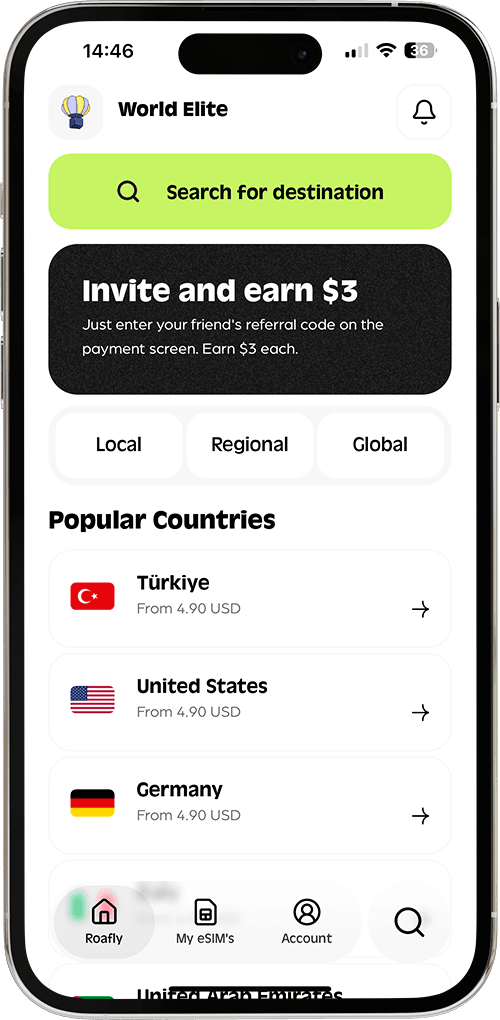
Create your order quickly
See your eSIM details
Track your remaining data
Download the App and manage your eSIMs easily
Create your order quickly
See your eSIM details
Track your remaining data
India has no single drinking age, and outdoor smoking is not governed by one simple nationwide permission.

Lena Hartley
Updated Oct 24, 2026
9 min read
Save 15% on your Roafly eSIM
Stay connected on your next trip. Use the code below at checkout.
View All DestinationsJump to section
👇Save 15% on your Roafly eSIM
Stay connected on your next trip. Use the code below at checkout.
View All Destinations
Manage your eSIM in the app
Install, top up and track data.
Delhi’s alcohol rules differ from Gujarat’s permit system, while cigarettes and vapes fall under different legislation. Before ordering a drink, lighting a cigarette or taking a drone sightseeing, distinguish national law from state restrictions and the rules of the particular venue or site.
| Topic | Current status | What visitors need to know | Safest action |
|---|---|---|---|
| Alcohol ages and venue entry | State law and venue policies | Purchase, consumption and admission are separate questions | Establish the state’s rules and the venue’s entry policy |
| Public drinking | Restricted by local rules | Legal purchase does not authorize drinking on streets or beaches | Use premises licensed for consumption |
| Cigarette smoking | Restricted in public places | Restaurants and some outdoor public spaces are covered | Use a lawful designated smoking area |
| Vapes and heated tobacco | National prohibitions on supply and transport | Nicotine-free devices are also covered | Leave these devices out of your travel plans |
| Cannabis and bhang | Different legal treatment | The distinction for cannabis leaves does not legalize ganja or hashish | Do not treat festival availability as proof of legality |
| Photography and drones | Site and aviation restrictions | Camera permission does not establish permission to fly | Review the site’s rules before visiting |
| Protected areas | Additional permits may be required | An Indian visa does not authorize every regional itinerary | Arrange the correct permit before travelling onward |
| Satellite phones | Specific authorization required | Ordinary mobile-phone rules do not apply | Obtain authorization before bringing or using one |
Rules checked on 24 October 2026. Laws, local restrictions and penalties can change; verify the linked official guidance before travel.
India has no single nationwide drinking age. State and union territory rules govern alcohol, and the relevant threshold can concern purchase, supply, consumption or eligibility for a permit. Turning 18 does not give a visitor permission to buy or drink alcohol throughout the country.
Delhi, for example, sets 25 as the minimum age for liquor sold or delivered by a licensed vendor. That restriction also covers alcohol intended for someone else; buying it for an older companion does not create an exception.
Gujarat presents a different question: whether you have permission to drink at all. Its prohibition framework includes limited visitor and tourist permit routes, but a foreign passport alone is not authorization to purchase or consume alcohol. Arrange the applicable permit before buying or drinking.
Licensed alcohol sales do not establish a right to drink on a street, beach or other public space. Delhi prohibits public drinking. Elsewhere, the applicable state, municipal and site restrictions determine where consumption is permitted.
Dry days can also interrupt otherwise lawful sales or service. Their dates and scope depend on local notifications, including election-related restrictions. Before planning a celebration, establish whether your venue can serve alcohol on that particular date; shop sales and hotel service should not be assumed to follow identical exceptions.
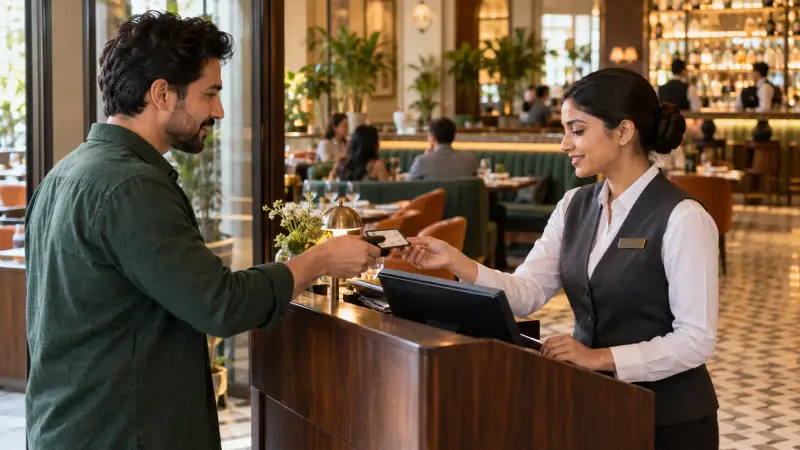
Admission and alcohol service are separate decisions. Restaurants serving alcohol, hotel dining rooms, bars and nightclubs may have different entry policies. There is no useful India-wide answer that makes every venue “18+” or “21+.”
Families should establish whether the specific venue admits minors, whether accompaniment changes its policy, and which identification it accepts. Permission to enter does not authorize alcohol service.
India’s child-protection law prohibits giving intoxicating liquor to a child under 18, apart from a narrow medical exception. Having parents present does not create a recreational drinking exemption, and state alcohol restrictions may set a higher threshold.
Cigarettes and electronic cigarettes require separate answers. Cigarette smoking is restricted in public places under India’s tobacco-control framework. Vapes and heated-tobacco devices face broader prohibitions involving supply and transport.
The national definition of a public place excludes ordinary open space, so describing cigarette smoking as banned on every Indian street would be inaccurate. However, that exclusion does not cover every place without a roof.
Open auditoriums, stadiums, railway stations and bus stops remain within the smoke-free framework. Local restrictions and individual site rules may also apply to streets, parks and beaches. Moving outside a building is therefore not enough to establish that smoking is permitted.
Indoor restaurants, cafés, bars and clubs fall within the public-place smoking restrictions. Restaurant coverage also extends to open surrounding spaces, so an outdoor dining table or open patio is not automatically exempt. Enclosing a terrace does not create permission either.
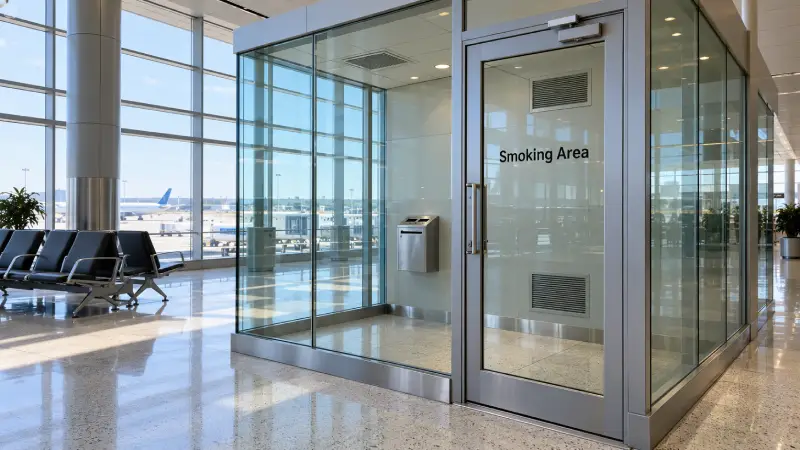
Hotels with at least 30 rooms, restaurants with at least 30 seats and airports may provide specially compliant, separate smoking areas or rooms. These must meet legal separation and ventilation requirements; an ashtray beside an ordinary dining table is not equivalent. Food and drink service is not permitted in designated smoking rooms.
Qualifying hotels can also designate smoking bedrooms under specified conditions. Your particular room may still be smoke-free, and a balcony does not establish a legal exemption or override the property’s policy. Book a designated smoking room if needed and establish where smoking is actually permitted.
India’s e-cigarette law prohibits activities including manufacture, sale, distribution and transport of electronic cigarettes, and prohibits knowingly allowing premises to store stock. Its definition covers devices with or without nicotine, including heat-not-burn products and e-hookahs.
These restrictions are broader than a ban on vaping inside restaurants. Personal ownership should not be treated as an exemption from transport restrictions, and a cigarette smoking area does not remove the separate restrictions on electronic devices.
Leave vapes and heated-tobacco devices out of your travel plans. The distinction between border treatment and rules after arrival is covered in our India customs rules guide.
Ganja, charas and hashish are controlled substances in India. Their availability in a tourist area or association with a festival does not establish lawful possession or use.
Bhang requires a narrower explanation. Cannabis leaves, when not accompanied by the flowering or fruiting tops, are treated differently under the national narcotics definition. State laws can nevertheless regulate the production and sale of bhang.
That distinction does not make cannabis generally legal. Products containing controlled flowering material or resin do not become lawful simply because a seller calls them bhang. Treat the ingredients and applicable state rules as material; a familiar name or open sale is insufficient.
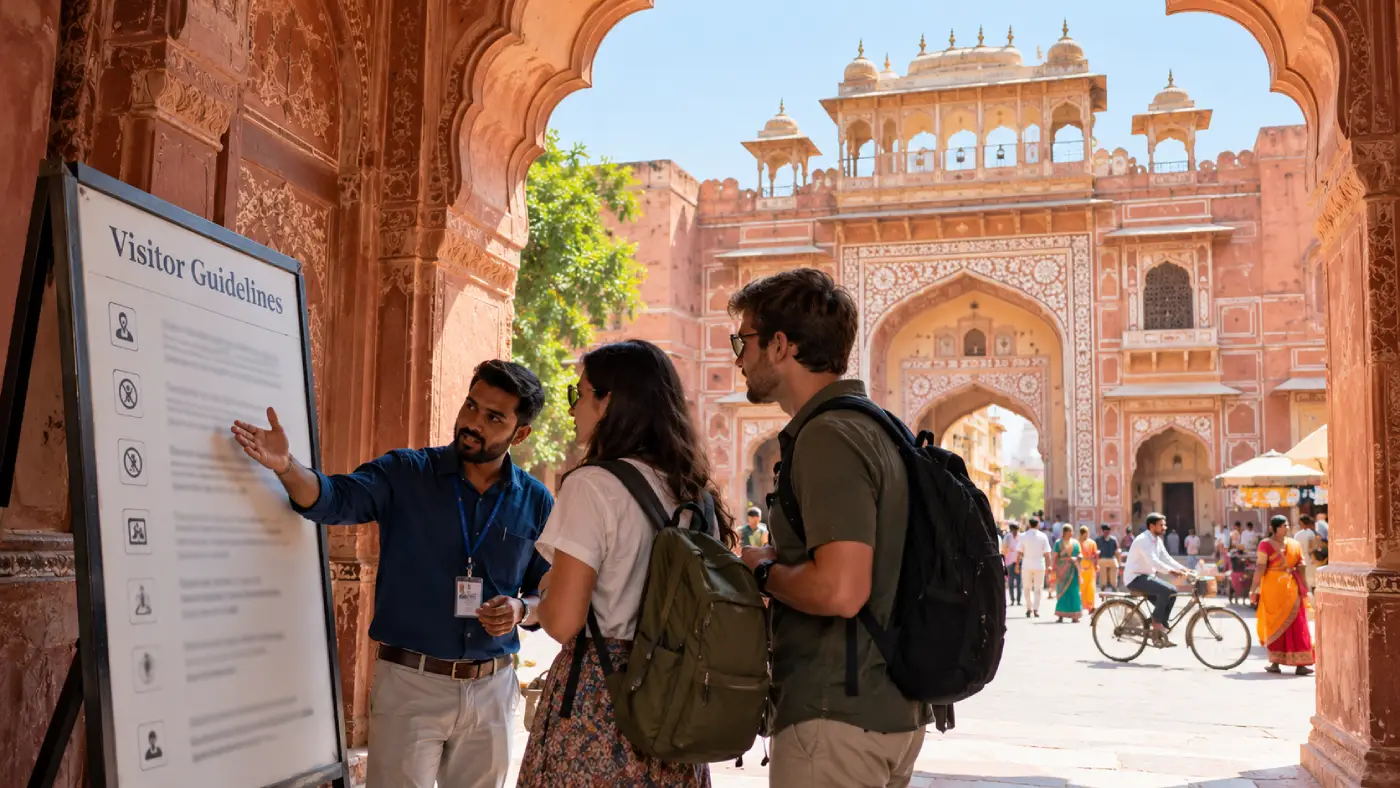
Photography restrictions can apply to one room, building or activity within an otherwise accessible attraction. Read the signs at the point of entry rather than assuming a ticket includes unrestricted photography.
The Taj Mahal visitor rules illustrate the distinction: photography is prohibited inside the main mausoleum, tripods are prohibited, and drones are prohibited inside and around the monument. Plan exterior photographs, then put your camera away before entering the mausoleum.
Establish whether you and your aircraft satisfy the current Directorate General of Civil Aviation requirements before planning a recreational flight. Aircraft registration, pilot eligibility, airspace restrictions and permission from the site are separate considerations.
Foreign visitors should resolve their eligibility before bringing equipment for a planned flight. A licence issued abroad, a drone weighing less than 250 grams or a green area on an airspace map should not be treated as complete authorization.
Site restrictions can still prevent a flight where the broader airspace rules would otherwise allow it. Keep the drone grounded unless both the aviation requirements and the location’s rules have been satisfied.
Permission to enter India and permission to visit a protected region are different matters. Your visa establishes the conditions of admission to the country; additional regional permits can determine where you may travel afterward.
Foreign tourists visiting Arunachal Pradesh require a Protected Area Permit. The permit process for foreign nationals differs from the Inner Line Permit arrangements used by Indian citizens. Arrange the correct authorization before committing to onward travel.
Start with India visa and entry requirements for admission formalities, then address the permits for your actual route. Avoid relying on an old countrywide list of unrestricted destinations when planning border or northeastern itineraries.
Keep permit details and local operator contacts accessible during the trip. An India eSIM can provide mobile data for retrieving booking messages and official notices where coverage is available.
Satellite phones are subject to specific authorization requirements, including for possession and use. They should not be treated like ordinary mobile phones simply because you intend to use one for emergencies.
Satellite messengers and other specialist communications equipment also warrant device-specific advice before travel. Establish the applicable requirements for the exact equipment rather than assuming every handheld device falls into the same category.
Religious-site guidance combines admission policies with cultural courtesies. Some requirements are conditions of entering a particular place; others are respectful choices rather than nationwide laws.
Clothing that covers shoulders and knees is a practical choice for many temple visits. Remove footwear where required and use the designated storage area. These recommendations should not be presented as a national dress law applying everywhere in India.
Admission can also depend on the site’s religious rules. The Jagannath Temple in Puri, for example, restricts entry to Hindus. Modest clothing alone does not establish eligibility to enter every temple.
Ask permission before photographing people, particularly during worship or in local communities. Permission from a person does not override a site’s photography ban, while permission to photograph a building does not imply consent from everyone nearby. Keep conversation quiet around active worship and follow the site’s instructions about cameras and phones.
Establish the alcohol rules for each state on your itinerary and the admission policy of any venue you plan to visit.
Arrange protected-area permits and any necessary equipment authorizations before travelling onward.
Save permit copies, accommodation details and essential maps offline.
If you still need mobile data for official notices and booking updates, compare eSIM options for India before choosing a plan.
Read site notices on arrival, keeping legal restrictions, admission conditions and courtesy recommendations distinct.
