Download the App and manage your eSIMs easily
Create your order quickly
See your eSIM details
Track your remaining data
Download the App and manage your eSIMs easily
Create your order quickly
See your eSIM details
Track your remaining data
Georgia allows citizens of many countries to visit without a visa for up to one full year. Other visitors may qualify through a foreign visa or residence permit, apply for an eVisa, or need a consular visa before travelling. Your passport and supporting documents determine which route applies.

Ethan Brooks
Updated Oct 25, 2026
9 min read

Save 15% on your Roafly eSIM
Stay connected on your next trip. Use the code below at checkout.
View All DestinationsJump to section
👇Save 15% on your Roafly eSIM
Stay connected on your next trip. Use the code below at checkout.
View All Destinations
Manage your eSIM in the app
Install, top up and track data.
Georgia allows citizens of many countries to visit without a visa for up to one full year. Other visitors may qualify through a foreign visa or residence permit, apply for an eVisa, or need a consular visa before travelling. Your passport and supporting documents determine which route applies.
Since 1 January 2026, ordinary tourists must also carry health and accident insurance covering their entire visit, with at least 30,000 Georgian lari (GEL) of coverage. Visa-free entry does not remove this requirement.
The rules below were checked on 25 October 2026 and cover tourist visits with ordinary passports. Work, study and residence involve separate requirements.
Start with your citizenship, then consider any qualifying foreign visa or residence permit you hold. Your departure airport alone does not determine your eligibility.
| Entry route | Representative examples | Permitted stay and main condition |
|---|---|---|
| Visa-free through citizenship | United States, United Kingdom, Canada, Germany, Australia, Türkiye and United Arab Emirates | Up to one full year |
| Visa-free under the China–Georgia agreement | Chinese ordinary passport holders | Up to 30 days per visit, with a cumulative maximum of 90 days in any 180-day period |
| Visa-free through a qualifying foreign visa or residence permit | Holders of qualifying documents from countries including the US, UK, Germany, Canada, Japan and UAE | Up to 90 days in any 180-day period; document and nationality conditions apply |
| eVisa | Eligible passport holders including India, Indonesia and the Philippines | The portal determines the applicable stay and validity period for your passport |
| Consular tourist visa | Visitors who meet neither visa-exemption nor eVisa requirements, including some Pakistani, Bangladeshi and Nigerian applicants without qualifying supporting documents | Obtain the visa before travelling and follow its stated conditions |
These are examples, not a complete nationality list. Use the official Georgia entry checker with your citizenship, passport type, intended stay and any foreign visa or residence permit.
Being eligible for visa-free travel or holding a visa allows you to seek entry. Border officials still assess your documents and the purpose of your visit.
Georgia’s foreign-document exemption can be useful if your passport does not qualify for visa-free entry by itself. Eligible visas and residence permits from specified countries can allow a visit of 90 days in any 180-day period.
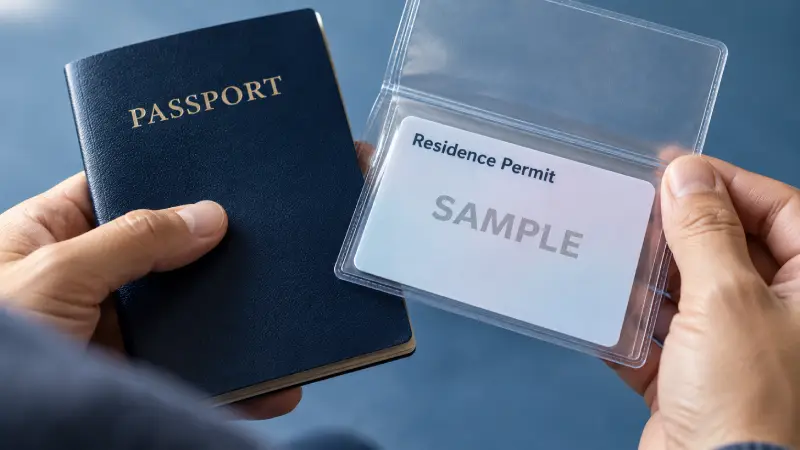
Keep the qualifying document with your passport. The general rule requires it to be valid when you enter Georgia. Embassy instructions may add requirements for a particular document or nationality.
The distinction between citizenship and residence matters. Someone travelling on a UAE passport can qualify for the one-year exemption. Someone holding another country’s passport and a UAE residence permit uses the separate foreign-document route.
Additional conditions apply to citizens of Afghanistan, Bangladesh, Cameroon, Congo, Côte d’Ivoire, Ethiopia, Eritrea, Ghana, Morocco, Nigeria, Pakistan, Somalia, Sudan, Syria, Tanzania, Uganda and Yemen.
For these nationalities, the UAE-based exemption requires a qualifying multiple-entry visa or residence permit with at least one year of validity remaining when entering Georgia. The Georgian Embassy in the UAE also instructs applicants using this route to keep their qualifying document valid through departure.
If your document does not meet the applicable conditions, arrange the appropriate Georgian visa before travelling. Simply having an Emirates ID is not enough to establish eligibility in every case.
Foreign supporting documents can also affect eVisa eligibility. Some passport holders need a qualifying Schengen or OECD-country visa or residence permit for that application route. Those eVisa conditions are separate from the visa-free exemption, so establish which route you qualify for before paying an application fee.
Eligible visitors apply through the official Georgia eVisa application while outside Georgia.
Prepare a recent photograph, a passport scan, accommodation details, travel arrangements, insurance and evidence of financial means. Include a qualifying supporting document if your application requires one.
The application process includes:
Select your citizenship and travel document. Use the passport you will carry on the trip.
Complete the form and upload the requested documents. Make sure names, passport numbers and travel dates match.
Verify your email and pay the application charge. Follow the deadlines in the portal’s emails.
Complete the mandatory DuVerify step within 24 hours. The link arrives by email after the first application stage.
Print the approved eVisa and carry it with your passport.
Each traveller, including a child, needs a separate application.
The eVisa fee is US$20 plus a 2% service charge. The application also requires US$15 per applicant for DuVerify, bringing those listed charges to US$35.40, before any card-provider or currency-conversion costs.
Allow at least five working days for processing and leave additional time before departure. Paying the charges does not mean the visa has been approved.
Read both fields on the issued visa. A 120/30 eVisa permits a maximum total stay of 30 days within its 120-day validity period. A 180/90 eVisa permits up to 90 days within the applicable 180-day period.
The longer number is the window during which the visa can be used. It is not the number of days you may remain in Georgia. Multiple-entry permission also does not restart your allowance each time you enter.
If the portal does not offer an eligible route for your circumstances, apply for the appropriate tourist visa through a Georgian embassy or consulate. An online consular application may still require an appointment and original documents.
Passport requirements depend on your entry route. Avoid applying a universal “six months remaining” rule to every visitor.
For an eVisa application, your passport must:
Remain valid for at least three months beyond the requested visa’s validity.
Have at least two blank pages.
Have been issued within the previous ten years.
Be undamaged and free of unofficial alterations.
Visa-exempt visitors should follow the requirements for their nationality and document. For example, British citizens visiting visa-free need a passport valid for their stay.
EU citizens can enter using a qualifying national identity card issued by an EU member state. Turkish citizens can also travel under the bilateral national-ID arrangement.
These exceptions concern eligible national identity documents. A driving licence or a foreign residence card is not interchangeable with a national ID accepted for travel. If you are transiting through another country, your documents must also satisfy that journey’s requirements.
Keep the following accessible at check-in and border control:
Your passport or accepted national ID, plus your Georgian visa or qualifying foreign document where applicable.
Accommodation details, such as hotel confirmations or the address and contact details of your host.
Return or onward travel arrangements consistent with your intended visit.
Health and accident insurance covering your complete stay.
Evidence of sufficient funds, such as recent bank statements or appropriate sponsorship documents.
A clear explanation of your trip, supported by your bookings or itinerary.
Download copies before travelling so you can open them without mobile data. Keep original travel documents with you.
Entry permission and permission to bring particular belongings are separate matters. Review Georgia’s customs rules before packing medicines, alcohol or items that may need declaration.
Georgia’s tourist insurance requirement took effect on 1 January 2026. Your policy must provide health and accident coverage of at least GEL 30,000 and cover the whole visit, including both arrival and departure dates.
The policy can come from a Georgian or foreign insurer. You must be able to present it in English or Georgian, either electronically or on paper.
Check that the policy clearly identifies:
The insured person and insurer.
Georgia as a covered territory.
The start and end dates.
Covered risks and coverage limits.
The other contract and payment information required by the policy rules.
The official tourist insurance requirements include exceptions for certain diplomatic, official and other specified categories. Ordinary tourists should prepare compliant coverage, including those entering visa-free or with an accepted national ID.
Match the insurance to your planned trip. Eligibility to stay for one year does not mean a two-week visitor needs to buy a full year of insurance. If your plans become longer, extend your cover accordingly.
You do not need a Georgian visa if you remain inside the international airport transit area. If your connection requires passing immigration—for example, to collect baggage, change airports or stay at a hotel outside the terminal—you must meet the applicable entry requirements.
Confirm whether your airline can transfer your baggage and issue the necessary boarding passes without requiring you to enter Georgia. Separate tickets deserve particular attention.
Georgia admits foreign visitors through official border checkpoints, including international airports and seaports. A land crossing does not remove the need for the correct visa, travel documents or insurance. When continuing to a neighbouring country, establish that country’s entry requirements separately.
Do not treat routes through Abkhazia or South Ossetia as ordinary alternatives to recognised international border crossings. Georgian law restricts entry into these occupied territories, and entering from a prohibited direction can lead to criminal consequences.
Use the relevant safety advice for Georgia when assessing your route and regional travel plans.
Once your entry route is settled, organise the practical details that make arrival easier. Save your accommodation address, host’s phone number, transfer arrangements and insurance documents together on your phone.
If you want mobile data for contacting your accommodation or arranging onward transport, you can install a Georgia eSIM before departure on a compatible, unlocked phone. Keep essential documents available offline as well.
Compare the best eSIM options for Georgia while planning your data allowance and trip length, rather than leaving that decision until you need a connection.
Finally, review the local laws in Georgia before your trip. Your entry documents cover admission; the rules governing your activities during the visit are a separate part of preparation.
