

'/%3e%3cuse xlink:href='%23b' transform='rotate(90)'/%3e%3c/g%3e%3c/defs%3e%3cpath d='M0 0h300v200H0z' style='fill:%23fff'/%3e%3cpath d='M130 0v80H0v40h130v80h40v-80h130V80H170V0h-40z' style='fill:red'/%3e%3cuse xlink:href='%23c' fill='red' transform='translate(64.45 39.45)'/%3e%3cuse xlink:href='%23c' fill='red' transform='translate(235.55 160.55)'/%3e%3cuse xlink:href='%23c' fill='red' transform='translate(235.55 39.45)'/%3e%3cuse xlink:href='%23c' fill='red' transform='translate(64.45 160.55)'/%3e%3c/svg%3e)
The short answer is yes, Georgia is generally very safe for tourists. In fact, it consistently ranks as of the safest countries in Europe regarding violent crime against foreigners. The true dangers here rarely involve muggings or cartel violence.
Instead, the "danger" in 2026 has shifted toward intense political demonstrations, treacherous mountain road conditions, and sophisticated overcharging scams. If you know what to watch out for, your trip to the Caucasus will be spectacular. If you show up clueless, you might end up stranded in the mountains or severely overcharged.
The Current Reality: Politics, Police, and Street Crime
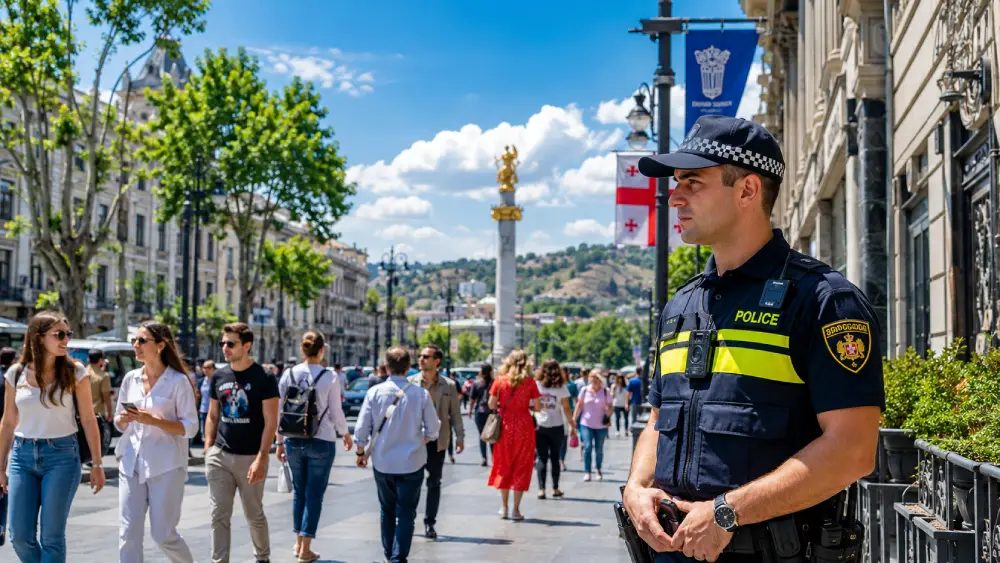
Georgia is sitting at a complex geopolitical crossroads in 2026. Tensions have simmered over the last few years regarding government legislation and the country's relationship with the European Union. Because of this, Tbilisi sees frequent and sometimes massive political protests.
These demonstrations are usually concentrated around the Parliament Building on Rustaveli Avenue. While they are rarely directed at tourists, the police response can sometimes involve tear gas or water cannons if crowds refuse to disperse. Your best move is to completely avoid large gatherings and political rallies.
Violent crime against tourists is incredibly rare. You are highly unlikely to be mugged or physically assaulted while walking in major cities. The local police force is generally helpful to foreigners and patrols heavily in tourist areas. However, petty theft does happen in crowded markets, so standard situational awareness is still required.
To stay on the right side of the authorities, you should brush up on our Georgia Tourist Bans & Laws guide. Drug laws in Georgia are extremely strict. Bringing in certain prescription medications without proper paperwork can lead to massive fines or detention at the border. Always double-check the Georgia Airport Customs Rules before you fly.
Regional Breakdown: Safe Havens and Absolute No-Go Zones
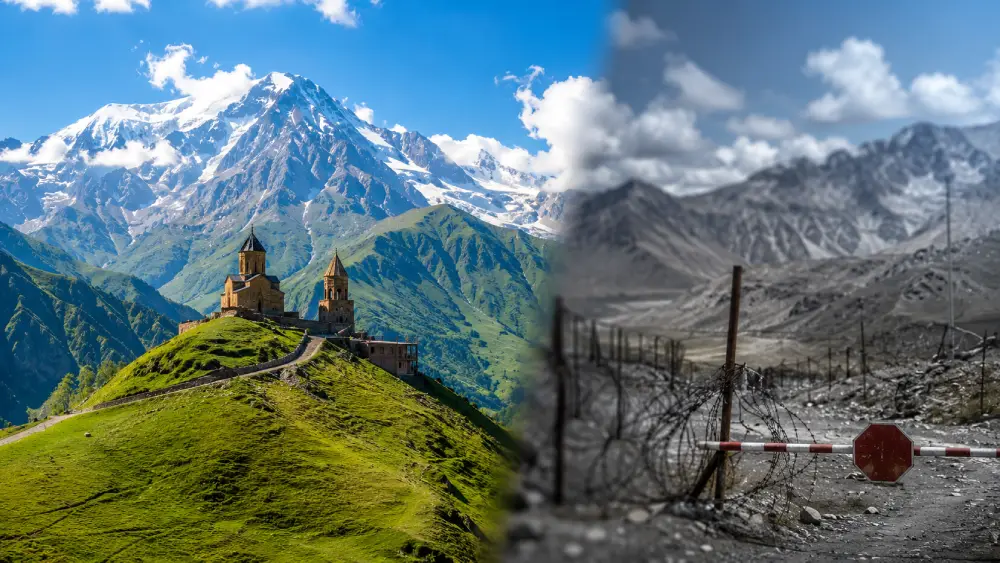
Georgia is a relatively small country, but the safety profile changes dramatically depending on where you travel. The capital, Tbilisi, is overwhelmingly safe. Neighborhoods like Vake, Vera, and the Old Town (Dzveli Tbilisi) are heavily policed, well-lit, and perfectly fine to walk around late at night.
Batumi, the summer party capital on the Black Sea, is also generally safe but sees a spike in petty theft and bar scams during the peak tourist season. Tourist hotspots like Kazbegi, Sighnaghi, and Kutaisi are incredibly peaceful. In these rural areas, the biggest threats are usually aggressive stray dogs or wandering livestock.
There are, however, two strict no-go zones in Georgia: South Ossetia and Abkhazia. These are breakaway regions heavily militarized and occupied by Russian forces. The administrative boundary lines are volatile, unmarked, and dangerous.
-
Never attempt to cross into South Ossetia or Abkhazia.
-
The boundary lines are heavily guarded, and there is a severe risk of unexploded landmines.
-
Entering these territories from the Russian side is considered illegal under Georgian law and will result in immediate arrest if you try to return to Georgian-controlled territory.
-
Consular assistance is entirely unavailable in these occupied regions.
Transportation Safety: Surviving the Georgian Roads
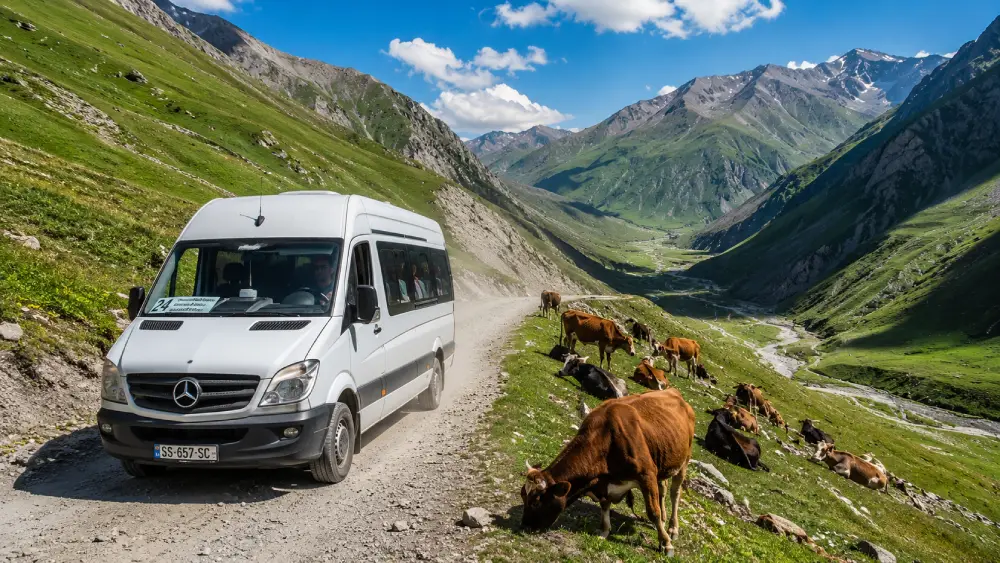
The single biggest threat to your safety in Georgia is not a person; it is the traffic. Georgian driving culture is notoriously aggressive and chaotic. Drivers routinely ignore speed limits, pass on blind mountain curves, and treat traffic lights as loose suggestions.
If you are planning to rent a car, be exceptionally careful. Mountain routes, especially the Abano Pass to Tusheti or the road to Ushguli in Svaneti, are considered some of the most dangerous roads in the world. They are unpaved, prone to landslides, and feature sheer cliff drops with zero guardrails.
-
Never drive in the mountains at night. There is no lighting, and wandering cows are a constant, invisible hazard on the roads.
-
Marshrutkas (shared minibuses) are the cheapest way to get around, but the drivers often speed recklessly. Sit near the back and buckle up if a seatbelt is somehow available.
-
Use ride-hailing apps in the cities. Taxis hailed off the street are notorious for ripping off tourists.
If you are trying to figure out how to order an Uber equivalent right when you land, you will need a solid connection. Read our breakdown on How to Get Internet in Georgia to ensure you aren't left stranded and forced to negotiate with predatory airport drivers.
Tourist Scams: The 2026 Threat Landscape
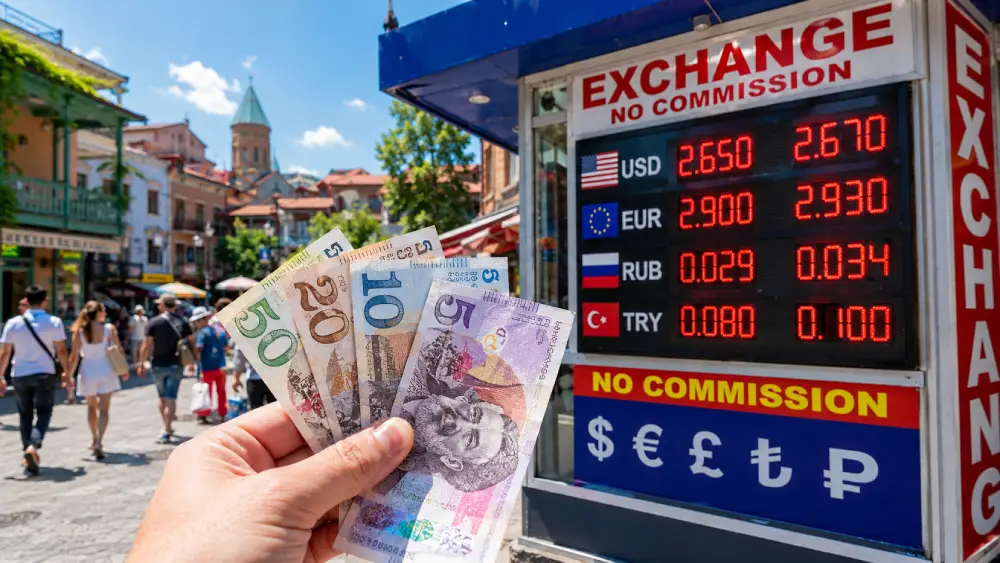
Because violent crime is low, criminals in Georgia focus on your wallet. Scams here have become quite refined in 2026, targeting newly arrived travelers who don't know the local exchange rate or customary prices.
The Airport Taxi Hustle is the most common initiation to Georgia. Unlicensed drivers will crowd you at the arrivals gate in Tbilisi or Kutaisi, grabbing your bags and offering a "metered" ride. They will then charge you ten times the normal rate, becoming highly aggressive if you refuse to pay. Always use the Bolt app instead.
Here are the other major scams to watch out for:
-
The Bar Scam: Friendly locals (often attractive women) invite you to a bar for a drink. You are handed a massive bill for hundreds of dollars, and intimidating bouncers force you to pay before leaving. Stick to well-reviewed establishments.
-
Currency Exchange Tricks: Kiosks in the Old Town often display highly misleading rates. They will post a favorable "sell" rate in massive font, while burying the terrible "buy" rate you are actually getting.
-
Child Beggar Distractions: Groups of aggressive child beggars might swarm you on Rustaveli Avenue. While grabs your legs or distracts you with a sign, another will try to pickpocket your phone or wallet.
-
Fake Tour Guides: Unofficial guides at major sites like the Svetitskhoveli Cathedral will start explaining the history without you asking, then demand an exorbitant tip at the end. Be firm and say no immediately.
Women’s Safety & Solo Travel
Georgia is generally an excellent and safe destination for solo female travelers. The country has a deep-rooted culture of hospitality, and locals will often go out of their way to help a solo traveler who looks lost. Catcalling is relatively uncommon compared to other parts of Europe.
However, Georgia is still a conservative, Orthodox Christian country. While Tbilisi is incredibly modern and progressive, rural areas hold tight to traditional gender roles. A mild "machismo" culture exists, and some men may interpret overly friendly behavior as romantic interest.
A firm, confident "no" is usually all it takes to deter unwanted attention. When visiting the many beautiful monasteries and churches across the country, strict dress codes apply. Women must cover their heads with a scarf and wear skirts below the knee. Men must wear long pants, and hats are strictly forbidden inside.
Nightlife in Tbilisi is vibrant and generally safe. The electronic music scene, spearheaded by clubs like Bassiani, is world-famous. Drink spiking is very rare, but you should always watch your drink and never accept beverages from strangers. Walk well-lit main streets or take a Bolt when heading home at 3:00 AM.
Health, Tap Water & Nature Risks
You can drink the tap water in Tbilisi. It originates from the mountains, is heavily treated, and is perfectly safe for consumption. However, in rural areas, smaller villages, and deep in the mountains, the plumbing infrastructure is older, and relying on bottled water is the smarter choice to avoid stomach bugs.
Georgia does not have major tropical disease risks. You do not need malaria pills, but ticks are a significant concern in the summer months, especially if you are hiking in Borjomi or Svaneti. Check yourself thoroughly after hiking, as tick-borne encephalitis and Lyme disease are present in the region.
Nature itself poses the biggest physical risk. The Caucasus Mountains are stunning but unforgiving. The weather can turn from blistering heat to freezing rain in a matter of hours. Always tell your guesthouse where you are hiking, and never attempt high-altitude trails without proper gear and offline maps.
Earthquakes are also a minor but persistent risk in the Caucasus region. While devastating quakes are rare, small tremors do happen. If you feel shaking, standard protocols apply: drop, cover, and hold on if you are indoors.
The Ultimate Safety Tool: Staying Connected
When navigating a country with an unfamiliar language and alphabet, your smartphone is your ultimate safety device. You need constant internet access to order secure rides on Bolt, translate Georgian menus to avoid food allergies, and use Google Maps to escape sketchy neighborhoods. Relying on public Wi-Fi is dangerous, as unencrypted networks are hotspots for data theft and hacking.
Need data in Georgia? Get an eSIM!
Choose the perfect data plan for your trip

Manage your eSIM in the app
Install, top up and track data.
The easiest way to secure your digital footprint is by installing a Georgia eSIM before your plane even touches the runway. This ensures you bypass the chaotic SIM card kiosks at the airport and have instant, encrypted 5G data from the moment you land. For a detailed breakdown of local network providers and data packages, check out our guide on the Best eSIM for Georgia.
Official Travel Advisories (2026 Update)
Global governments maintain updated safety warnings for their citizens. Here is the consensus for Georgia in 2026:
-
US State Department: Advises "Normal Precautions" for the majority of Georgia. However, they issue a strict "Do Not Travel" warning for the Russian-occupied regions of South Ossetia and Abkhazia due to crime, civil unrest, and landmines.
-
UK FCDO: Advises against all travel to Abkhazia and South Ossetia. They also warn British citizens to avoid all large political gatherings and protests in Tbilisi.
-
Canadian Government: Recommends taking normal security precautions in Georgia, but echoes the strict avoidance of the breakaway regions. They also highlight the high risks associated with winter mountain driving.
The Verdict: Is Georgia Safe?
Yes, Georgia is an incredibly safe destination for 2026, provided you respect the rugged environment and stay vigilant against common street hustles. The violent crime rate is wonderfully low, but the country demands a high level of situational awareness when it comes to traffic, politics, and your wallet. By using trusted ride-hailing apps, staying out of the occupied territories, and avoiding large demonstrations, you will experience the legendary Georgian hospitality exactly as it is meant to be enjoyed.
Your Golden Rules for 2026:
-
Never hail taxis off the street; exclusively use the Bolt app to avoid aggressive overcharging.
-
Avoid all political protests around Parliament on Rustaveli Avenue in Tbilisi.
-
Do not drive at night outside the cities; wandering livestock and poor roads make it incredibly dangerous.
-
Stay completely away from Abkhazia and South Ossetia; they are highly dangerous, militarized no-go zones.
-
Always have offline maps and immediate internet access upon arrival to navigate safely and translate the Georgian language.
Note: Travel safety situations can change rapidly. This information is accurate as of May 2026. Always exercise street smarts and consult official advisories before your trip.