Download the App and manage your eSIMs easily
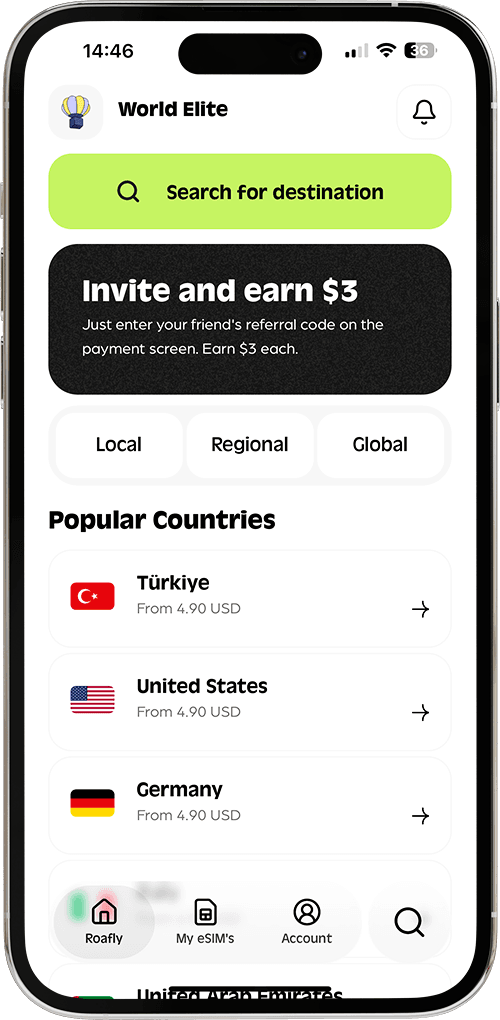
Create your order quickly
See your eSIM details
Track your remaining data
Download the App and manage your eSIMs easily
Create your order quickly
See your eSIM details
Track your remaining data
The nationwide FAA ground stop has ended, but US flight schedules are still recovering. As of 14:35 UTC on November 14, 2026—9:35 a.m. Eastern—weekend travelers should check their individual booking before leaving for the airport. Thousands of cancellations have continued into Saturday.

Roafly Editorial Team
Updated Nov 14, 2026
5 min read
Save 15% on your Roafly eSIM
Stay connected on your next trip. Use the code below at checkout.
View All DestinationsJump to section
👇Save 15% on your Roafly eSIM
Stay connected on your next trip. Use the code below at checkout.
View All Destinations
Manage your eSIM in the app
Install, top up and track data.
The immediate decision is whether your airline can still get you to your destination in time. Review its replacement itinerary before buying another ticket, accepting a voucher or canceling the rest of your trip.
The FAA halted departures across the United States on November 13 after communication problems affected multiple air traffic control centers. Transportation Secretary Sean Duffy said airspace reopened at 8:15 p.m. Eastern that evening, with departures resuming gradually.
The nationwide restriction is over. The remaining disruption concerns individual flights and airline schedules, including journeys to and from the United States and itineraries with US connections.
Air Canada’s recovery update confirms that flights may remain delayed or canceled after the ground stop ends. Airline recovery takes longer than lifting the restriction: aircraft and crews need to be available in the right places before a replacement schedule can operate.
Treat an airport’s reopening announcement as background. Your flight number, travel date and confirmed reservation determine whether you should travel to the terminal.
Open the airline’s app or booking-management page and review every flight in your itinerary. Your first flight may be operating even if the onward connection has changed.
Confirm the new arrival time. Check whether it still works for your connection, hotel check-in, cruise departure or other time-sensitive booking.
Look for a replacement booking. Read any acceptance deadline and confirm that all passengers traveling together are included.
Check the departure airport and terminal. Rebooking can change more than the departure time.
Save your records. Keep booking references, cancellation notices, baggage receipts and screenshots of the options offered.
If the flight remains scheduled, follow the airline’s check-in and airport-arrival instructions. Do not assume a delay extends the baggage-drop deadline.
Keep notifications switched on while you travel. If your home plan does not include US roaming, our guide to getting mobile internet in the USA explains the available connectivity options. Download your booking details as well, so you can show them without a connection.
Start inside the existing reservation. Air Canada is directing affected customers toward self-service booking tools while its contact centers handle high call volumes. If an acceptable replacement appears, review the whole journey before accepting it.
Some airlines have issued broader change waivers. At the time of checking, Delta’s air traffic control outage waiver covers systemwide travel from November 13 through November 15, 2026, for tickets issued on or before November 14. Eligible customers must rebook and begin their new journey by November 22.
Delta’s fare-difference waiver is subject to its cabin and booking conditions; changing the origin or destination can create an additional charge. Other airlines set their own dates and eligibility rules, so use the waiver attached to your carrier and booking.
Before buying a separate replacement ticket, establish what will happen to the original reservation. Get written approval if an airline offers to reimburse another booking rather than arranging it directly.
If both flights are on one ticket, ask the airline to review the itinerary through to your final destination. Confirm the new connection, any overnight stop and where your checked baggage will be delivered.
Separately booked flights need separate attention. Contact the onward airline before its departure, explain the disrupted inbound journey and ask what changes are available under your fare or its disruption policy. Do not assume the first airline has changed the second booking.
Nearby airports can offer alternatives, but compare the complete journey before accepting one. Factor in ground transport, baggage collection and the time needed to reach the new terminal. Our JFK, Newark and LaGuardia comparison helps with a New York airport change; the USA transport guide covers options for the onward journey.
Tell hotels, transfer providers and tour operators about your revised arrival rather than letting a missed check-in become a second problem.
Under US Department of Transportation refund rules, an airline cancellation entitles you to a refund if you decline the alternative travel and do not accept a voucher or other compensation instead. This applies regardless of the cancellation’s cause, including to nonrefundable tickets.
Significant delays or itinerary changes can also qualify. The thresholds include arriving at least three hours later on a domestic itinerary or six hours later on an international itinerary. Changed origin or destination airports and added connections can qualify too.
Decide whether you still want to travel before accepting credit. Taking the delayed or replacement flight generally removes the entitlement to a ticket refund for that disruption.
If you booked through an agency, identify the merchant of record—the company shown on your payment statement—to establish who handles the airfare refund.
Ticket refunds and help with an overnight stay are separate matters. US airline commitments to provide hotels or meals commonly depend on whether the disruption was within the airline’s control. The FAA outage does not automatically establish an entitlement to those benefits.
Ask what assistance applies to your specific cancellation before paying for a room or replacement transport. Keep itemized receipts and any written authorization. If you have travel insurance or card-based trip-delay cover, review its covered causes, waiting period and spending limits before making a claim.
Choose accommodation around a confirmed onward plan where possible. If the airline has not yet assigned a replacement flight, a flexible booking gives you more room to respond when a seat becomes available.
