

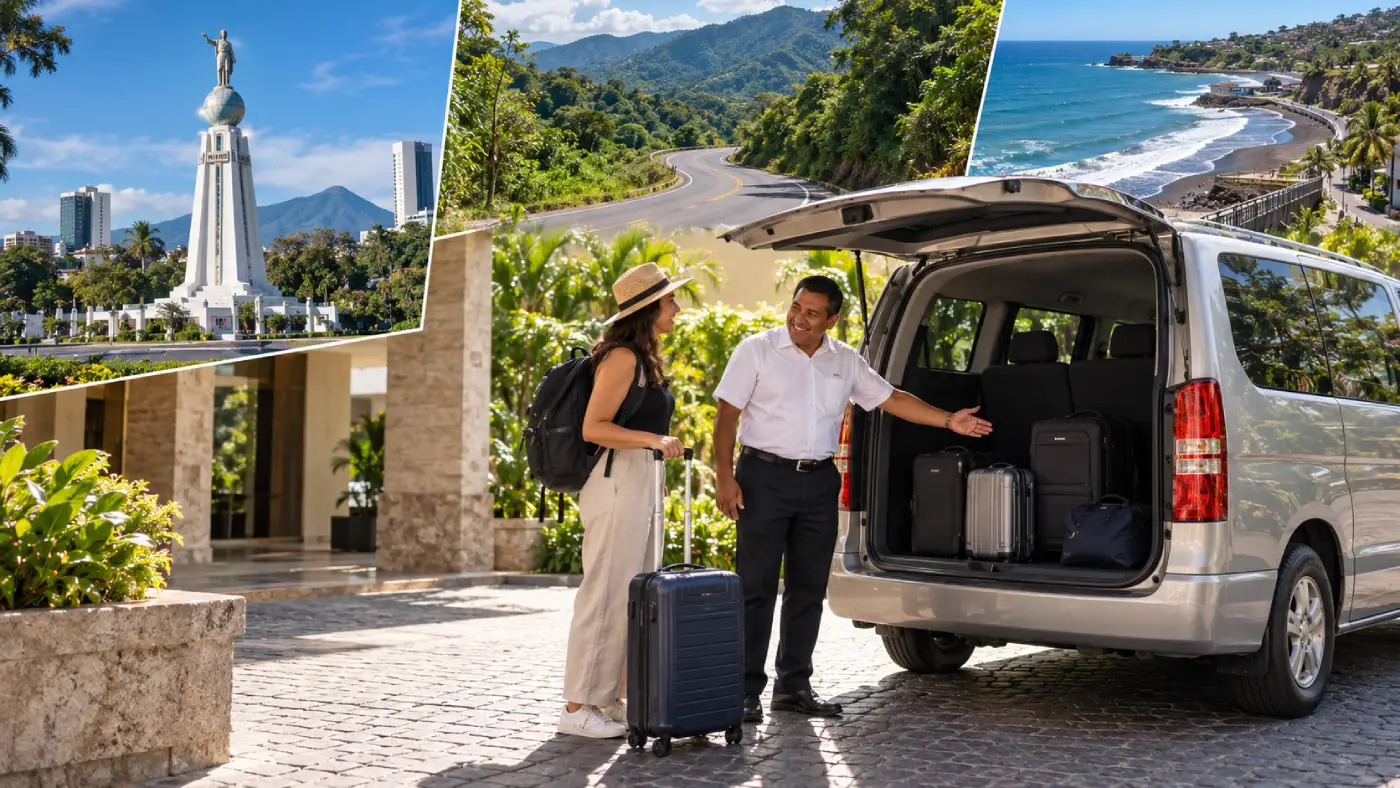

Start by arranging your arrival from El Salvador International Airport (SAL), then decide how you will reach your next base. Public buses need a separate judgment: their low fares do not remove the safety concerns identified in official travel advice.
Which transport option fits your trip?
Build your transport budget around complete journeys, including hotel pickup and the final connection. Paying less for the main ride may leave you arranging another vehicle from a terminal or roadside stop.
| Transport | Best use | Payment preparation | Main limitation |
|---|---|---|---|
| Uber | City journeys in San Salvador and airport trips when a driver is available | Check the fare and available payment method in the app | An outward ride does not guarantee a return pickup |
| Pre-booked taxi or private transfer | Airport arrivals, luggage-heavy trips and journeys to a specific property | Agree on the full price, payment method and waiting terms | Compare the total vehicle price with the number of passengers |
| Shared tourist shuttle | Moving between destinations served by a published route | Reserve a seat and check what the quoted price includes | Operating days, pickup points and luggage allowances vary |
| Public bus or minibus | Understanding the local transport network and its budget trade-offs | Carry small US-dollar denominations and confirm the fare | Official travel advice warns against public buses |
| Rental car | Several stops, flexible sightseeing and rural stays | Check the required card, deposit, insurance and documents | Driving conditions and rental restrictions need advance planning |
Couples and small groups should compare a private transfer with the combined price of individual shuttle seats. Confirm whether each quote is per person or per vehicle before deciding which costs less.
Arriving at SAL: book for your actual destination

Set your first accommodation as the destination when comparing airport transfers. If you are staying in El Tunco, El Zonte or another coastal community, ask for a direct quote there. Routing yourself through a San Salvador hotel or terminal adds another journey unless you intend to visit the city.
Pre-booked transport is particularly useful after a late arrival or when traveling with children, multiple bags or a surfboard. Give the operator your flight number and accommodation address, then confirm the meeting instructions, included waiting time and procedure for a delayed flight. Keep those details available offline.
Uber’s SAL pickup instructions direct passengers to request a ride and follow the pickup location shown in the app. Check those instructions after landing; a meeting point copied from an older airport guide may no longer match your booking. Driver availability and the fare need checking for your journey.
Hiring a car on arrival is another option. CEPA, the airport authority, identifies authorized rental companies after Customs. Reserve with the correct branch and confirm its collection hours, especially if your flight arrives late.
Using Uber and taxis in San Salvador
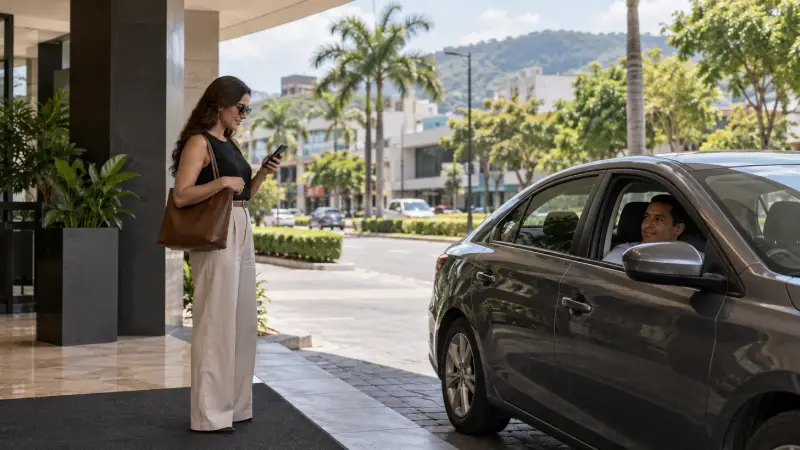
Uber operates in San Salvador. Enter the exact destination and check the pickup pin before requesting a car. Hotel entrances, shopping centers and large properties can have several access points, so a short message describing where you are waiting can help.
Check the registration plate and driver details against the booking before boarding. If you need room for large luggage, select an appropriate vehicle category when available or arrange the vehicle size with a transfer operator in advance.
Payment options depend on the account and location. Uber’s El Salvador instructions describe cash and digital payment options; use the methods actually displayed in your app. Set up your account before traveling and check that your intended payment method is available. Keep small US-dollar notes as a backup without assuming every driver can change a large bill.
Book taxis through a reputable company or ask your accommodation to arrange the vehicle. Agree on the price and destination before departure, including any extra stops or waiting time.
Reaching a beach, viewpoint or rural property by app does not establish that another driver will be nearby later. Arrange the return journey before leaving if pickup availability is important to your plans.
Public buses: understand the safety trade-off
Local buses and minibuses form part of El Salvador’s everyday transport system, but they should not be presented as an automatic tourist recommendation. The UK’s current travel advice warns against public buses because of petty crime and recommends reputable transport providers. It distinguishes these services from private intercity coaches, while noting that crime can also occur on the latter.
Traveling in daylight, keeping valuables concealed and checking the route do not cancel that warning. If you are comparing options mainly on cost, consider reducing the number of accommodation changes or sharing a pre-booked transfer with companions.
If you nevertheless intend to use local buses, ask your accommodation to verify the boarding point, destination, changes and last practical return service. Confirm the fare before boarding and carry small dollar denominations. Check how you would complete the journey if the bus stops short of your accommodation.
Keep broader questions about police checks, personal security and regional risks separate from the route decision; our guide to transport and travel safety in El Salvador covers that context.
Moving between Santa Ana, the highlands and the coast
Tourist shuttles and private transfers are useful to compare when changing bases. Read the individual route details before paying: “shared shuttle” does not always mean daily departures or pickup at every hotel.
Santa Ana and the western highlands
Decide whether you need transport to your next accommodation or a vehicle for sightseeing along the way. Reaching Santa Ana, visiting several Ruta de las Flores towns and stopping at a rural property are different bookings.
Ask whether a quote covers the transfer or also stops and waiting time. If you want to explore several places before checking in, a private driver or rental car may fit the day better than a seat on a scheduled shuttle.
Ruta de las Flores to the surf coast
Published shuttle routes can connect the highlands with beach destinations. For example, Gekko Trails Explorer lists a shared service from Ruta de las Flores to the coast, with departures from Ataco and Juayúa and coastal destinations including El Tunco and El Zonte.
The listing specifies selected operating days and meeting-point pickup. Check availability for your date, the exact coastal stop and how you will reach your accommodation from there. Do not assume a booking labeled “El Tunco” includes a property farther along the coast.
Before reserving any shuttle, confirm:
-
The collection point and final drop-off address.
-
Whether the departure is confirmed or requires further approval.
-
The bag allowance and any surfboard or oversized-luggage charge.
-
Whether the journey is direct or includes vehicle changes.
-
Cancellation terms and a contact for pickup problems.
Wheelchair users and passengers who need step-free boarding should request details about the actual vehicle and assistance available. Families should confirm child-seat availability when booking a private vehicle.
Longer journeys and travel
Apply the same checks to destinations farther east: book to the property or a clearly identified meeting point and arrange the final connection before arrival.
International coaches serve a different purpose from local buses and domestic tourist shuttles. If you are continuing to another Central American country, Tica Bus provides digital booking and ticket information. Check the departure terminal, border-document requirements and baggage conditions for the specific journey. Allow a separate margin for border procedures when planning connections.
Should you rent a car in El Salvador?
Renting is worth comparing when your itinerary includes frequent stops, several travelers or accommodation away from a town center. If you mainly want San Salvador plus beach stay, price the city rides and transfers first; the convenience of a car depends on how much you will actually use it.
Compare the complete rental cost, including required protection, deposit, extra-driver charges, fuel terms and any-way fee. The lowest displayed daily rate may not include everything needed to collect the vehicle.
Alamo’s SAL branch conditions, for example, require a passport and a credit card in the renter’s name and state that debit cards and cash are not accepted at that location. Treat this as a branch-specific requirement and check your chosen supplier before paying.
Bring your original valid driving license. Ask the rental branch what additional documentation it requires for your license’s issuing country and alphabet. Legal permission to drive and a rental company’s document or translation requirements are separate checks; an international driving permit does not replace your original license.
Confirm any cross-border plans in writing. Permission to drive the rental car within El Salvador does not automatically include taking it into Guatemala, Honduras or another country.
Rural accommodation also deserves a practical access check. Ask the property whether the approach road suits an ordinary car in your travel season. Canada’s road-travel advice for El Salvador notes that some rural roads are unpaved and certain areas require four-wheel drive. Ask about the specific approach rather than choosing a vehicle solely from the country itinerary.
Leave room for rain and daytime travel
Plan intercity driving for daylight and avoid building a day around the fastest journey time shown on a map. Traffic, pickup stops and access roads can change how long a transfer takes. Give your operator the flight check-in deadline when arranging an airport return and ask for an appropriate collection time.
Canada’s travel advice identifies May to November as the rainy season and warns that flooding can disrupt overland travel or make roads impassable. Check local conditions before leaving, particularly for rural stays, and allow flexibility when severe weather is forecast.
Use our guide to El Salvador’s rainy and dry seasons when deciding how much of your itinerary should depend on driving between outdoor stops.
Prepare your phone and pickup details before leaving
Save accommodation addresses, map pins, booking confirmations and driver contacts before setting out. Download offline maps for the areas you will visit, and keep your phone charged for pickup messages or a change of plans.
If you plan to use mobile data for maps and driver messages, compare El Salvador eSIM plans for a compatible, carrier-unlocked phone. Roafly’s country plans are data-only, so keep access to your regular number if an account needs SMS verification. Set up ride-hailing accounts before departure where possible.
Our guide to internet options in El Salvador explains the wider connectivity choices. Before each transfer, make sure you know where to meet, how to pay and how to contact the operator if either of you is delayed.