

'/%3e%3cuse xlink:href='%23a' transform='rotate(23.036 .093 25.536)'/%3e%3cuse xlink:href='%23a' transform='rotate(45.87 1.273 16.18)'/%3e%3cuse xlink:href='%23a' transform='rotate(69.945 .996 12.078)'/%3e%3cuse xlink:href='%23a' transform='rotate(20.66 -19.689 31.932)'/%3e%3c/svg%3e)
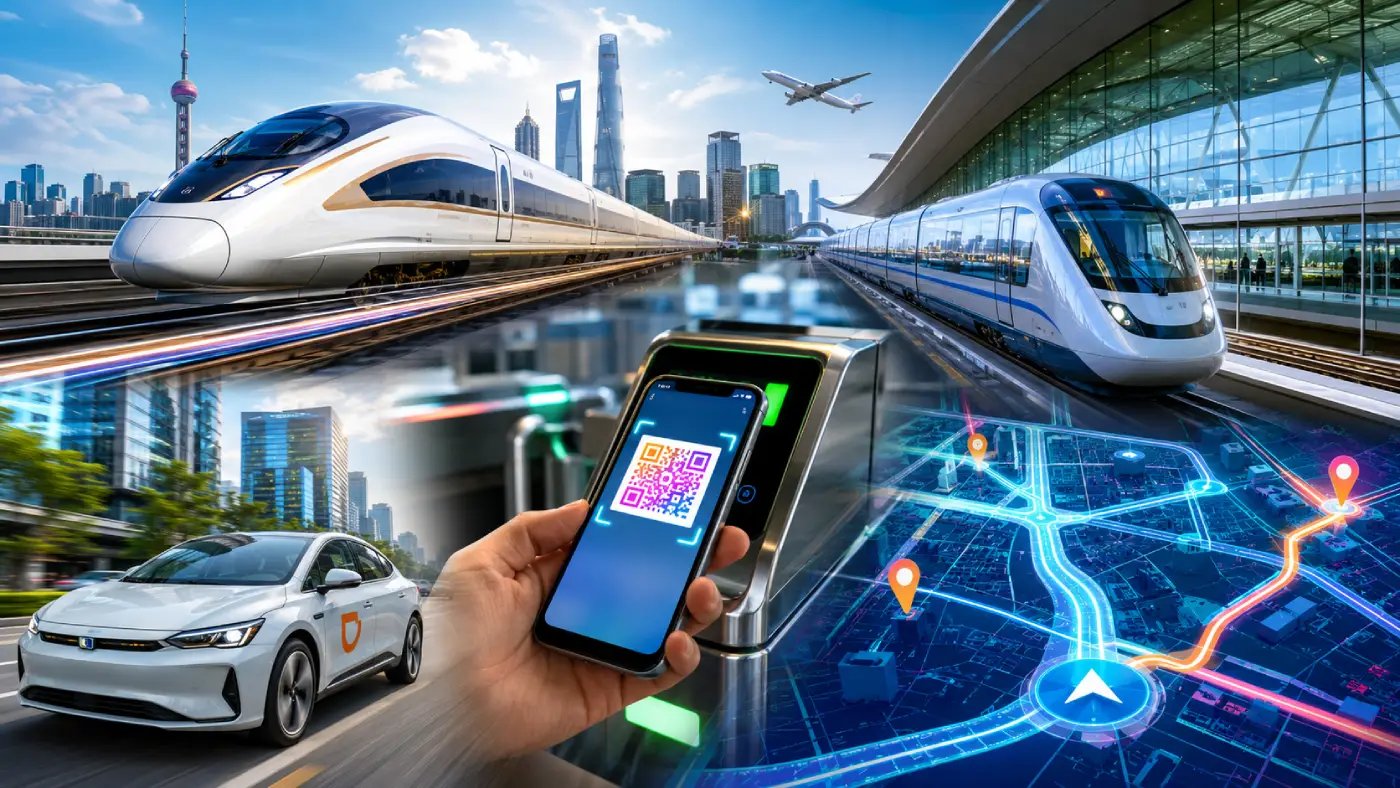
Navigating transport in China as an international traveler is easier than ever, yet dramatically different from almost anywhere else in the world. Digital payments rule every transaction, paper tickets have been entirely eliminated in favor of passport-linked electronic passes, and physical cash is rarely accepted by automated turnstiles or bus drivers.
Whether you are planning your trip around peak seasonal weather in our Best Time to Visit China: Weather, Seasons & Crowds guide or hopping between mega-cities, understanding how the country's transit ecosystem connects will make or break your journey. you set up your smartphone with the right local mini-programs and digital wallets, you can move through China’s massive transport hubs faster and more efficiently than in almost any other country on Earth.
The Basics: Understanding the Network
China operates of the world's most extensive and technologically advanced public transit networks. Every major metropolis features an expansive metro system with modern trains, crystal-clear bilingual signage in English and Mandarin, and rigorous security checkpoints at every entrance.
City transport is divided into three primary layers: urban metro rail networks, municipal bus lines, and point-to-point ride-hailing services. While metros and buses are operated by municipal transit authorities, they are tied into unified national digital platforms.
-
Urban Metros: Fast, incredibly clean, and running every 2 to 4 minutes during peak hours. Stations feature full platform screen doors and luggage security scanners at all entry gates.
-
Municipal Buses: Ultra-cheap local transport, almost entirely converted to quiet electric vehicles. Route maps inside stops use Chinese characters with pinyin romanization, though English audio announcements vary by city.
-
Inter-City Rail: China Railway operates a vast high-speed rail (HSR) grid connecting virtually every primary and secondary city. High-speed trains are designated with G (fastest, up to 350 km/h), D (fast, up to 250 km/h), or C (inter-city commuter) prefixes.
Because every city manages its own transit operator, tickets are not interchangeable between different cities unless you use unified mobile payment mini-programs.
Payment & Tickets: Mobile Apps vs. Physical Cards
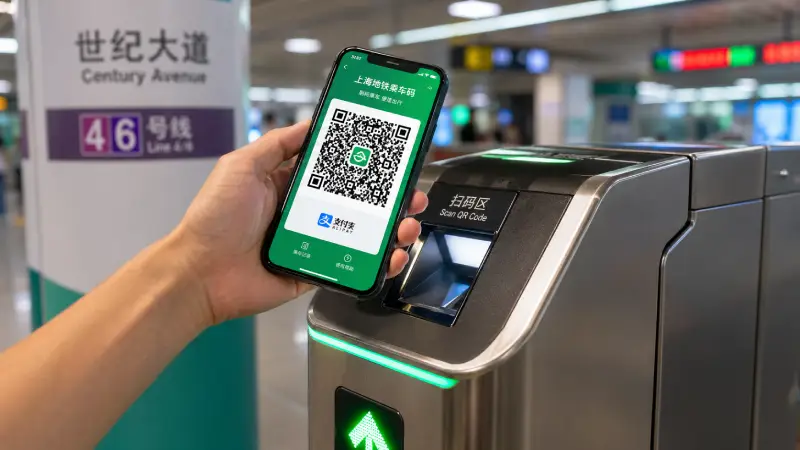
The days of needing a physical Chinese transit card or queuing up at cash ticket machines are officially over. Mobile payment platforms like Alipay and WeChat Pay allow international travelers to link foreign Visa, Mastercard, and American Express cards directly to their accounts.
Physical cash is technically legal tender, but ticket booths in metro stations often do not carry change, and automated ticket vending machines may refuse cash altogether. Tapping a physical contactless credit card at metro turnstiles is supported at select major hubs like Beijing and Shanghai, and usually incurs higher transaction fees than mobile apps.
| Payment Method | Foreign Card Support | Best Used For |
| Alipay Transport | Yes (Visa, Mastercard, Amex, JCB) | Metro turnstiles, city buses, DiDi rides |
| WeChat Pay | Yes (Visa, Mastercard, Amex) | DiDi rides, high-speed rail, regional buses |
| Physical Cash | N/A (RMB Cash) | Emergency fallback (often no change) |
Setting up your digital transit pass before setting foot in the country is crucial. Through Alipay's Transport tab, you simply select your current city (e.g., Beijing, Shanghai, Guangzhou, Shenzhen) and activate that city’s dynamic QR code.
-
Alipay Transport Code: Generate a city-specific QR code in the app, scan it at the optical reader on the metro turnstile or bus scanner upon entering, and scan again when exiting. The fare is automatically deducted from your linked international credit card.
-
Transaction Fee Waivers: Both Alipay and WeChat Pay waive the standard 3% foreign card processing fee for single transactions under 200 RMB. Since almost all urban metro and bus rides cost under 10 RMB, you will rarely pay processing fees for city transit.
-
Digital Transit Wallet Traps: Avoid trying to purchase physical rechargeable smart cards (like Shanghai's Jiaotong Card or Beijing's Yikatong) at airport counters unless you plan on turning off your smartphone completely. Unused balances on physical cards require complex refund procedures at specific service windows that often require Chinese bank accounts.
Before arriving at customs, ensure you review our China Airport Customs Rules: Alcohol, Cigarettes & Strict Bans guide to avoid delays when carrying restricted goods through transit security hubs.
Airport Transfers: Getting to the City Safely
China’s major international entry points—such as Shanghai Pudong (PVG), Beijing Capital (PEK), Beijing Daxing (PKX), Guangzhou Baiyun (CAN), and Shenzhen Bao'an (SZX)—are directly connected to downtown areas via dedicated express trains and metro lines.
| Airport & City | Best Transit Option | Travel Time | Estimated Cost |
| Shanghai Pudong (PVG) | Maglev / Metro Line 2 | 8 min / 45 min | 50 RMB / 7 RMB |
| Beijing Daxing (PKX) | Daxing Airport Express | 20 min | 35 RMB |
| Guangzhou Baiyun (CAN) | Metro Line 3 | 35–45 min | 7–9 RMB |
| Shenzhen Bao'an (SZX) | Metro Line 11 | 30 min | 7–8 RMB |
Shanghai Pudong International Airport (PVG) Transfers
-
Shanghai Maglev: Reaches top speeds of up to 430 km/h, taking you to Longyang Road Metro Station in just 8 minutes for 50 RMB (40 RMB if you show a same-day flight ticket). From Longyang Road, transfer to Metro Line 2 or Line 7 to reach central districts like the Bund or Nanjing Road.
-
Metro Line 2: Connects directly from PVG through central Shanghai to Hongqiao Airport/Railway Station. It takes about 45–60 minutes to reach downtown and costs roughly 7 RMB.
Avoiding Airport Taxi Scams
Always skip generic touts who approach you inside the arrival terminal offering "cheap private cars" or "official airport transfers". These are unlicensed drivers who routinely charge up to four times the meter rate or add fake highway toll fees.
Follow the official airport signage directly to the designated Taxi Stand or use your phone to hail a ride via DiDi. Official airport taxis use strict meters, and standard fares into city centers generally range between 120 RMB and 250 RMB depending on traffic and distance.
Shifting Cities: Inter-City Trains, Shuttles & Domestic Flights
Moving between major cities in China is fastest and most convenient via high-speed rail. Trains run with near-perfect punctuality, offering wide seats, power outlets, and generous luggage rack spaces.
| Airport & City | Best Transit Option | Travel Time | Estimated Cost |
| Shanghai Pudong (PVG) | Maglev / Metro Line 2 | 8 min / 45 min | 50 RMB / 7 RMB |
| Beijing Daxing (PKX) | Daxing Airport Express | 20 min | 35 RMB |
| Guangzhou Baiyun (CAN) | Metro Line 3 | 35–45 min | 7–9 RMB |
| Shenzhen Bao'an (SZX) | Metro Line 11 | 30 min | 7–8 RMB |
Booking High-Speed Train Tickets
All train travel in China requires real-name passport registration. You do not receive a physical paper ticket; your passport itself acts as your electronic boarding pass at station turnstiles.
-
China Railway 12306 App: The official national rail operator app has a fully functional English interface. You can register with your foreign passport details, verify your identity, and book tickets at official base prices without middleman booking fees.
-
Third-Party Platforms: Platforms like Trip.com offer convenient booking in multiple currencies with slightly more intuitive search filters for a small service fee.
-
Boarding Process: Arrive at the station at least 45 to 60 minutes before departure. High-speed rail stations function like major airports, requiring security bag checks and passport verification. Scan your physical passport at the automated glass gates (or proceed to the manual inspection lane marked for passports) to access the platform.
Luggage & Duty-Free Rules
Standard high-speed trains enforce a personal luggage weight limit of 20 kg per adult passenger, with maximum combined dimensions (length + width + height) not exceeding 130 cm.
If you are purchasing goods during your travel, remember to review our China Tax-Free Rules guide to keep tax invoices organized before exiting the country.
Taxis, Ride-Sharing & Local Driving Laws
Navigating road travel in China requires knowing which apps work best and what security protocols apply to personal vehicles.
Ride-Sharing: The Dominance of DiDi
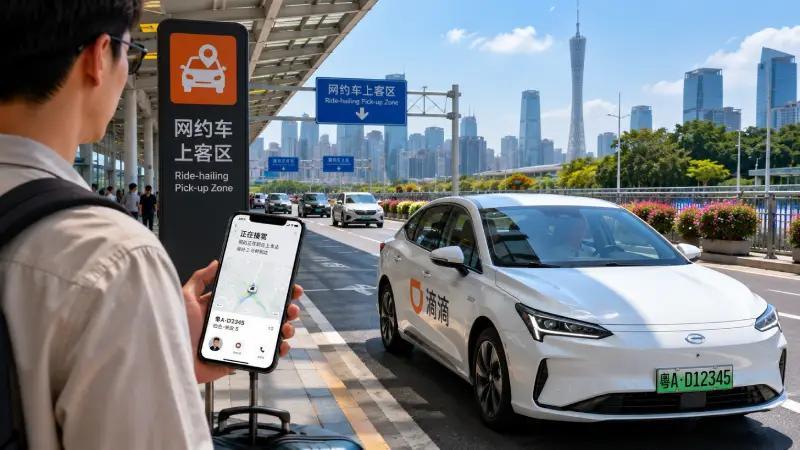
Uber does not operate directly in China, having sold its Chinese operations to DiDi. However, using DiDi as an international visitor is remarkably smooth because the platform is integrated natively into both WeChat and Alipay as a mini-program, as well as via a standalone English app.
-
No Local Number Required: You can hail DiDi rides using an international phone number.
-
In-App Translation: Destination addresses and real-time chat messages between you and the driver are automatically translated within the app interface.
-
Upfront Pricing: Fares are calculated electronically and charged directly to your linked international credit card via Alipay or WeChat Pay when the ride completes.
Traditional Street-Hail Taxis
If you hail a traditional street-side taxi (usually painted in bright municipal colors specific to each city), always ensure the driver turns on the meter ("dǎ biǎo").
Taxis do not accept foreign credit cards directly via terminal readers. Payment must be made by scanning the driver's printed Alipay/WeChat QR code hanging on the dashboard or paying with exact cash.
Driving & Scooter Rentals: Strict Prohibitions
Foreigners cannot legally drive cars or operate motor scooters in mainland China using an International Driving Permit (IDP) alone.
China is not a signatory to the 1949 Geneva Convention on Road Traffic, meaning international driving licenses are completely invalid. Driving without a recognized Chinese driving license can lead to severe legal penalties and detention.
To stay completely clear of legal trouble, read our comprehensive China Tourist Bans & Laws resource before organizing your itinerary.
Transit Etiquette & Unwritten Rules
Public transportation in China is governed by strict social harmony rules and safety standards that are heavily enforced by station staff and conductors.
-
Quiet Carriage Culture: Talking loudly on phones, using speakerphone for videos, or playing mobile games without headphones is strictly forbidden on high-speed trains and urban metros.
-
Eating and Drinking: Consuming food or sugary drinks inside subway cars and platforms is illegal in almost every Chinese city and carries immediate fines. On long-distance high-speed trains, eating at your seat is permitted, and hot water dispensers are provided in every carriage for instant noodles or tea.
-
Security Screening Routine: Every single entry into a metro station or train terminal involves putting all backpacks, handbags, and luggage through X-ray machines. Keep metal objects out of your pockets to move quickly through body scanners.
-
Backpack Positioning: During rush hour, carry your backpack in front of your chest or lower it to your feet to avoid bumping into fellow commuters in packed cars.
Checking safety standards and surveillance customs in our Is China Safe to Travel? Guide to Scams, Surveillance & Safety guide will help you understand station monitoring protocols and keep your belongings secure.
Navigation Apps & The Best Route Tools
Standard mapping applications that tourists rely on in Western countries often hit significant hurdles in China due to government mapping offset standards (GCJ-02 coordinate system) and firewall restrictions.
| App Name | English Support | Best Functionality |
| Amap (Gaode Ditu) | Very Limited | Most accurate real-time transit & walking routes |
| Apple Maps | Full | Excellent turn-by-turn navigation on iOS |
| Baidu Maps | Chinese | Comprehensive visual station layouts |
| Google Maps | Full (Requires VPN) | Outdated transit schedules; location offset issues |
Apple Maps vs. Amap
For iPhone users, Apple Maps is by far the easiest and most reliable tool. When connected to local Chinese networks, Apple Maps automatically switches to localized partner data, displaying accurate, real-time subway line routes, platform exit numbers, and walking directions in clear English without location offset issues.
Amap (Gaode) is the undisputed king of precision mapping inside China. While the interface is primarily in Chinese, typing English hotel names or destination keywords into the search bar usually yields the exact metro exit numbers (e.g., "Exit C2"). This detail is essential for navigating massive interchange stations like People's Square in Shanghai or Xizhimen in Beijing.
Avoiding Google Maps Pitfalls
Avoid relying exclusively on Google Maps. Due to the lack of updated local mapping licenses, Google Maps often displays inaccurate subway station entrance locations and suffers from GPS coordinate drifts that show your location hundreds of meters away from where you actually stand.
To understand how software firewalls impact navigation apps and search connectivity, review our detailed guide on How to Get Internet in China: eSIM, Local SIM, Airport SIM, and What Tourists Need.
Staying Connected: Your Ultimate Navigation Tool
Maintaining uninterrupted high-speed mobile data is not a luxury in China—it is an absolute survival requirement for transportation. You will need instant mobile internet to scan dynamic QR codes at metro turnstiles, call a DiDi driver when exiting a crowded train terminal, reload your mobile transit wallets, and translate station signs in real time.
Need data in China? Get an eSIM!
Choose the perfect data plan for your trip

Manage your eSIM in the app
Install, top up and track data.
Traditional local SIM cards purchased at Chinese airports require physical passport registration, long wait times, and subject your mobile traffic to the Great Firewall, blocking critical mapping services and international communication apps.
An eSIM bypasses these hurdles completely. By activating a China eSIM prior to landing, your smartphone connects directly to local cellular towers via international roaming agreements. This grants you instant access to raw mobile data with unblocked internet routing right out of the terminal.
For a full breakdown of data plans, regional coverage, and setup instructions, consult our dedicated guide on the Best eSIM for China.
Summary Checklist: Transport Tips
-
Set Up Alipay & WeChat Pay Early: Link your foreign Visa, Mastercard, or Amex credit cards to both platforms at home and complete passport identity verification before departure.
-
Activate Alipay's City Transport Codes: Switch the city selection inside Alipay's "Transport" tab upon arrival in each new destination to generate instant metro and bus QR codes.
-
Use Passport as Train Tickets: Book high-speed train tickets on the 12306 app or Trip.com using your exact passport details, and scan your physical passport directly at station entry gates.
-
Rely on DiDi for Point-to-Point Rides: Hail rides directly inside Alipay or WeChat to avoid language barriers, ensure transparent pricing, and pay automatically via linked cards.
-
Stick to Apple Maps or Amap: Avoid Google Maps due to GPS coordinate offsets; rely on Apple Maps or Amap for real-time metro platform exit numbers.
-
Never Drive Without a Local License: Do not attempt to rent cars or electric motor scooters using an International Driving Permit.