

'/%3e%3cuse xlink:href='%23a' transform='rotate(23.036 .093 25.536)'/%3e%3cuse xlink:href='%23a' transform='rotate(45.87 1.273 16.18)'/%3e%3cuse xlink:href='%23a' transform='rotate(69.945 .996 12.078)'/%3e%3cuse xlink:href='%23a' transform='rotate(20.66 -19.689 31.932)'/%3e%3c/svg%3e)
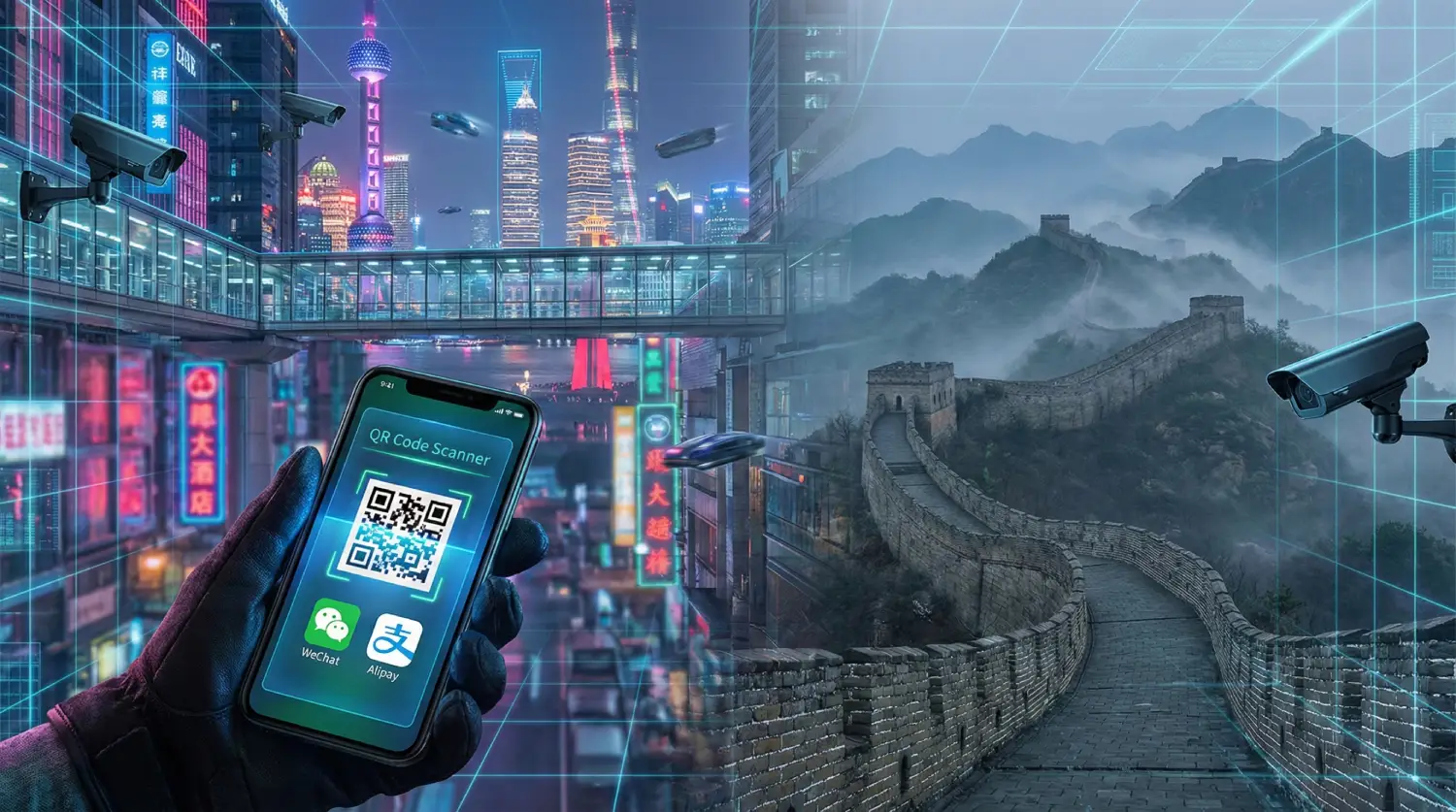
For travelers in 2026, the question "Is China safe?" requires a nuanced answer. Are you safe from violent crime? Absolutely. Are you safe from getting stranded without money because you don't have WeChat Pay? No. Are you safe from digital surveillance? It’s complicated.
China is not dangerous, but it is demanding. It rewards the prepared and punishes the spontaneous.
This comprehensive guide is your survival manual. We will strip away the Western media fear-mongering and tell you the real risks: from the infamous "Tea House Scam" in Beijing to the stomach-churning "Laduzi" (food poisoning), and why your phone is your lifeline.
The Short Answer: Is It Dangerous? (TL;DR)
Statistically, China is of the safest countries in the world for physical safety. Violent crime against foreigners is virtually non-existent. The massive surveillance network and strict gun laws act as powerful deterrents.
However, safety in China is about logistics and digital access:
-
Physical Safety: Extremely High. You are safer here than in London, Paris, or New York.
-
Digital Safety: Low. The "Great Firewall" blocks Western apps. Using public Wi-Fi is monitored.
-
The Real Risks: Scams targeting tourists, traffic accidents, and strict legal penalties for drug use.
The Golden Rule: In China, if your phone dies or you lose internet access, you are helpless. You cannot pay for food, hail a taxi, or translate signs. Connectivity is safety.
1. Crime & Surveillance: The "Big Brother" Effect
China’s reputation for surveillance is well-earned. In major cities like Beijing, Shanghai, and Shenzhen, CCTV cameras are everywhere—on street corners, in taxis, and in hotel lobbies.
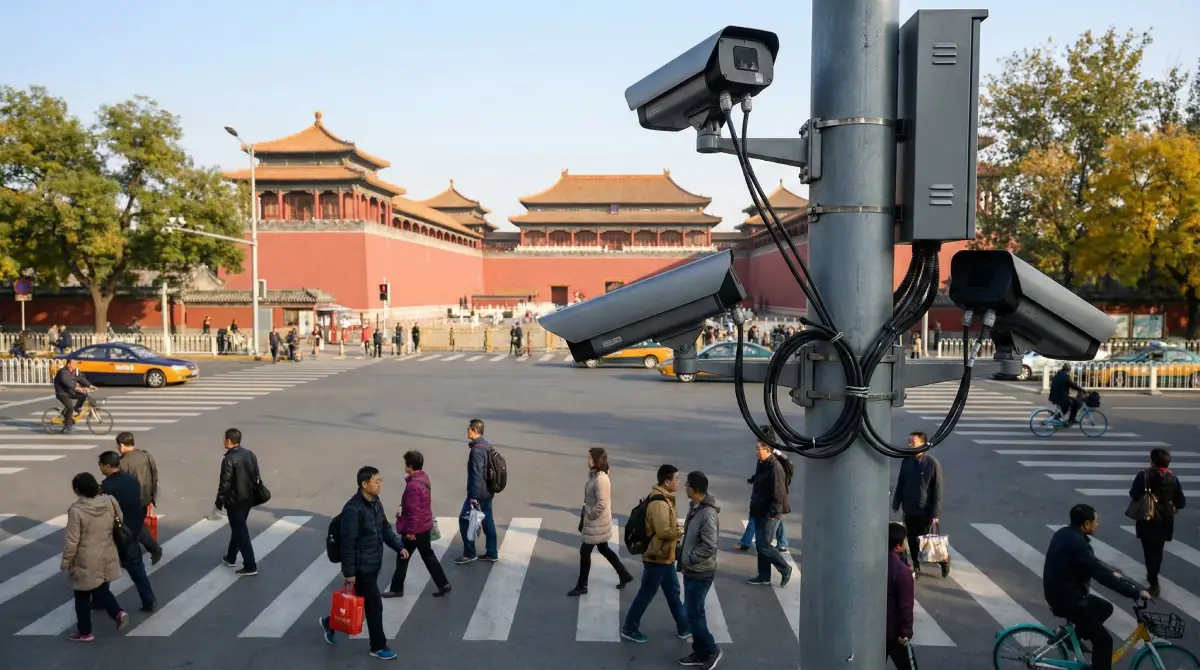
Does this affect tourists? For the average traveler, this surveillance actually works in your favor.
-
Theft is Dying: Pickpocketing has plummeted. Why? Because cash is dead. Thieves know nobody carries wallets anymore; everyone pays with their phones.
-
Violent Crime: Assaults on foreigners are incredibly rare. The penalties are severe, and the likelihood of being caught on camera is 100%.
The "Police Registration" Rule: By law, foreigners must register with the police within 24 hours of arrival.
-
Hotels: If you stay in a hotel, they do this for you automatically.
-
Airbnb/Friends: If you stay in a private apartment, you must go to the local police station to register. Failing to do so can result in fines or issues when leaving the country.
2. The Digital Wall: Why Your Phone Will Stop Working
This is the #1 safety issue for travelers. When you land in China, WhatsApp, Google Maps, Gmail, Instagram, Facebook, and YouTube will NOT work.
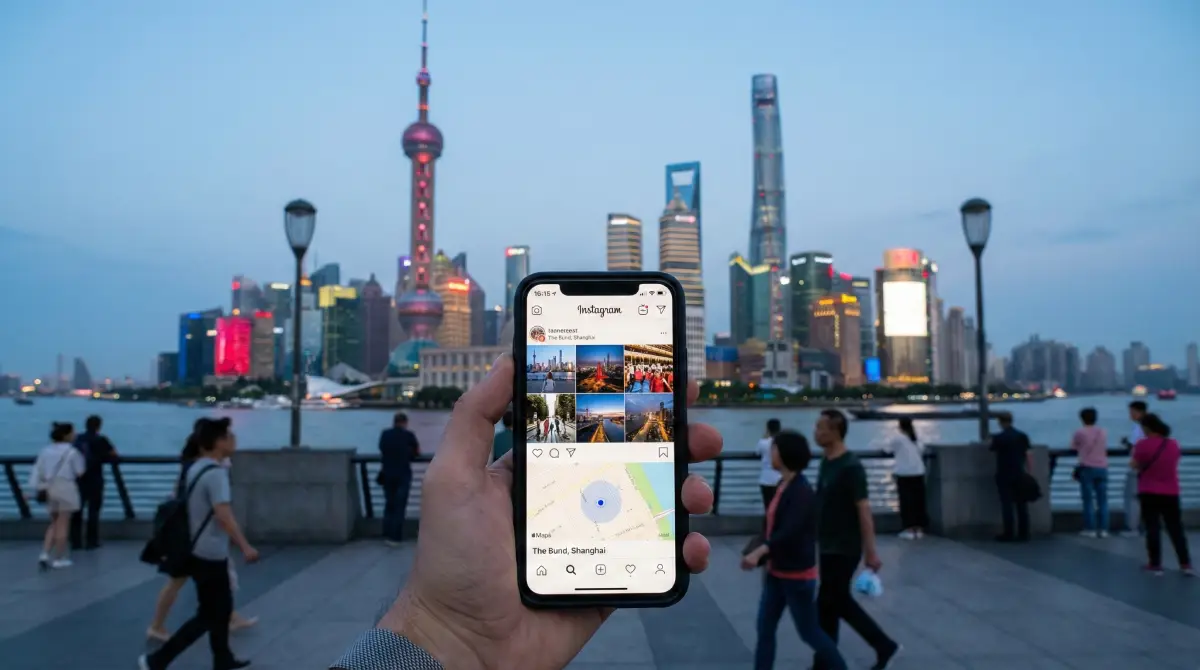
Imagine getting lost in a city where nobody speaks English, and you can't open Google Maps or message your friend on WhatsApp. That is a safety risk.
VPN vs. eSIM:
-
VPNs: Many travelers try to use VPN apps. However, the Chinese government frequently blocks VPN servers, especially during political events ("Sensitive Times"). A VPN that worked yesterday might not work today.
-
The Roaming/eSIM Solution: Foreign SIM cards roaming in China generally bypass the Great Firewall legally. This means your data traffic is routed through a foreign server (e.g., Hong Kong or Singapore), allowing you to access unrestricted internet.
📲 Critical Step: Before you board the plane, you must set this up. Do not rely on finding a solution after landing. Read our guide on Does WhatsApp Work in China? How to Use It While Traveling to understand the technical workaround.
Need data in China? Get an eSIM!
Choose the perfect data plan for your trip

Manage your eSIM in the app
Install, top up and track data.
3. Scams Targeting Tourists: The Classics
While you won't get mugged at knifepoint, you might get charmed out of $500. Chinese scammers are sophisticated, friendly, and speak excellent English.

The "Tea House" Scam (Beijing & Shanghai)
This is the most famous scam in China.
-
The Scenario: You are near a tourist site (like Tiananmen Square or the Bund). A friendly pair of "students" approaches you. They want to practice their English or show you a traditional tea ceremony.
-
The Trap: You go to a nearby tea house. You drink some tea, have a nice chat. Then the bill arrives: $300 USD for a pot of tea.
-
The Outcome: Huge intimidation tactics if you refuse to pay.
-
Defense: Never follow strangers to a secondary location. If you want tea, you pick the place.
The "Art Gallery" Scam
Similar to the Tea House scam, but they take you to a "student art exhibition." You are pressured into buying cheap prints for hundreds of dollars, believing they are valuable investments.
The "Black Taxi" (Hei Che)
Unmarked cars waiting at airports or train stations.
-
The Risk: They rig the meter or demand 5x the normal price halfway through the journey.
-
Defense: use the official taxi queue or the Didi app (Chinese Uber).
4. Transportation Safety: The Real Danger Zone
The biggest threat to your physical safety in China is crossing the street.
-
Right on Red: In China, cars can turn right on a red light, and they often do not stop for pedestrians.
-
Silent Killers: Most scooters and mopeds are electric. They are completely silent and often drive on sidewalks. Always look both ways, even on the pavement.
-
Didi Chuxing: This is the Chinese version of Uber. It is safer than street taxis because the ride is tracked, the price is fixed, and there is an English interface.
5. Health & Food Safety: Avoiding "Laduzi"
"Laduzi" is the Chinese word for diarrhea. It is a rite of passage for many travelers, but it can be avoided.
-
Tap Water: NEVER drink the tap water. It contains heavy metals and bacteria not suitable for drinking, even if locals boil it. Stick to bottled water (check the seal).
-
Street Food: It is generally safe if it is cooked in front of you. High heat kills bacteria. Avoid cold dishes or cut fruit on the street.
-
Hospitals: Healthcare in major cities (Beijing, Shanghai) is world-class, especially in "International Wings" of hospitals. In rural areas, it is basic.
6. The "Cashless" Trap: A Survival Issue
China has skipped credit cards and gone straight to mobile payments. Visa and Mastercard are accepted almost nowhere—not in taxis, not in restaurants, not at 7-Eleven. Cash is often refused or drivers won't have change.

If you do not have Alipay or WeChat Pay set up on your phone, you will struggle to function.
-
Good News (2026): Both apps now allow you to link a foreign credit card.
-
The Risk: If your phone battery dies, you have no money. Always carry a power bank.
7. Solo Female Travel in China
China is incredibly safe for women traveling alone.
-
Harassment: Catcalling and aggressive machismo are very rare compared to Europe or South America.
-
Staring: You will be stared at, especially if you have blonde/curly hair or fair skin. Locals might take photos of you without asking. This is usually out of curiosity, not malice.
-
Night Safety: Walking alone at night is generally safe in cities, thanks to streetlights and cameras.
8. Regional Sensitivity: Xinjiang & Tibet
China is vast, and safety rules change in autonomous regions.
-
Tibet: You cannot travel here independently. You generally need a special permit (Tibet Travel Permit) and must be part of an organized tour.
-
Xinjiang: While open to tourists, security is extremely tight. Expect frequent police checkpoints where your phone and passport will be checked. It is not "unsafe," but it is stressful and time-consuming.
9. Connectivity: The Ultimate Safety Net
We cannot stress this enough: In China, offline = helpless. You need internet to translate menus (Google Lens/Translate), to pay for things (Alipay), and to navigate (Apple Maps or Gaode Maps).
Need data in China? Get an eSIM!
Choose the perfect data plan for your trip
Manage your eSIM in the app
Install, top up and track data.
Don't buy a local SIM at a street shop. Local SIM cards require facial scans and passport registration, and they come with the firewall installed (meaning no Google/Instagram).
-
The Smart Move: Buy a China eSIM before you fly.
-
It gives you data immediately upon landing.
-
Crucially: Most travel eSIMs route traffic through Hong Kong or Singapore, meaning you automatically bypass the Great Firewall without needing a VPN.
-
-
Comparison: We analyzed the prices and speeds of the top providers. Check our guide on the Best eSIM for China: The Most Affordable Options for Travelers
-
Setup: If you are unsure how to set this up, read our step-by-step tutorial: How to Get Internet in China: eSIM, Local SIM, Airport SIM, and What Tourists Need
10. Laws & Customs: Don't Get Arrested
-
Drugs: China has zero tolerance for drugs. Police can drug test you at bars (hair/urine samples). Penalties are severe, including deportation or imprisonment. Do not bring anything illegal.
-
Politics: Avoid discussing sensitive topics (Taiwan, Hong Kong, Xinjiang) in public or while in the country.
-
Customs: China scans every bag entering the country. Bringing in certain books, excessive alcohol, or specific electronics can get you flagged. Read our China Airport Customs Rules 2026: Alcohol, Cigarettes & Strict Bans guide to pack correctly.
11. The "Police Knock" Phenomenon: Are You Being Raided?
This is a scenario that terrifies unprepared tourists but is completely routine in China. You are sleeping in your hotel room at 11:00 PM. Suddenly, there is a loud banging on the door. It is the police.
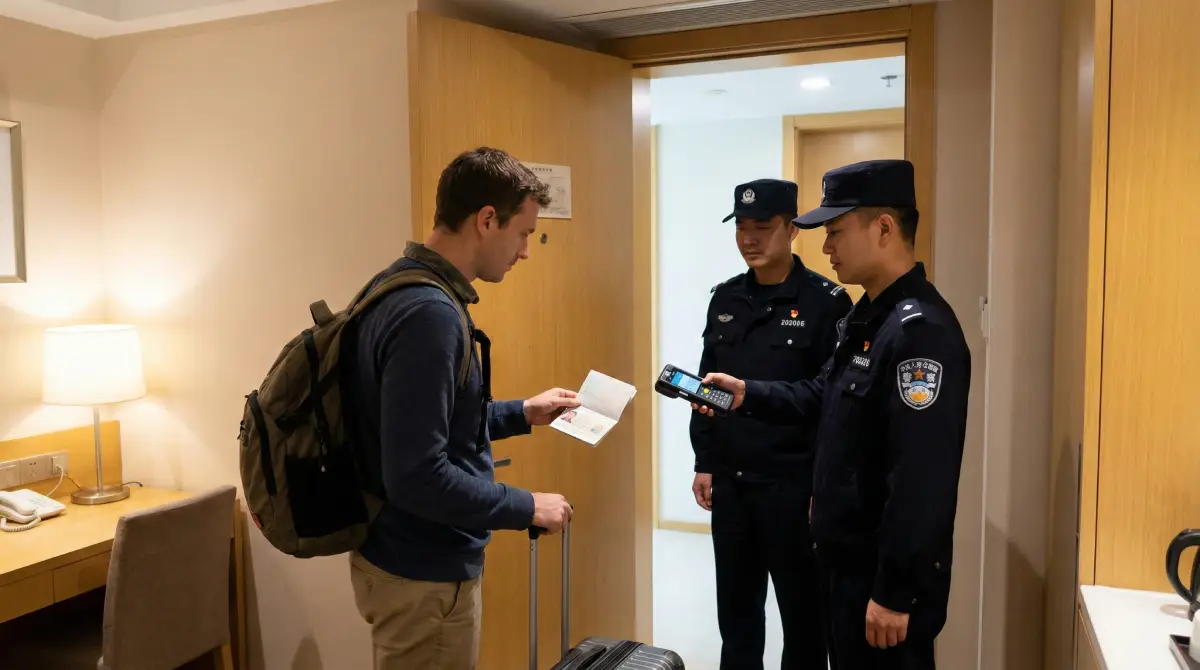
Is it a raid? Usually, no. In China, police frequently conduct "random checks" (Suiji Chakan) on hotels to verify that all foreigners are registered correctly.
-
What to do: Open the door, show them your passport. They will look at your visa, maybe scan it with a device, check the hotel's computer, and leave.
-
Don't Panic: They are checking the hotel's compliance, not investigating you (unless you are doing something illegal).
-
The "Foreigner Ban": Be aware that not all hotels in China are legally allowed to host foreigners. Cheap motels (Binguan) often lack the license. Always book hotels marked as "Accepts Foreigners" on apps like Trip.com or Booking.com to avoid being turned away at midnight.
12. Air Pollution: The Invisible Safety Risk
While headlines about the "Airpocalypse" have decreased as China has cleaned up its skies, air quality remains a health concern, especially in winter (November–February) in the north (Beijing, Xi'an, Harbin).
The AQI (Air Quality Index):
-
Safety Tip: Download an app like "AirVisual" or check the built-in weather app on your iPhone daily.
-
The Threshold: If the AQI is over 150, sensitive groups should wear a mask. If it hits 300+ (Hazardous), you should limit outdoor exertion.
-
Masks: Wearing a mask in China is socially normal (even pre-COVID). Nobody will look at you strangely if you wear an N95 mask on the subway or street.
13. LGBTQ+ Safety in China
China is conservative but generally tolerant of tourists. Homosexuality was decriminalized in 1997, but it is not culturally celebrated.
-
Public Displays of Affection (PDA): This applies to straight couples too, but especially for same-sex couples. Holding hands or kissing in public will draw stares and potentially negative comments from older generations. It is not "dangerous," but it attracts unwanted attention.
-
Apps: Dating apps like Grindr and the local giant Blued work in China, but they are monitored. Be cautious about meeting strangers, as "catfishing" (scams) happens here too.
-
The Verdict: You will not be harassed or denied entry to hotels for being gay, but discretion is the cultural norm. "Don't ask, don't tell" is the prevailing vibe.
14. Emergency Numbers & The Language Gap
If you have an emergency in New York, you call 911. In China, it is more complicated because operators rarely speak English.
Essential Numbers:
-
Police: 110
-
Ambulance: 120
-
Fire: 119
The Safety Hack: If you call 110 and speak English, they might transfer you to a translation line, but don't count on it.
-
Action Plan: If you are in trouble, go to the nearest star-rated hotel or university. Staff there are more likely to speak English and can call the police for you.
-
Translation App: Have a pre-written message on your phone in large Chinese characters: "I need help, please call the police" (我需要帮助,请报警) or "Take me to the hospital" (带我去医院).
Final Verdict: Is China Safe?
Yes. China is of the safest adventures you can take. You can hike the Great Wall, explore the Avatar mountains of Zhangjiajie, and eat your way through Chengdu without worrying about your physical safety.
But you must be digitally prepared.
Your China Survival Checklist:
-
Download Alipay and link your credit card before you leave home.
-
Install a translation app (Google Translate) and download the Chinese language pack for offline use.
-
Get an eSIM to bypass the firewall and stay connected.
-
Ignore the "students" who want to drink tea.