


'/%3e%3cuse xlink:href='%23a' transform='rotate(23.036 .093 25.536)'/%3e%3cuse xlink:href='%23a' transform='rotate(45.87 1.273 16.18)'/%3e%3cuse xlink:href='%23a' transform='rotate(69.945 .996 12.078)'/%3e%3cuse xlink:href='%23a' transform='rotate(20.66 -19.689 31.932)'/%3e%3c/svg%3e)
If you want the simplest setup, install a travel eSIM before you fly and you’ll connect as soon as you land—no store visit, no airport queues, and no SIM registration paperwork. If you prefer a physical SIM, you can buy at the airport or in the city, but you’ll typically need your passport for real-name registration and the airport option is usually pricier.
This guide breaks down eSIM vs local SIM vs airport SIM, what documents tourists need, typical price ranges, and how to keep everyday apps working smoothly while you’re in China.
The fastest way to get after landing
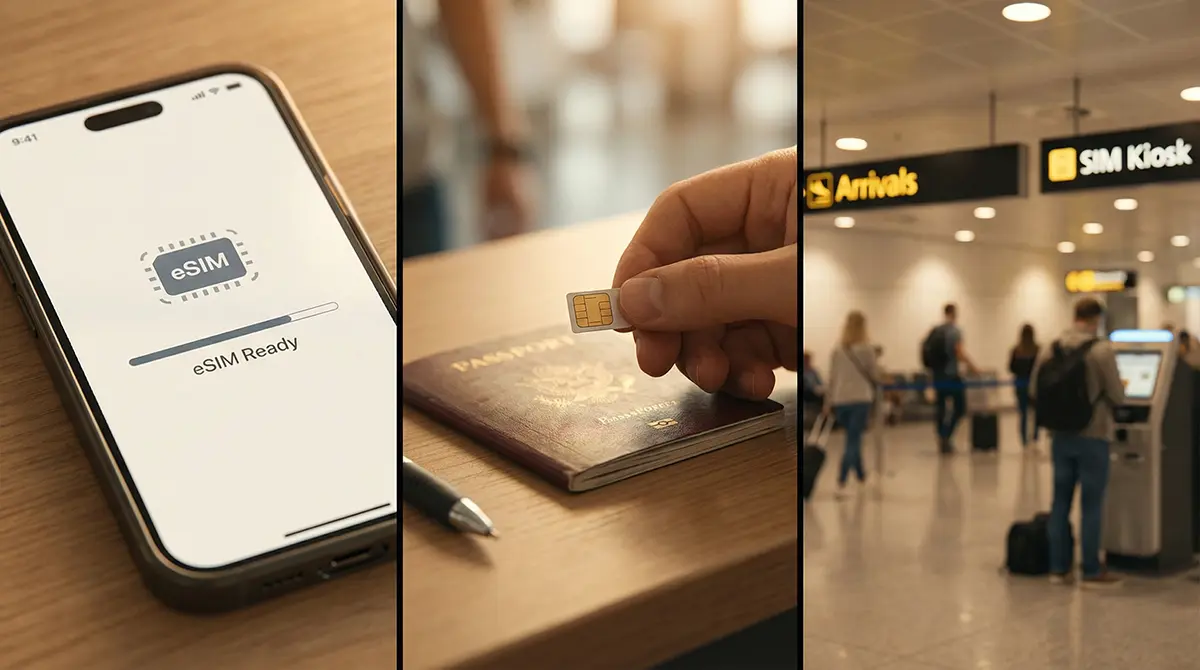
Most travelers use of these three options:
-
Travel eSIM (recommended for speed + simplicity): Install before departure, connect the moment you arrive.
-
Local physical SIM: Often good value for long stays, but requires in-person purchase and real-name registration.
-
Airport SIM: Convenient, but usually more expensive and limited in choice.
Option 1: Use a travel eSIM (Roafly) to skip paperwork and stay connected
If you want internet immediately—without queues, passport scanning at a counter, or guessing which carrier works best with your phone—an eSIM is the easiest solution.
Roafly’s China eSIM plans are data-only, hotspot-enabled, and designed to work across major Chinese networks. Roafly supports China Mobile + China Unicom coverage for China eSIM plans, which helps in busy city centers and on intercity travel.
Need data in China? Get an eSIM!
Choose the perfect data plan for your trip

Manage your eSIM in the app
Install, top up and track data.
Will WhatsApp and blocked apps work without a VPN?
On typical local networks in mainland China, many international apps and services can be restricted by the Great Firewall (WhatsApp included).
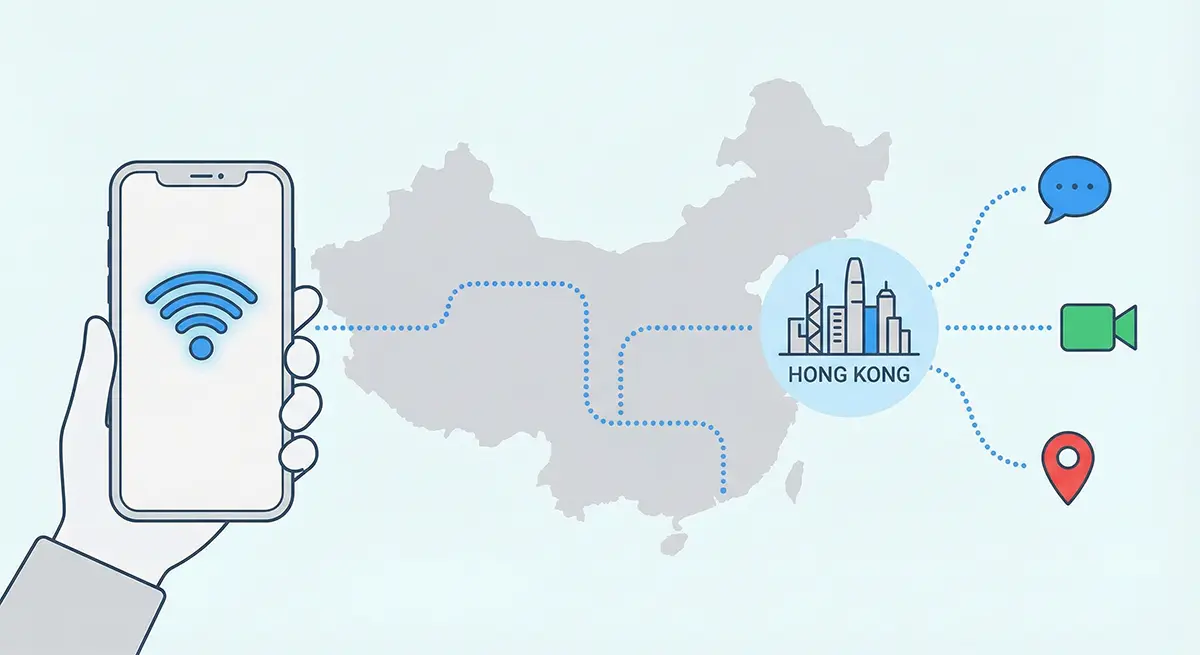
Roafly’s China eSIM is built for travelers who want those apps to work more normally. Roafly explains that traffic is routed through international gateways (outside mainland China), which can allow WhatsApp and other blocked services to function without installing a separate VPN.
Practical note: always follow local laws and regulations. Connectivity behavior can vary by app and location, but the “international routing” approach is specifically meant to reduce the usual China access issues for travelers.
Roafly China eSIM packages (USD)
Based on Roafly’s China plan listing, these are the available package tiers:
-
1GB / 7 Days — $3.70
-
2GB / 15 Days — $5.50
-
3GB / 30 Days — $7.50
-
5GB / 30 Days — $9.90
-
10GB / 30 Days — $16.90
-
20GB / 30 Days — $24.00
How to install Roafly in China (3 methods)
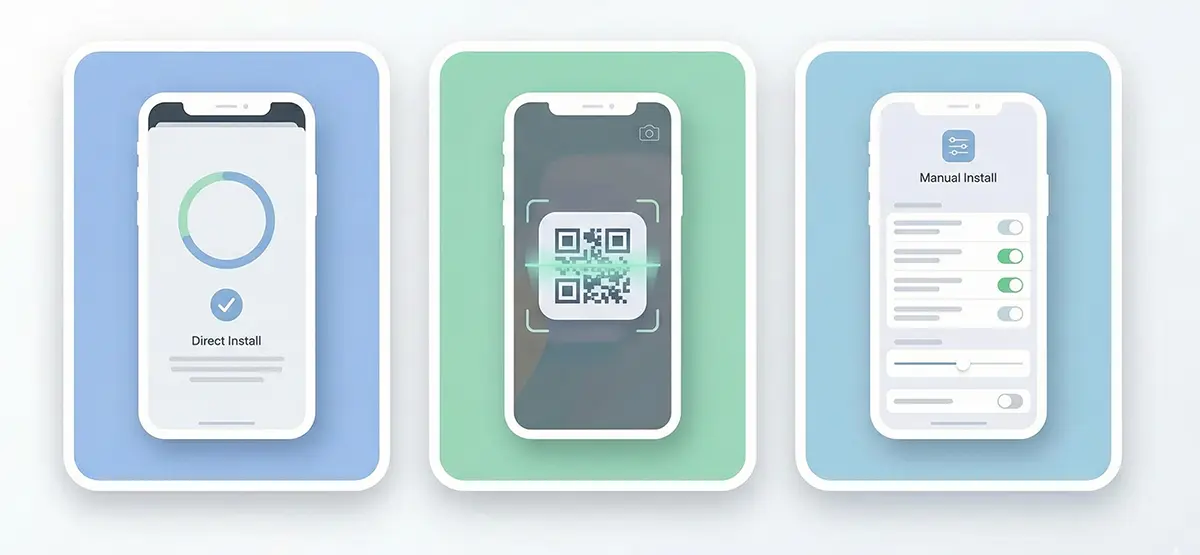
Roafly supports the three most common eSIM setup flows:
-
iOS Direct Install (best for speed on iPhone)
-
QR Code (works across iOS + Android)
-
Manual installation (fallback if QR scanning isn’t possible)
If you ever land and see “No Service,” it’s usually a settings issue (most often data roaming toggled off). Keep this troubleshooting guide handy.
And if iPhone activation fails during setup, this guide walks through the common causes and fixes.
Want the full provider comparison?
You already have a dedicated comparison article for eSIMs in China. If you want deeper breakdowns (features, speeds, value per GB), jump to the existing Best eSIM for China guide
Option 2: Buy a local SIM card in China (what you need to know)
A local physical SIM can be a good choice if you’re staying longer, need a Chinese phone number for local services, or want to top up easily in-country. But it’s not “grab and go” like many destinations.

What documents do tourists need?
China enforces real-name registration for SIM activation. In practice, that means:
-
Passport is required (often scanned/photocopied by the store)
-
Your details are registered before the SIM is activated
Some stores may also ask for basic supporting info (like a local address or hotel details), and the experience can vary by city and branch.
Which carrier is easiest for tourists?
China’s big three carriers are:
-
China Mobile
-
China Unicom
-
China Telecom
In many traveler guides, China Unicom is often mentioned as a more “foreigner-friendly” option for compatibility with international phones (especially for 4G/LTE bands), while China Mobile is widely available.
If you want to avoid the “which carrier works best with my phone?” question entirely, the simplest strategy is using a travel eSIM that supports more than partner network (like Roafly’s China Mobile + China Unicom support).
Typical local SIM costs (ballpark)
Local SIM pricing changes often, and what you see depends on city, store type, promotions, and whether you’re buying voice + data or data-only. Many travel resources describe an entry budget around ~100 RMB for getting started at local stores, with larger bundles costing more.
For exact local pricing, you’ll get the most accurate numbers at official carrier stores in the city (not third-party kiosks).
Option 3: Airport SIM cards (fast, but usually pricier)
If you didn’t prepare anything before landing, airport SIM booths can get you quickly. The tradeoff is you’ll often pay more than you would in the city.
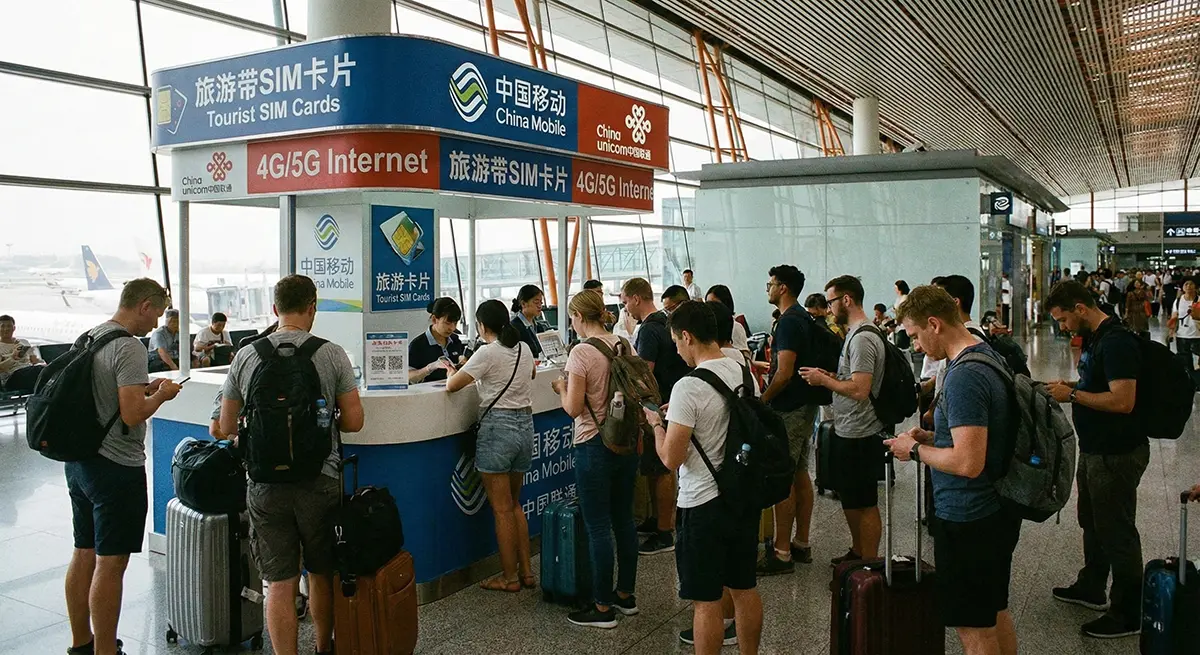
Shanghai Pudong (PVG) example prices
At PVG, detailed guide lists tourist bundles such as:
-
China Unicom 20GB + 300 minutes (30 days) — 200 RMB
-
China Mobile 20GB + minutes (30 days) — 150 RMB
-
Higher bundles can reach 500 RMB depending on included data/validity
Beijing Capital (PEK) example prices
At Beijing airport, guide lists options like:
-
China Unicom 7-day tourist SIM — 58 RMB (2GB)
-
China Mobile 30-day plan — 128 RMB (listed as 30GB full-speed)
Airport booths typically still require passport registration for activation.
Coverage and speed expectations in China
China’s mobile infrastructure is massive, and 4G coverage in major cities is generally reliable. 5G expansion is also significant: official reporting citing MIIT notes about 4.76 million 5G base stations in China as of the end of October 2025.

For travelers, this usually means that in large cities, transit corridors, and business districts, you’re more often choosing between “fast enough” and “very fast” than dealing with “no signal.” If you’re traveling rural routes or crossing provinces, multi-network support (where available) can help reduce weak pockets and congestion—especially during holidays and peak travel periods.
China Mobile (CMCC)
-
What it’s known for: Very broad nationwide reach.
-
What travelers feel: Stable day-to-day connectivity across many regions; congestion can still happen at peak times.
-
Best for: Multi-city trips and long travel days.
China Unicom
-
What it’s known for: Strong performance in major cities and often good compatibility with international phones.
-
What travelers feel: Reliable in dense urban areas and transport hubs.
-
Best for: City-heavy itineraries and visitors using international devices.
Why multi-network support matters for travelers (Roafly’s approach)
Coverage “gaps” in China are often not dead zones, but congestion pockets—for example, a busy station, stadium area, or holiday surge. Having access to more than major network can help your connection stay more consistent across different neighborhoods and travel days.
Roafly’s China eSIM connects via China Mobile + China Unicom, which is a practical combo for tourists because it pairs broad nationwide reach with strong international-device friendliness.
How much data do you need for China?
China trips often consume more data than expected because navigation and translation are constant, and many travelers rely on messaging + video calls.
Quick guidelines (typical travel usage):
-
1–3GB: short trip, maps + messaging + light browsing
-
5–10GB:-week trip with social media + frequent navigation
-
20GB: longer stays, hotspot use, work calls, cloud apps
If you want a more accurate estimate, use Roafly’s Trip Data Estimator to model your daily habits (maps, streaming, social apps, work).
A simple decision rule
-
You want internet the moment you land and fewer headaches: choose an eSIM.
-
You need a Chinese phone number or you’re staying long-term: consider a local SIM (with passport registration).
-
You didn’t prepare and need data immediately: airport SIM works, but expect higher prices.
Check the latest China eSIM packages and install before you fly to stay connected from the first minute you arrive.