Download the App and manage your eSIMs easily
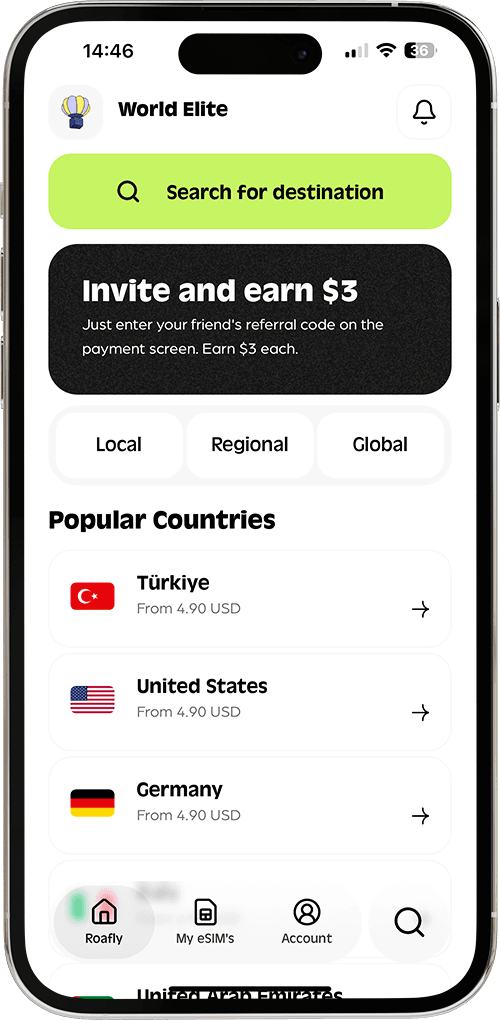
Create your order quickly
See your eSIM details
Track your remaining data
Download the App and manage your eSIMs easily
Create your order quickly
See your eSIM details
Track your remaining data
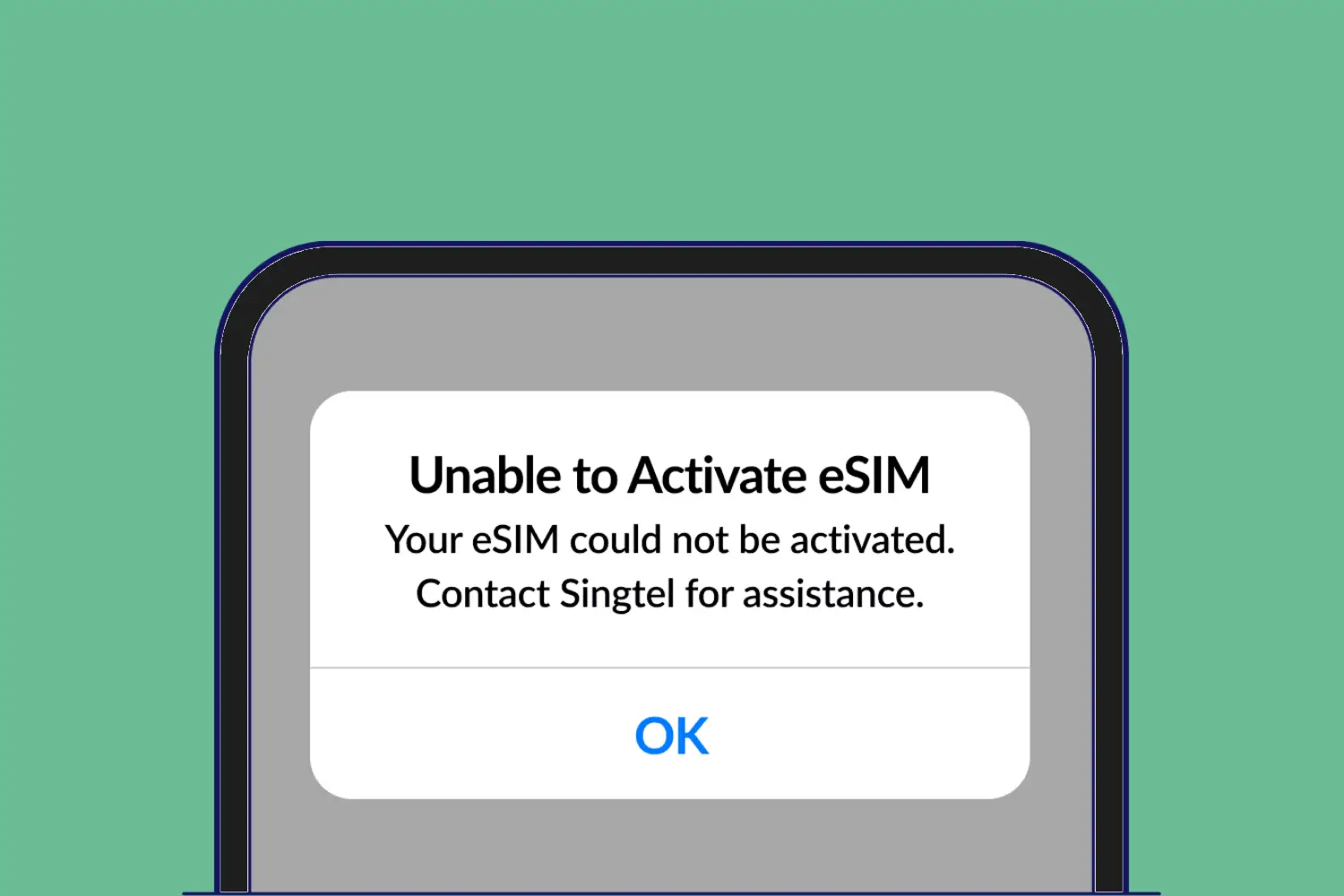
You're trying to set up your new eSIM on your iPhone, but you keep hitting a wall with the "Unable to Activate eSIM" error message. I've been there, and I know how frustrating it can be when you need your phone working right now.

Sophie Callahan
Updated Nov 24, 2025
10 min read
Save 15% on your Roafly eSIM
Stay connected on your next trip. Use the code below at checkout.
View All DestinationsJump to section
👇Save 15% on your Roafly eSIM
Stay connected on your next trip. Use the code below at checkout.
View All Destinations
Manage your eSIM in the app
Install, top up and track data.
This iPhone eSIM error isn't just an inconvenience—it can disrupt your entire mobile experience. You might miss important calls, lose access to mobile data, or find yourself unable to use your device as intended. Whether you're switching carriers, traveling internationally, or simply adding a second line to your device, eSIM installation problems can bring everything to a halt.
In this article, you'll discover:
Let's get your eSIM activated and your iPhone back to full functionality.
An eSIM (embedded SIM) is a digital SIM card built directly into your iPhone's hardware. Unlike traditional physical SIM cards that you insert into a tray, an eSIM is programmable and can be activated remotely. This technology eliminates the need for physical swapping when changing carriers or adding new cellular plans.
iPhone eSIM compatibility depends on your device model. Apple introduced eSIM support starting with iPhone XS, XS Max, and XR. You can use eSIM alongside a physical SIM card for dual-SIM functionality, or exclusively with eSIM on iPhone 14 models sold in the United States.
The eSIM activation requirements include several critical components:
When you encounter eSIM activation failure, several underlying issues could be at play. Identifying these root causes helps you address the problem quickly and get your eSIM working.
Your iPhone needs a stable internet connection to validate the eSIM with your carrier's servers during activation. Without proper connectivity, the validation process fails, leaving you stuck with an error message. This applies whether you're using Wi-Fi or cellular data from an existing SIM card.
Apple regularly releases updates that include bug fixes specifically designed to improve eSIM activation processes. Running an older iOS version means you're missing these critical improvements, which can directly cause activation failures.
If your iPhone is carrier locked, you won't be able to activate an eSIM from a different provider. You can verify this by checking your device's lock status in settings. A locked device displays "SIM Locked" or similar messaging, while an unlocked one shows "No SIM restrictions."
These tools modify your network settings and security configurations, which can block the authentication process your carrier needs to complete. IT departments often install MDM profiles on corporate devices, and these can inadvertently prevent personal eSIM installations from succeeding.
When you encounter eSIM installation problems on your iPhone, following a systematic approach helps you troubleshoot eSIM activation efficiently. I've compiled these proven methods that address the most common scenarios preventing successful activation.
Before attempting a new installation, check if your eSIM is already present on your device. Navigate to Settings > Cellular (or Mobile Data depending on your region) and look for your eSIM line listed among available cellular plans. If you see it there, tap on the line and enable "Turn On This Line". You'll also want to toggle "Data Roaming" on if you're traveling or if your carrier requires it for proper functionality.
Your iPhone needs internet access to validate the eSIM during activation. Connect to a stable Wi-Fi network with strong signal strength. Cellular data from your physical SIM card works too if you have one installed. The validation process communicates with your carrier's servers, so any interruption in connectivity will trigger the "unable to activate eSIM iPhone" error.
A simple restart clears temporary system glitches that might be blocking activation. Press and hold the power button along with either volume button until the power-off slider appears. Drag the slider, wait 30 seconds, then power your device back on. This refresh of iPhone settings for eSIM can resolve conflicts you weren't even aware existed.
Outdated software is a frequent culprit behind activation failures. Open Settings > General > Software Update to check your current iOS version. If an update is available, download and install it while connected to Wi-Fi and a power source. Apple regularly releases patches that fix unable to activate eSIM iPhone bugs, making this step critical for success.
Head to Settings > General > About and scroll down to Carrier Lock. You need to see "No SIM restrictions" displayed here. A locked device prevents eSIM activation with carriers other than your original provider. For more information about checking carrier lock status, refer to this Apple support article.
If all else fails, resetting your network settings can often resolve persistent issues related to eSIM activation. To do this, go to Settings > General > Reset, then select Reset Network Settings. Keep in mind that this action will erase all saved Wi-Fi networks and passwords, cellular settings, and VPN/APN settings you've used before.
If you're still unable to activate your eSIM after trying all these steps, it might be best to reach out directly to your carrier's customer support team for assistance. There may be specific issues related to your account or their service that they can help you resolve.
For further guidance on common issues related to eSIM activation, Apple's official support pages provide extensive resources:
Sometimes the standard troubleshooting steps need a little extra push. These additional techniques have proven effective for many iPhone users struggling with eSIM activation.
Access your iPhone's Control Center by swiping down from the top-right corner (or up from the bottom on older models). Tap the airplane icon to enable Airplane Mode, wait about 10 seconds, then tap it again to disable. This simple action forces your device to disconnect and reconnect to cellular networks, establishing a fresh connection that often resolves validation issues preventing your eSIM from activating properly.
Your carrier regularly releases configuration updates that optimize network performance and compatibility. Navigate to Settings > General > About and wait on this screen for about 30 seconds. If an update is available, you'll see a popup prompting you to install it. These carrier settings updates contain critical enhancements for voice calls, data connectivity, and 5G network access. Installing them can eliminate compatibility issues blocking your eSIM activation.
When you've exhausted all self-service options, contact carrier support for eSIM assistance. Your mobile operator's customer service team has access to backend tools unavailable to end users. They can remotely reset your account configurations, verify your eSIM profile is properly provisioned on their network, and re-push activation credentials to your device. Have your phone number, account PIN or password, IMEI, and EID ready when you call—this information helps them quickly identify and resolve your specific activation problem.
You can save yourself considerable frustration by taking proactive steps to prevent eSIM installation problems before they occur.
Maintain updated iOS on your device consistently. I check for software updates every few weeks, and you should too. Navigate to Settings > General > Software Update to see if new versions are available. These updates deliver critical bug fixes that directly impact eSIM functionality, making your future activations smoother and less error-prone. You're not just getting shiny new features—you're protecting yourself from known activation issues that Apple has already resolved.
Avoid VPN interference during the activation process. When you're scanning QR codes from your carrier or entering activation details, disable any active VPN connections. These applications can block the secure communication channels your iPhone needs to establish with your carrier's network. The QR codes contain unique identifiers and sensitive provisioning data that must reach your carrier's servers without interference. I've seen countless activation attempts fail simply because a VPN was running in the background.
Verify carrier compatibility before purchasing or attempting to activate an eSIM. Not every mobile operator supports this technology yet, despite its growing popularity. Check your carrier's website or contact their support team to confirm eSIM availability for your specific plan and device model. This simple verification step prevents wasted time and disappointment.
The 'Unable to Activate eSIM' error indicates a failure in activating the embedded SIM on your iPhone, which can disrupt your mobile connectivity and requires troubleshooting to restore seamless service.
Successful eSIM activation requires an iPhone compatible with eSIM technology, carrier support for eSIMs, an active cellular plan, the latest iOS version installed, and a stable internet connection during the activation process.
Common causes include network connectivity issues preventing validation, outdated iOS software, carrier locks or restrictions, and conflicts from VPNs or Mobile Device Management (MDM) profiles interfering with the installation process.
Troubleshooting steps include verifying if the eSIM is already installed and enabled, ensuring a stable internet connection, restarting your device, updating to the latest iOS version, confirming your device is not carrier locked, and temporarily disabling any active VPNs or MDM profiles.
Yes. Toggling Airplane Mode on and off can refresh network connections; checking for and installing carrier settings updates may enhance compatibility; and contacting your carrier's customer support can provide advanced assistance such as remote configuration resets or line re-provisioning.
Maintain up-to-date iOS software to benefit from bug fixes and new features; avoid using VPNs during critical activation steps to prevent conflicts; and verify that your chosen carrier supports eSIM technology before attempting installation to avoid compatibility issues.
