Download the App and manage your eSIMs easily
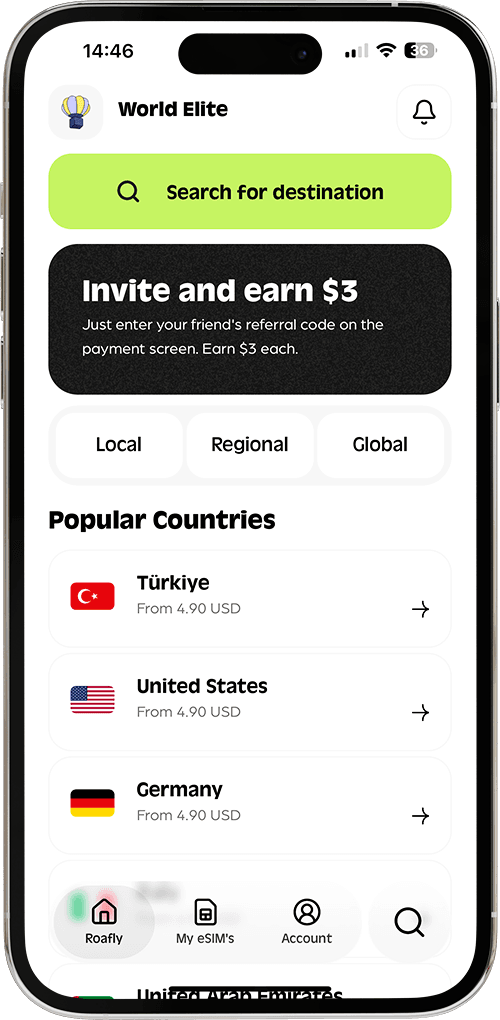
Create your order quickly
See your eSIM details
Track your remaining data
Download the App and manage your eSIMs easily
Create your order quickly
See your eSIM details
Track your remaining data
Brazil’s entry rules depend on the passport you travel with. Some visitors can arrive without a visa, while others need an approved eVisa or consular visa before departure. Even among visa-exempt nationalities, the permitted stay varies.

Lena Hartley
Updated Oct 22, 2026
7 min read
Save 15% on your Roafly eSIM
Stay connected on your next trip. Use the code below at checkout.
View All DestinationsJump to section
👇Save 15% on your Roafly eSIM
Stay connected on your next trip. Use the code below at checkout.
View All Destinations
Manage your eSIM in the app
Install, top up and track data.
The rules checked on 21 October 2026 include a temporary exemption for Chinese ordinary-passport holders and an advance-visa requirement for visitors using US, Canadian or Australian passports. Start with your nationality, then check your trip length and whether your connections involve entering Brazil.
The following examples cover ordinary passports used for short tourist visits. Diplomatic passports, residence permits and other travel purposes can follow different rules.
| Entry route | Passport-country examples | Main condition |
|---|---|---|
| Visa-free visit | United Kingdom, Japan, Türkiye | Up to 90 days |
| Visa-free visit with a specified cumulative limit | Germany, France, Italy, Netherlands | Up to 90 days within 180 days |
| Shorter visa-free visit | Indonesia, Singapore | Up to 30 days |
| Temporary visa-free visit | China, using a mainland Chinese ordinary passport | Up to 30 days under the temporary arrangement explained below |
| Advance visa, with a tourist eVisa option | United States, Canada, Australia | Obtain approval before travel; visitor stays are generally up to 90 days |
| Advance consular visitor visa | India, Pakistan, Egypt | Apply through the responsible Brazilian consulate before travel |
These are examples, not a complete nationality list. Use Brazil’s official visa requirements table, reading the VIVIS column for ordinary passports.
Residence in a visa-exempt country should not be treated as equivalent to holding that country’s passport. If you have more than one nationality, keep the passport used for your visa application consistent with the one you intend to present for travel.
Chinese ordinary-passport holders can visit Brazil without a visa for up to 30 days, under an arrangement effective from 11 May to 31 December 2026. Stays under this exemption cannot be extended.
Trips after that expiry date need a fresh eligibility check. Hong Kong and Macao passports have separate entries in Brazil’s nationality table, so the mainland Chinese rule should not be applied to them.
Eligible South American nationals, including citizens of Argentina, Chile, Paraguay and Uruguay, may use an accepted civil identity card instead of a passport. This provision concerns specified nationalities and travel documents; it does not extend to every visitor arriving from a neighbouring country.
Your application route matters because an online application form and an electronically issued visa are different things.
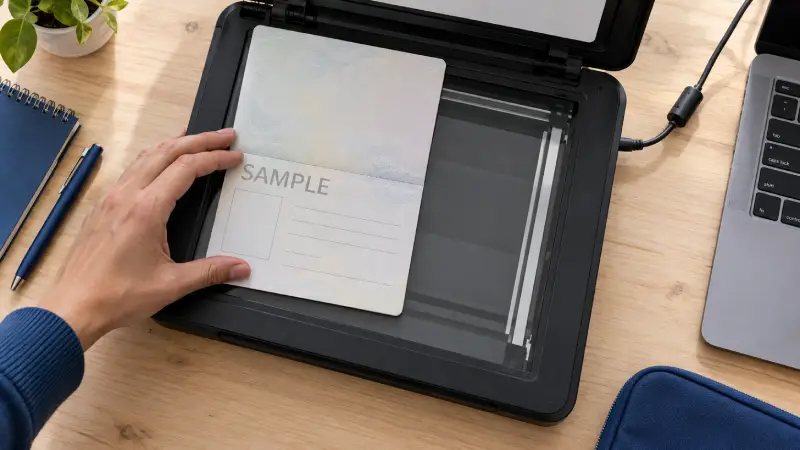
Visitors using US, Canadian or Australian passports can apply through the official Brazil eVisa portal.
The process involves entering your details, uploading documents, paying the fee and downloading the visa after approval. The adult tourist checklist includes a recent photograph and a colour copy of the passport’s biographical page. Consular staff can request additional documents.
The listed eVisa fee was US$80.90 when checked. The portal gives a processing period of up to 10 business days after a complete, verified application reaches the consular post, and recommends applying two months before travel. That distinction matters: correcting a photograph or supplying missing documents can add time before the application reaches that stage.
Wait for the issued visa before making non-refundable arrangements. Once approved, print the PDF for boarding and arrival, and keep an offline copy on your phone.
Applications for children require additional documentation, including birth and parental-authorisation records. The exact checklist depends on circumstances such as custody arrangements and differences between names on family documents.
If your passport requires a visa and you are outside the tourist eVisa group, follow the instructions of the Brazilian consulate responsible for your place of residence.
Use its visitor-visa checklist for the application, supporting documents, fee and submission method. Completing an online form is only part of the process; travel requires the issued visa.
Keep a valid travel document and any required visa accessible during your journey. Border officers may also request evidence of your departure plans, sufficient funds and the purpose of your visit.
Prepare a small document folder containing:
Your passport and issued visa, where required.
Return or onward travel details.
Accommodation bookings or your host’s address and contact information.
Evidence that you can fund the visit.
Any additional documents requested during your visa application.
Make sure your passport remains valid throughout the planned trip and meets the conditions of your particular application route. Follow the relevant consulate’s checklist or eVisa instructions; there is no useful shortcut in assuming one passport-validity threshold covers every application and itinerary.
Download bookings before departure so they remain accessible without airport Wi-Fi. A printed copy of the eVisa is particularly useful because it is part of the portal’s travel instructions.
Immigration and customs also serve different purposes. Your visa concerns admission, while Brazil’s customs rules cover the goods, food, cash and other items you bring.
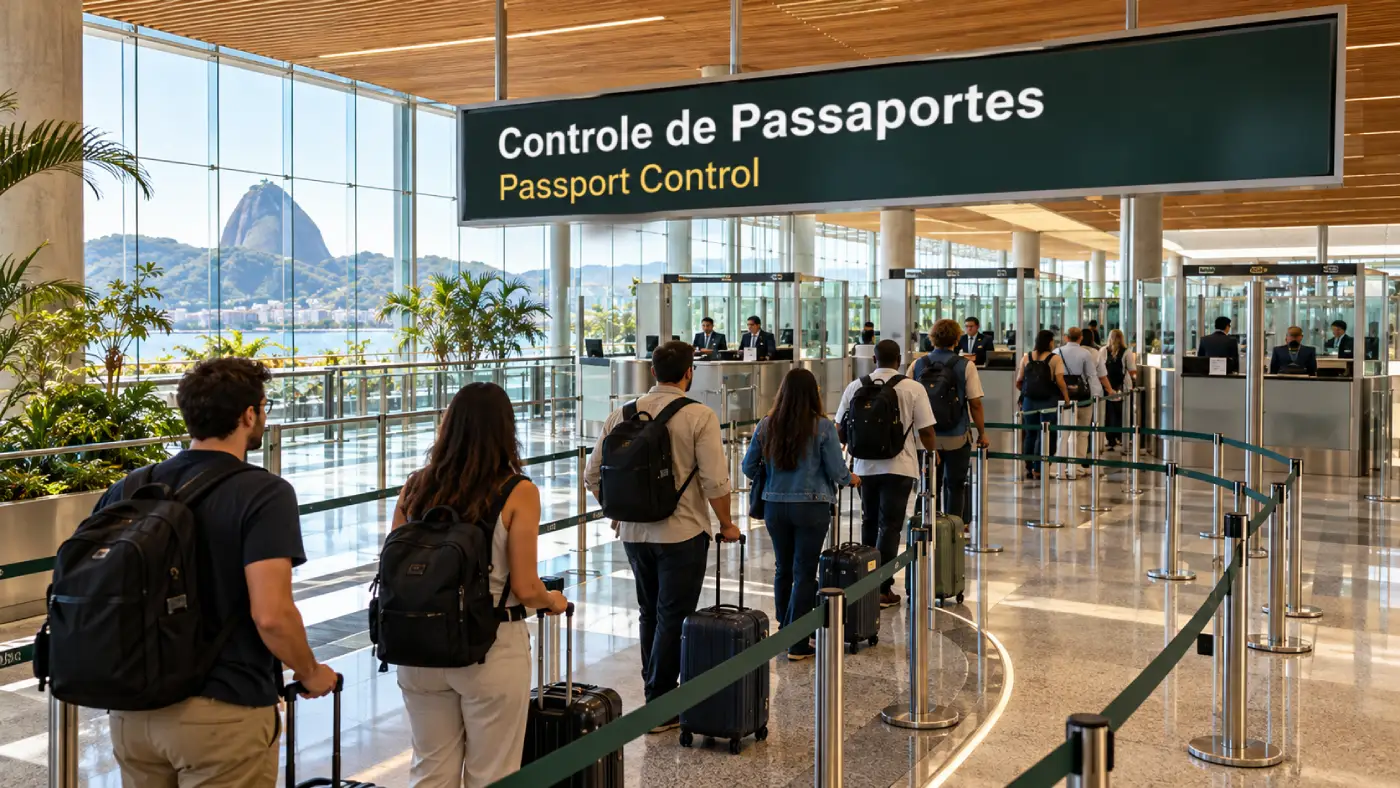
International transit without a visa is possible when you remain in the international transit area and continue to another country. An itinerary that requires passing immigration must meet Brazil’s entry requirements.
Before booking a connection, establish whether you will need to collect baggage, change airports or join a domestic flight. Ask the airline whether the complete itinerary can remain airside; the word “transit” on a booking is not enough to establish that.
For example, an international arrival followed by a domestic flight within Brazil involves entry into the country. The same applies if you plan to leave the airport during a stopover.
Land arrivals must use the designated immigration control point. Cruise and river arrivals also have immigration procedures, so match your documents to the itinerary before departure.
If São Paulo is your arrival point, review the SIM options at São Paulo GRU before relying on buying connectivity after landing.
Brazil does not currently require proof of vaccination for entry. COVID-19 vaccination certificates and tests are also no longer general entry requirements.
Health preparation remains a separate consideration. Yellow fever vaccination may be recommended for your itinerary, and another country you visit after Brazil may require a certificate because of your recent travel.
Discuss the route with a travel-health professional before departure, especially if it includes forest or rural areas. Brazil’s health guidance recommends allowing at least ten days before travel to areas where yellow fever vaccination is advised.
Use the period authorised on entry together with the cumulative limit applicable to your nationality. The expiry date of a visa and the number of days you may spend in Brazil are separate limits.
Brazil’s general visitor framework allows an initial stay of up to 90 days, with a possible extension subject to nationality and applicable rules. Some exemptions instead specify a 90-in-180-day limit, while the temporary Chinese exemption described above is non-extendable.
Do not plan a six-month visit on the assumption that every 90-day admission can be renewed.
Eligible visitors can request an extension through the Federal Police’s visitor-stay service. Apply before the current stay expires. The process can require a valid travel document, payment of the fee and supporting evidence such as accommodation, funds or return travel.
The listed application fee was R$110.44 when checked. Approval depends on your circumstances and eligibility.
Leaving and returning should not be treated as a way to reset a cumulative allowance. If you have already overstayed, contact the Federal Police about your situation; penalties can apply.
Finish the administrative preparation first, then organise the practical details of arrival:
Match your passport to the correct entry route. If a visa is required, carry the issued approval.
Account for previous visits. Include earlier days in Brazil when a cumulative stay limit applies.
Keep your arrival details offline. Save your accommodation address, transfer information and essential bookings.
Prepare for the trip beyond immigration. Review the local rules for tourists in Brazil, including restrictions relevant to what you carry and how you travel.
Mobile data can help you access changed bookings or contact your accommodation after arrival. Roafly’s Brazil eSIM provides data for a compatible, unlocked phone without adding a local phone number. If you are still choosing a provider or allowance, compare Brazil eSIM options before departure.
