Download the App and manage your eSIMs easily
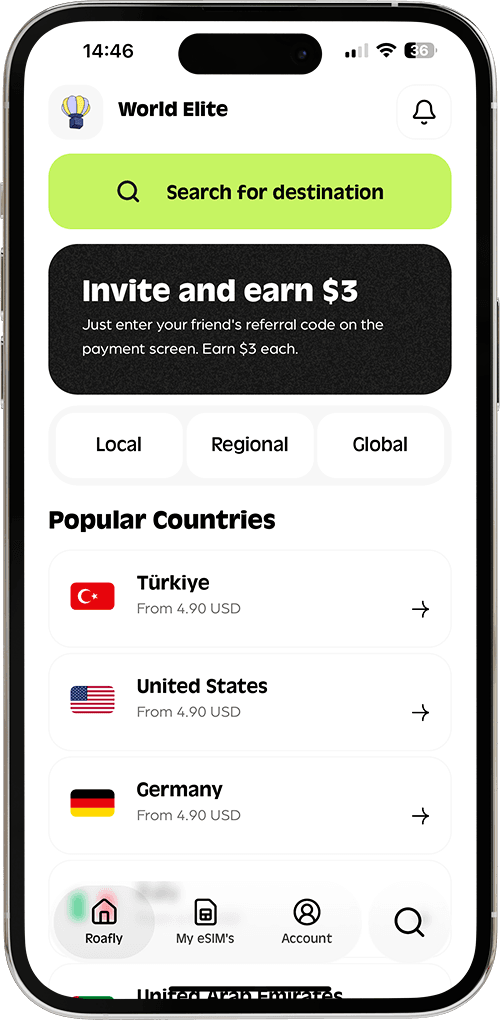
Create your order quickly
See your eSIM details
Track your remaining data
Download the App and manage your eSIMs easily
Create your order quickly
See your eSIM details
Track your remaining data
Brazil is big enough that the cheapest-looking eSIM is not automatically the smartest buy. Price matters, but so do the local networks behind the plan and how much data you will realistically use.
Claro, TIM
Instant delivery
3.90 USD From 3.51 USD

Sophie Callahan
Updated Aug 17, 2026
10 min read

Jump to section
👇Best for most trips
Claro, TIM

Brazil
10 GB · 30 days
Enough for maps, bookings and everyday travel.
Hotspot supported
$22.00
$19.80
BRAZIL10 automatically applied
$3.90From 3.51 USD
10% reader discount
Landing in São Paulo or Rio can burn through mobile data in small, unremarkable chunks: an Uber from the airport, WhatsApp messages, Google Maps, restaurant searches, translations and photo uploads. None of that requires an enormous data package by itself.
For a trip of roughly a week, 5GB is a sensible starting point if your phone is mainly handling maps, messaging, browsing and moderate social media. Moving up to 10GB gives you more breathing room for frequent uploads, music, heavier social use or occasional laptop tethering.
Among the capped plans verified for this comparison, Roafly has the lowest price at both 5GB and 10GB. It also lists both TIM and Claro in Brazil, giving it broader disclosed local-network access than the closest TIM-only alternatives.
| Provider | 5GB | 10GB | Validity | Listed network(s) | Key difference |
|---|---|---|---|---|---|
| Roafly | $12.50 | $22.00 | 30 days | TIM + Claro | Lowest verified capped prices here; two disclosed networks |
| Airalo | $13.00 | $23.00 | 30 days | TIM | Close pricing, but one disclosed network |
| Roamless | $12.95 | $22.95 | 30 days | TIM | Very close on price |
| Saily | $13.99 | $24.99 | 30 days | Not disclosed | Higher price and less network transparency |
| Yesim | $16.80 | $28.80 | 30 days | TIM + Claro | Same disclosed network pair as Roafly, at a higher price |
| Holafly | — | Unlimited: $36.50 / 10 days | 10 days | Vivo | Unlimited model; FUP applies; 1GB/day data sharing |
Prices, validity and network listings checked August 17, 2026. Providers can change packages, prices and network partners, so confirm the latest details before buying.
Choose the perfect data plan for your trip
Exclusive Reader Bonus!
Enjoy an extra %10 OFF your first Roafly eSIM purchase as a thank you for reading.
The strongest capped options are close enough on headline price that a few cents should not decide the purchase by themselves. Roafly, Airalo and Roamless sit within a narrow range, which makes the underlying network setup and practical plan terms more useful tie-breakers.
Roafly still wins the value comparison clearly. Its 5GB package is $0.50 cheaper than Airalo and $0.45 cheaper than Roamless. At 10GB, it costs $1 less than Airalo and $0.95 less than Roamless, while listing both TIM and Claro rather than TIM alone.
Roafly has the strongest balance in this comparison because it does not need a secondary feature to compensate for a higher price. It is already the cheapest verified capped option at both package sizes.
The 5GB plan costs $12.50 for 30 days, while 10GB costs $22 for 30 days. That validity is comfortably longer than a typical one-week Brazil itinerary, so you are not forced to match your purchase to an exact number of travel days.
The network disclosure adds more weight. Roafly lists TIM and Claro, compared with TIM alone for Airalo and Roamless.
That should be interpreted carefully. A two-network listing does not prove that your phone will always switch automatically to whichever operator has the strongest signal, nor does it guarantee coverage from both networks at every location. It simply gives Roafly the broader disclosed network setup among those close-priced options.
Hotspot use is supported across the data allowance you purchase. Buy 10GB, for example, and Roafly does not carve out a separate smaller tethering quota from that package.
There is another Brazil-specific technical detail: Roafly uses a Brazil breakout IP for this destination. Rather than sending the connection through a distant international internet gateway, traffic can break out locally in Brazil. That can reduce avoidable routing distance and help with route-induced latency, but it is not a promise of a particular ping, speed or response time.
You can compare Roafly's current Brazil eSIM packages before departure and choose the allowance that fits how you actually use your phone.
Roafly also sells eSIM plans for 200+ destinations through its wider product range. That does not mean this Brazil eSIM covers 200+ countries; the point is simply that the same provider can be used again when you buy separate plans for future destinations.
Airalo is only slightly more expensive. Its 5GB plan costs $13 and its 10GB plan costs $23, with 30-day validity in both cases.
The gap is small enough that price alone would not make Airalo a poor buy. The issue is that it does not reveal a compensating advantage in this comparison: Airalo lists TIM, while Roafly is slightly cheaper and lists TIM plus Claro.
That leaves Roafly with the stronger combination of price and disclosed network breadth.
Roamless gets even closer to Roafly financially: $12.95 for 5GB and $22.95 for 10GB, each valid for 30 days.
A $0.45 difference at 5GB is trivial on its own, and even the $0.95 gap at 10GB is hardly enough to build a recommendation around.
The network setup gives that small saving more meaning. Roamless lists TIM, while Roafly lists TIM and Claro. When one option is marginally cheaper and discloses broader local-network access, the overall value case becomes easier to separate.
Saily charges $13.99 for 5GB and $24.99 for 10GB, with 30-day validity.
That puts it $1.49 above Roafly at 5GB and $2.99 above at 10GB.
The local operator was not disclosed in the verified comparison data, so there is no visible network difference here to offset the higher price. That does not mean the underlying network is necessarily weak; it means the buyer has less information before purchase.
In this particular Brazil comparison, Saily therefore has a harder time justifying its premium.
Yesim is the other capped provider here that lists both TIM and Claro, so it matches Roafly on disclosed local-network breadth.
The price difference is much harder to ignore.
Yesim costs $16.80 for 5GB and $28.80 for 10GB, compared with $12.50 and $22 from Roafly. That is an extra $4.30 at 5GB and $6.80 at 10GB for the same 30-day validity and the same disclosed pair of Brazilian networks.
Based on these verified offers, Roafly is the stronger buy.
Holafly does not belong in a normal 5GB-versus-10GB price race. Its Brazil product uses an unlimited-data model based on trip duration, with the verified 10-day plan costing $36.50 and listing Vivo.
That can make sense if you specifically do not want to monitor a fixed allowance. It is also a substantially different product from a $12.50 5GB or $22 10GB package.
“Unlimited” does not mean every aspect of the plan is unrestricted. Holafly's current Brazil information allows up to 1GB of hotspot/data sharing per day, rather than unlimited tethering. Its terms also state that unlimited plans may be subject to a network operator's fair-use policy, including restrictions on usage or speed when use is considered excessive.
Holafly therefore makes the most sense when high on-device data usage is the actual reason for choosing it. Someone who expects to stay comfortably inside 5GB or 10GB is paying more for a different usage model rather than automatically getting a better eSIM.
Brazil is a good example of why a single “best network” label can be misleading.
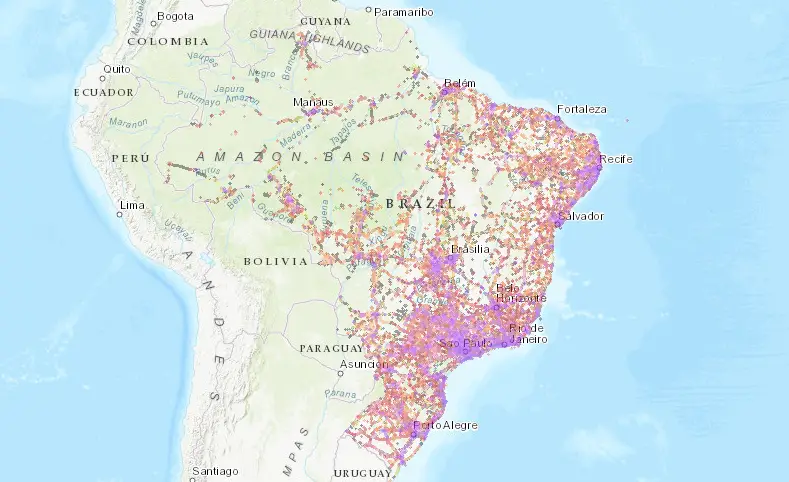
Opensignal's January 2026 Brazil report gives TIM the lead for Consistent Quality and Reliability Experience, while Vivo leads Download Speed Experience. Different metrics are measuring different parts of the mobile experience, so one result should not be turned into a universal network ranking.
nPerf's April 2026 Brazil barometer, covering tests from April 2025 through March 2026, adds another angle. Vivo ranked first overall with an nPerf score of 67,693, Claro second with 62,587 and TIM third with 59,176.
The 5G picture is more interesting for Roafly's network mix. nPerf says Claro and Vivo jointly delivered the best 5G internet performance in its 2026 Brazil results; Claro recorded the highest 5G download and upload rates in that dataset, while Vivo led on 5G latency and had a slightly higher overall 5G score.
That context matters because the eSIMs in this comparison disclose different network access:
Roafly: TIM + Claro
Airalo: TIM
Roamless: TIM
Saily: local operator not disclosed in the verified data
Yesim: TIM + Claro
Holafly: Vivo
Roafly's TIM + Claro listing is therefore more than an extra name in a table. TIM performs strongly in Opensignal's consistency and reliability measures, while Claro is highly competitive in nPerf's latest overall and 5G results.
That still does not prove automatic best-network selection, guaranteed better coverage or faster speeds at every point in Brazil. Local signal, network provisioning and your exact route can all change the experience.
Likewise, Holafly's Vivo access should not be turned into an automatic recommendation merely because Vivo leads several performance measures. Its higher price, unlimited product model, FUP and 1GB/day sharing limit are part of the same buying decision.
Think about what your phone will actually do between breakfast and bedtime rather than choosing a package just because the number sounds safe.
5GB is the sensible value tier if you mainly need WhatsApp, Maps, Uber, browsing, translation, digital tickets and moderate social media. Hotel or apartment Wi-Fi can handle large software updates, long streaming sessions and cloud backups.
10GB gives you considerably more margin for frequent photo and video uploads, music streaming, heavier social use or occasional tethering. With Roafly's verified pricing, moving from 5GB to 10GB costs another $9.50.
Repeated video streaming or using your phone as a regular laptop connection changes the equation quickly. That is where the decision stops being about whether 5GB or 10GB is “normal” and starts depending on your actual usage.
Holafly's unlimited model becomes more relevant at the heavy end, but its larger on-device allowance does not erase the higher purchase price, fair-use conditions or 1GB-per-day hotspot limit.
Roafly is our best overall pick from the plans compared here.
It has the lowest verified capped price at both practical tiers: $12.50 for 5GB and $22 for 10GB, with 30-day validity. More importantly, the price advantage is supported by useful secondary differences rather than standing alone.
Roafly lists both TIM and Claro, supports hotspot use across the full purchased allowance and uses a Brazil breakout IP. Independent network measurements also show why having TIM and Claro in the disclosed setup is relevant rather than cosmetic: TIM performs strongly in Opensignal's reliability-related measures, while Claro sits close to Vivo in nPerf's latest Brazil results and co-leads nPerf's 5G assessment.
Roamless is the nearest capped competitor on price, with Airalo also close behind, but both list TIM alone. Yesim matches Roafly's TIM + Claro disclosure and costs considerably more. Saily costs more as well without the same network transparency in the verified data.
Holafly serves a different need: its $36.50 10-day option offers unlimited on-device data on Vivo, subject to fair-use policy, with up to 1GB of data sharing per day.
For a typical short Brazil trip, buying enough data to stop worrying about your balance is more useful than buying the biggest number on the page. At the verified prices here, Roafly offers the strongest combination of cost, validity, hotspot flexibility and disclosed Brazilian network access.
Disclosure: Roafly publishes this guide and is included in the comparison.
Best for most trips
Claro, TIM
Brazil
10 GB · 30 days
Enough for maps, bookings and everyday travel.
Hotspot supported
$22.00
$19.80
BRAZIL10 automatically applied
$3.90From 3.51 USD
10% reader discount

Manage your eSIM in the app
Install, top up and track data.
