

'%3e%3cg id='b'%3e%3cpath id='a' stroke='%23000' stroke-width='2' d='M-6-25H6m-12 3H6m-12 3H6'/%3e%3cuse xlink:href='%23a' y='44'/%3e%3c/g%3e%3cpath stroke='%23fff' d='M0 17v10'/%3e%3ccircle r='12' fill='%23cd2e3a'/%3e%3cpath fill='%230047a0' d='M0-12A6 6 0 0 0 0 0a6 6 0 0 1 0 12 12 12 0 0 1 0-24z'/%3e%3c/g%3e%3cg transform='rotate(-123.69)'%3e%3cuse xlink:href='%23b'/%3e%3cpath stroke='%23fff' d='M0-23.5v3M0 17v3.5m0 3v3'/%3e%3c/g%3e%3c/svg%3e)
The Practical Takeaway
-
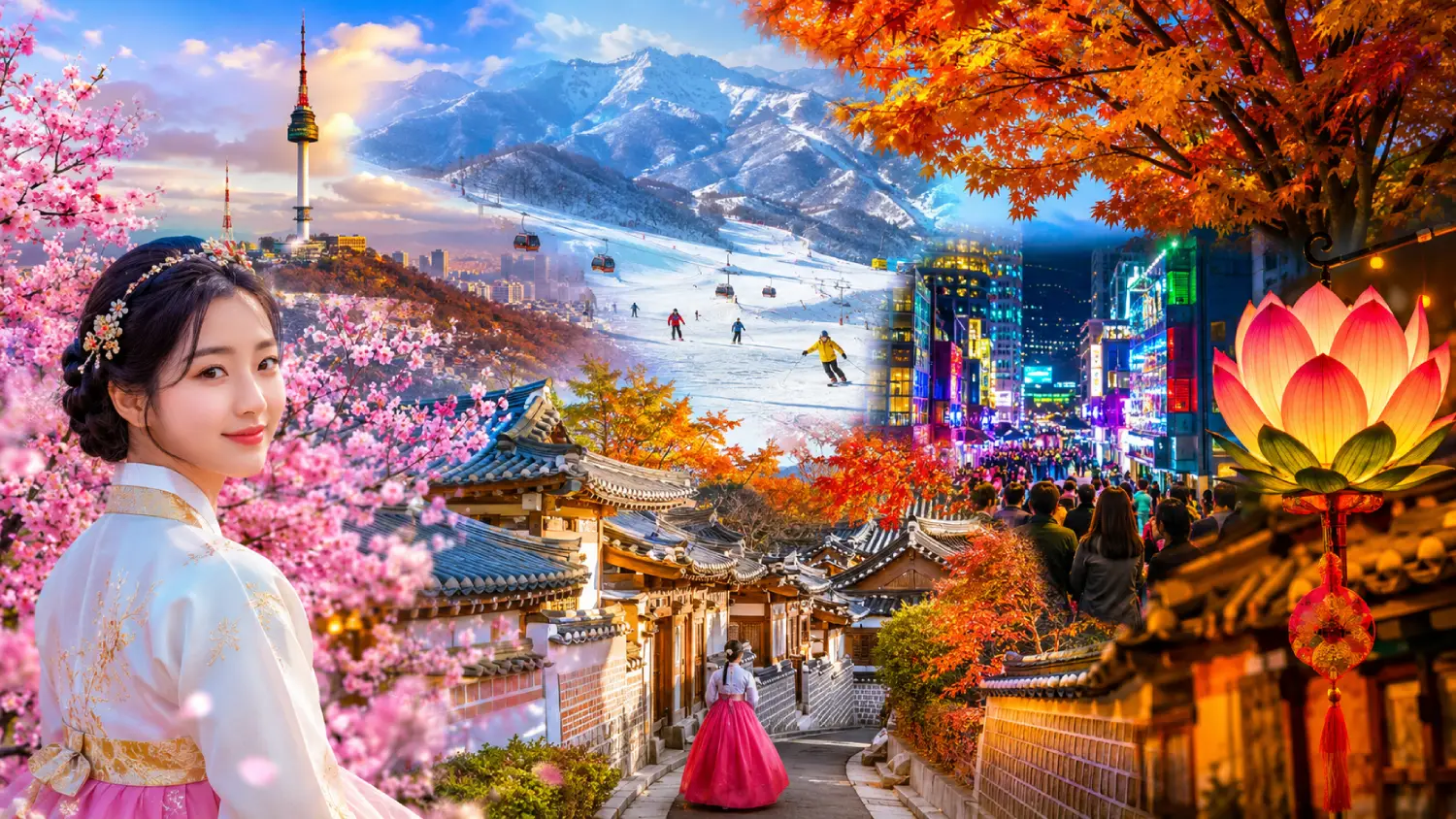
Best Overall for First-Timers: April to May (Spring) and September to November (Autumn) offer perfect, mild weather and spectacular natural colors.
-
Best for Budget Travelers: November (post-autumn peak) and late February to March (shoulder seasons) feature lower flight and hotel prices.
-
Best for Avoiding Crowds: June (before monsoon season hits) and early December allow you to explore major temples and palaces with breathing room.
South Korea by Season: What You Really Get
South Korea experiences four distinct seasons, each completely transforming the landscape and the local vibe. You will either be stripping off layers in humid summers or bundling up for freezing winters. Here is a breakdown of what to expect in 2026 so you can pack properly and budget accordingly.
| Season (Months) | Typical Conditions | Crowds | Costs | Best For |
| Spring (Mar - May) | Mild and dry, occasional light rain. Temps range from 5°C to 22°C. | High (Peak during April blossoms) | High | Cherry blossom viewing, hiking, city sightseeing, cafe hopping. |
| Summer (Jun - Aug) | Hot, highly humid, and rainy. Monsoon season peaks in July. Temps 25°C to 30°C+. | Peak (especially beaches) | Highest | Beach clubs, surfing, bingsu (shaved ice) eating, coastal nightlife. |
| Autumn (Sep - Nov) | Crisp, cool, and clear blue skies. Temps drop from 25°C down to 10°C. | High (Peak in late October) | High | Fall foliage, hiking national parks, outdoor food markets. |
| Winter (Dec - Feb) | Freezing, dry, and snowy in the north. Temps drop below -10°C. | Low (except ski resorts) | Low | Skiing, snowboarding, hot springs, strawberry picking, holiday lights. |
Regional Differences (Microclimates & Geography)
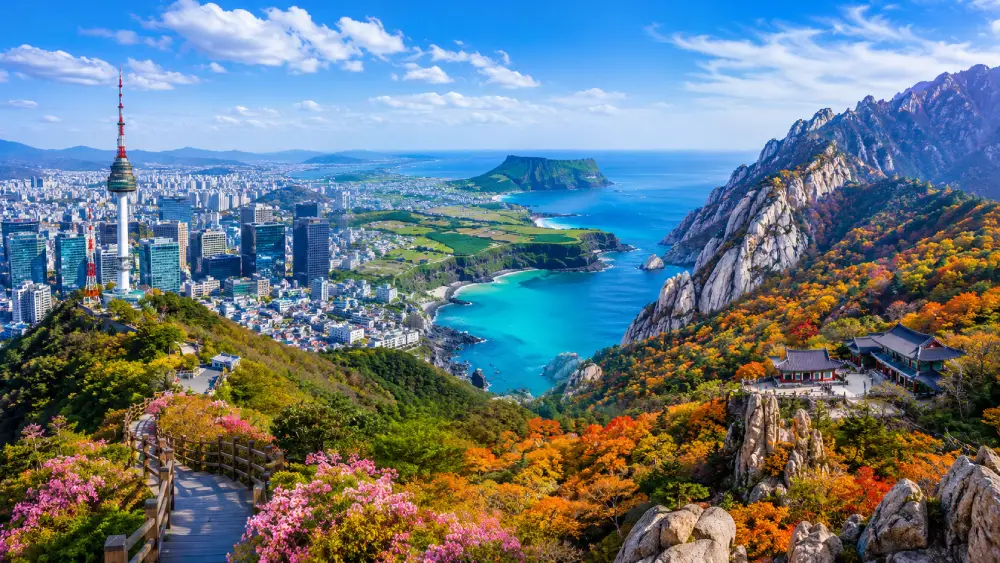
South Korea might look small on a map, but its mountainous terrain and coastal borders create distinct microclimates. The weather in a northern mountain town will feel vastly different than the breeze on a southern island. Understanding these zones will help you plan a seamless itinerary.
Seoul & The Northern Mainland
Seoul, Incheon, and the surrounding Gyeonggi province experience the most extreme temperature swings. Winters are brutally cold, driven by freezing Siberian winds, while summers are intensely hot and muggy. The best times to explore the capital’s palaces and bustling neighborhoods are mid-spring and mid-autumn.
Busan & The Southern Coast
Busan and the southern coastal cities benefit from a milder oceanic climate. Winters here are much more bearable, rarely dropping below freezing for long periods. Summers are still hot, but the ocean breeze makes July and August beach trips incredibly popular for domestic travelers.
Jeju Island (The Hawaii of Korea)
Jeju Island sits off the southern coast and boasts a subtropical climate, making it the warmest region in the country. Spring arrives here first, with cherry blossoms blooming as early as late March. Summer is long and humid, drawing massive crowds to its pristine beaches, though it is also vulnerable to late-summer typhoons.
Mountain Regions (Gangwon-do & Seoraksan)
The eastern province of Gangwon-do is defined by towering mountains and deep valleys. This region gets the most snow, making it the undisputed capital for winter sports from December through February. In autumn, these mountains are the absolute best place in the country to witness fiery fall foliage.
Month-by-Month Cheat Sheet
Planning your trip down to the specific month? Here is exactly what 2026 has in store for South Korea.
-
January: The coldest month of the year. Vibe: Icy and festive. Why go: Perfect for budget travelers who want to hit the world-class ski resorts in Gangwon-do without massive crowds.
-
February: Still freezing, but slowly starting to thaw by the end of the month. Vibe: Quiet and romantic. Why go: Great for winter festivals and enjoying hot Korean stews in cozy pojangmacha (street tents).
-
March: The transition month where the chill lingers but spring is visible. Vibe: Anticipation. Why go: The southern regions like Jeju start seeing early blossoms, and flight prices are still relatively low.
-
April: The crown jewel of Korean tourism. Vibe: Vibrant and bustling. Why go: Pink cherry blossoms blanket the country. Be warned: This is peak tourist season, so book accommodations months in advance.
-
May: Arguably the most comfortable month for weather. Vibe: Cheerful and green. Why go: The blossoms are gone, but the weather is flawless for hiking, outdoor festivals, and palace tours.
-
June: The calm before the humid storm. Vibe: Warm and breezy. Why go: It is your last chance for comfortable sightseeing before the summer monsoon hits, with fewer crowds than May.
-
July: The peak of the monsoon season (jangma). Vibe: Wet, hot, and sticky. Avoid unless: You love heavy rain, indoor shopping malls, or plan to stay exclusively on the southern beaches.
-
August: The rain tapers off, but the intense heat and humidity remain. Vibe: Energetic and sweaty. Why go: It is the ultimate beach month for Busan and Jeju Island, packed with summer night markets.
-
September: The humidity breaks, and crisp air returns. Vibe: Refreshing and active. Why go: The weather is perfect for walking tours, and you can experience the major Chuseok holiday (harvest festival).
-
October: The second major peak season of the year. Vibe: Picturesque and cinematic. Why go: The mountains explode in vibrant reds, oranges, and yellows; it is the ultimate month for photographers.
-
November: The leaves drop, and a chill fills the air. Vibe: Calm and atmospheric. Why go: You can still catch late autumn colors in the south while enjoying off-peak hotel rates.
-
December: Winter officially arrives with freezing temperatures and holiday lights. Vibe: Cozy and festive. Why go: Seoul transforms into a winter wonderland with ice skating rinks and dazzling Christmas markets.
Best Time to Visit by Traveler Type
Your ideal month heavily depends on what you actually want to do you land. Align your priorities with the right season to maximize your experience.
For Sightseeing & Culture
If your goal is to wander through Bukchon Hanok Village, hike up the N Seoul Tower, and explore five grand palaces, you need mild weather. April, May, September, and October are the undisputed champions. You will avoid the exhausting summer sweat and the numbing winter winds.
When planning your cultural itinerary, make sure you understand the local rules. Before you arrive, read our guide on South Korea Tourist Bans & Laws to ensure you respect local etiquette. Also, review the South Korea Airport Customs Rules to guarantee a smooth entry.
For Beaches & Swimming
If you want to sip cocktails in Haeundae or surf in Jeju, aim for July and August. Yes, it is the peak of the rainy season, but when the sun is out, it is brilliantly hot. The ocean water is finally warm enough for swimming, and the coastal nightlife is legendary.
Keep in mind that summer in Korea is incredibly safe, but heavy crowds can attract minor issues. Brush up on Is South Korea Safe? Reality Check & Scams to Know before hitting the busy beach clubs.
For Shoppers & Budget Travelers
To score the cheapest flights and snag the best hotel deals, fly during the deep winter (January to early March) or late autumn (November). The cold weather keeps casual tourists away, meaning aggressive discounts.
Winter is also the perfect time to hit the massive underground shopping malls in Myeongdong and Gangnam. If you plan to shop heavily, learn how to get your money back by reading about the South Korea VAT Refund: Tax-Free Shopping Rules.
For Skiing & Winter Sports
South Korea hosted the 2018 Winter Olympics for a reason. From mid-December through February, the ski resorts in Gangwon-do are covered in fresh powder. January is the absolute best month for reliable snowfall and perfectly groomed slopes.
Festivals & Special Dates to Plan Around (2026)
Timing your trip to coincide with (or actively avoid) a major Korean festival can make or break your vacation. Here are the crucial 2026 dates to monitor.
The Spring Cherry Blossom Season (Late March to Mid-April)
This is the most famous natural event in the country. The blossoms start in Jeju in late March and sweep up to Seoul by the first week of April. If you are debating between Asian destinations, our breakdown of Japan vs. South Korea is essential reading.
Lotus Lantern Festival (Yeon Deung Hoe) (May 2026)
Held in the weeks leading up to Buddha’s Birthday, this festival transforms Seoul into a glowing spectacle. Hundreds of thousands of vibrant paper lanterns are strung across the streets and temples. The massive parade in downtown Seoul is an unforgettable cultural experience.
Chuseok (Korean Thanksgiving) (September 2026)
Chuseok is of Korea’s most important holidays, usually falling in mid-to-late September. Warning: Millions of Koreans travel back to their hometowns, causing massive traffic jams and fully booked train tickets. Many family-run restaurants and small shops will be closed for three days, though major tourist sites and palaces remain open (and often free!).
Boryeong Mud Festival (July 2026)
If you are visiting in the heat of summer, head to Daecheon Beach for this wild, messy festival. Originally created to promote the cosmetic benefits of local mud, it has evolved into a massive beach party. Expect mud slides, mud wrestling, and live K-pop performances.
A Quick Note on Staying Connected
Navigating South Korea requires immediate and reliable internet. You will need a strong connection to use Naver Maps (Google Maps does not work well here), translate menus, and check live subway schedules. Relying on public Wi-Fi will leave you stranded when you need directions the most.
Need data in South Korea? Get an eSIM!
Choose the perfect data plan for your trip

Manage your eSIM in the app
Install, top up and track data.
The absolute most convenient way to get the second your plane lands at Incheon Airport is with a South Korea eSIM. There is no need to queue at a kiosk or swap out tiny physical SIM cards. For a deep dive into your options, check out How to Get Internet in South Korea and compare the top data packages in our Best eSIM for South Korea guide.
FAQ: Best Time to Visit South Korea
What is the cheapest month to visit South Korea?
January and February are generally the cheapest months for flights and accommodations. The freezing weather deters most sightseeing tourists, leading to heavy discounts in major cities like Seoul and Busan.
When is the rainy season in South Korea?
The summer monsoon season, known as jangma, typically begins in late June and lasts through late July. During this time, you can expect heavy downpours, high humidity, and overcast skies.
Is it worth visiting South Korea in the winter?
Absolutely, if you are prepared for the cold. Winter offers world-class skiing, beautiful snow-covered palaces, incredible winter street food, and significantly fewer crowds at major tourist spots.
When do the autumn leaves peak in Korea?
Fall foliage usually begins in the northern mountains (like Seoraksan) in mid-October and slowly moves south, reaching Seoul by late October. By early November, the southern regions are hitting their peak vibrant colors.
When is the worst time to visit South Korea?
July is generally considered the most difficult month for traditional tourism. The combination of intense heat, extreme humidity, and heavy monsoon rains makes outdoor sightseeing physically exhausting.
Are shops and restaurants open during Chuseok?
Major department stores, large tourist attractions, and palaces usually remain open during Chuseok. However, many independent shops, local markets, and family-owned restaurants will close for at least 1-2 days during the holiday.
When is the best time to visit Jeju Island?
May and September are the sweet spots for Jeju Island. You get beautiful, warm weather that is perfect for hiking the Olle Trails and exploring nature, without the suffocating humidity and peak domestic crowds of August.
What should I pack for a spring trip to Korea?
Spring weather fluctuates. Bring a mix of light, breathable layers for the daytime, but absolutely pack a medium-weight jacket for the brisk evenings. A travel umbrella is also highly recommended for sudden April showers.