Download the App and manage your eSIMs easily
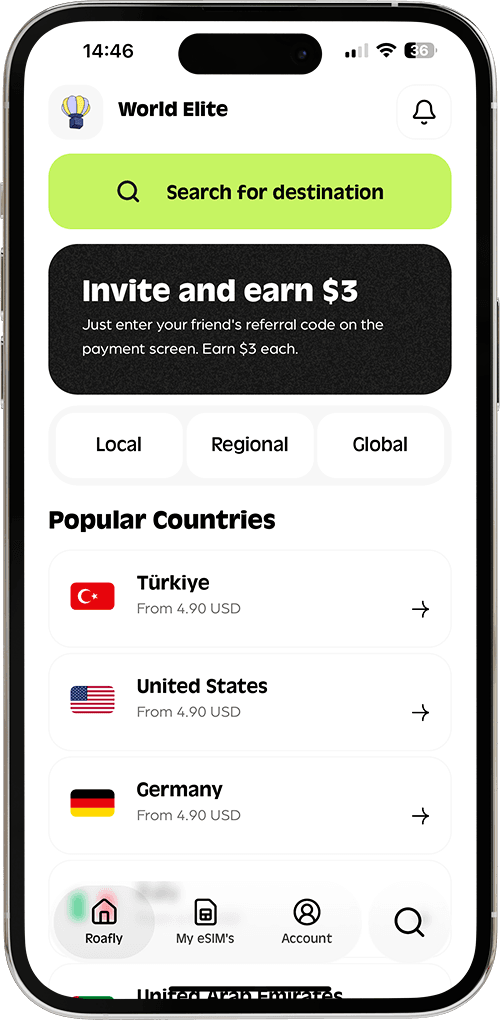
Create your order quickly
See your eSIM details
Track your remaining data
Download the App and manage your eSIMs easily
Create your order quickly
See your eSIM details
Track your remaining data
It is the ultimate East Asian dilemma. On one side, you have Japan: the land of Anime, Samurai, and arguably the world's most refined hospitality. On the other, South Korea: the energetic powerhouse of K-Pop, cutting-edge skincare, and cities that truly never sleep.

Lena Hartley
Updated Jan 11, 2026
10 min read
Save 15% on your Roafly eSIM
Stay connected on your next trip. Use the code below at checkout.
View All DestinationsJump to section
👇Save 15% on your Roafly eSIM
Stay connected on your next trip. Use the code below at checkout.
View All Destinations
Manage your eSIM in the app
Install, top up and track data.
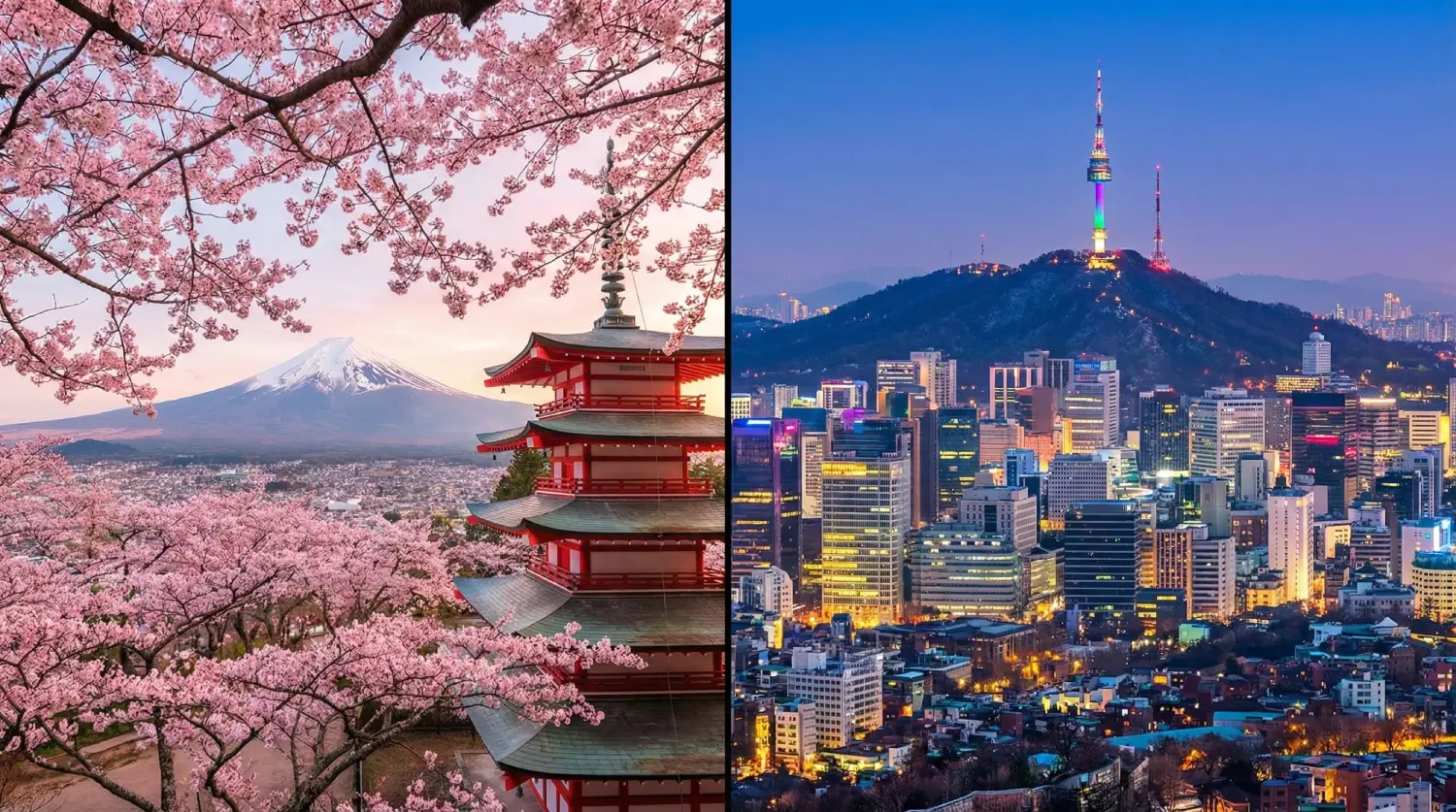
Both are safe, clean, and futuristic. Both turn spectacular shades of pink with cherry blossoms (Sakura) in late March. But they offer wildly different experiences.
So, for your big trip in 2026, do you choose the polite perfection of Tokyo or the neon-lit chaos of Seoul? Or, like many ambitious travelers, do you grab a short flight to do both?
We’ve compared the costs (spoiler: Japan is cheaper than you think), the food, the vibe, and—crucially—the connectivity challenges to help you decide. If you are looking for inspiration on where to go this year, both of these nations are top contenders on our list of Best Places to Travel in 2026.
Both feel distinctively "East Asian," but the cultural rhythm is polar opposite.
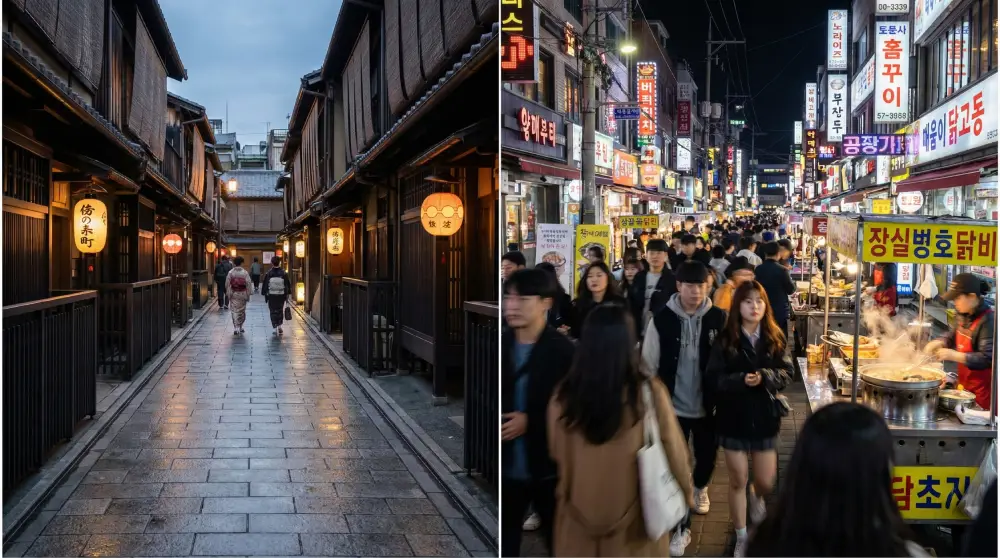
Japan feels like a massive, well-oiled machine mixed with ancient spirituality.
The Atmosphere: Even in the heart of Tokyo, there is a sense of order. People are incredibly polite, trains run to the exact second, and streets are surprisingly quiet. It is an introvert’s paradise.
The Scenery: The variety is unmatched. You have the neon overload of Akihabara, the wandering deer in Nara, and the timeless temples of Kyoto.
The Culture: It’s about Omotenashi (wholehearted hospitality). Service is impeccable everywhere, from luxury hotels to convenience stores.
Korea is Japan’s louder, grittier, and more spontaneous cousin.
The Atmosphere: Seoul doesn't sleep. Cafes are open 24/7, K-Pop blasts from shops, and the nightlife in Hongdae or Itaewon is intense. The culture is "Pali-Pali" (Hurry-Hurry)—everything moves fast.
The Scenery: It’s a mix of ultra-modern skyscrapers and traditional palaces (Hanok villages). But uniquely, Korea is very mountainous—you can literally hike a mountain inside the city limits of Seoul.
The Culture: It feels more social and communal. Dining is loud, sharing food is mandatory, and the energy is infectious.
This is where most travelers get it wrong. The old stereotype is that "Japan is incredibly expensive." That is no longer true.
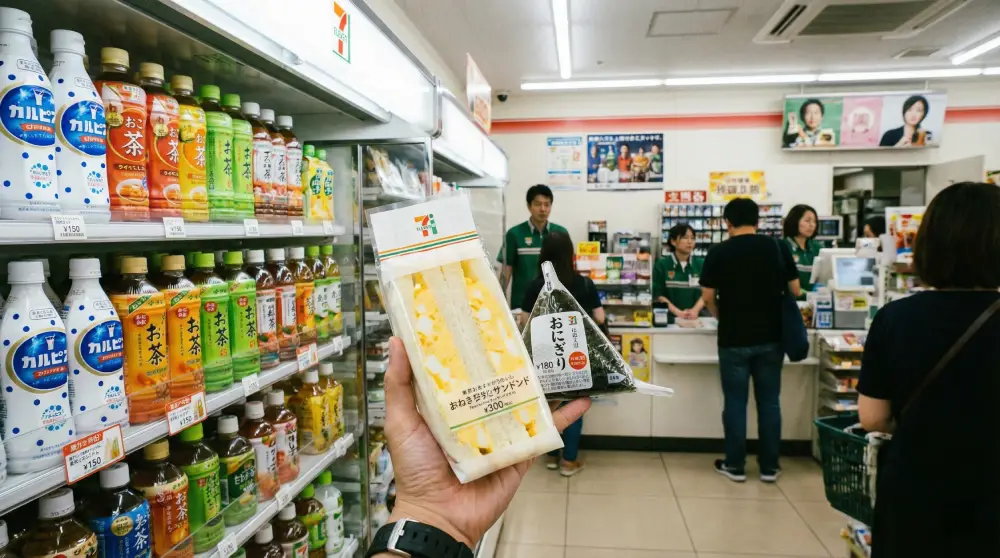
If you visited Japan 10 years ago, yes, it was pricey. But due to the weakening of the Japanese Yen over the last few years, Japan has become one of the best-value destinations in the developed world.
Food: You can eat a high-quality bowl of Ramen or a set meal (Teishoku) for $6 - $9 USD. Convenience store meals (Konbini) are legendary and cost $3 - $5.
Accommodation: While luxury ryokans are pricey, business hotels in Tokyo can be found for $80-$100 USD, which is comparable to Europe or the US.
Verdict: Don't let the price scare you. Your money goes a long way here in 2026.
Korea is still generally affordable, but prices in Seoul (especially Gangnam) have been creeping up.
Food: Street food is cheap ($3-$5), but Korean BBQ dinners with alcohol can add up quickly.
Transport: Taxis in Seoul are significantly cheaper than in Tokyo. This is a big plus if you stay out late after the trains stop.
This is the most critical technical difference that ruins trips for unprepared travelers. Connectivity is not just a luxury here; it is a survival tool.
Google Maps works perfectly in Japan. It tells you exactly which train car to board, which exit to take, and how much the fare is.
The Problem: The Tokyo Metro system is a labyrinth. Shinjuku Station alone has over 200 exits. You need constant internet to check your route. If you lose signal underground, you are lost.
The Solution: You need a reliable connection that works in subways. For a detailed guide on navigating this, check our article on How to Get Mobile Internet in Japan.
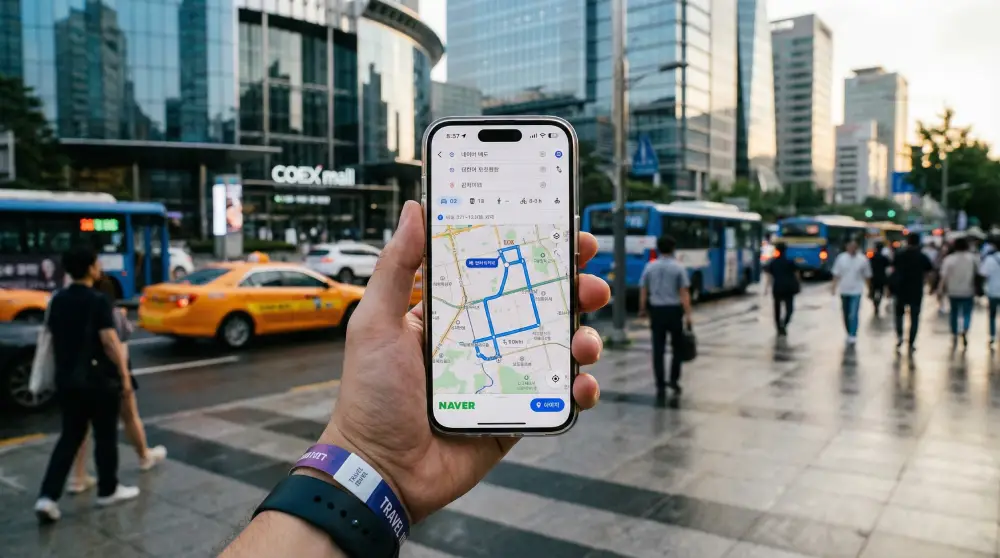
Warning: Google Maps does NOT provide walking or driving directions in South Korea due to government security laws. It is almost useless for navigation.
The Reality: If you rely on Google Maps, you will get lost. You must download local apps like Naver Map or KakaoMap.
The Catch: These apps are data-heavy and require real-time location tracking. Finding a cafe with Wi-Fi just to find your way to the hotel is a nightmare.
The Fix: You need your own high-speed mobile data to run Naver Map 24/7.
Recommendation: Don't rely on public Wi-Fi. Check out our guide on the Best eSIM for South Korea to ensure you have the data needed for local navigation apps.
This is not just a battle of flavors; it’s a battle of dining philosophies. Both countries offer some of the best food on the planet, but the experience is wildly different.
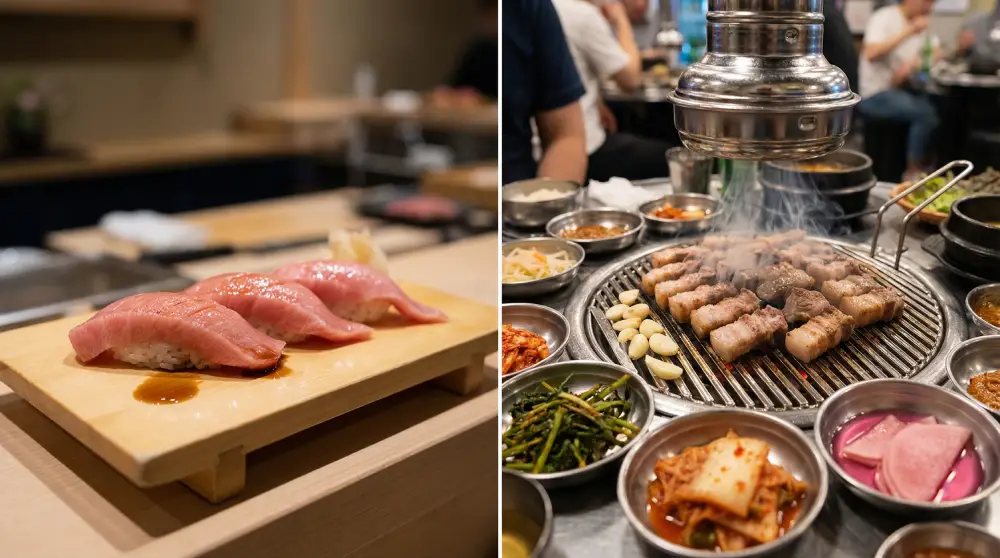
In Japan, the focus is on the purity of the ingredient and the mastery of the chef.
The Range: It’s not just Sushi. You have Ramen (every region has its own style), Tempura, Okonomiyaki (savory pancakes), and the incredible Wagyu/Kobe Beef.
The "Konbini" Culture: This is a highlight for every traveler. Japanese convenience stores (7-Eleven, Lawson, FamilyMart) are legendary. You can get a Michelin-quality egg salad sandwich, Onigiri (rice balls), or hot fried chicken (Famichiki) for under $3. It is the ultimate budget hack.
The Izakaya Experience: For a casual night out, locals head to Izakayas (Japanese pubs). You order small plates of Yakitori (grilled chicken skewers) and edamame while drinking draft beer or Highballs. It’s loud, smoky, and authentic.
Dining Etiquette: Tipping is not practiced (and can be considered rude). Also, slurping your noodles is encouraged—it shows the chef you are enjoying the meal!
Korean food is intense, spicy, garlic-heavy, and inherently social.
Communal Dining: You rarely eat alone in Korea. Korean BBQ is an event—you sit around a grill, cooking Samgyeopsal (pork belly) or Hanwoo beef, wrapping it in lettuce with garlic and Ssamjang sauce. It comes with endless free side dishes called Banchan (Kimchi, pickled radishes, spinach).
Chimaek (Chicken & Beer): Forget what you know about fried chicken. Korean Fried Chicken is double-fried, impossibly crispy, and coated in sweet and spicy sauces. Eating this with beer ("Maekju") by the Han River is a rite of passage.
Street Food & Markets: Places like Gwangjang Market in Seoul are food paradises. You must try Tteokbokki (spicy rice cakes), Hottaeok (sweet pancakes), and Gimbap.
The Cafe Scene: Korea has arguably the best cafe culture in the world. In neighborhoods like Seongsu-dong or Hongdae, you’ll find multi-story concept cafes serving artistic pastries and high-quality coffee. It’s not just about caffeine; it’s about the "vibe."
Both countries have world-class public transport, but the logistics (and the apps you need) are very different.
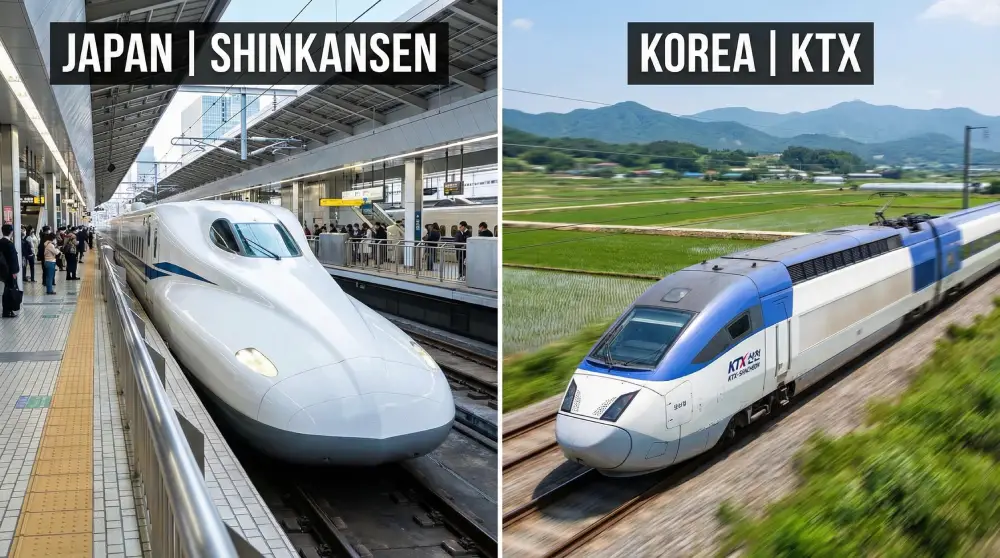
Japan’s train system is punctual to the second, but it can be overwhelming for first-timers.
The Shinkansen (Bullet Train): It is fast and futuristic, but pricey. A round trip from Tokyo to Kyoto costs about $200 USD.
Pro Tip: Since the JR Pass price hike in late 2023, buying individual tickets is often cheaper for standard itineraries.
Luggage Rule: If you have "oversized baggage" (large suitcases), you must reserve a seat with a luggage area on the Shinkansen. If you don't, you face a fine.
The Subway Maze: Tokyo has multiple subway operators (Tokyo Metro, Toei, JR Lines). A ticket for one line doesn't always work on the other. Transfers can involve walking 15 minutes underground.
The Hack: Use a Suica or Pasmo IC card (available on iPhone Apple Wallet). You just tap and go across all lines, vending machines, and even convenience stores. To reload it on your phone, you need an active internet connection. To avoid connection issues underground, check out our comparison of the Best eSIM for Japan to find the most reliable provider.
Taxis: Japanese taxis are expensive. The doors open automatically (don't touch them!). For shorter trips, stick to the subway.
Korea’s transport is incredibly efficient and significantly cheaper than Japan’s.
The KTX (Bullet Train): Fast and clean. A trip across the country (Seoul to Busan) takes 2.5 hours and costs only ~$45 USD. It’s a bargain compared to Japan.
Taxis are Affordable: Unlike Tokyo, taxis in Seoul are a viable transport option even for budget travelers. A 20-minute ride might cost $10-$15.
The App You Need: You cannot hail Uber easily. You need the Kakao T app to call taxis. It works in English, but you need data to use it.
The T-Money Card: This is the Korean version of the Suica card. You buy it at any convenience store (GS25, CU), load it with cash, and use it for subways, buses, and taxis nationwide.
Navigation Warning: As mentioned, Google Maps doesn't give walking directions here. You will rely on Naver Map to find the right bus stop or subway exit. Without a Best eSIM for South Korea, navigating the bus system is nearly impossible for non-Korean speakers.
Connectivity Check: In both countries, the transport systems are cashless and digital-first. Whether it’s reloading your Suica card in Tokyo or hailing a Kakao Taxi in Seoul, a dead phone means you are stranded. Ensure you have your Roafly Asia Regional eSIM active the moment you land.
Timing is everything in East Asia.
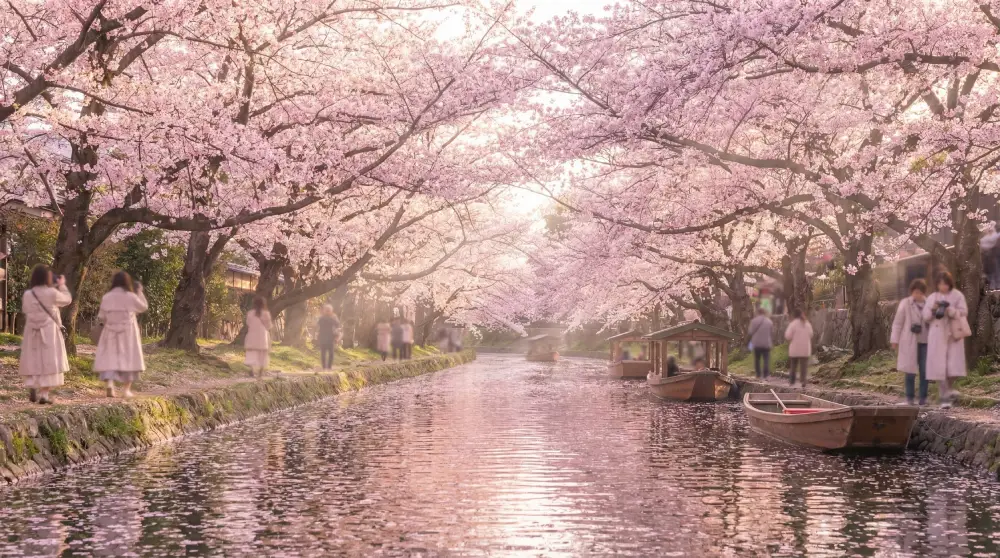
Spring (Sakura): Late March to early April is the famous Cherry Blossom season in both countries. It is breathtaking but crowded. If you want to catch this magical window, read our guide on the Best Time to Visit Japan to plan your dates perfectly.
Winter: If you love skiing, Japan (Hokkaido) is world-class. Korea also has great ski resorts near Seoul. In fact, Japan is consistently rated one of the Best Countries to Visit in January 2026 for winter sports enthusiasts.
Here is the secret: Most long-haul travelers visit both. It is very common to fly into Tokyo, spend 10 days in Japan, and then take a short 2-hour flight to Seoul for 4-5 days.
The Logistics: Flights between Japan and Korea (e.g., Fukuoka to Busan or Tokyo to Seoul) are short and cheap. There is even a ferry between Fukuoka and Busan!
The Connectivity Problem: Usually, you’d need to buy a SIM card in Narita, then throw it away and buy another one in Incheon. It’s wasteful and stressful.
The Roafly Solution: If you plan to visit both, don't buy single-country plans. Grab the Roafly Asia Regional eSIM. It covers Japan, South Korea, China, Singapore, Thailand, and more. One eSIM, zero swapping, instant connection in both countries.
Choose Japan if: It’s your first time in Asia, you value scenery and history, you are an Anime/Gaming fan, and you want to experience the unique "Omotenashi" culture. And remember, it's more affordable than you think!
Choose South Korea if: You want high energy, incredible nightlife, spicy food, shopping for skincare, and a fast-paced urban adventure.
Final Checklist for the Smart Traveler:
Japan Bound? Don't get lost in the subway maze. Grab your Japan eSIM.
Korea Bound? Remember Google Maps won't help you. Download Naver Map and get your Korea eSIM.
Doing Both? Save money and hassle with the Asia Regional Pack.
Enjoy the East Asian adventure! 🌸🍣🥢
Choose the perfect data plan for your trip
Choose the perfect data plan for your trip
Manage your eSIM in the app
Install, top up and track data.
Manage your eSIM in the app
Install, top up and track data.