

'%3e%3cg id='b'%3e%3cpath id='a' stroke='%23000' stroke-width='2' d='M-6-25H6m-12 3H6m-12 3H6'/%3e%3cuse xlink:href='%23a' y='44'/%3e%3c/g%3e%3cpath stroke='%23fff' d='M0 17v10'/%3e%3ccircle r='12' fill='%23cd2e3a'/%3e%3cpath fill='%230047a0' d='M0-12A6 6 0 0 0 0 0a6 6 0 0 1 0 12 12 12 0 0 1 0-24z'/%3e%3c/g%3e%3cg transform='rotate(-123.69)'%3e%3cuse xlink:href='%23b'/%3e%3cpath stroke='%23fff' d='M0-23.5v3M0 17v3.5m0 3v3'/%3e%3c/g%3e%3c/svg%3e)
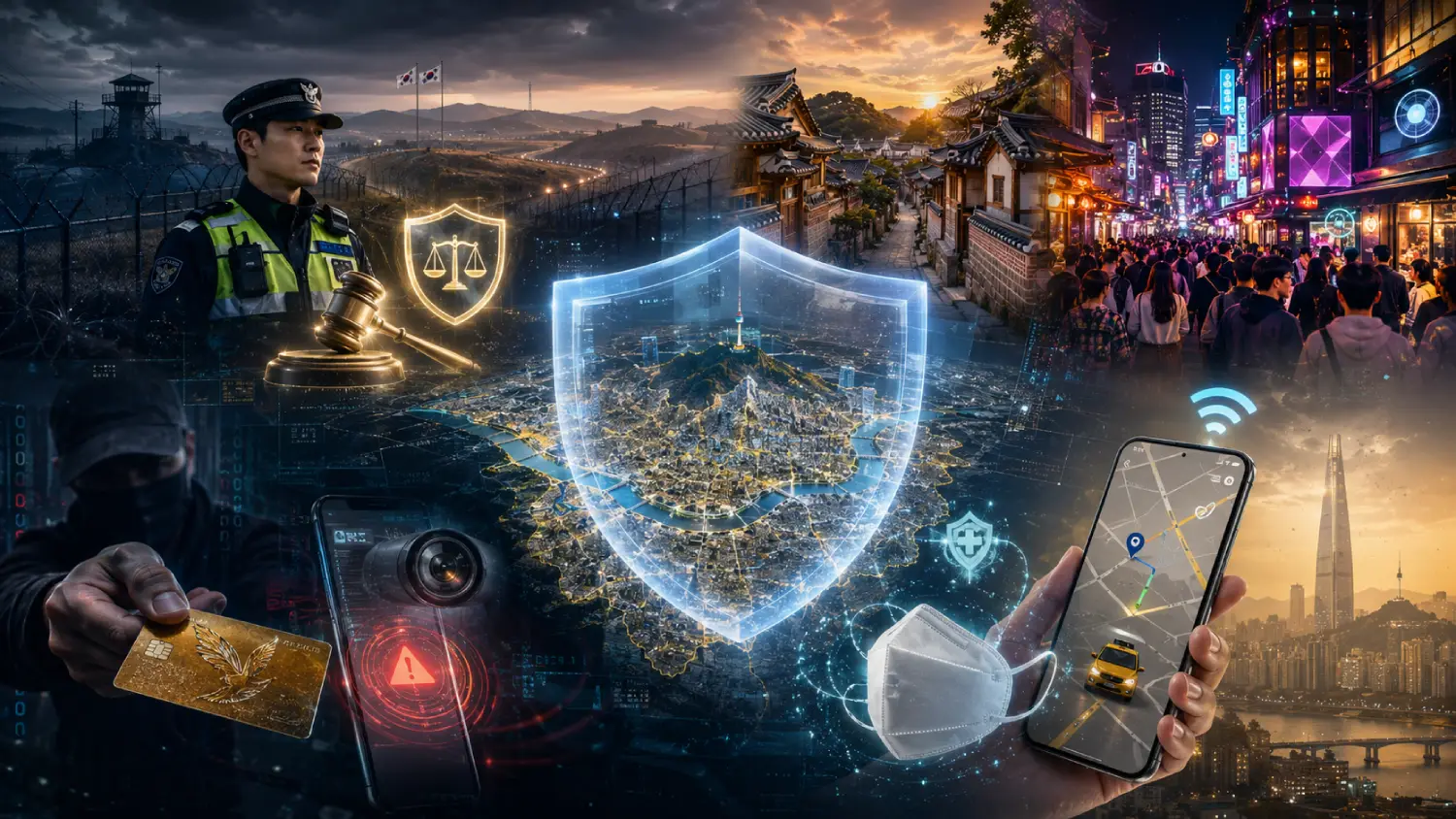
The short answer is an overwhelming yes. South Korea consistently ranks as of the safest countries on the planet for international travelers. You can comfortably walk through most neighborhoods at 3:00 AM without constantly looking over your shoulder.
However, the nature of "danger" in South Korea is vastly different from other global destinations. You are highly unlikely to face violent crime, muggings, or cartel violence. Instead, the risks here are much more subtle, ranging from aggressive traffic to psychological scams.
In 2026, the real threats are digital privacy violations, highly organized religious cult scams targeting foreigners, and sudden geopolitical tensions. Navigating these requires a sharp mind rather than physical defense. Before you pack your bags, it helps to understand exactly what you are walking into.
The Current Reality: Geopolitics, Policing & Strict Laws
South Korea operates under a unique cloud of geopolitical tension. The border with North Korea is heavily militarized, and headlines about missile tests frequently make international news. However, locals in Seoul go about their daily lives entirely unbothered by this reality.
Tensions on the peninsula can escalate with little notice, but this rarely impacts day-to-day tourism. It is crucial to stay informed, but panicking over news headlines will ruin your trip. The South Korean government has extensive emergency protocols in place that are highly effective.
When it comes to street crime, the statistics are incredibly reassuring. Violent crime against tourists is exceptionally rare, and gun ownership is strictly prohibited for the general public. You are more likely to lose your wallet by dropping it than having it stolen from you.
The police force in South Korea is highly visible, professional, and generally helpful to tourists. There are police boxes, known as Pachulso, scattered throughout every neighborhood. If you ever feel unsafe, stepping into of these stations guarantees immediate assistance.
However, strict laws govern both locals and visitors. You cannot plead ignorance if you break the rules, especially regarding public behavior and photography. Make sure you read up on the South Korea Tourist Bans & Laws to avoid hefty fines or legal trouble.
Drug laws in South Korea are notoriously severe and entirely unforgiving. Even trace amounts of illegal substances, including marijuana gummies, can lead to immediate deportation or lengthy prison sentences. The police routinely conduct random drug tests in certain nightlife districts, and foreigners are not exempt.
Regional Breakdown: Pristine Safe Zones vs. Areas of Caution
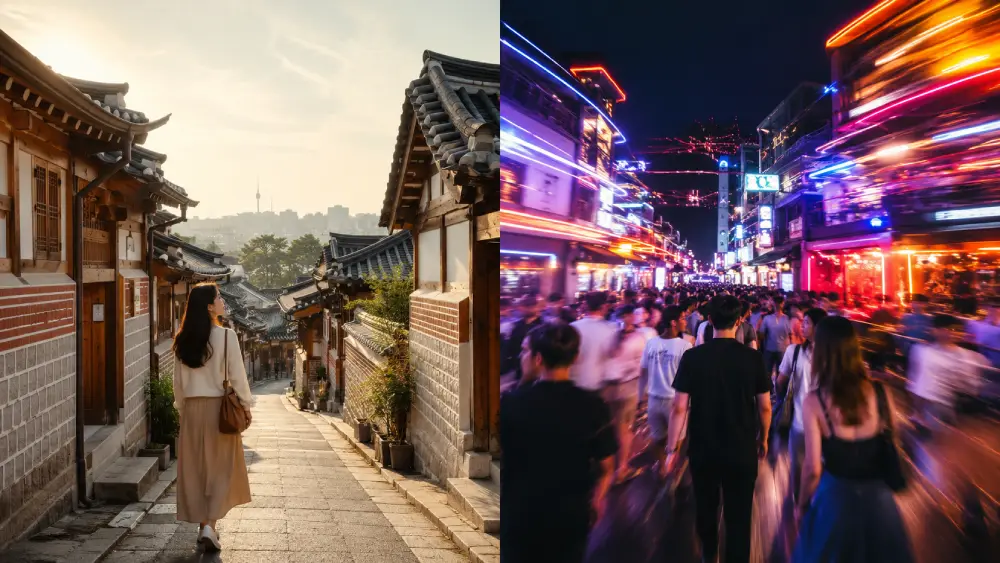
South Korea does not have "no-go zones" or dangerous slums in the way many Western or Latin American countries do. The entire country is remarkably secure, from the sprawling capital to the southern coast. However, different neighborhoods require different levels of vigilance.
Seoul is a massive metropolis divided by the Han River. Upscale areas like Gangnam, the shopping mecca of Myeongdong, and the historic Bukchon Hanok Village are pristine and heavily policed. You can explore these affluent areas freely at any hour of the day or night.
The nightlife districts, however, demand a higher level of street smarts. Hongdae and Itaewon are the epicenters of Seoul's party scene, drawing massive, energetic crowds every weekend. While generally safe, the sheer volume of intoxicated people can lead to unpredictable situations and occasional brawls.
In Itaewon specifically, the streets are famously narrow and can become dangerously congested on holiday weekends. Always maintain situational awareness and know where your nearest exit is. Pickpocketing, though rare in Korea overall, occasionally happens in these dense, distracted crowds.
If you are heading to the southern port city of Busan, the safety profile remains excellent. Haeundae Beach and Seomyeon are popular, highly secure tourist hubs filled with cameras. As always, stick to well-lit areas at night and avoid wandering alone on isolated stretches of the beach.
Jeju Island, often called the Hawaii of South Korea, is idyllic, peaceful, and heavily geared towards families. Crime here is almost non-existent, making it perfect for a relaxed getaway. If you are debating between a spring trip here or elsewhere, check out our Japan vs. South Kore guide.
Transportation Safety: Navigating the Urban Jungle
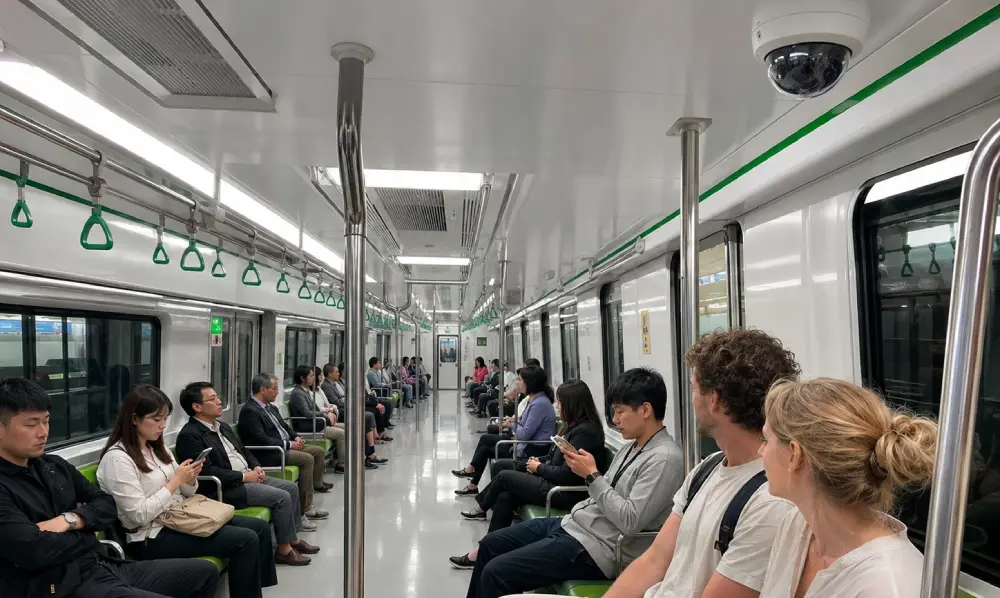
Public transportation in South Korea is world-class, impeccably clean, and extraordinarily safe. The Seoul Metropolitan Subway system is heavily monitored with CCTV cameras in every single car and on every platform. You can ride the trains late at night with complete peace of mind.
Buses are equally reliable and safe, though the driving style can sometimes feel erratic to foreigners. Bus drivers in Seoul are known for sudden stops and extremely sharp turns to beat traffic. Always hold the handrails tightly if you are standing during your commute.
Taxis are plentiful, affordable, and heavily regulated by the government. Violent crime involving taxi drivers is virtually unheard of. However, communication can be a barrier, so it is best to have your destination written in Korean or to use a ride-hailing application.
Uber works in South Korea, but it primarily summons local licensed taxis rather than private drivers. The local alternative, Kakao T, is the absolute best way to get around. Using the app ensures your route is tracked and the fare is predetermined, eliminating the risk of being scammed.
The biggest physical danger to tourists in South Korea is actually road traffic. The rate of fatal road accidents is surprisingly high compared to other developed nations. Vehicles frequently ignore pedestrian crossings, and delivery scooters aggressively weave through sidewalks.
Never assume a car will stop for you just because you have a green pedestrian light. Look both ways multiple times, and do not bury your face in your phone while crossing the street. Stick to underground or above-ground pedestrian walkways whenever possible.
Tourist Scams (The New Threat): Cults and Extortion
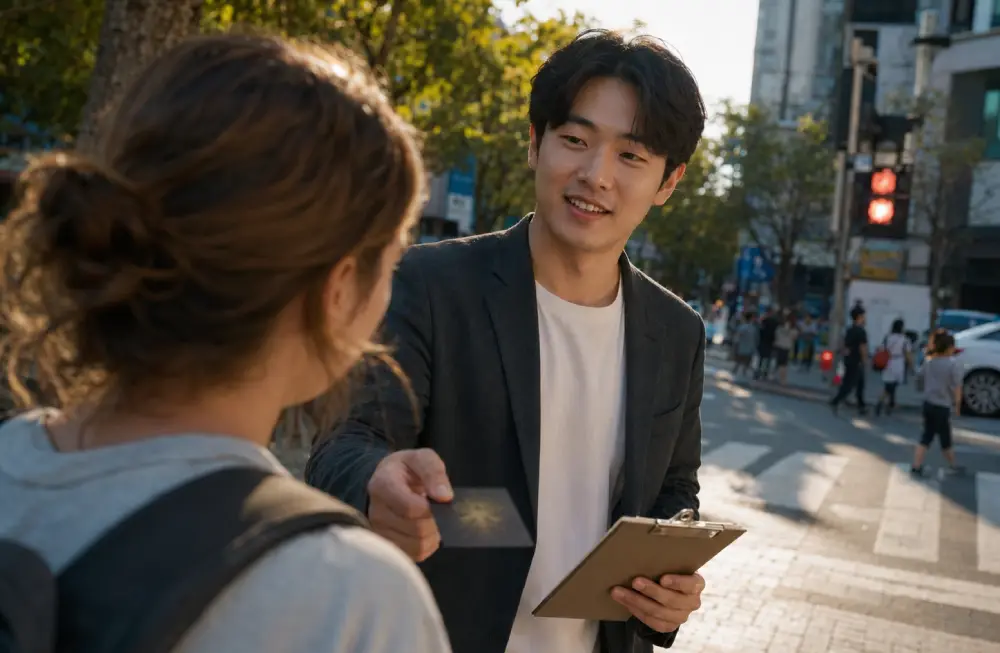
While you won't be mugged in Seoul, your wallet might still be emptied by sophisticated, psychological scams. The most prevalent issue targeting foreigners in 2026 is the religious cult scam. Approachable, friendly young locals will strike up a conversation under the guise of practicing English or conducting a cultural survey.
These seemingly innocent encounters quickly pivot into high-pressure invitations to participate in a "traditional Korean ceremony" at a hidden location. there, tourists are aggressively coerced into paying mandatory "donations" to leave the premises. Never agree to follow a stranger to an undisclosed location, no matter how polite they seem.
Bar overcharging is another persistent issue, particularly in areas like Itaewon and Hongdae. "Teaming" is a tactic where an attractive local will invite a foreign tourist to a specific, off-the-beaten-path bar. After a few drinks, the tourist is slapped with an extortionate bill running into the thousands of dollars, and bouncers will block the exit until it is paid.
To avoid this, stick to reputable, busy establishments and always check the menu prices before ordering. Never hand your credit card over to be taken out of your sight. If a stranger insists on taking you to an empty bar, decline firmly and walk away immediately.
Fake monks are a minor nuisance around major temples and tourist sites in central Seoul. They will approach you, offer a cheap wooden bracelet or golden card, and then aggressively demand a hefty cash donation. Real Buddhist monks in South Korea do not solicit money on the streets.
Finally, be mindful of tax refund rules to avoid overpaying for luxury goods. Many stores offer instant tax refunds, but you need your physical passport on hand. Make sure you understand the South Korea VAT Refund: Tax-Free Shopping Rules to ensure you don't get financially shortchanged at the airport.
Women’s Safety & Solo Travel: Security and Digital Threats
South Korea is highly rated as a top-tier destination for solo female travelers. The risk of physical assault or street harassment is significantly lower than in North America or Europe. You can dine alone, use public transit late at night, and walk through most neighborhoods comfortably.
However, the country does grapple with a deeply concerning digital crime issue known as "Molka" (hidden cameras). These tiny cameras are illegally installed in public restrooms, changing rooms, and sometimes even cheap motel rooms. The government cracks down on this heavily, but the paranoia among local women is entirely valid.
To protect yourself, stick to restrooms in major department stores, subway stations, or upscale cafes, which are frequently inspected by authorities. If a restroom has small holes filled with toilet paper or stickers, this is a sign that locals are blocking potential camera lenses.
Catcalling is incredibly rare in South Korea. The culture highly values public decorum, and drawing loud, aggressive attention to strangers is frowned upon. If you do experience unwanted attention, it is most likely to happen late at night in nightlife districts involving highly intoxicated individuals.
Drink spiking is a rising concern in the crowded, high-end clubs of Hongdae and Gangnam. Never leave your drink unattended on a table, and do not accept open drinks from strangers. If you feel disproportionately intoxicated, immediately seek help from the venue staff or your friends.
When packing, keep local fashion norms in mind to avoid unwanted stares. While incredibly short skirts and shorts are completely normalized, exposing your shoulders or cleavage is still considered slightly provocative by older generations. Dressing modestly on top will help you blend in seamlessly.
Health, Tap Water & Nature: Navigating the Elements
You can legally and safely drink the tap water in South Korea. It goes through rigorous purification processes and meets all international health and safety standards. However, most locals still prefer to drink filtered or bottled water due to the taste and the older pipe infrastructure in some historical buildings.
When it comes to health, air pollution is a major environmental hazard, particularly during the spring months. "Yellow dust" blows in from the Gobi Desert, mixing with local smog to create hazardous air quality levels that can cause respiratory issues. You should download an air quality app and wear a high-quality KF94 mask on bad days.
South Korea experiences a brutal monsoon season from late June through August. Torrential downpours can cause localized flash flooding, severe travel disruptions, and landslides in mountainous regions. If you are traveling during this time, heavy-duty waterproof gear is absolutely mandatory.
Typhoons occasionally strike the southern coast and Jeju Island in late summer and early autumn. These severe storms bring destructive winds and rain, sometimes grounding flights for days at a time. Always monitor local weather channels if you are traveling between August and October.
Mosquitoes are prevalent during the humid summer months, and while malaria is not a major concern, cases of Japanese Encephalitis do occur in rural, agricultural areas. Use strong insect repellent if you are hiking or spending extensive time in the countryside.
Medical facilities in South Korea are world-class, sterile, and highly efficient. However, doctors expect immediate, upfront payment, and they will not bill your foreign insurance directly. You must have comprehensive travel insurance to cover any out-of-pocket medical costs before you can file a claim back home.
The Ultimate Safety Tool: Staying Connected
In a country where you likely don't speak the language, having reliable, high-speed internet is your greatest safety asset. It allows you to instantly translate menus, navigate the complex subway system in real-time, and summon a Kakao T taxi if you find yourself lost in an unfamiliar neighborhood. Relying on public Wi-Fi is a massive security risk for your personal banking data.
Having constant internet access means you can check real-time air quality updates or receive life-saving government emergency broadcast alerts. It also ensures you can contact your embassy or the tourist police at a moment's notice without panicking. You do not want to be wandering around trying to find a café connection during a crisis.
Need data in South Korea? Get an eSIM!
Choose the perfect data plan for your trip

Manage your eSIM in the app
Install, top up and track data.
Before you land, make sure you understand the communication infrastructure by reading our guide on How to Get Internet in South Korea. A digital connection is non-negotiable for a smooth and secure trip.
The most secure and efficient way to guarantee this connection is by downloading an eSIM. It activates the moment you touch down, keeping you protected from shady, unsecured airport Wi-Fi networks. Grab your South Korea eSIM right now.
For a deeper dive into the technical options and the best coverage maps available this year, compare the market leaders in our Best eSIM for South Korea breakdown.
Official Travel Advisories (2026 Update)
Global governments constantly monitor the geopolitical and domestic security situation on the Korean Peninsula. While the media often hypes up border tensions for clicks, the official diplomatic stance remains exceptionally calm. As of May 2026, major Western governments share a unified safety consensus.
-
United States State Department: Currently lists South Korea as Level 1: Exercise Normal Precautions. They advise standard situational awareness and note the excellent local medical facilities available to foreigners.
-
UK Foreign, Commonwealth & Development Office (FCDO): Advises that South Korea is generally safe to visit. They specifically highlight the high rate of traffic accidents and the potential for sudden, severe typhoons in the late summer months.
-
Government of Canada: Recommends travelers exercise normal security precautions. They warn tourists about the extremely heavy penalties for drug offenses and the high level of air pollution during the spring.
It is always wise to register your travel plans with your respective embassy before departure. Also, ensure you are fully aware of what you can legally bring into the country by reviewing the South Korea Airport Customs Rules to avoid confiscation or fines at the border.
The Verdict: Is South Korea Safe?
Yes, South Korea is incredibly safe for tourists in 2026. The risk of violent crime is negligible, the public infrastructure is robust, and the society places a high value on order and respect. As long as you respect local laws and stay alert to modern scams, you will have a spectacular and highly secure journey.
-
Ignore the Cults: Never follow overly friendly strangers who approach you on the street asking for directions or offering cultural surveys.
-
Watch the Crosswalks: Do not trust cars to stop. Pedestrian right-of-way is often ignored by delivery scooters and aggressive taxi drivers.
-
Inspect the Restrooms: Be aware of the "Molka" hidden camera issue and try to use public facilities in major, reputable buildings.
-
Mask Up in Spring: Monitor the AQI daily and wear a KF94 mask when the yellow dust pollution reaches hazardous levels.
-
Stay Connected: Always have an active data plan to use Kakao T, Naver Maps, and Papago translation to navigate safely at all hours.
Note: Travel safety situations can change rapidly. This information is accurate as of May 2026. Always exercise street smarts and consult official advisories before your trip.