

'%3e%3cpath fill='%23001489' d='M0 0v6h9V0z'/%3e%3cpath fill='%23e03c31' d='M0 0v3h9V0z'/%3e%3cg stroke='%23fff' stroke-width='2'%3e%3cpath id='d' d='m0 0 4.5 3L0 6m4.5-3H9'/%3e%3cuse xlink:href='%23b' stroke='%23ffb81c' clip-path='url(%23c)'/%3e%3c/g%3e%3cuse xlink:href='%23d' fill='none' stroke='%23007749' stroke-width='1.2'/%3e%3c/g%3e%3c/svg%3e)
-
Best Months for First-Timers: May to September offers unparalleled wildlife viewing across the northern reserves, while November to March brings optimal beach weather to the southwestern coast.
-
Best Months for Budget Travelers: May and August present excellent shoulder-season deals, slashing accommodation and flight prices across major tourist hubs.
-
Best Months to Avoid Peak Crowds: May and September provide a sweet spot of excellent weather conditions without the massive influx of school holiday crowds.
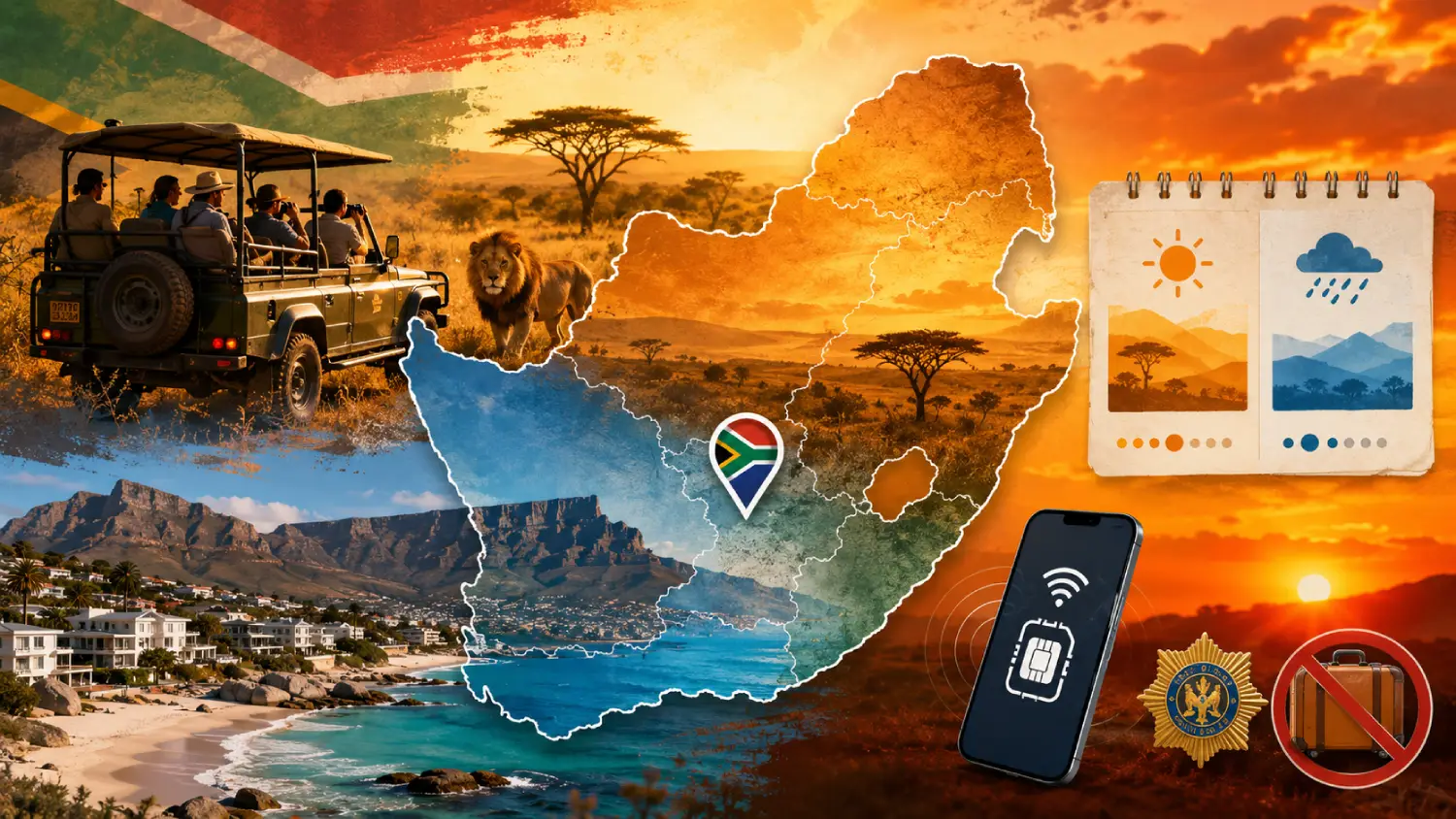
South Africa by Season: What You Really Get
South Africa's seasons are inverted relative to the Northern Hemisphere, which means winter runs from June to August and summer spans December to February. Understanding these shifts helps ensure you don't show up to a coastal retreat during a winter deluge or a safari during intense summer humidity.
| Season (Months) | Typical Conditions | Crowds | Costs | Best For |
| Winter (May–Sep) | Clear skies, cold nights, dry in the north; rainy and windy in Cape Town. | Moderate (High in Kruger) | Mid-range | Big Five safaris, wildlife viewing, whale watching. |
| Spring (Oct–Nov) | Warming temperatures, blooming flowers, occasional afternoon thundershowers. | Medium | Moderate | West Coast wildflowers, early safaris, sightseeing. |
| Summer (Dec–Feb) | Hot and sunny in Cape Town; high heat and dramatic afternoon storms in Kruger. | Very High | Premium | Beaches, nightlife, Cape Winelands, festive holidays. |
| Autumn (Mar–Apr) | Mild, comfortable temperatures nationwide; cooling down but mostly dry. | Medium | Moderate | Wine harvest, hiking, pleasant cross-country travel. |
Regional Differences (Microclimates & Geography)
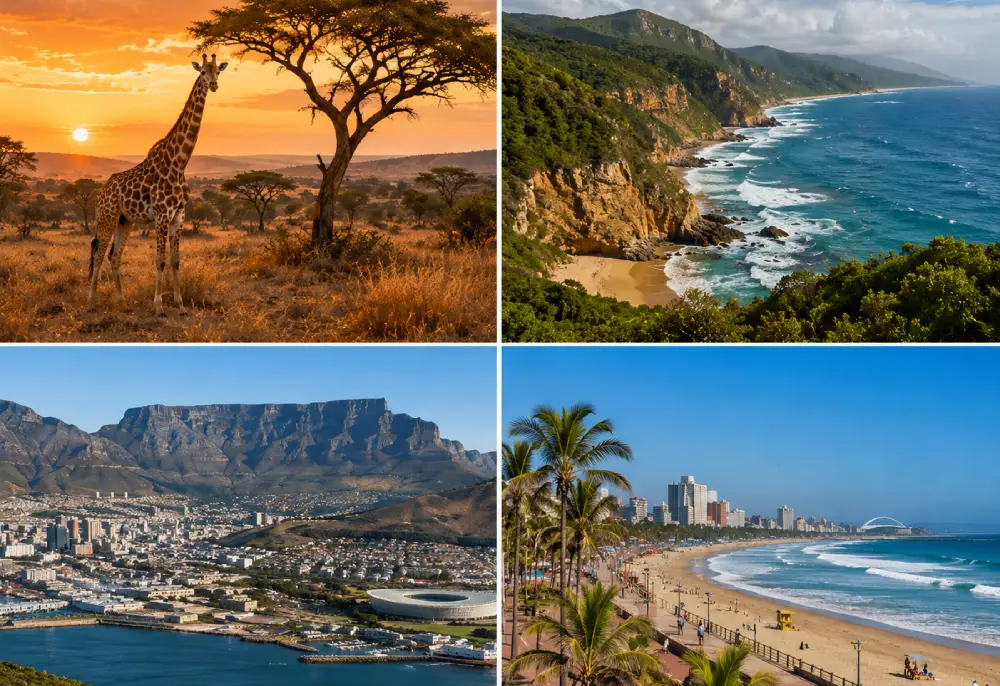
Greater Kruger & The North (Safari Hub)
The northern safari territories experience a classic summer-rainfall climate. From November to March, the bush becomes incredibly thick and lush, which makes spotting hidden wildlife a bit more challenging.
Conversely, the dry winter months from May to September cause the vegetation to die back. Animals naturally congregate around dwindling waterholes, offering spectators front-row seats to spectacular game viewing.
Cape Town & The Western Cape (Mediterranean Vibe)
Cape Town operates on a Mediterranean climate that runs completely opposite to the safari north. Winters here are wet, chilly, and tempestuous, often making indoor wine tastings more appealing than outdoor hikes.
Summer brings long, hot, dry days perfect for exploring Table Mountain or lounging on Clifton Beach. When prepping your bags for different provinces, keep in mind local regulations found in our guide on South Africa Airport Customs Rules: Alcohol, Cigarettes, Vaping and know the standard South Africa Tourist Bans & Laws to avoid legal hiccups at checkpoints.
The Garden Route & Eastern Cape (Mild & Coastal)
The Garden Route enjoys a wonderfully temperate marine climate with rain distributed relatively evenly throughout the entire year. Spring and autumn are spectacular along this stretch, offering mild hiking weather and gorgeous coastal vistas.
The Eastern Cape features superb, malaria-free game reserves that remain excellent for viewing wildlife year-round. It serves as a fantastic alternative if you want to mix coastal driving with a mid-year safari.
KwaZulu-Natal & The East Coast (Subtropical Warmth)
Durban and the surrounding KwaZulu-Natal coastline feature a warm, subtropical climate. Summers can feel incredibly hot and sticky, with high humidity and frequent evening downpours.
Winter is arguably the best time to visit this region, as daytime temperatures hover comfortably around 24°C. The ocean water stays warm enough for swimming all year long, making it a favorite winter escape for locals.
Month-by-Month Cheat Sheet
-
January: Peak summer brings scorching temperatures across the country and heavy local crowds to the beaches. It is a fantastic time for nightlife in Cape Town but expect maximum pricing everywhere.
-
February: The intense festive crowds begin to dissipate, leaving behind beautiful, hot beach weather. It is an ideal month for wine tasting in Stellenbosch and long evenings on the coast.
-
March: Temperatures begin to mellow into comfortable warmth nationwide. This month features incredible cultural energy, highlighted by the world-famous Cape Town International Jazz Festival.
-
April: Crisp mornings and golden, clear afternoons make this a dream month for outdoor adventurers. It is highly recommended for hiking in the Drakensberg Mountains, though Easter holidays bring temporary price spikes.
-
May: This marks the official transition into winter, bringing dry, clear days to the safari parks. Vegetation thins out, signaling the start of the prime wildlife-viewing window.
-
June: Winter arrives in full force with freezing nights in the northern bushveld and rainy days in Cape Town. Safari tracking is exceptional, and the first southern right whales appear along the southern coast.
-
July: Excellent game viewing coincides with the mid-year school holidays, causing family safari lodges to book out early. Pack heavy layers for morning game drives, as open-vehicle safaris are freezing.
-
August: The dry winter landscape makes spotting the Big Five remarkably easy. Meanwhile, the West Coast transforms into a vibrant carpet of blooming wildflowers as early spring approaches.
-
September: Spring delivers lovely mild weather across most provinces, making it a fantastic cross-country travel month. Whale watching peaks in Hermanus, and safari conditions remain top-tier before the rains arrive.
-
October: Temperatures rise quickly, creating hot days in the north while Cape Town enjoys fresh, sunny spring conditions. Shoulder-season pricing makes this a highly cost-effective time to travel.
-
November: The rainy season begins in the northern safari zones, turning the parched brown earth into a lush green paradise. Newborn animals appear everywhere, making it an exciting time for birdwatchers and nature lovers.
-
December: High summer brings the commencement of the major festive holiday rush. Accommodation rates hit their absolute peak, requiring travelers to book up to a year in advance.
Best Time to Visit by Traveler Type
For Wildlife Safaris & Game Drives
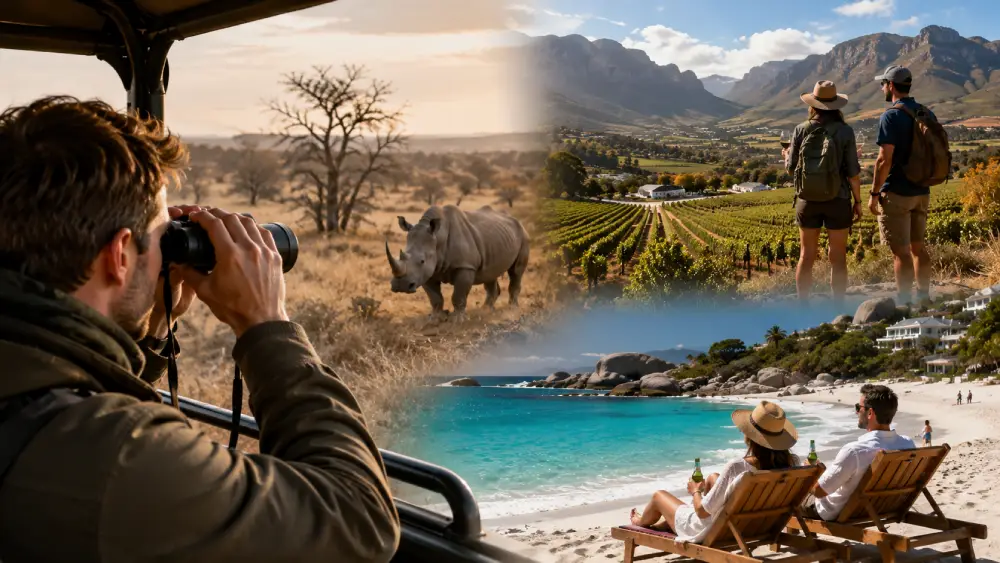
To maximize your chances of spotting the elusive Big Five, lock in your dates between May and September. The lack of rain forces animals to frequent predictable watering holes, and the sparse winter brush prevents them from hiding. Morning drives are cold, but the daytime skies are consistently clear and sunny.
For Beaches, Coastal Relaxation & Swimming
If your dream trip involves coastal sunbathing and beach hopping, aim for December to February in Cape Town. For travelers who prefer fewer crowds and lower humidity, the subtropical beaches of Durban are spectacular from April to September. The warm Agulhas current ensures the Indian Ocean remains comfortable even during winter.
For Budget Travelers & Backpackers
The ultimate windows for securing lower rates are the shoulder months of May and September. During these periods, safari lodges and boutique hotels slash their prices to fill empty rooms. Flight paths are less congested, and you can explore top attractions without long queues.
For Sightseeing, Hiking & Wine Tasting
The shoulder seasons of autumn (March to May) and spring (October to November) offer the most comfortable trekking conditions. You will avoid both the scorching summer heatwaves and the stormy winter downpours. Autumn is particularly beautiful in the Winelands, as the vineyards turn rich shades of amber and gold during the annual harvest.
Staying informed on safety variables like power outages and security is key to an uninterrupted trip. Make sure to review our comprehensive resource on Is South Africa Safe ? Crime Reality, Safaris & Load Shedding before finalizing your daily sightseeing itinerary.
Festivals & Special Dates to Plan Around (2026)
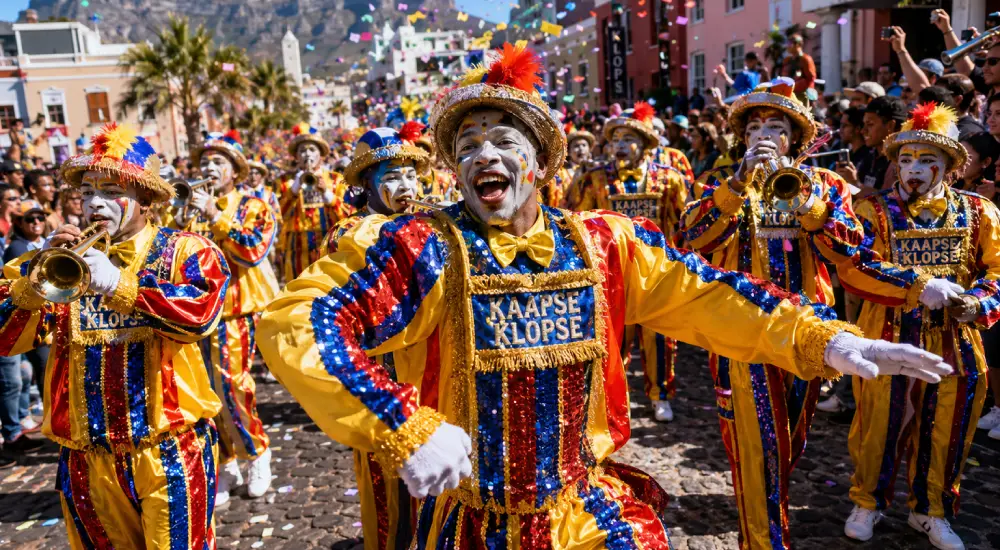
Cape Town Minstrel Carnival (Kaapse Klopse) – January 5, 2026
This massive cultural parade takes over the streets of Cape Town right after New Year. Thousands of musicians and dancers in bright outfits march through the city center, celebrating historic Cape culture. It is an unforgettable spectacle, but expect major road closures and packed downtown streets.
Cape Town International Jazz Festival – March 27–28, 2026
Known as "Africa's Grandest Gathering," this iconic music festival draws global jazz legends and tens of thousands of fans to the Cape Town International Convention Centre. Accommodation in the city center sells out months in advance for this weekend. If you are a music lover, plan your itinerary directly around these late March dates.
The Rand Show (Johannesburg) – April 2–6, 2026
A massive historical institution in Johannesburg, this multi-day event blends large-scale consumer expos with an energetic family carnival. It is fantastic for anyone wanting to experience local Joburg culture, food stalls, and live entertainment. Traffic around the expo center peaks heavily during this week.
Hermanus Whale Festival – September 2026
This eco-arts festival celebrates the annual return of southern right whales to the coastal waters of Walker Bay. Hermanus offers some of the best land-based whale watching in the entire world. The town fills up completely with eco-tourists, making advanced hotel bookings mandatory.
A Quick Note on Staying Connected
Landing in South Africa with an active internet connection is essential for a smooth vacation. You will need live data to navigate coastal highways, track real-time safari maps, check load-shedding schedules, and request ride-share transport safely.
Need data in South Africa? Get an eSIM!
Choose the perfect data plan for your trip
Setting up a South Africa eSIM prior to your departure is the most streamlined way to secure instant data the moment your plane touches down. To explore the best connectivity methods for your upcoming trip, take a look at our detailed comparisons in Best eSIM for South Africa as well as our complete guide on How to Get Internet in South Africa.
FAQ: Best Time to Visit South Africa
What is the overall cheapest month to visit South Africa?
May is widely considered the cheapest month to visit. The summer crowds are entirely gone, winter safari rates are just beginning, and airlines offer heavily discounted seats to fill planes before the mid-year rush.
When is the absolute best month for a Kruger safari?
July and August are unmatched for game viewing in Kruger National Park. The winter drought peaks during these months, forcing animals to stay close to primary rivers and waterholes, creating ideal viewing conditions.
Does South Africa experience a monsoon season?
No, South Africa does not have a true monsoon season. However, the northern regions experience dramatic afternoon summer thundershowers between November and March, which bring heavy downpours followed by quick clearing.
Is it worth visiting Cape Town during the winter months?
Yes, if you enjoy cozy indoor dining, green landscapes, and robust wine tastings next to fireplaces. However, if your heart is set on hiking Table Mountain or visiting beaches, the winter rains of June to August can disrupt plans.
When can you see the famous wildflowers bloom?
The spectacular desert bloom on the West Coast and Namaqualand happens from mid-August to early September. The timing depends heavily on winter rainfall, creating a massive, brief blanket of color across the landscape.
How far in advance should I book a holiday for December?
You should book your accommodation, domestic flights, and national park permits at least 6 to 9 months in advance. December is the main summer holiday for South Africans, meaning local families fill up coastal towns rapidly.
