Download the App and manage your eSIMs easily
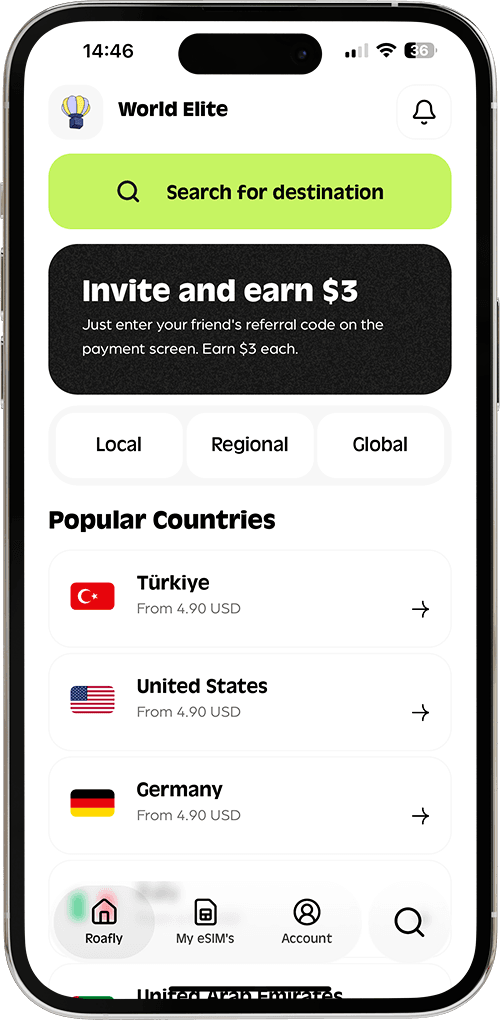
Create your order quickly
See your eSIM details
Track your remaining data
Download the App and manage your eSIMs easily
Create your order quickly
See your eSIM details
Track your remaining data
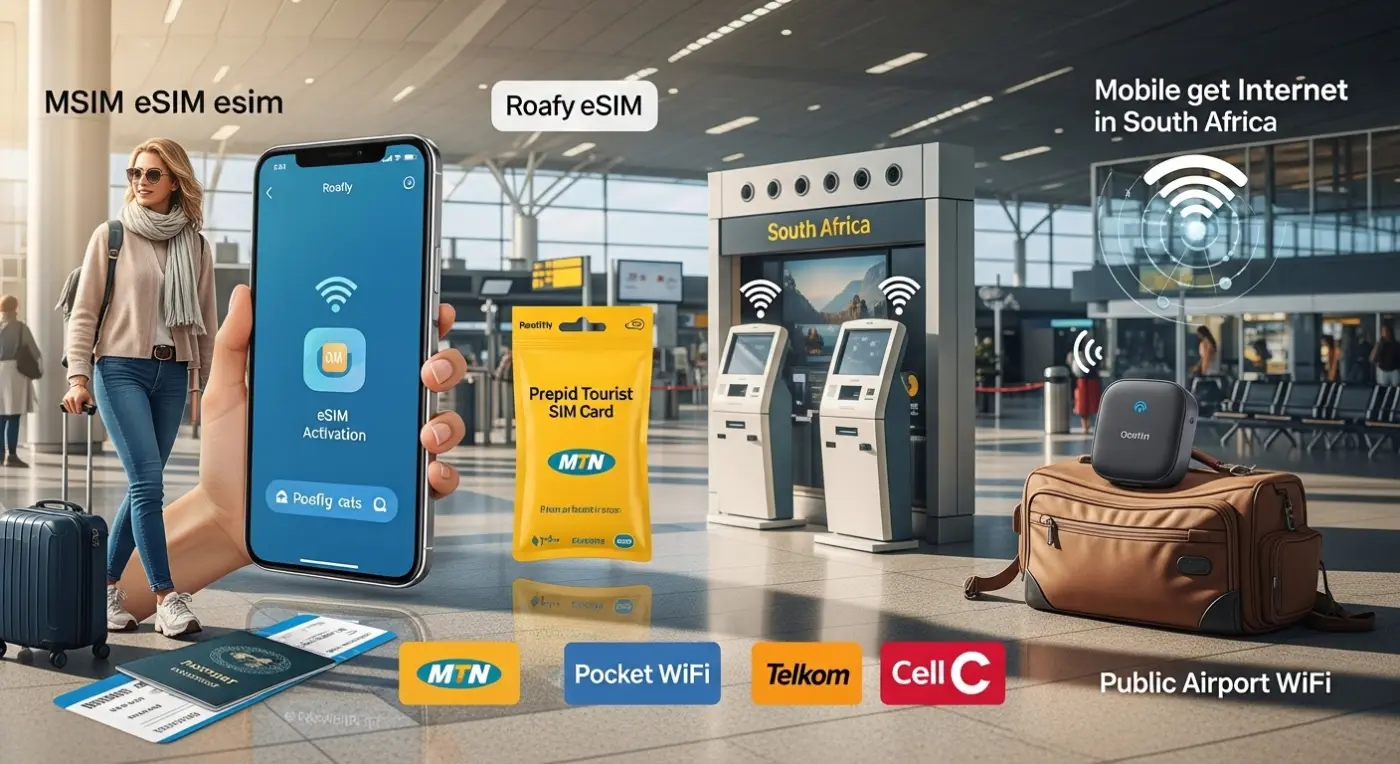
Planning a trip to South Africa and wondering how to stay connected? The good news is that getting mobile internet is usually straightforward, especially if you land in Johannesburg, Cape Town, or Durban. The main decision is not whether you can get internet, but which option makes the most sense for your trip: airport SIM cards, local prepaid SIMs, a travel eSIM, pocket WiFi, or just relying on Wi-Fi.
Vodacom
Instant delivery
From 4.50 USD

Ethan Brooks
Updated Mar 28, 2026
10 min read
Jump to section
👇Best for most trips
Vodacom

South Africa
10 GB · 30 days
Enough for maps, bookings and everyday travel.
Hotspot supported
$21.00
From 4.50 USD
For most travelers in 2026, the best setup depends on how quickly you need data after landing, how long you are staying, and whether you want to deal with in-store registration. South Africa’s strongest mobile coverage is generally associated with Vodacom and MTN, and both operators provide prepaid options, while free airport Wi-Fi is also available at major airports.
There are five practical ways to get online in South Africa:
| Option | Best for | Typical cost | Main downside |
|---|---|---|---|
| Airport SIM card | Travelers who want data immediately after landing | About $17.54 to $41.01 for tourist bundles | Usually more expensive than local prepaid |
| Local prepaid SIM card | Longer stays and better local value | From about $0.59 to $17.54+ depending on SIM and bundle | Registration takes time |
| Roafly eSIM | Travelers who want setup before arrival | $4.50 to $34.90 | Requires an eSIM-compatible phone |
| Pocket WiFi | Families or groups with multiple devices | From about $6.90+ per day | Extra device to carry and charge |
| Airport/public Wi-Fi | Light use, short trips, backup access | Often free | Limited speed, time, coverage, and privacy |
These options are all workable, but they serve different travel styles. If you want internet the moment you land without queueing at a kiosk, eSIM is the simplest route. If you are staying longer and want a local number, a prepaid SIM from a city store can still work well.
Choose the perfect data plan for your trip
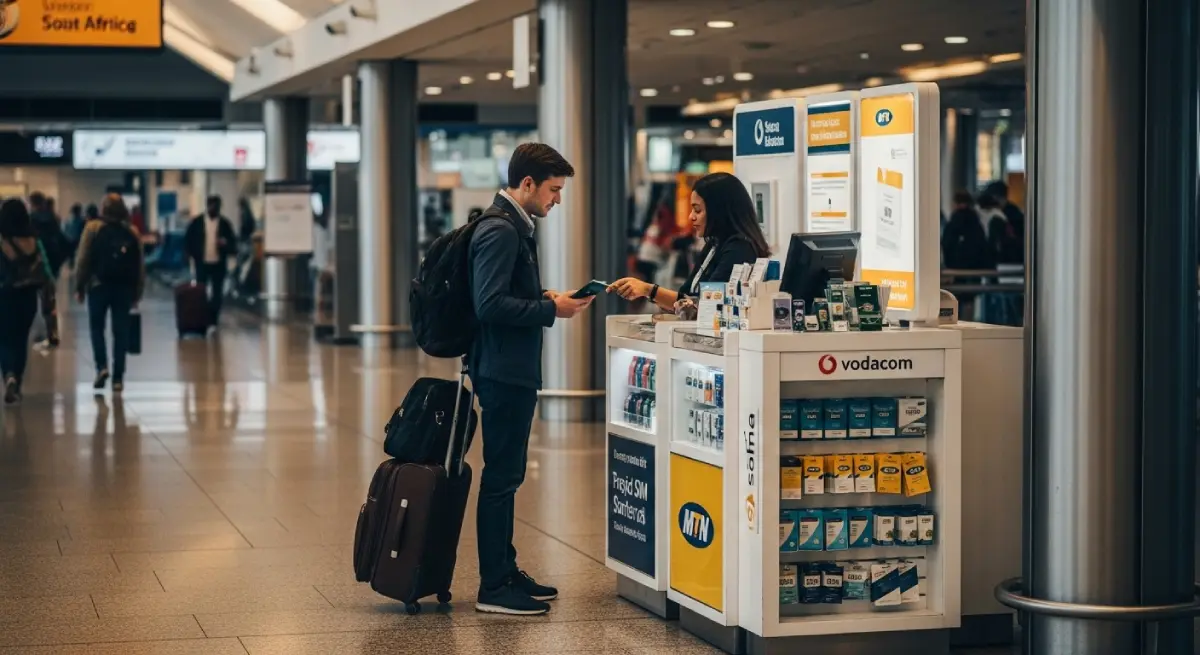
If convenience matters more than price, airport SIM cards are the easiest physical option. At major arrival points such as O.R. Tambo International Airport, travelers can find mobile shops or kiosks shortly after landing. Airports Company South Africa also offers free Wi-Fi, which gives you a safety net while you compare plans or activate a line.
The clearest official airport-style tourist bundle currently available is the Vodacom Travel SIM Bundle, which comes in three versions:
| Airport / tourist SIM option | What you get | Validity | Price in ZAR | Approx. price in USD* |
|---|---|---|---|---|
| Vodacom Travel SIM Bundle | 3GB + 30 minutes + R50 airtime + 30 SMS | 30 days | R299 | $17.54 |
| Vodacom Travel SIM Bundle | 5GB + 50 minutes + R100 airtime + 50 SMS | 30 days | R449 | $26.34 |
| Vodacom Travel SIM Bundle | 10GB + 100 minutes + R150 airtime + 100 SMS | 30 days | R699 | $41.01 |
*USD conversions are approximate using the South African Reserve Bank’s rate of R17.0435 per $1 on 26 March 2026.
Independent on-the-ground airport pricing checks from Johannesburg also show that MTN prepaid airport pricing can be lower if you build your own bundle: one report lists an MTN prepaid SIM at R63.50 with 60 ZAR airtime, and data add-ons such as 1GB for R99, 3GB for R229, and 6GB for R399 at the airport. That works out to roughly $3.73 for the SIM, $5.81 for 1GB, $13.44 for 3GB, and $23.41 for 6GB.
The trade-off is simple: airport SIMs save time, not money. They are great if you need maps, ride-hailing, banking codes, or WhatsApp right after arrival. But if your trip is longer than a week, city stores and supermarkets often give you more flexibility on bundle choice.
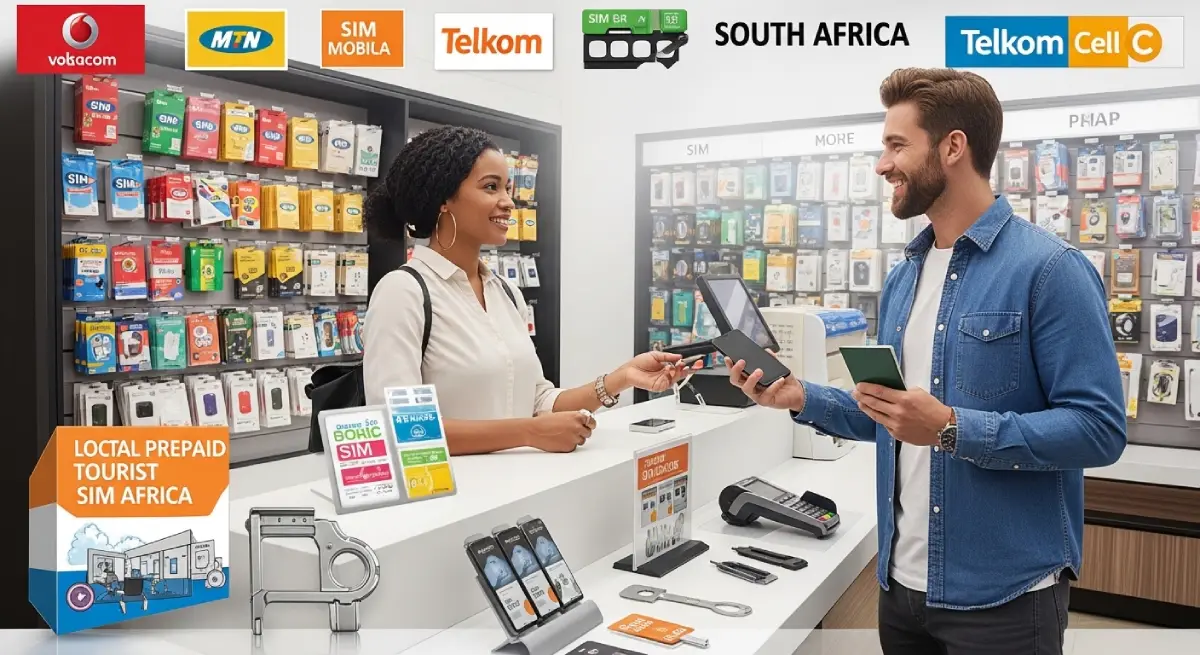
Buying a local SIM in the city is still a solid option in 2026, especially if you want to top up as you go. In South Africa, prepaid SIMs are widely sold through operator shops and participating retailers. MTN says a prepaid SIM is included in every starter pack, and Vodacom also sells prepaid starter products and data bundles online and in stores.
The biggest thing to know is SIM registration. South Africa requires SIM registration under RICA, and operators ask for identity details before activation. Vodacom’s support pages state that registration requires items such as a cellphone or starter pack reference, SIM number, full names, and passport number for foreign travelers. ICASA also notes that SIM registration is required for mobile users in South Africa.
Here is a useful snapshot of local prepaid pricing you can expect from major operators and common prepaid bundles:
| Local SIM / prepaid option | What you get | Validity | Price in ZAR | Approx. price in USD* |
|---|---|---|---|---|
| MTN starter pack at retail | Starter pack only | — | R9.99 | $0.59 |
| MTN prepaid bundle | 1GB | 30 days | R85 | $4.99 |
| MTN prepaid bundle | 2GB | 14 days | not shown in summary list | — |
| Vodacom weekly prepaid bundle | 1.2GB | 7 days | R73 | $4.28 |
| Vodacom weekly prepaid bundle | 2.2GB | 7 days | R105 | $6.16 |
| Vodacom weekly prepaid bundle | 6GB | 7 days | R210 | $12.32 |
| Vodacom travel-style prepaid bundle | 3GB + talk/text extras | 30 days | R299 | $17.54 |
*Approximate USD conversion based on SARB rate of R17.0435 per $1 on 26 March 2026.
A local SIM makes the most sense if you are staying for two weeks or longer, want some voice minutes, or do not mind stopping at a store after arrival. The downside is that the process is less immediate than an eSIM. You may need to show documents, wait for activation, and choose from a larger bundle menu that is not always designed with short-term travelers in mind.
For most visitors, Vodacom and MTN are the safest names to look for when coverage matters. Vodacom’s official coverage map is live in 2026, and MTN also provides a national coverage search tool. In practice, those are usually the networks travelers prioritize for cities, road trips, and many safari routes.
If you want the easiest setup, eSIM is the most travel-friendly option. You can install it before departure, land in South Africa, and get connected without finding a kiosk, opening your passport in a queue, or handling a plastic SIM card. That is especially useful if you arrive late, have a domestic transfer, or just want data ready for Uber, Google Maps, and banking apps as soon as the plane lands.
For South Africa, Roafly’s current eSIM packages are:
| Roafly South Africa eSIM | Validity | Price |
|---|---|---|
| 1GB | 7 days | $4.50 |
| 3GB | 30 days | $8.90 |
| 5GB | 30 days | $12.00 |
| 10GB | 30 days | $21.00 |
| 20GB | 30 days | $34.90 |
Roafly’s South Africa eSIM is data-only, supports mobile hotspot, works in South Africa, uses the Vodacom network, does not require eKYC, and the validity starts when the eSIM connects to a supported network. Installation methods include iOS Direct Install, QR Code, and Manual setup. Based on the package details provided, it is a straightforward option for travelers who want mobile data without local registration steps.
This is the simplest choice for most short trips. A 7-day city break can fit comfortably into the 1GB or 3GB range if you use hotel Wi-Fi regularly. A 2- to 3-week trip with maps, messaging, some social media, and a bit of tethering usually fits better in the 5GB or 10GB range. If you expect frequent uploads, remote work, or long road travel, 20GB gives you a much safer buffer.
If you want a deeper breakdown before choosing, the related best eSIM for South Africa guide is a helpful next read. And if you are already comparing country options for a bigger regional trip, checking the South Africa eSIM page can make it easier to match your trip length with the right package.
Choosing the right internet setup in South Africa gets easier when you match it to your travel style.
Best for most trips
Vodacom
South Africa
10 GB · 30 days
Enough for maps, bookings and everyday travel.
Hotspot supported
$21.00
From 4.50 USD
| Traveler type | Best option | Why |
|---|---|---|
| Short city-break traveler | Roafly eSIM 1GB or 3GB | Quick setup and no store visit |
| Two-week vacation traveler | Roafly eSIM 5GB or 10GB | Better convenience for moderate daily use |
| Long-stay traveler | Local prepaid SIM | More flexibility for local top-ups and voice |
| Family or group | Pocket WiFi or one phone hotspotting | Can connect multiple devices |
| Budget backup user | Airport/public Wi-Fi + small eSIM | Cheap and flexible for light data use |
For many travelers, the real sweet spot is a moderate eSIM plan plus hotel Wi-Fi. That combination gives you internet all day without overpaying for a large local tourist bundle. It also avoids the risk of landing, needing a verification SMS or transport app, and having no working connection.
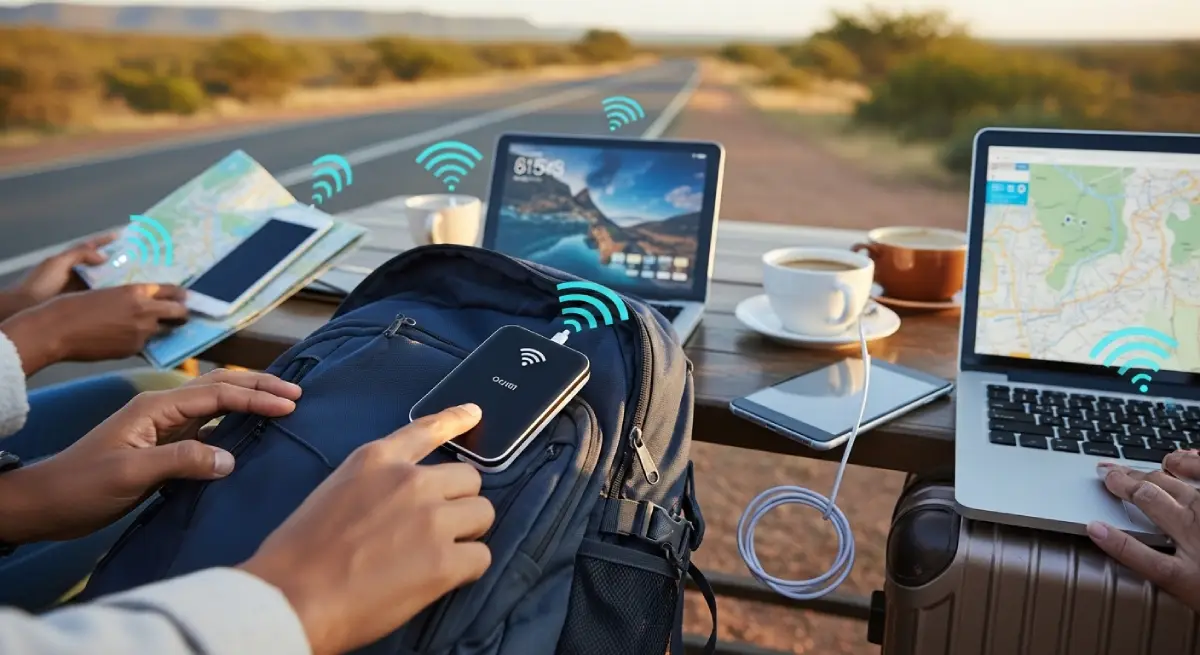
Pocket WiFi still exists, but it is a more niche solution now. It can be useful for families, small teams, or travelers carrying several devices, because one router can share a connection across phones, tablets, and laptops. Some global rental providers advertise South Africa portable Wi-Fi from around $6.90 per day, while others show rates from €3.30 per day, usually before delivery or return fees.
The problem is that pocket WiFi is often less convenient than it sounds. You have to reserve it, collect it or receive delivery, keep it charged, carry it around, and return it. For solo travelers, that usually makes less sense than simply using an eSIM and hotspotting from your phone when needed. For a family of four sharing one connection, though, the math can still work.
So yes, pocket WiFi is an option in South Africa, but in 2026 it is usually best treated as a group solution, not the default choice for individual travelers.
You can rely on Wi-Fi for basic backup use, but not as your only internet plan.
Airports Company South Africa says major airports including O.R. Tambo, Cape Town International, and King Shaka International offer 1GB or 4 hours of free Wi-Fi, while several smaller airports offer 500MB or 4 hours. That is genuinely useful after landing, especially for calling a driver, checking directions, or activating an eSIM.
Public Wi-Fi is also available in parts of South Africa, but it is inconsistent. The City of Cape Town lists public Wi-Fi zones, and its city-wide public Wi-Fi service offers 50MB of free data per day in supported locations. That is fine for quick tasks, but nowhere near enough for navigation, video, or regular travel use.
In practice, you should think of public Wi-Fi as a bonus, not a plan. Hotel Wi-Fi is common. Cafes and malls often have internet access. Airports help on arrival. But if you are going between cities, driving scenic routes, heading into wine country, or spending time on safari, you will want your own mobile data.
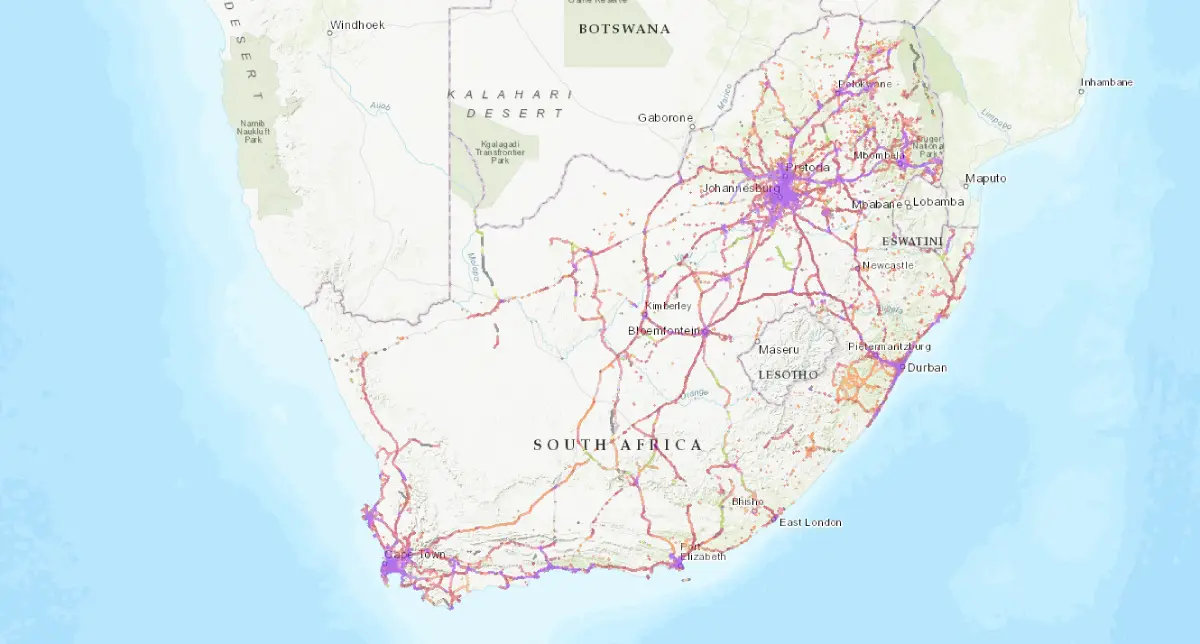
Coverage matters if you plan to travel beyond the main cities. In general, Vodacom and MTN are the strongest options for travelers in South Africa, with better overall reach across cities, road routes, and many regional areas. Telkom and Cell C can work well too, but they are usually less preferred by short-term visitors who want the simplest nationwide coverage.
For most tourists, the practical choice is clear: pick coverage first, then compare price. If your trip includes places outside Johannesburg, Cape Town, or Durban, Vodacom or MTN will usually be the safer bet.
| Network | Coverage summary |
|---|---|
| Vodacom | Strong all-round coverage for most trips |
| MTN | Strong alternative for city and regional travel |
| Telkom | Better suited to urban use |
| Cell C | Available, but less common for tourists |
If you want the least hassle, get your eSIM before departure and arrive connected. If you want a local number and are comfortable with registration, buy a prepaid SIM from a city store. If you want the absolute fastest physical option, airport SIMs are easy but generally cost more.
For most travelers in South Africa in 2026, the simplest balance of cost, convenience, and instant connectivity is:
That setup is hard to beat for a modern trip.
Check the latest eSIM packages for South Africa before your trip so you land with data already working.

Manage your eSIM in the app
Install, top up and track data.
Choose the perfect data plan for your trip
Manage your eSIM in the app
Install, top up and track data.
