


The Quick Answer: When to Book Your Flights
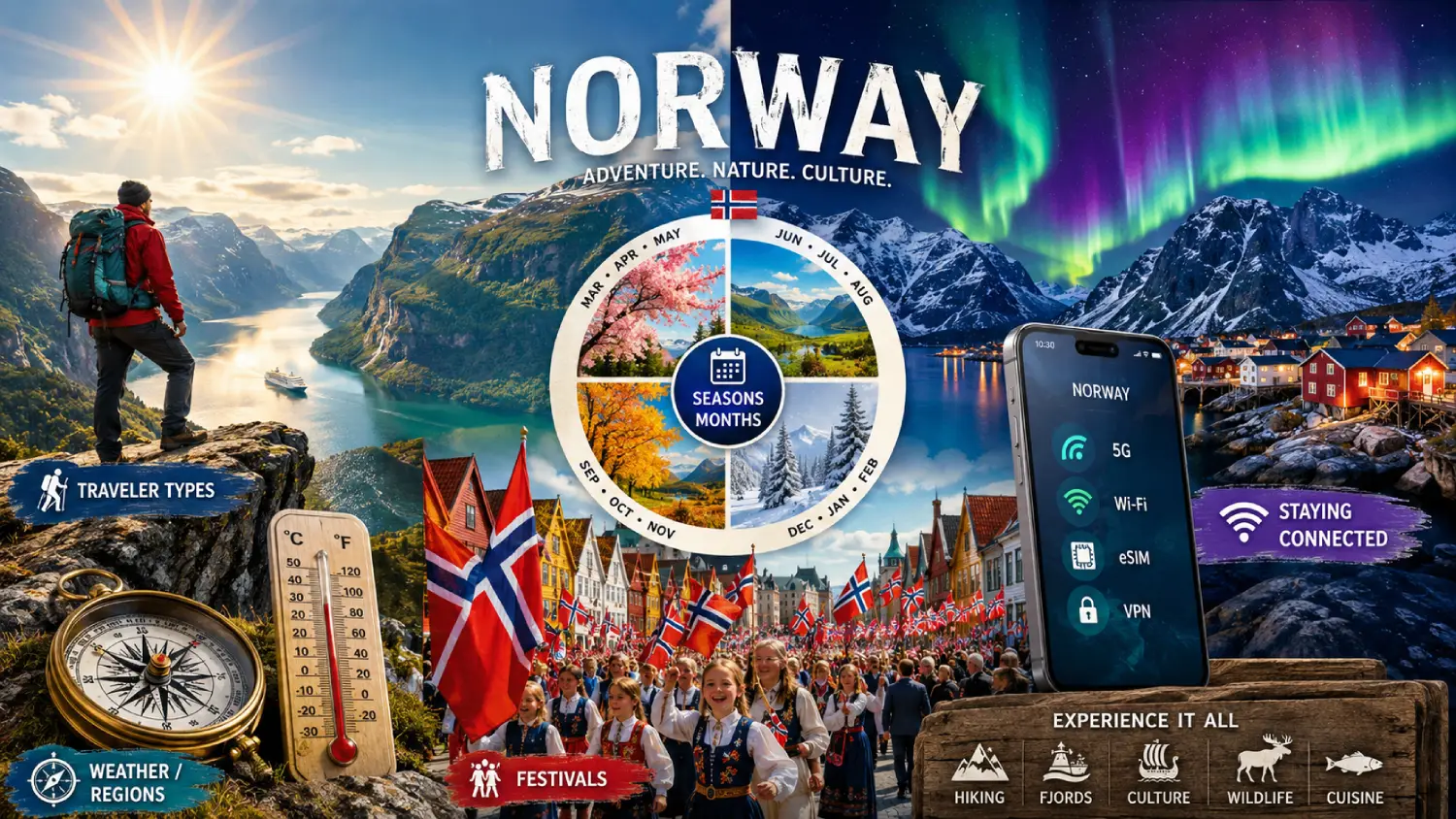
If you want the absolute best balance of weather, accessibility, and classic scenery, the summer months are your target. However, if you are hunting the aurora borealis, you need the dark, crisp skies of deep winter. Here is the ultimate cheat sheet for your 2026 trip:
-
Best Overall Months for First-Timers: June to August. You get the warmest temperatures, open mountain passes, and stunningly green fjords.
-
Best Months for the Northern Lights: December to February. The nights are at their longest, providing the ultimate dark canvas.
-
Best Time for Budget Travelers: October and November. The summer crowds are gone, and winter peak pricing has not yet started.
-
Best Time to Avoid Peak Crowds: May and September. These shoulder seasons offer spectacular transitions in nature with a fraction of the summer tourists.
Norway by Season: What You Really Get
Norway experiences four incredibly distinct seasons, each offering a completely different way to explore the country. You cannot experience deep winter magic and summer fjord hikes on the same trip. Before packing your bags, you need to decide exactly which version of this Nordic landscape you want to see.
Season (Months)Typical ConditionsCrowdsCostsBest ForSpring (Mar - May)Melting snow, blooming orchards, gushing waterfalls. Temps: 0C to 15C.ModerateAverageAvoiding crowds, intense waterfalls, and city breaks.Summer (Jun - Aug)Long days, midnight sun, vibrant green landscapes. Temps: 15C to 25C.HighHighestFjord cruises, hiking, road trips, and endless daylight.Autumn (Sep - Nov)Crisp air, golden foliage, first snows up north. Temps: 5C to 15C.LowLowestBudget travel, quiet roads, and early northern lights.Winter (Dec - Feb)Deep snow, polar nights, freezing temperatures. Temps: -20C to 2C.Moderate to HighHighNorthern lights, dog sledding, skiing, and winter magic.
Regional Differences (Microclimates & Geography)
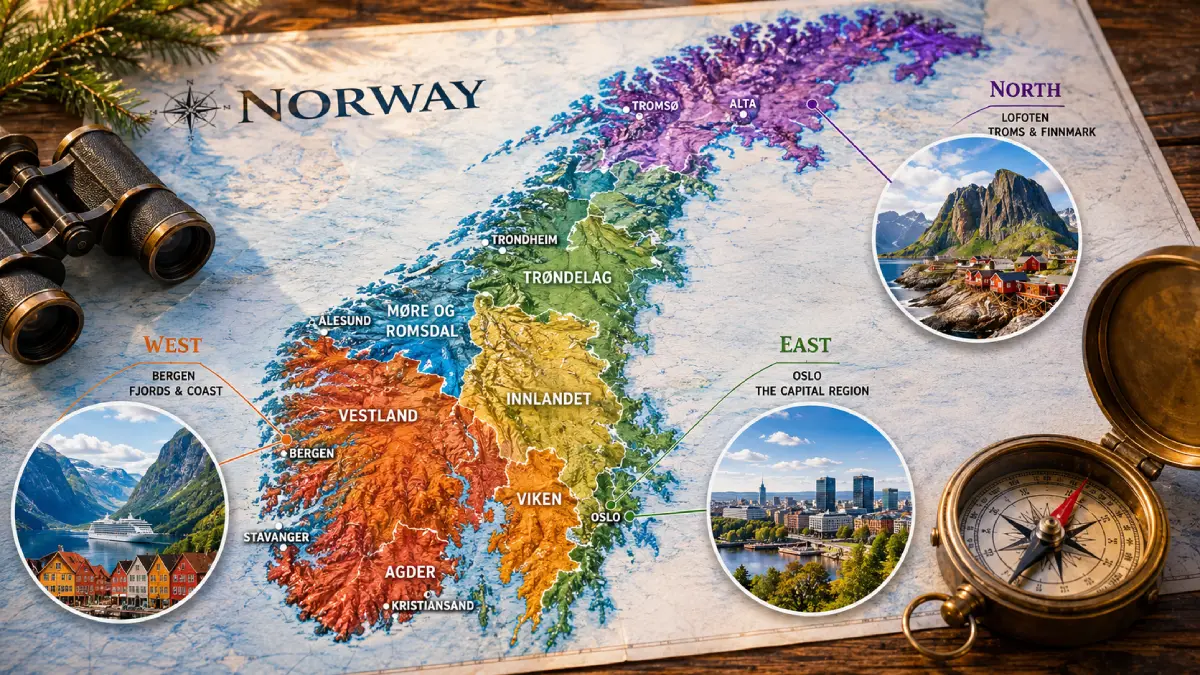
Norway is incredibly long, stretching far above the Arctic Circle. This vast geography creates distinct microclimates that drastically shift the "best time" to visit depending on your destination. Understanding these regions is the key to setting realistic expectations for your itinerary.
Southern and Eastern Norway (Oslo, Kristiansand)
This region boasts the mildest climate in the country and genuinely warm summers. If you visit between June and August, you will find locals swimming in the Oslofjord and enjoying outdoor cafes. Winters here are cold and snowy, but generally less extreme than the deep Arctic.
Spring arrives early here, making May an absolute delight for exploring city parks and museums. Autumn rolls in by late September, painting the forests in stunning shades of gold and crimson. If you are flying into the capital, make sure you understand the Norway Airport Customs Rules before hitting the duty-free shops.
Fjord Norway (Bergen, Stavanger, Ålesund)
The western coast is defined by dramatic mountains, deep fjords, and highly unpredictable weather. Due to the Gulf Stream, the coast rarely experiences the bitter freezing temperatures of the interior, but it does get a lot of rain. Bergen is famously wet, so a high-quality rain jacket is mandatory regardless of the month you visit.
To see the fjords at their most majestic, target late May or June when the snowmelt fuels massive waterfalls. By July, the famous hiking trails like Trolltunga and Preikestolen are entirely clear of snow. Winter in the fjords is quiet and moody, though shorter daylight hours will limit your sightseeing time.
Northern Norway & Svalbard (Tromsø, Lofoten, North Cape)
Everything north of the Arctic Circle plays by an entirely different set of rules regarding light and temperature. From late May to mid-July, this region experiences the Midnight Sun, meaning the sun literally never sets. Conversely, from late November to mid-January, the Polar Night plunges the region into perpetual twilight and darkness.
The best time to visit Tromsø or the Lofoten Islands depends entirely on your goal. For epic hiking, kayaking, and road tripping, you must go between June and August. For hunting the aurora borealis, dog sledding, and experiencing Sami culture, February and March offer the best winter conditions.
Month-by-Month Cheat Sheet
Planning requires precision when dealing with Arctic weather systems and seasonal shifts. Every month offers a unique vibe, distinct weather challenges, and different opportunities. Here is exactly what to expect in Norway throughout 2026.
-
January: Deep winter and dark days. Perfect for northern lights hunting in Tromsø, but expect bitter cold and very short daylight hours everywhere else.
-
February: The absolute best winter month. The sun begins to return slightly, offering stunning pink skies, optimal snow for skiing, and excellent aurora viewing.
-
March: Winter transitions into early spring in the south, while the north remains a snowy wonderland. Days are getting longer, making it great for winter sports.
-
April: A month of massive transition and unpredictable weather. Skiing is still possible in the mountains, but the fjords begin to thaw and bloom.
-
May: The ultimate shoulder season. Waterfalls are at maximum power from snowmelt, the valleys are turning bright green, and the summer crowds have not yet arrived.
-
June: Summer officially begins, bringing the midnight sun to the north. Hiking trails open up, ferries run on full schedules, and the weather is generally excellent.
-
July: The absolute peak of the tourist season. Expect the warmest weather, the most reliable sunshine, but also the highest prices and busiest roads.
-
August: Still fantastic for summer activities, though the midnight sun begins to fade. Late August starts to feel like early autumn in the far north.
-
September: A spectacular month for vivid fall foliage and quiet hiking trails. The nights get dark enough to spot the first northern lights of the season.
-
October: The weather turns distinctly cold and wet. This is a low season for tourism, making it the best time for budget travelers to score flight and hotel deals.
-
November: The darkest and often bleakest transition month before the winter snows fully set in. Head far north if you want early winter activities and auroras.
-
December: A festive, cozy month filled with Christmas markets and glowing cabins. It is cold, dark, and expensive, but undeniably magical.
Best Time to Visit by Traveler Type
Your ideal itinerary hinges on what you actually want to do you land. A photographer's dream season might be a hiker's worst nightmare. Let's break down the optimal timing based on your specific travel goals.
For the Northern Lights
You need two things to see the aurora borealis: active solar weather and completely dark, clear skies. Therefore, the summer months are completely off the table due to the midnight sun. The aurora season technically runs from late September to late March.
For the highest probability of clear skies and spectacular displays, plan your trip between December and February. Base yourself in northern hubs like Tromsø, Alta, or the Lofoten Islands to maximize your chances. If you are debating between Nordic destinations for your winter trip, check out our Norway vs. Iceland: The Ultimate Northern Lights Guide.
For Fjord Cruising & Road Trips
Navigating Norway's winding scenic routes requires clear roads and predictable ferry schedules. The high mountain passes, such as the famous Trollstigen, are entirely closed during the winter due to heavy snow. These roads typically do not open until late May or early June.
For the ultimate road trip or fjord cruise, July and August are the safest bets. You will enjoy endless daylight, allowing you to drive safely into the evening without missing any views. Just be mindful of local regulations on the road; reading up on Norway Tourist Bans & Laws is highly recommended.
For Hiking & Outdoor Adventures
Norway features some of the most dramatic and challenging day hikes in the world. Trails like Kjeragbolten and Trolltunga are dangerous and largely inaccessible in winter without specialized climbing gear. The official hiking season is incredibly short.
You should aim for July through early September for the best trail conditions. By July, the snow at higher elevations has usually melted, and the mountain cabins are open for trekkers. If you hike in September, you get the added bonus of fewer crowds and spectacular autumn colors.
For Budget Travelers & Beating the Crowds
Norway is notoriously expensive, but you can slash your budget by avoiding the peak summer rush. Hotels, car rentals, and domestic flights see massive price hikes in July. Traveling in the off-season requires a bit of compromise on weather, but the savings are substantial.
October and November offer the cheapest rates on accommodations across the country. If you want a better balance of decent weather and lower prices, the shoulder month of May is fantastic. You get the beauty of spring without the premium price tags of mid-summer.
Festivals & Special Dates to Plan Around (2026)
Local holidays and massive festivals can severely impact hotel availability and prices. Norwegians love to celebrate, and joining in on a local festival can be the highlight of your trip. Here are the major events to keep on your radar for 2026.
Syttende Mai (Constitution Day) – May 17
This is the biggest party of the year in Norway. Locals take to the streets in traditional dress (bunads) for massive parades, music, and celebrations. If you are in Oslo or Bergen on May 17, expect incredible energy, but book your hotel months in advance.
The Midnight Sun & Summer Solstice – Late June
The summer solstice in late June is celebrated across the country with massive bonfires, known as Sankthansaften. People gather by the fjords and coastlines to barbecue and stay up all night. It is an incredibly communal and joyful time to be in the country.
Bergen International Festival – May / June
Spanning late May into early June, this is the largest music and theater festival in the Nordic region. The city of Bergen comes alive with hundreds of concerts, ballet performances, and art exhibitions. Accommodations in Bergen will be incredibly tight during these two weeks.
Sami Week in Tromsø – February
Held around the Sami National Day on February 6, this festival celebrates the indigenous culture of the Arctic. You can witness traditional reindeer racing right in the center of Tromsø, alongside cultural markets and concerts. It is a fantastic cultural addition to any northern lights itinerary.
A Quick Note on Staying Connected
Norway's stunning geography means you will be navigating winding mountain roads, remote fjords, and complex ferry schedules. Having instant, reliable internet access the moment you land is absolutely crucial for a smooth trip. You do not want to be caught without a signal when trying to pay a digital toll or translate a ferry timetable.
Need data in Norway? Get an eSIM!
Choose the perfect data plan for your trip

Manage your eSIM in the app
Install, top up and track data.
Buying a physical SIM card at the airport can be time-consuming and frustrating after a long flight. The smartest and easiest setup for modern travelers is downloading a Norway eSIM before you even depart. This ensures your phone connects to local networks like Telenor or Telia the second you step off the plane.
If you are unsure how this technology works, read our comprehensive guide on the Best eSIM for Norway. We also break down all your connectivity options in our broader review on How to Get Internet in Norway. Do not let a dead connection ruin your road trip.
FAQ: Best Time to Visit Norway
What is the cheapest month to go to Norway?
October and November are generally the cheapest months to visit. The summer tourists have left, and the winter northern lights crowds have not yet arrived, leading to significant drops in hotel and flight prices.
When is the absolute best time to see the northern lights?
The peak viewing window is between December and February. During these months, the nights are the longest and darkest, providing the perfect conditions for the aurora borealis if the skies are clear.
Are the fjords open in the winter?
Yes, the fjords never freeze over thanks to the warming effects of the Gulf Stream. You can take scenic fjord cruises year-round, though winter sailings are colder and offer much shorter daylight hours for viewing.
When does the midnight sun happen?
The midnight sun occurs north of the Arctic Circle, typically from late May to mid-July. Places like Tromsø and the Lofoten Islands experience 24 hours of continuous daylight during this period.
Is it worth visiting Norway in May?
Absolutely. May is arguably the best shoulder month to visit. The waterfalls are gushing from snowmelt, the landscapes are turning bright green, and you avoid the massive crowds of July and August.
When do the hiking trails open?
Most high-elevation hiking trails, including Trolltunga and Kjeragbolten, are safely accessible from early July to late September. Attempting these trails outside of this window is dangerous without a professional guide and winter climbing gear.
How cold does it actually get in winter?
It varies wildly by region. Coastal cities like Bergen hover around 0C (32F), while inland and northern areas like Tromsø or Karasjok can easily plunge to -20C (-4F) or colder.
Can I drive the scenic routes year-round?
No. Many of Norway's most famous mountain passes and scenic tourist routes close entirely for the winter due to heavy snow. If a road trip is your main goal, you must plan your visit between June and September.