

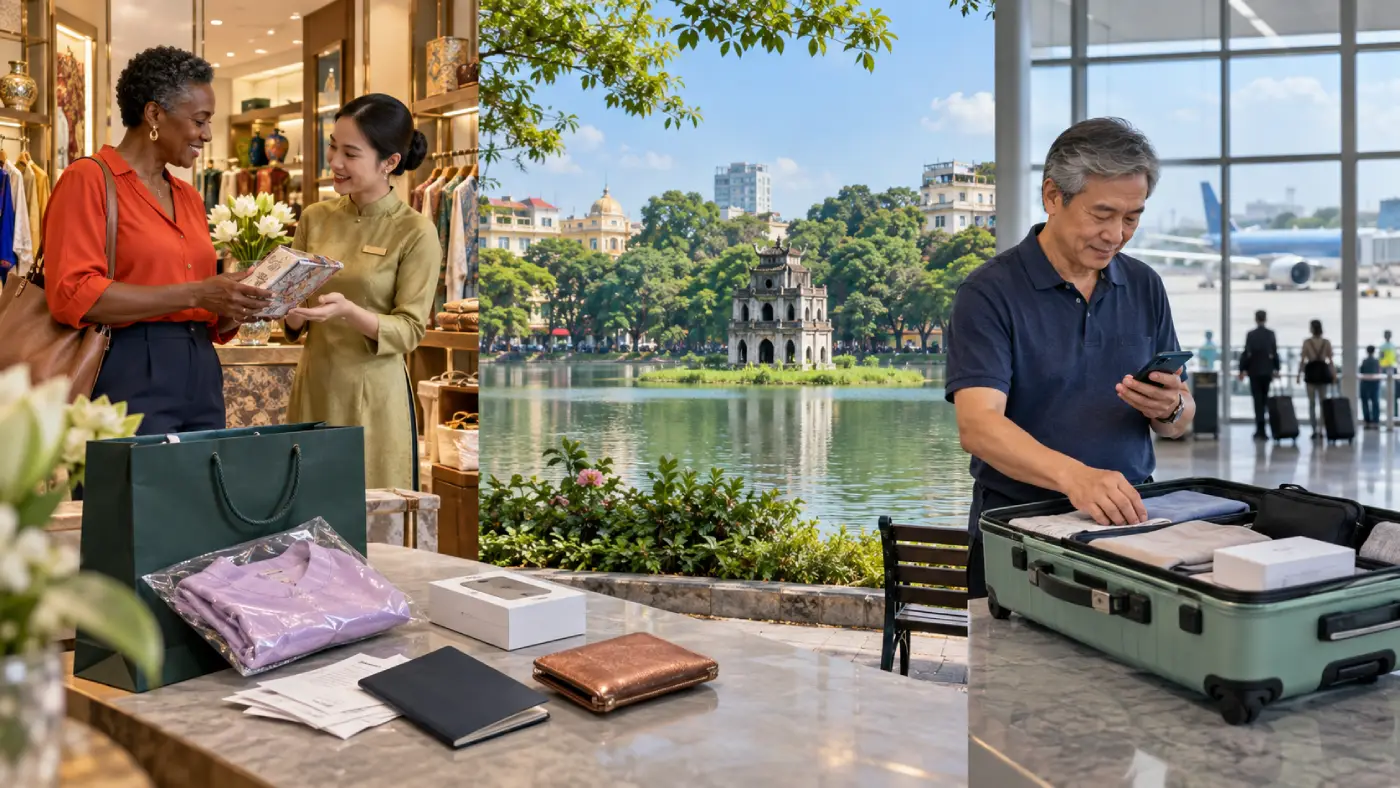

Getting the paperwork right at the shop matters just as much as reaching the refund counter. Ask about the scheme before paying, keep your purchases available for inspection and complete customs validation before handing over any checked baggage containing them. The bank processes the payment after customs has approved the claim.
Who Can Claim a Vietnam VAT Refund?
The scheme covers foreigners and Vietnamese people living overseas who hold valid passports or entry-exit documents issued by a foreign country and use those documents to enter and leave Vietnam. Flight crew and seafarers are excluded.
Vietnamese heritage alone does not rule someone out, but living overseas is not the test either: the travel documents used for the journey matter. Shopping details, refund paperwork and those documents need to identify the same person.
Eligible purchases must leave with you through an authorised VAT-refund airport or seaport. Do not assume that every international departure point offers the service.
These rules concern purchases you take out of Vietnam. If your question is about belongings, cash or restricted items you bring into the country, use the separate guide to Vietnam’s arrival customs rules.
Check the Store and Your Purchases Before Paying
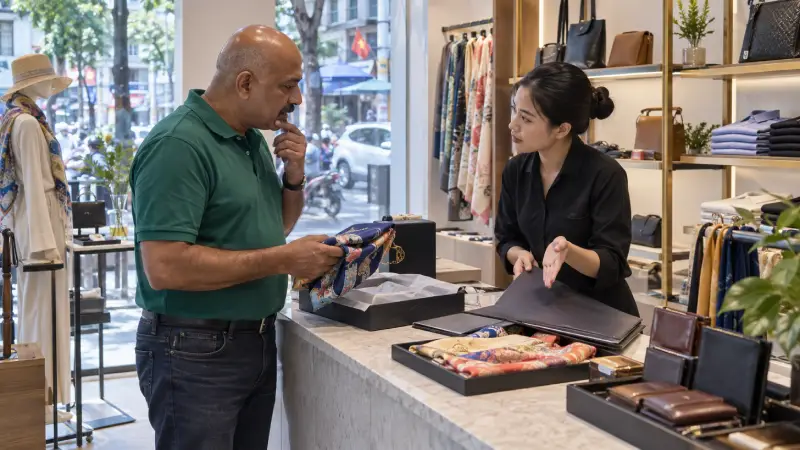
Start with question at the checkout: Can this store issue the invoice and declaration required for a tourist VAT refund? An ordinary receipt is insufficient, even if it shows VAT.
Participation applies to the registered selling location. Shopping at a large mall or a familiar brand is not enough to establish that a particular outlet can prepare the documents.
The VND 2 million minimum applies to store on day. Several invoices can be combined when they meet both conditions. Two VND 1.1 million purchases at the same participating store on the same day reach VND 2.2 million. Splitting those purchases between different stores does not meet that threshold through aggregation.
Qualifying goods must be unused and meet the original-packaging condition. Keep them packed for export and resist wearing new clothes or setting up a new device during the trip. Goods subject to export bans, export licensing or specialised export controls fall outside the ordinary scheme.
Hotel nights, restaurant meals and other services consumed during your stay are outside this goods-export refund process. Your overall holiday spending does not count towards the shopping minimum.
Treat the refund as part of the purchase decision. Compare the actual price and inspect the item before letting a promised refund influence you. Our guide to tourist scams in Vietnam covers wider situations to watch for while shopping and travelling.
Get the Right Paperwork at the Checkout
Bring the original passport or qualifying travel document you used for the journey. The retailer needs its details to prepare the combined VAT invoice and refund declaration.
Before leaving, check these details together:
-
Your name and passport or travel-document number.
-
The retailer’s details and purchase date.
-
The goods listed, their quantities and amounts.
-
The VAT charged and the completed refund information.
Have the store correct mistakes while you are still there. Matching the paperwork to the actual items is easier with the purchase on the counter than with a packed suitcase on departure day.
Vietnam’s electronic refund system connects retailers, customs, tax authorities and participating banks. The retailer still supplies printed paperwork for the traveller. An electronic process behind the counter is not a reason to leave with a card-payment slip or a photograph.
Keep the retailer’s contact details and a digital backup of the documents. Mobile data can help you reach the shop or retrieve an emailed record if a correction becomes necessary; compare internet options in Vietnam if you have not arranged a connection. Keep the original refund documents together for the airport.
Understand the 60-Day Window
The invoice and refund declaration must be issued no more than 60 days before you leave Vietnam. The clock follows the document’s issue date, so shopping early in a long trip can put a purchase outside the window.
The amended VAT-refund rules specify 60 days. Nội Bài Airport’s passenger guide currently gives 30 days, creating a mismatch with the legislation. If your documents will be 31–60 days old when you depart through Nội Bài, clarify their handling with airport customs before relying on the refund.
We would avoid leaving a claim close to the deadline when travel dates are flexible. A changed departure can affect more than your flight booking.
Claim at the Airport Before You Leave Vietnam
Identify the airport where you will actually leave the country. With a domestic flight followed by an international connection, the domestic departure is not the point at which your purchases leave Vietnam. Before checking bags through, ask how the goods will remain available for refund inspection at your international exit.
Nội Bài’s official refund procedure gives a useful sequence for departures from Hanoi:
-
Visit customs before check-in. Present your passport, original purchase invoice, refund declaration and purchased goods for inspection and validation.
-
Complete check-in and departure formalities. inspection is finished, you can hand over checked baggage containing the purchases.
-
Go to the authorised refund bank counter. Present your passport, boarding pass and customs-validated refund documents so the bank can process payment before departure.
Customs validates the claim; the bank pays it. Finishing the first step does not complete the second.
Keep purchases easy to reach rather than buried beneath everything else in your suitcase. Documents belong in your hand luggage. Allow time for both stages, especially if a form needs correcting or goods need unpacking.
The Hanoi sequence should not be read as a universal counter map. Use your actual departure airport’s instructions for local arrangements, and establish that your exit point supports VAT refunds before making a purchase dependent on.
Plan the airport transfer alongside the paperwork. Keeping your Vietnam eSIM or another mobile-data connection active is useful for route maps and messages with your driver on departure day.
How Much of the VAT Do You Get Back?
The refund is 85% of the VAT on goods approved for the scheme. The bank’s service fee accounts for the remaining 15% of that VAT amount.
Use the VAT shown on the eligible invoice. Applying a headline tax rate directly to a tax-inclusive shopping total gives the wrong starting point.
Here is an illustrative calculation for an eligible purchase whose invoice shows VND 1 million of VAT:
| Invoice or calculation | Amount |
|---|---|
| Price before VAT | VND 10,000,000 |
| VAT shown on this example invoice | VND 1,000,000 |
| Total paid | VND 11,000,000 |
| Bank service fee: 15% of VAT | VND 150,000 |
| Refund: 85% of VAT | VND 850,000 |
The example assumes a 10% VAT rate solely to demonstrate the arithmetic; use the actual tax charged on your goods. Here, the refund equals about 7.73% of the total paid.
The refund and fee provisions set the refund currency as Vietnamese dong. Converting it into another currency uses the authorised bank’s exchange rate, so the amount you ultimately receive in that currency depends on the conversion too.
Is a Vietnam VAT Refund Worth the Effort?
The best candidate is an eligible purchase you already intended to make, from a participating shop, with enough time at departure to complete the claim. The paperwork is easier to justify for substantial purchase than for extra shopping done purely to reach the minimum.
Compare store prices before considering the refund. Paying more at a participating retailer can cancel out the benefit, while currency conversion affects what the refund is worth in your home currency.
If a purchase fits your budget after the expected refund, allow for the possibility of a rejected claim. We would treat the money recovered as a bonus on a well-priced purchase and keep the shopping decision comfortable at the full checkout price.