


Start with a bakery breakfast, try a lokanta for cooked dishes at lunch, and leave time for a regional speciality or a shared meze dinner. Learning a few menu words also helps you check the filling, portion size and price before ordering.
Start the Day with Simit, Menemen or a Shared Breakfast
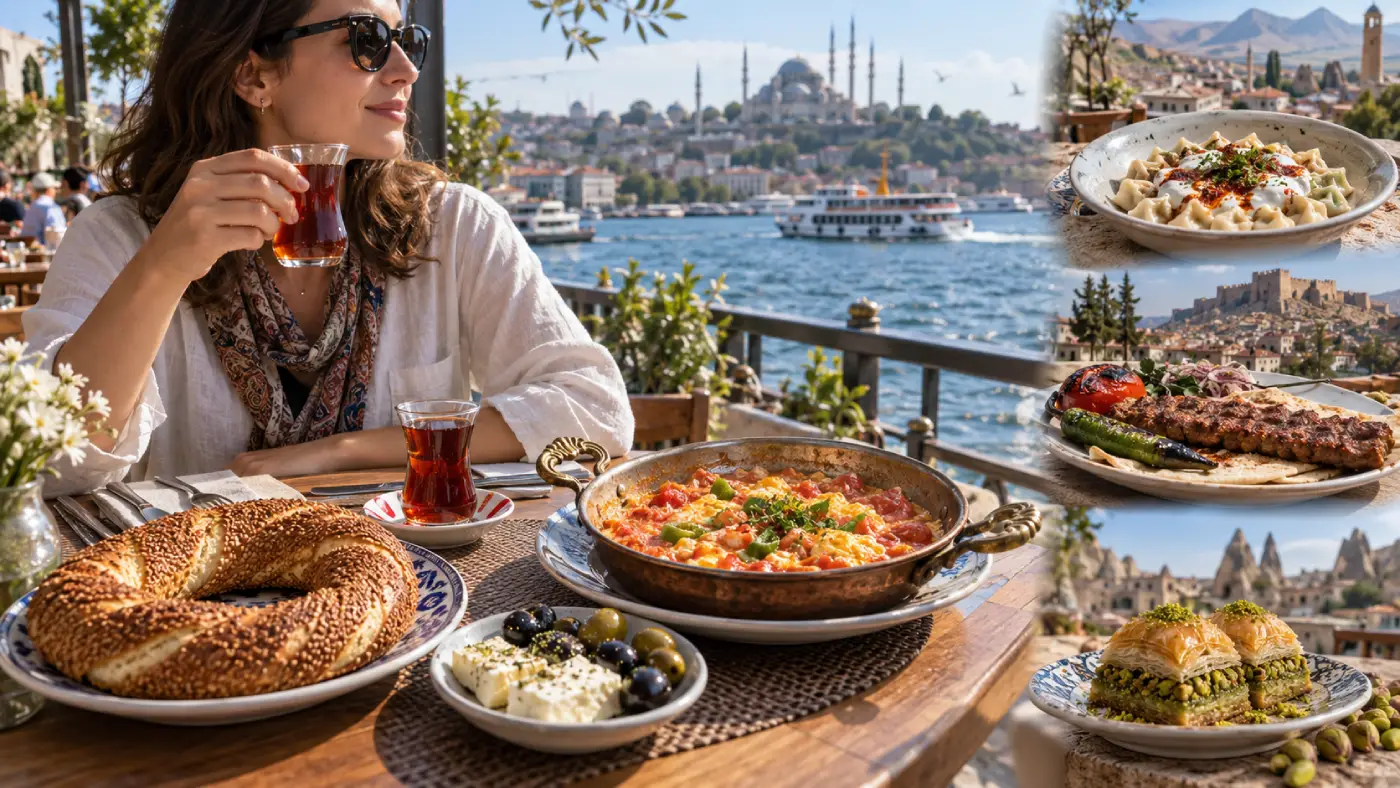
Simit, the sesame-covered bread ring, is a straightforward breakfast alongside cheese and çay, Turkish tea. Börek is filled pastry: look for peynirli for cheese, ıspanaklı for spinach or kıymalı for minced meat. Ask how it is priced, since a piece and a portion are not necessarily the same quantity.
Menemen combines eggs, tomatoes and green peppers, with additions varying by kitchen. Check the description if you want it without cheese or sausage. Çılbır is a different egg dish: poached eggs with garlic yoghurt and usually pepper-flavoured butter. Both feature in Türkiye’s breakfast traditions.
Serpme kahvaltı brings multiple small dishes to the table, typically including cheeses, olives, tomatoes, cucumber, preserves and bread, with other items depending on the venue. It suits a leisurely morning with people who want to share.
Before ordering, establish:
-
Whether the advertised price is per person or for the whole spread.
-
Whether a minimum number of diners applies.
-
Which hot dishes and drinks are included.
Let the waiter know how many people are eating before adding separate egg dishes.
Everyday Meals: Lokantas, Pide and Döner
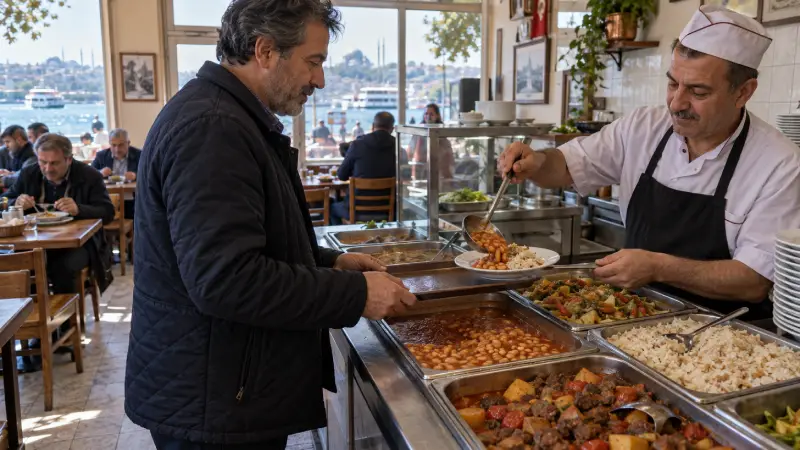
Esnaf lokantası is a useful term when looking for everyday cooking. Ready dishes may be displayed at a counter: soups, vegetables, beans, stews and rice. Point to what interests you and ask the price of the portion you want. Several small servings can add up to a different bill from main dish.
Mercimek çorbası is lentil soup. Kuru fasulye is a bean dish often paired with pilav, usually rice in this context. Recipes can include meat, stock or butter, so the dish name alone does not settle whether a meal meets your dietary needs.
Bread-based meals offer another way to order:
-
Pide: baked bread with toppings or fillings such as cheese, minced meat or diced meat. Check which version is on the menu.
-
Lahmacun: thin dough topped with a minced-meat mixture. Ask whether the price is per piece before ordering several.
-
Döner: meat cooked on a vertical spit, served in bread, as a wrap or on a plate. Et döner indicates a meat version; tavuk döner means chicken.
Dürüm describes a wrap, rather than particular filling. A döner dürüm and an Adana dürüm contain differently prepared meat. Check the filling and any stated meat weight when comparing prices.
Bakery counters and specialist pide or döner shops work well for a focused order. Lokantas give you a chance to combine several cooked dishes.
Match Regional Dishes to Your Route
Use this table to choose what to look for along your journey. These are regional associations; dishes also travel with cooks and communities and appear elsewhere in Türkiye.
| Where you are travelling | What to look for | What helps when ordering |
|---|---|---|
| Istanbul and Bursa | Istanbul offers many regional cooking traditions; Bursa is closely associated with İskender kebap | İskender brings sliced döner over bread with tomato sauce, yoghurt and butter. It is a plated meal. |
| Aegean coast | Zeytinyağlı vegetables, herbs, fava and stuffed courgette flowers | Ask what is seasonal and which dishes contain dairy or meat. Confirm the price of each small plate. |
| Kayseri and Central Anatolia | Mantı; also Kayseri yağlama | Mantı are filled dumplings, commonly served with yoghurt and a butter-based sauce. Fillings and preparation vary. |
| Black Sea region | Hamsi tava, hamsili pilav and kuymak | Hamsi means anchovy. Kuymak combines cheese, butter and commonly cornmeal; it can be a substantial shared order. |
| Adana and Mersin, Mediterranean region | Adana kebabı and tantuni | Adana is a minced-meat kebab; tantuni uses small pieces of meat. Ask about chilli and the bread or plate format. |
| Antalya and Hatay, Mediterranean region | Antalya piyazı and Hatay künefe | Antalya-style piyaz features tahini. Künefe contains cheese inside fine strands of syrup-soaked pastry. |
| Gaziantep and the southeast | Baklava and local kebab dishes | Check the nut filling and whether sweets are sold by weight, piece or portion. |
| Erzurum, Kars and the east | Cağ kebabı, Kars kaşar and gruyere-style cheese | Ask how the kebab serving is counted and priced; cheese shops offer another way to explore the region’s food. |
The distinctions can change a meal decision. Mantı varies by region, while Antalya’s tahini-based piyaz differs from the bean salads served under the same broad name elsewhere.
If meals are shaping your itinerary, consider access to restaurants and markets when deciding where to stay in Türkiye. Staying close to the places you want to eat makes it easier to return for an unhurried dinner.
Build a Meze Dinner, Then Choose Something Sweet
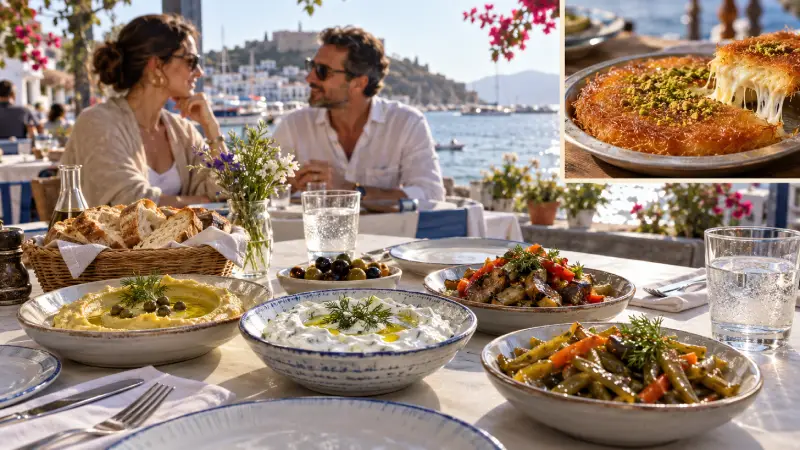
Meze means small dishes served as part of a meal. Depending on the kitchen, the selection might include olive-oil vegetables, bean purées, yoghurt-based dishes and seafood. Ask what each plate contains and how many plates suit your group.
Order a few dishes first, then decide whether you also want fish, a grill or another main course. Confirm the price of anything offered from a display or tray. If fish is priced by weight, ask its weight and the total before it is cooked.
Dessert deserves a separate choice:
Baklava uses layers of thin pastry, fat, filling and syrup. Pistachio and walnut versions are common; neither the nut nor the serving size should be assumed. A small order gives you room to try more than variety.
Künefe is a cheese-filled, syrup-soaked pastry dessert associated with Hatay. Check how many people the portion serves.
Sütlaç is rice pudding, with baked versions often listed as fırın sütlaç. It offers a different finish from syrup-based pastries, although ingredients and toppings still need checking for dietary restrictions.
Ayran is a savoury yoghurt drink made with water and salt. With Turkish coffee, specify the sweetness when ordering: sade means without sugar, orta medium-sweet and şekerli sweet. Let the grounds settle in the cup.
Read the Price, Check the Portion and Understand the Bill
Compare the actual meal you intend to buy: main dish, sides, drink and any shared starters. Ask whether the displayed price is per person, piece, portion or weight, particularly for breakfast spreads, fish, sweets and counter-served food.
In Istanbul, the online menu of Kızılkaya Kardeşler Meşhur Sultanahmet Köftecisi, at Divan Yolu Caddesi No. 4, listed these prices when checked on September 5, 2026:
-
Soup: TRY 150
-
Köfte portion: TRY 620
-
Bean piyaz: TRY 180
-
Packaged ayran: TRY 70
Köfte, piyaz and ayran therefore total TRY 870 at those listed prices. These figures describe that restaurant’s menu at the time checked; they do not establish a typical meal price across Türkiye. Confirm the current menu before ordering.
The rules on extra charges changed on January 30, 2026. Under the Ministry of Trade’s restaurant pricing rules, restaurants, cafés and similar businesses cannot demand compulsory service, table or cover charges. Listing such a charge on the menu does not make it permissible.
Tips remain voluntary. The ministry also states that cover items served before ordering without the customer requesting them cannot be charged. Meze or other food you actively order is a separate matter.
Check an unexpected bill item with the staff and request an itemised explanation.
Useful Turkish for Ordering and Dietary Questions
Keep these phrases handy, especially when the menu describes dishes briefly.
| Turkish | Meaning |
|---|---|
| Bu nedir? | What is this? |
| Bir porsiyon ne kadar? | How much is portion? |
| Bu fiyat kişi başı mı? | Is this price per person? |
| Acısız olabilir mi? | Can it be made without chilli? |
| İçinde et veya tavuk suyu var mı? | Does it contain meat stock or chicken stock? |
| Tereyağı, süt veya yoğurt var mı? | Does it contain butter, milk or yoghurt? |
| Hesabı alabilir miyim? | Could I have the bill? |
Vegetarian and vegan diners need to ask about the complete recipe. Vegetable dishes, beans, rice and soups can contain animal ingredients. Cheese and yoghurt also appear frequently in Turkish cooking; requesting “no meat” does not communicate a vegan diet.
With allergies, name the specific ingredient. “Susama alerjim var” means “I am allergic to sesame”; “Süte alerjim var” means “I am allergic to milk.” Distinguish Antep fıstığı, pistachio, from yer fıstığı, peanut, rather than relying on the word fıstık alone.
Türkiye requires allergen information in food-service establishments. Ask to see it and discuss shared utensils, cooking surfaces and frying oil with the kitchen. Published information does not guarantee that cross-contact can be prevented.
Translation apps help with menu vocabulary, but confirm allergy details directly with staff. Set up a Türkiye eSIM before travelling if you want mobile data for translation and finding restaurants; save essential dietary phrases offline as well.
Leave Room for What Is in Season
Markets and daily menus can suggest the next thing to try. Spring and summer bring changing selections of fruit, followed by grapes, figs and other late-summer or autumn produce; local timing varies. Seasonal fruit also has a place at the Turkish table, served fresh or used in preserves and desserts.
Ask “Bugün ne var?”—“What is available today?”—at a lokanta, and ask fish restaurants which fish is currently available. Keep a regional favourite in mind while leaving space for the day’s menu.
If food markets and outdoor dining are priorities, compare regional conditions in the guide to the best time to visit Türkiye before fixing your dates.