Download the App and manage your eSIMs easily
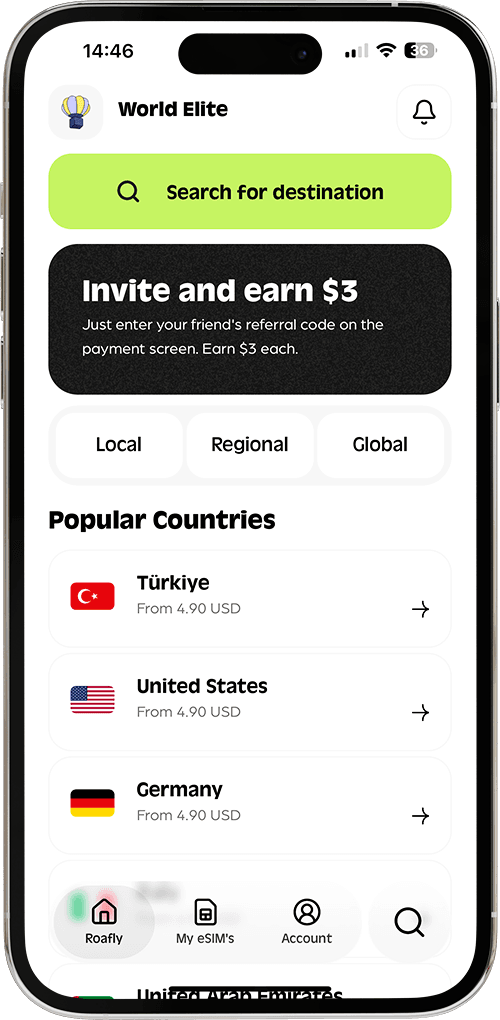
Create your order quickly
See your eSIM details
Track your remaining data
Download the App and manage your eSIMs easily
Create your order quickly
See your eSIM details
Track your remaining data
Tunisia allows visa-free tourist visits for many passport holders, while others need a consular visa or qualify through a specific tourism arrangement. Booking an organised tour can change the entry route for some nationalities, so the distinction between an independent holiday and a group trip matters.

Ethan Brooks
Updated Nov 12, 2026
8 min read
Save 15% on your Roafly eSIM
Stay connected on your next trip. Use the code below at checkout.
View All DestinationsJump to section
👇Save 15% on your Roafly eSIM
Stay connected on your next trip. Use the code below at checkout.
View All Destinations
Manage your eSIM in the app
Install, top up and track data.
The rules and official guidance checked on 12 November 2026 also show why passport validity deserves its own check: the advice given to British, French and American visitors differs. Establish your visa route first, then prepare your passport, accommodation evidence and return journey documents.
These examples cover ordinary passports used for short tourist visits. Nationality determines the starting point; living in a visa-exempt country does not turn your passport into that country’s passport.
| Passport | Tourist visa position | Stay or condition |
|---|---|---|
| United Kingdom — full British citizen passport | Visa-free | Up to 90 days; Crown Dependency passport holders need separate advice |
| United States | Visa-free | Up to 90 days |
| France | Visa-free | Up to three months |
| Türkiye | Visa-free | Up to 90 days within 180 days |
| Pakistan, Bangladesh or Nigeria | Visa required before travel | Apply through the Tunisian mission responsible for your residence; follow the stay granted |
Tunisia’s official nationality table covers more passports, but some entries have been superseded by later country-specific arrangements, including the Chinese tourist exemption below. Read the column for entry into Tunisia, rather than the neighbouring column about Tunisians travelling abroad.
British Crown Dependency passport holders should contact the Tunisian Embassy before travelling: UK guidance notes that they may need a visa on arrival. Do not assume every passport describing its holder as British has identical treatment.
Three arrangements illustrate why a hotel booking, an organised-tour exemption and a visa on arrival must be treated separately.
Indian nationals travelling independently normally need a visa in advance. The organised-tour exemption applies to a group of at least five people travelling with hotel accommodation vouchers and return air tickets.
Before paying for a trip on this basis, have the organiser confirm that the booking meets the Tunisian exemption and supplies the required group documentation. Five friends independently booking rooms and flights should not assume they have created a qualifying organised tour.
Chinese tourists can use the tourist exemption for individual or group travel. Prepare a valid passport, flight documents and a hotel voucher showing that the accommodation has been paid for. Where a booking platform collects payment, ensure the money has reached the hotel; the Chinese Embassy has warned that some private-rental bookings may be rejected.
The Chinese Embassy’s July 2026 entry reminder reinforces the tourism-only scope and the need for genuine itinerary and accommodation documents. Business, study, work and family visits require the appropriate visa in advance.
Serbian citizens travelling independently need to arrange a visa through a Tunisian mission before departure. Tourist groups on organised trips can receive visas on arrival with a prepaid hotel voucher and a confirmed return flight matching their stay.
This airport arrangement is specific to qualifying groups. Independent visitors should complete the consular process before flying.
Keep the permitted stay for these arrangements tied to the applicable authorisation and your itinerary. The 90-day limits in the first table should not be copied onto every conditional route.
Tunisia passport advice is not uniform across government travel pages. The following distinctions matter when your passport is close to expiry.
| Traveller or application | Published passport guidance |
|---|---|
| Full British citizen passport | UK travel advice says it should remain valid throughout the stay |
| French tourist | French travel advice requires at least three months’ validity from arrival |
| US tourist | US travel advice specifies six months’ validity beyond arrival |
| Tunisian consular visa applicant | The Tunisian consular checklist requires at least six months’ validity |
These are the respective authorities’ instructions, not proof that one validity period applies universally. If your passport falls short of the advice for your case, settle the requirement with the Tunisian mission and your carrier before committing to travel. Renewing early avoids having an otherwise straightforward holiday depend on a disputed expiry date.
Türkiye’s Embassy in Tunis recommends six months’ validity from entry for Turkish visitors; that recommendation should be distinguished from a universal statutory rule.
Travel with a passport in good condition and space for entry and exit stamps. French visitors should also disregard older package-holiday advice suggesting a national identity card is sufficient: the French guidance requires a passport for entry from 1 January 2025.
US–Tunisian and French–Tunisian travellers should prepare their Tunisian passports as well as the documents needed to return to the United States or France. Their countries’ guidance sets out Tunisian-passport requirements, including at departure.
British–Tunisian guidance says to enter and leave Tunisia using the same passport. Resolve dual-national documentation before travel, particularly when children are travelling, rather than relying only on the ordinary foreign-tourist table above.
Start with the Tunisian embassy or consulate covering your place of residence. Its consular visa application instructions identify the core documents:
A completed and signed application form.
A recent photograph.
A copy of the passport identification page, with the required remaining validity.
Residence-status evidence where applicable.
A hotel reservation or the appropriate legalised accommodation invitation.
The applicable consular fee.
The published checklist states a minimum processing period of 20 days from submission. Build in time to obtain documents and follow the mission’s local appointment, submission and payment instructions before fixing a departure date.
Residence in another country affects which mission handles your application and the evidence it requests. For example, the Tunisian Embassy in Washington asks applicants for proof of lawful US status. Its fees and mailing procedure are specific to that office.
Use the consular application route if you need a visa. E-CONSULAT’s visa page directs applicants to the responsible Tunisian mission; it is not an instant tourist eVisa approval service.
Completing an online form, booking an appointment or paying a fee does not give you an issued visa. Finish the process required by the mission before boarding, rather than relying on a commercial website’s use of the term “Tunisia eVisa”.
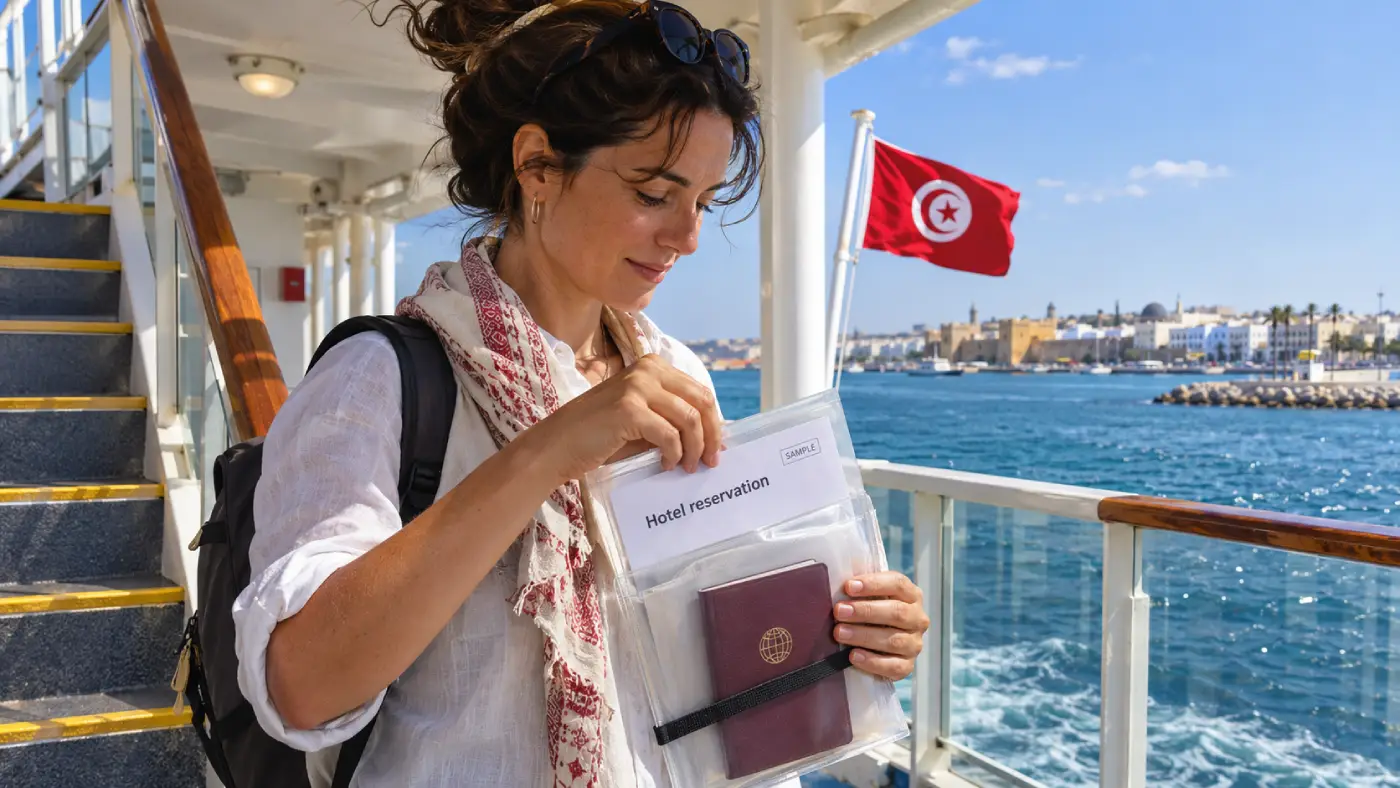
Visa exemption removes the advance visa application for an eligible visit, but border officers can still ask about your accommodation and departure plans. Keep these items accessible:
Passport and visa, if required: use the same travel-document details across your application and bookings.
Return or onward travel: carry the booking that matches your permitted visit. Conditional tourism routes may specifically require a return air ticket.
Accommodation evidence: bring the hotel confirmation or the host documentation appropriate to your route, with a full address and contact number.
Tour documents: retain the organiser’s voucher and group paperwork if your entry arrangement depends on them.
Funds for the stay: prepare the evidence required for your circumstances.
Accommodation deserves particular attention. British guidance records entry delays and refusals where visitors could not provide sufficient evidence of where they would stay. Private accommodation should be supported by usable host details; visa applicants may need a legalised hosting certificate instead of an informal invitation.
Türkiye’s Embassy in Tunis also advises Turkish visitors to carry paid hotel confirmations and return tickets, and says non-resident visitors are expected to have cash equivalent to USD 50 or EUR 50 per person per day. Turkish visitors should plan for that cash check alongside their booking documents.
Save tickets and accommodation documents offline before departure. Decide how to get internet in Tunisia in advance if you will need access to messages or booking changes after arrival. With a compatible phone, Roafly’s Tunisia eSIM provides mobile data for contacting your hotel and finding its address once you leave passport control.
Cash and goods declarations are a separate arrival task. Review Tunisia’s customs rules before packing money, alcohol, tobacco or other controlled items.
Remaining in the international transit area is different from entering Tunisia. Tunisian transit rules exempt air passengers who remain at the airport during their connection; leaving through immigration brings the normal entry requirements into play.
Before booking a self-transfer, establish whether you must collect checked baggage, pass immigration or change airports. The connection you can make entirely airside may have different document requirements from one that requires entry into the country.
Ferry and land arrivals should be planned against the actual visa or exemption you hold. Organised-tour arrangements requiring return air tickets, or visas issued at an airport, should not be assumed to cover a different arrival method. Where a visa specifies an entry point, use that crossing.
If your itinerary approaches Algeria or Libya, consider Tunisia’s border-area travel advice separately from visa eligibility. Permission to enter the country does not resolve the security or access conditions along a particular route.
Make sure your passport receives the arrival stamp and check any recorded conditions before leaving border control. Keep your departure within the period applicable to your passport or visa.
If you need to remain longer, approach the relevant local police or immigration authority before your authorised stay ends. For US visitors staying beyond 90 days, official guidance directs them to obtain a residence permit through the central police station in their district.
Overstaying can lead to fines and departure formalities. Resolve an extension through the authorities; paying a penalty is not a substitute for arranging permission to stay.
With the entry documents settled, read the local rules to know before your trip for the restrictions that affect your holiday after arrival.
