

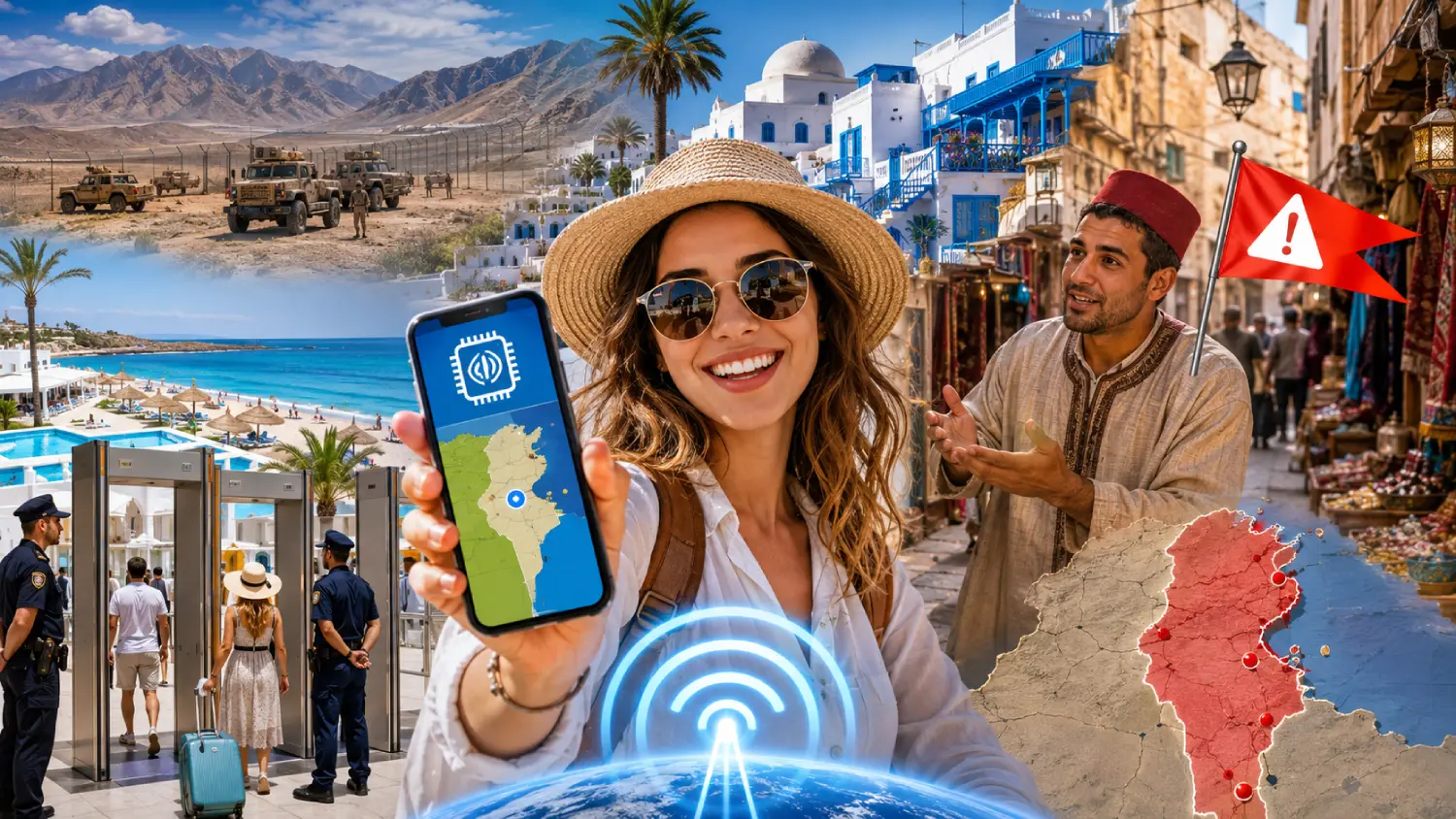

The short answer is Yes, but you cannot wander aimlessly. Tunisia is perfectly safe if you stick to the classic coastal resort towns and northern suburbs. However, straying off the beaten path into western mountainous areas or southern border regions puts you at severe risk. The days of severe, unchecked instability in the major cities have largely settled, but the military remains on high alert for terrorism.
The Current Reality: Politics & Security
Since the highly publicized events of 2015, Tunisia has aggressively overhauled its tourist security infrastructure. If you visit a major resort, you will notice a massive police presence. Hotels have metal detectors, beaches are actively patrolled, and video surveillance is ubiquitous in busy medinas. This security blanket is designed to protect the country's vital tourism economy.
However, Tunisia remains under a continuous State of Emergency in 2026. This grants security forces extraordinary powers to conduct random stops, search vehicles, and enforce curfews if necessary. You must carry your original passport at all times and comply immediately if stopped by police at a checkpoint. If you are bringing a drone or specific electronics, be sure to review our Tunisia Tourist Bans & Laws guide to avoid confiscation at the airport.
Politically, civil unrest and localized protests can spark with little to no warning. Demonstrations often occur on Fridays around major mosques or central avenues like Avenue Habib Bourguiba in Tunis. While these are usually aimed at domestic issues, they can turn violent, and tourists should evacuate the area the moment a crowd begins to form.
Regional Breakdown: Safe Zones vs. Areas to Avoid
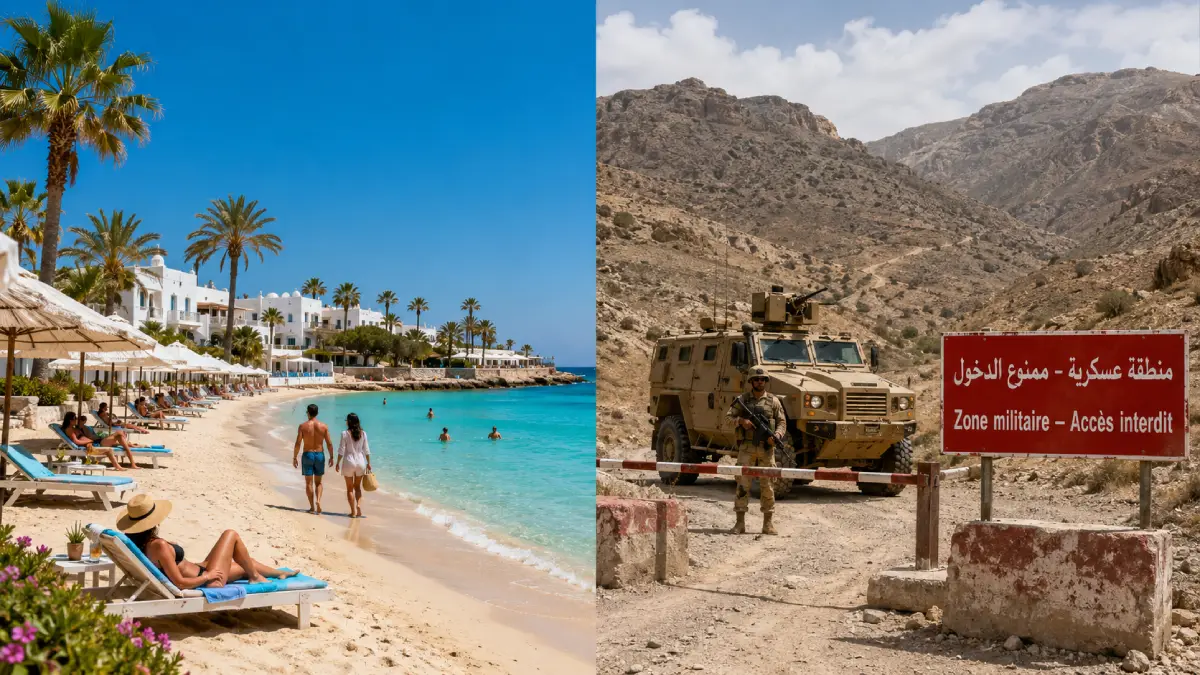
Tunisia's safety profile is highly regional. The coastal resort towns and the capital's northern suburbs are generally safe. Millions of Europeans visit destinations like Djerba, Hammamet, Sousse, and the upscale neighborhoods of La Marsa and Carthage without incident. These areas are heavily monitored and accustomed to catering to international travelers.
Conversely, the border regions are absolute no-go zones. The western border with Algeria, particularly the Chaambi Mountains, Mount Salloum, and Kasserine, are active military zones with a high risk of terrorism. Similarly, the southern border with Libya, including towns like Remada and Ben Guerdane, experiences cross-border conflict and kidnapping risks. If you are an adventure traveler, do not attempt to explore the deep southern desert without an official, government-approved military escort.
Tourist Safe Havens:
-
Sidi Bou Said & La Marsa: The upscale northern suburbs of Tunis are highly secure, expat-friendly, and relaxed.
-
Djerba Island: Naturally isolated, well-policed, and heavily reliant on tourism.
-
Hammamet & Sousse: The main resort hubs feature heavily guarded hotel complexes.
Transportation Safety: Chaotic Roads and Night Driving
Getting around Tunisia requires serious defensive driving skills. Traffic laws are treated as mere suggestions by many locals. You will routinely encounter vehicles driving on the wrong side of the road, ignoring stop signs, and using headlights instead of turn signals to indicate a pass. If you decide to rent a car, you must be a highly confident driver.
Never drive at night outside of major city centers. Rural roads are poorly lit, severely potholed, and often populated by wandering livestock or unlit mopeds. If you are traveling between cities, always stick to the main toll highways during daylight hours.
For public transportation, intercity trains and buses are cheap but can be fertile ground for petty theft. Always keep your bags on your lap, never in the overhead racks. Taxis are generally safe in major cities, but always insist the driver uses the meter to avoid aggressive price gouging.
Tourist Scams: The New Threat
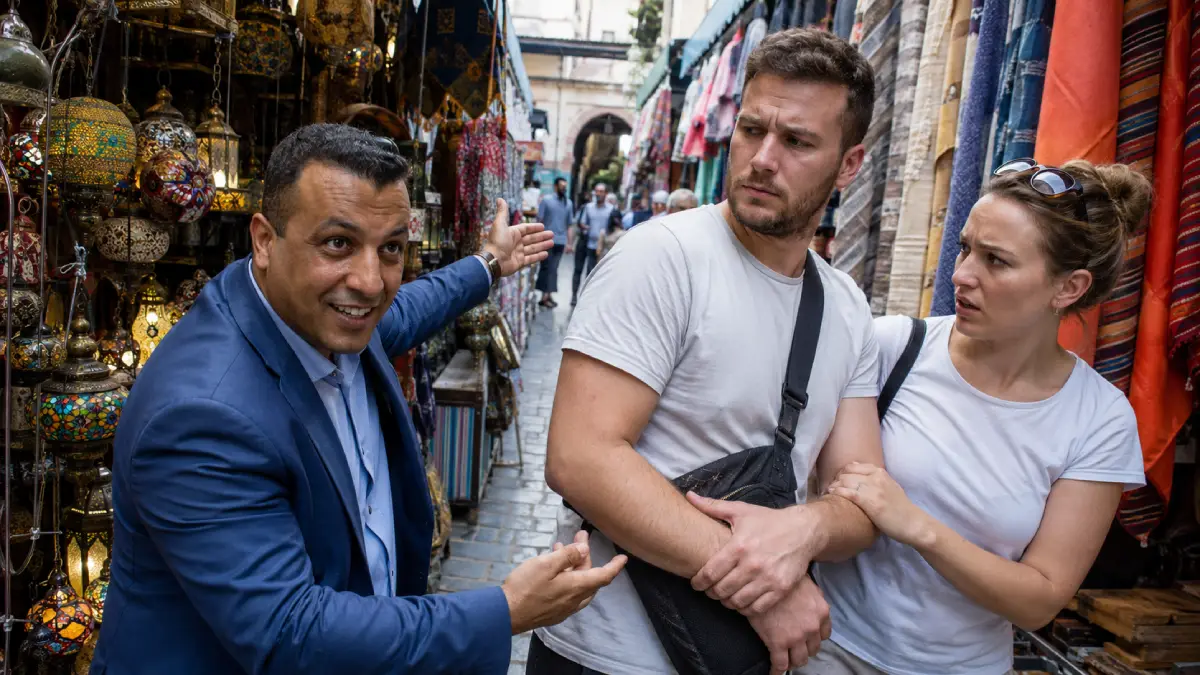
Violent crime against tourists is rare, but financial deception is an everyday reality in the bustling medinas. The "Friendly Local" scam is everywhere. A well-dressed local will approach you, claim they recognize you from your hotel, and offer to show you a "special festival" or a "cooperative" shop. You will inevitably be pressured into buying low-quality goods at exorbitant prices.
Petty theft and crimes of opportunity are the most common headaches for visitors. Pickpockets operate in crowded souks, train stations, and at popular beaches. Never walk around with your smartphone sticking out of your back pocket, and keep a firm grip on your cross-body bag.
Watch out for these common traps:
-
The Medina "Guide": Unofficial guides will forcefully offer directions and then demand a large tip, becoming aggressive if you refuse.
-
Meter Rigging: Taxi drivers claiming the meter is "broken" or using a rigged "night rate" during the daytime.
-
Cafe Overcharging: Always ask for a printed menu with prices before ordering a mint tea, or you might be charged triple the local rate.
Women’s Safety & Solo Travel
Tunisia is of the more progressive countries in North Africa, but solo female travelers will still face unique challenges. Street harassment, catcalling, and staring are common. While usually verbal and non-violent, it can be highly exhausting. Walking confidently, ignoring comments, and wearing sunglasses can help deflect unwanted attention.
Dress codes dictate respect and safety outside of the resorts. In beach towns like Hammamet, resort wear is perfectly fine. However, when exploring the medina of Tunis or visiting inland towns, women should cover their shoulders and knees. Blending in slightly reduces the constant barrage of aggressive vendors and "friendly" scammers.
Nightlife requires extra caution. Drink spiking is a known issue in some clubs and bars. Never accept a drink from a stranger and never leave your beverage unattended. If you are out late, always use a reputable taxi service or ride-hailing app to get back to your accommodation rather than walking dark streets alone.
Health, Tap Water & Nature
Do not drink the tap water in Tunisia. Stick strictly to bottled water with a sealed cap. The local water system can carry bacteria that will quickly ruin your trip with severe stomach illness. You should also be cautious with ice cubes in your drinks and ensure any raw salads or fruits have been washed in purified water.
Mosquito-borne diseases, including West Nile virus and Leishmaniasis, are present. You must aggressively apply DEET-based insect repellent, especially in the evenings, and ensure your hotel room has intact window screens. If you are venturing near fresh water, avoid swimming in lakes or rivers due to the risk of Schistosomiasis (a parasitic infection).
If you need medical care, the private clinics in Tunis, Sousse, and Sfax are generally of a good standard. However, you will be expected to pay in cash upfront before receiving any treatment. Be aware that very few medical professionals speak English; French and Arabic are the primary languages. Make sure you understand what you can bring in by reading our Tunisia Airport Customs Rules overview.
The Ultimate Safety Tool: Staying Connected
In a country where you might need to quickly translate French to a pharmacist, navigate a labyrinthine medina, or call a reliable taxi to escape a sketchy area, mobile internet is your greatest safety asset. Do not rely on public Wi-Fi. Unsecured cafe networks are prime hunting grounds for hackers, and the connection speeds are notoriously unreliable.
Need data in Tunisia? Get an eSIM!
Choose the perfect data plan for your trip

Manage your eSIM in the app
Install, top up and track data.
Arriving with a Tunisia eSIM already installed means you have instant data the second your plane lands at Tunis-Carthage Airport. You bypass the chaotic SIM card kiosks and avoid handing over your physical passport to a random vendor. For a full breakdown of the top local networks, check out our How to Get Internet in Tunisia. To find the right data package and avoid aggressive roaming fees, check out our comprehensive Best eSIM for Tunisia.
Official Travel Advisories (2026 Update)
Global governments maintain strict, active warnings for specific regions of Tunisia. Here is the current consensus for 2026:
-
United States (State Department): Advises "Increased Caution" overall due to terrorism and crime. Strictly forbids travel to the southeastern and western border regions.
-
United Kingdom (FCDO): Advises against all travel to the Chaambi Mountains National Park, designated military zones, and the Tunisia-Libya border.
-
Canada (Travel.gc.ca): Recommends a "High Degree of Caution" countrywide and explicitly states to "Avoid All Travel" to the mountainous regions in the west and the militarized zones in the south.
The Verdict: Is Tunisia Safe?
Tunisia is a safe destination for tourists who exercise common sense and stick to the established tourist corridors. The government has invested heavily in securing the coastlines and major historical sites, making places like Djerba, Sidi Bou Said, and Hammamet excellent vacation spots. However, the country is not a playground for extreme off-the-grid exploration; venturing near the Algerian or Libyan borders is genuinely dangerous.
Golden Rules for 2026:
-
Stay in the Bubble: Stick to the coast and the northern suburbs of Tunis. Avoid the deep south and western mountains entirely.
-
Keep Your Passport: You must carry your original passport at all times; police checkpoints are frequent and mandatory.
-
Drink Bottled Water: Avoid tap water and ice cubes at all costs to prevent severe stomach bugs.
-
Ignore the "Friendly Local": Anyone approaching you on the street offering unsolicited tours or directions is running a scam.
-
No Night Driving: Never drive intercity roads after dark due to extreme hazards and erratic local driving habits.
Note: Travel safety situations can change rapidly. This information is accurate as of June 2026. Always exercise street smarts and consult official advisories before your trip.