

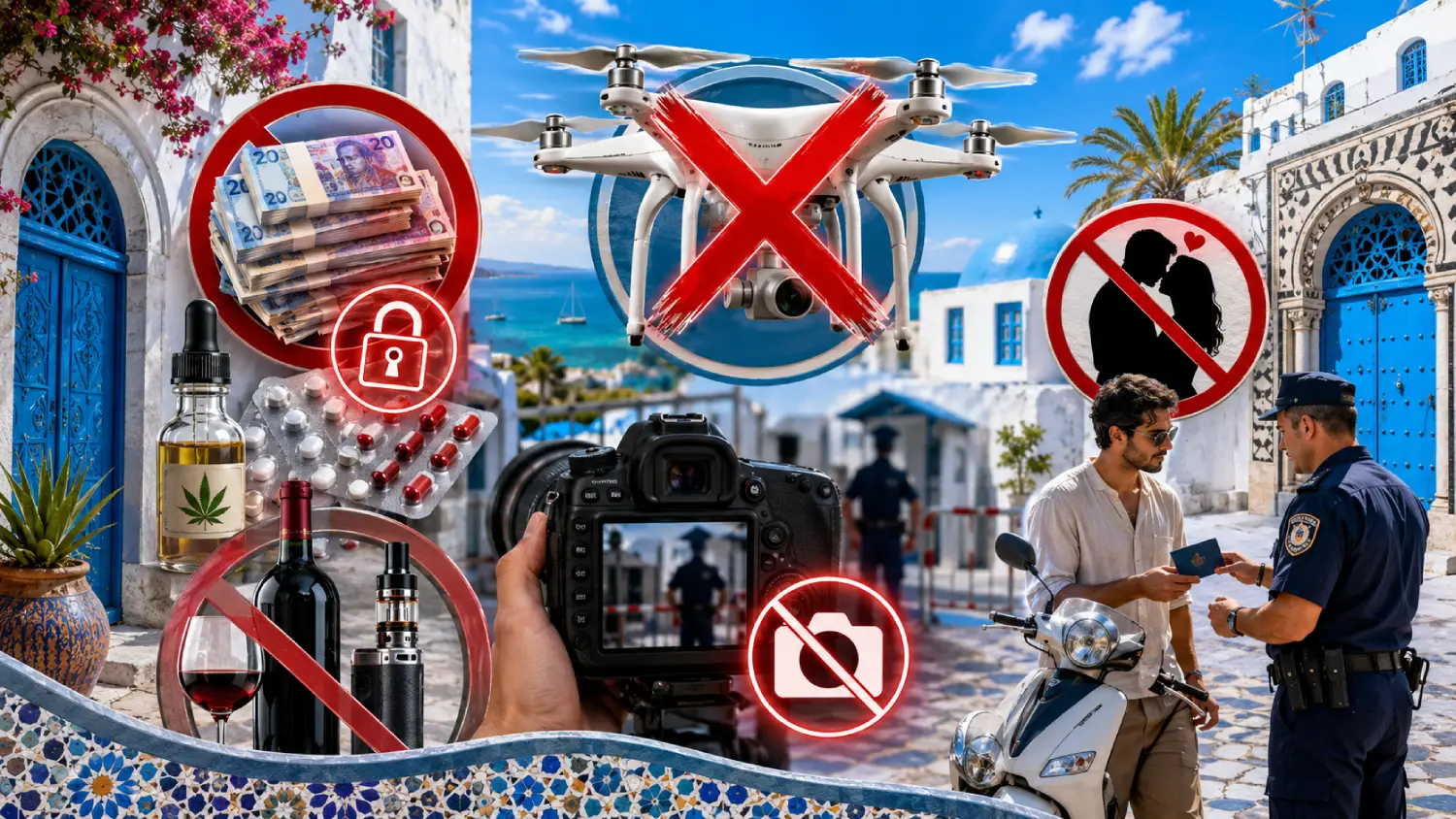

Ignorance is never a valid excuse when you cross international borders. Many travelers land in North Africa expecting a completely relaxed Mediterranean atmosphere, to find themselves detained at the airport for packing everyday items that are strictly banned. Before you pack your bags, you need to understand that local authorities operate with a high degree of security and minimal patience for rule-breaking. A simple mistake can result in massive fines, confiscation of your expensive gear, or even jail time.
The Drone Trap: Confiscation and Espionage Suspicions
Bringing a drone into this country without prior authorization is the single most common mistake foreign tourists make. The laws regulating unmanned aerial vehicles date back to strict aviation protocols, and they are heavily enforced at every border crossing. If you pack a DJI or any other drone in your luggage, it will almost certainly be flagged by airport X-ray scanners.
To legally fly a drone here, you need written authorization from multiple government ministries, including the Ministry of the Interior and the Ministry of Defense. This process can take months, is heavily scrutinized, and is rarely granted to casual tourists. Without these documents, customs officers will confiscate your device the moment you land. If you want to know more about navigating the airport experience, read our guide on Tunisia Airport Customs Rules : Alcohol, Cigarettes & Cash Limits.
Trying to sneak a drone past security or flying illegally carries severe consequences. If you are caught flying an unregistered drone, the police will not treat it as a harmless hobby. Because of regional security concerns, you could be accused of espionage or suspected of terrorism.
-
Immediate Confiscation: Your drone will be seized at the border, and while you may get a receipt to claim it when you leave, the retrieval process is a bureaucratic nightmare.
-
Heavy Fines: Flying without a permit can result in thousands of dollars in fines.
-
Arrest and Interrogation: You will be detained and questioned extensively about your motives, your footage will be deleted, and you could face deportation.
The Zero-Tolerance Currency Law: The Dinar Black Hole
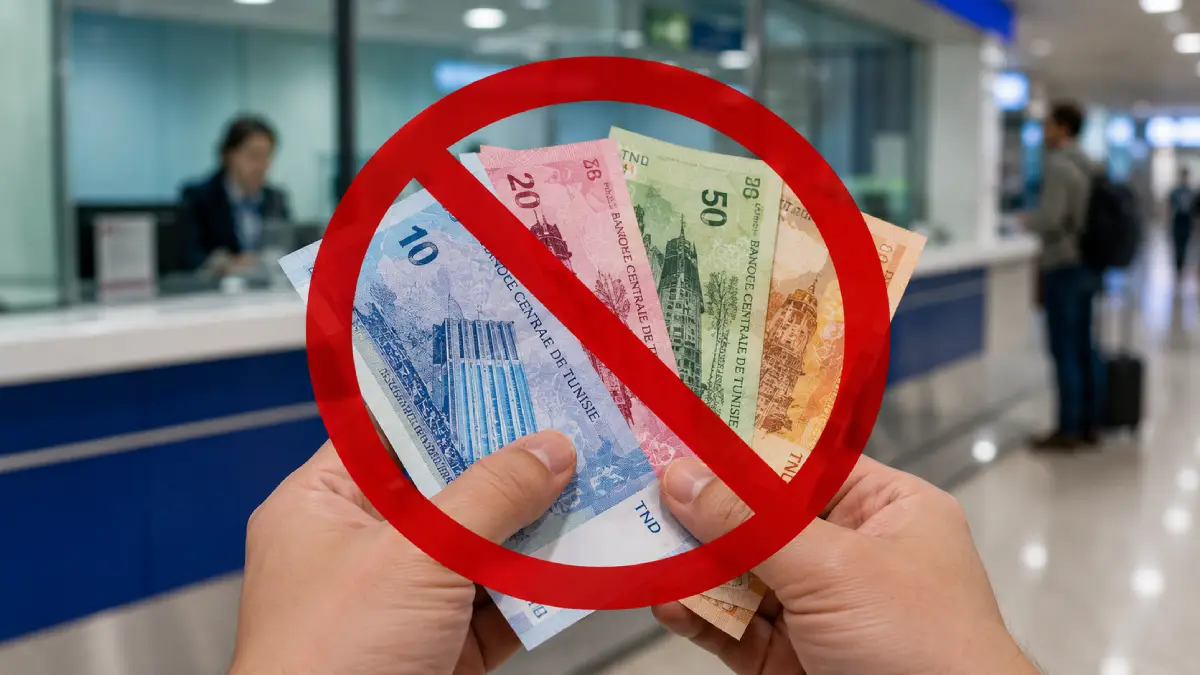
This destination operates under highly protective, closed-currency financial laws. It is strictly illegal to import or export the Tunisian Dinar (TND). You cannot bring it into the country, and you absolutely cannot leave with it in your wallet.
When you arrive, you should bring hard foreign currency (like USD, Euros, or GBP) to exchange locally. If you are carrying more than the foreign equivalent of TND 10,000, you are legally required to declare it upon arrival. According to the Tunisian Customs Authority, failing to declare large sums of cash will result in immediate confiscation at the border.
Getting your money back out of the country requires strict paperwork. When exchanging your foreign currency into Dinar, you must keep the physical paper receipts.
-
The Re-Exchange Rule: You can exchange up to TND 3,000 back into foreign currency when you leave, and if you present the original bank or exchange bureau receipt.
-
ATM Receipts Don't Count: Receipts printed from an ATM are usually not accepted for re-exchange purposes at the airport.
-
Airport Seizures: Customs officers regularly search departing tourists, and any Dinar found in your possession will be permanently seized without compensation.
Prescription Meds, CBD, and The Prison Risk
Do not assume that your standard home prescriptions are legal across the globe. Authorities maintain extremely strict regulations on narcotics, psychotropics, and certain over-the-counter medications. Carrying medications like Adderall, Xanax, or strong painkillers without the proper paperwork can lead to immediate arrest.
If you require Benzodiazepines, Opioids, or ADHD medication, you must declare them at the airport. You are required to carry the medication in its original, clearly labeled bottle. Furthermore, you must carry a translated doctor's note and a copy of your physical prescription to prove medical necessity.
When it comes to cannabis, there is zero tolerance. Marijuana, THC vapes, and all CBD products are completely illegal.
-
Severe Penalties: Bringing in CBD oil or weed can result in fines ranging from $500 to $2,000 and up to a year in a foreign prison.
-
No Medical Exceptions: A medical marijuana card from your home country holds zero legal weight here.
-
Random Searches: Customs dogs and secondary baggage screenings are common for flights arriving from Europe and North America.
Photography Bans: Keep Your Camera Away From Uniforms
The government takes national security and military privacy extremely seriously. Taking photos or recording videos of sensitive infrastructure is considered a major offense. It is strictly illegal to photograph military installations, police stations, government buildings, or embassies.
You must be hyper-aware of your surroundings when holding a camera or smartphone in the capital city or near border towns. Even accidentally capturing a police checkpoint or a military vehicle in the background of your selfie can trigger an aggressive response. Security personnel are known to force tourists to hand over their unlocked phones to permanently delete the files.
-
Look for Signs: Sensitive areas usually have a white sign with a camera crossed out in red. If you see this, put your phone in your pocket immediately.
-
Ask for Consent: Never photograph local women or older residents without explicitly asking for their permission first, as doing so is a major cultural violation.
-
Drone Footage: As mentioned above, using a drone to bypass these photography rules will lead to immediate arrest.
Smoking, Vaping & Alcohol: What You Need to Know
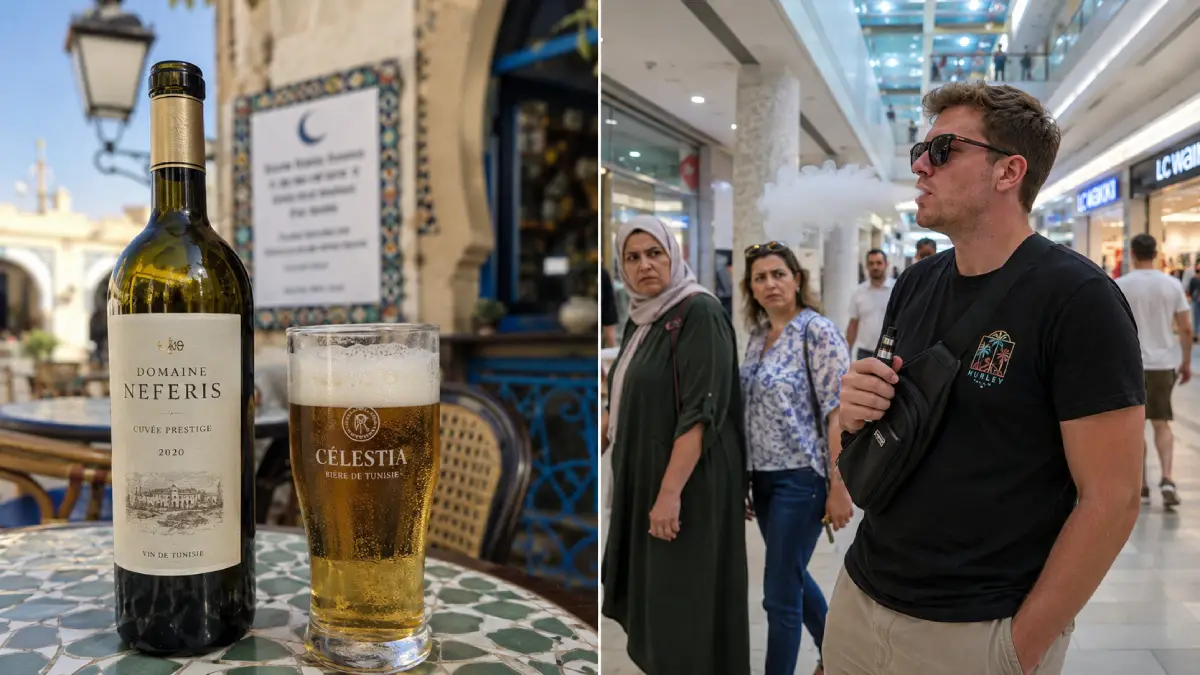
The vaping landscape in 2026 is somewhat of a legal grey area. There is no specific law explicitly banning the use of e-cigarettes, making them generally tolerated for tourists. However, because local vape stock is limited and expensive, you should bring your own supplies in your carry-on luggage.
Public smoking laws apply to both traditional cigarettes and vapes. Smoking or vaping inside government buildings, public transport, hospitals, and enclosed shopping malls is strictly prohibited. While enforcement can sometimes be lax in local cafes, smoking in a restricted zone can earn you a fast fine and a public scolding.
Alcohol consumption has very clear boundaries in this society. While alcohol is perfectly legal and easily purchased in licensed hotels, designated tourist restaurants, and specific supermarkets, public consumption is a crime.
-
No Street Drinking: Walking down the street with an open beer or drinking on a public beach (outside of a private resort) is illegal.
-
Ramadan Restrictions: During the holy month of Ramadan, alcohol sales are heavily restricted, and drinking in public view is considered deeply offensive.
-
Public Intoxication: Being visibly drunk and disorderly in public will draw immediate police attention and likely result in a night in a local holding cell.
Navigating Public Behavior and Cultural Taboos
Despite being of the more progressive countries in the region, conservative Islamic values dictate public behavior. Public displays of affection (PDA) are highly inappropriate and can land you in legal trouble. Holding hands is generally accepted in tourist zones, but kissing or heavy physical contact in public will draw intense negative attention and potential police intervention.
The legal landscape regarding sexuality is incredibly strict. Homosexuality is strictly illegal and carries a penalty of up to three years in prison. Same-sex couples must exercise extreme discretion, avoid any public displays of affection, and book accommodations with care. Similarly, unmarried heterosexual couples may face hurdles, as some local hotels enforce laws prohibiting unmarried mixed-gender couples from sharing a room.
Modesty in dress is expected the moment you step outside your beachfront resort.
-
Cover Your Shoulders and Knees: When visiting medinas, local markets, or rural villages, both men and women should dress conservatively.
-
Mosque Etiquette: You cannot enter religious sites without proper attire; women must cover their hair, and shoes must be removed.
-
Ramadan Fasting: If traveling during Ramadan, eating, chewing gum, or drinking water in public during daylight hours is a massive cultural taboo.
Scooters, Driving & The Checkpoint Reality
Renting a car or a scooter is a great way to explore the coastal roads, but the traffic laws and police presence can be intimidating. According to the U.S. Department of State, security operations and police checkpoints are frequent, especially near the Algerian and Libyan borders. You must carry your physical photo ID (or a high-quality color photocopy of your passport) at all times.
If you are pulled over or stopped at a National Guard checkpoint, remain polite, keep your hands visible, and hand over your documents. You are required to have an International Driving Permit (IDP) alongside your native driver's license to legally operate a vehicle. Driving without an IDP invalidates your rental insurance and gives the police grounds to issue a hefty on-the-spot fine.
-
Helmet Laws: Riding a scooter or motorcycle without a helmet is illegal and strictly enforced in urban centers.
-
No Shirt, No Driving: Driving shirtless, even if you are just driving back from the beach, is illegal and considered highly disrespectful.
-
Seatbelts are Mandatory: Ensure everyone in the vehicle is buckled up before you turn the key, as checkpoint guards actively look for unbuckled tourists.
Stay Connected to Stay Safe
When navigating a country with stringent laws, frequent police checkpoints, and an unfamiliar language, reliable internet access is your best safety tool. Having a constant data connection allows you to instantly translate warning signs, access digital maps to avoid military zones, and contact your embassy in an emergency. Relying on slow hotel Wi-Fi leaves you vulnerable when you are out exploring the medina or driving down the coast.
Need data in Tunisia? Get an eSIM!
Choose the perfect data plan for your trip

Manage your eSIM in the app
Install, top up and track data.
The smartest and most secure way to guarantee immediate internet access upon landing is by using a Tunisia eSIM. Buying physical SIM cards at the airport can expose you to long lines, language barriers, and inflated tourist pricing scams. An eSIM activates instantly, keeping your personal data secure while giving you high-speed local network access.
For a complete breakdown of your connectivity options, make sure to read How to Get Internet in Tunisia. If you want to compare the most affordable and reliable data packages for your trip, check out our comprehensive review on the Best eSIM for Tunisia.
Summary Checklist (Don't Be That Tourist)
-
Leave the Drone at Home: Do not bring a drone unless you have obtained multiple ministerial permits; it will be confiscated, and you may face espionage charges.
-
Zero Dinar Policy: Do not bring Tunisian currency into the country, and remember to exchange all of it back before you pass through airport departure security.
-
Hide the Camera: Never take photographs of military personnel, police checkpoints, government buildings, or embassies.
-
Clear Your Meds: Ensure all prescription drugs (especially ADHD meds and painkillers) have a doctor's note, and never bring CBD or THC products.
-
Dress and Act Modestly: Keep your shoulders and knees covered in local towns, avoid public displays of affection, and respect the strict laws against street drinking.
-
Carry Your ID: Always keep your passport (or a high-quality copy) on your person to avoid detention at routine police checkpoints.
Note: Travel laws and fines can change. This information is accurate as of June 2026. Always consult official local authorities before your trip.