


The useful question is what you are being asked to trust. Correct booking dates, a familiar railway logo or a transfer screenshot can all be copied. Pause before an unexpected payment, open the service through a channel you found yourself and keep control of your cards and belongings.
Hotel Messages Asking You to Pay Again
Messages about a real hotel booking can arrive through WhatsApp, email or even the reservation platform’s own messaging system. The sender may know your name, the hotel and your exact travel dates.
Two approaches deserve particular attention:
-
The cancellation threat: you must verify your card or make another payment immediately to keep the room.
-
The refund offer: a booking error supposedly entitles you to money back, but you must follow a link and enter financial details to receive it.
Both appear in the Swiss cyber authority’s warning about hotel booking messages. Access to a hotel’s booking account can allow criminals to send messages inside an existing conversation, so familiarity alone is a weak test.
Open your booking account directly and review the payment terms. If the request is unexpected, contact the hotel using a number you obtain independently. Ask whether that specific payment or verification request came from them; simply confirming that your reservation exists does not resolve the question.
Legitimate deposits and advance payments depend on the reservation you made. The warning sign is an unexpected request that redirects you to another payment page or pressures you to disclose financial information.
Before departure, arrange your internet access in Switzerland so you can retrieve your booking and look up the hotel’s contact details while travelling.
Fake SBB Ticket Websites
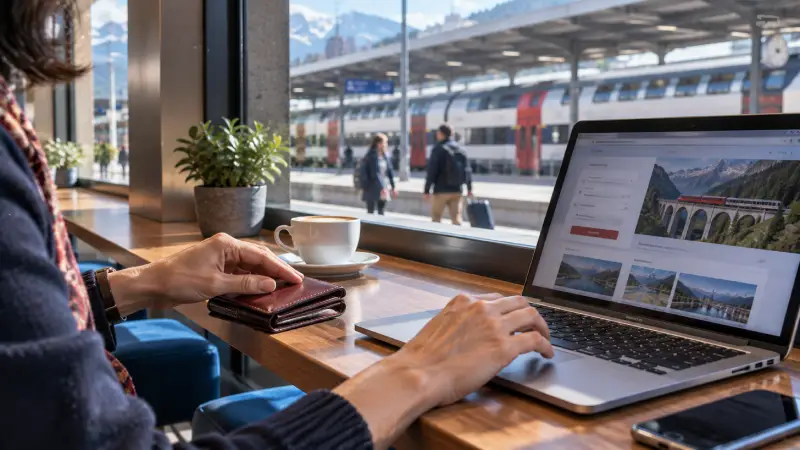
Copied railway websites can be more convincing than a poorly written message. They may show plausible departure times, routes, platforms and a choice between first and second class.
An August 2026 Swiss police warning about fake SBB ticket shops describes websites reached through search results or email links. They imitate the real booking process, offer unusually cheap tickets and then collect card or payment details.
Use the official SBB Mobile app or enter SBB’s website address yourself. During checkout, pay attention to the complete address and the payment recipient. Accurate timetable information cannot establish that the seller is genuine.
If you have already paid through a suspicious site, contact your card provider promptly and ask SBB to verify whether you hold a valid ticket. Do this before boarding; a payment confirmation from the suspicious seller is insufficient.
Digital ticket purchases must be completed before the train’s actual departure. If you use a Switzerland eSIM for mobile data, allow time to finish the purchase and retrieve the ticket before boarding. Where necessary, use a station ticket machine or staffed sales point.
“I’m Stranded—Can You Withdraw Some Cash?”
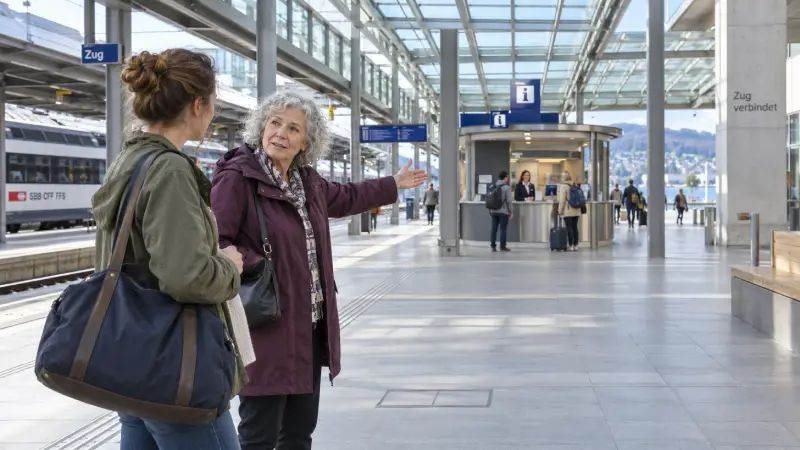
Someone approaches with a story about a stolen wallet, missing travel money or an urgent journey home. They offer to transfer money to you if you withdraw cash for them, then show a screenshot or banking screen as proof.
Cases reported by police in the canton of Zug in early 2026 involved invented emergencies and supposed repayment screenshots. The promised transfers never arrived.
Someone else’s screen is not proof that money has reached your account. Politeness, convincing travel details and an offer to pay you extra do not change that.
Keep control of your phone and banking app, and do not accompany the person to an ATM to complete the arrangement. If you want to help, offer directions to a staffed station desk or police station. You can respond kindly to a request without becoming responsible for someone else’s cash withdrawal.
Not every person asking for assistance is dishonest. Focus on the proposed transaction: pressure to withdraw money against an unverifiable repayment is the reason to stop.
Parking QR Codes That Lead to the Wrong Payee
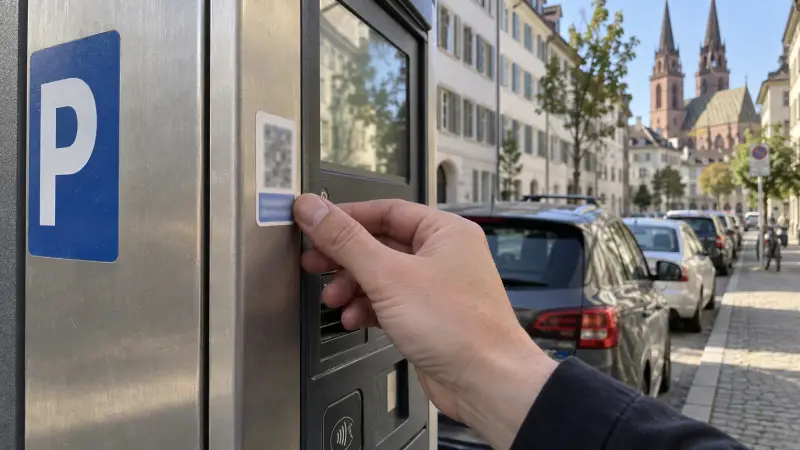
Fraudulent stickers can be placed over genuine QR codes on parking machines. Scanning opens a convincing payment page, but the money goes elsewhere.
The extra trap is the final authorisation. You may think you are approving a small parking charge while your banking app displays a larger amount or an unrelated merchant.
Before approving a parking payment:
-
Look for a sticker covering another code or payment instruction.
-
Read the destination address before entering card details.
-
Match the amount and recipient in the approval screen to the parking payment you intended.
-
Use an independently opened official parking app or another payment method offered by the machine if anything seems wrong.
Even after a successful card charge, look for the parking confirmation, including the correct vehicle and time, before leaving. The charge alone does not establish that the parking operator received payment.
If you suspect the code was altered, notify the parking operator. Contact your card provider immediately if you entered payment details or authorised an unexpected charge.
Fake Swiss E-Vignette Sites and Follow-Up Emails
Drivers buying a Swiss motorway vignette can encounter imitation shops and emails asking them to re-enter payment information.
The official e-vignette costs CHF 40, with no deposit. The Swiss customs authority does not ask buyers to reconfirm payment details by email. Use the official e-vignette purchase information to reach its Via shop.
Enter the registration country and number plate carefully. With a rental car, first ask the rental company whether the vehicle already has a valid vignette. The public lookup displays e-vignettes whose buyers enabled public visibility; a missing result is not conclusive.
Keep the receipt after purchase. Treat an unexpected request for a second payment, a deposit or card “reactivation” as a reason to stop and verify through the official channel.
Disclosed intermediary service fees are a separate issue from imitation shops stealing payment details. Buying through the official channel makes the actual cost and seller clear. Our guide to driving and road costs in Switzerland explains the wider rental and motorway decisions.
Distractions at Stations and Cash Machines
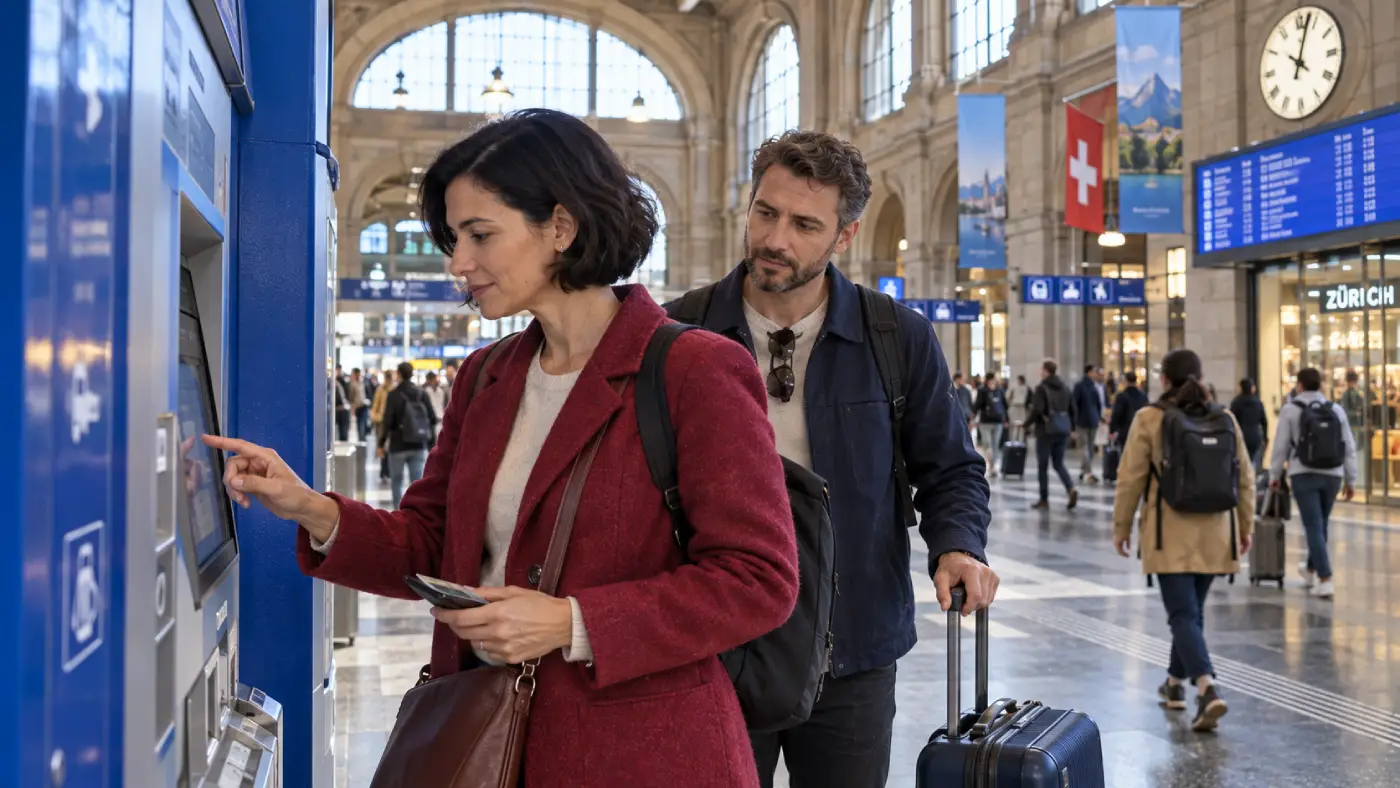
Deception can also be used to steal belongings rather than obtain an authorised payment. Swiss crime-prevention guidance describes teams in which person distracts or crowds the victim while another takes a wallet, phone or bag.
Stations, airports, public transport and escalators create opportunities because passengers are managing luggage and watching for directions. At an ATM, an unexpected conversation can divert attention from the card, cash or someone standing nearby.
Finish the transaction and secure your belongings before responding to an interruption. Keep smaller valuables in closed pockets or a bag in front of you, and retain control of your luggage while looking at departure boards.
If an ATM behaves unexpectedly, use the bank’s independently verified contact channel. Do not give your PIN to someone offering help or allow them to handle the card.
The key warning sign is someone drawing your attention away from money or belongings while moving close to them. Broader precautions for transport, personal security and mountain travel belong in our Switzerland safety guide.
Expensive Charges and Genuine Ticket Penalties
Switzerland’s prices can make an unfamiliar bill feel suspicious. Separate the amount from the reason it was charged.
| Situation | What matters |
|---|---|
| A high price disclosed before purchase | Whether you accepted that price and received the agreed service |
| An unexpected hotel payment request | Whether it matches your reservation terms and the hotel independently confirms it |
| A reduced train fare | Whether you qualify for the discount attached to that ticket |
| A surcharge after buying a ticket too late | Whether the purchase was completed before actual departure |
| A payment larger than the amount you approved | The merchant, receipt and transaction details, followed by prompt contact with your payment provider |
SBB can apply surcharges when a ticket is invalid or partly valid, including a reduced ticket bought without the required entitlement. Digital tickets are personal, so an inspector may also legitimately ask for identification.
If you disagree with a charge, keep the ticket, receipt or inspection document and raise the issue through the operator’s official contact channel. Avoid dismissing a genuine invoice because the rules were unfamiliar.
What to Do If You Have Been Targeted
The next step depends on whether you disclosed information, authorised a payment or lost belongings.
-
Stop the interaction. Close the suspicious payment page. If an encounter becomes threatening, move to a staffed public place and call 117 for an immediate police emergency.
-
Contact your bank or card issuer promptly. Explain exactly what you entered or authorised. Ask about blocking the affected card and the process for disputing the transaction.
-
Secure affected accounts. If you disclosed a password, change it through the real service. Change it elsewhere too if you reused it.
-
Preserve evidence. Keep messages, website addresses, payment records, booking references and the approximate time and location. Save what is already available without continuing contact with the suspect.
-
Report financial loss or theft to local police. Bring the evidence to a police station. Contact the hotel, railway or parking operator separately where its service was impersonated.
Your bank’s response depends on the transaction and circumstances; a police report does not guarantee reimbursement. Acting promptly gives the relevant organisations the information they need to assess what happened.