Download the App and manage your eSIMs easily
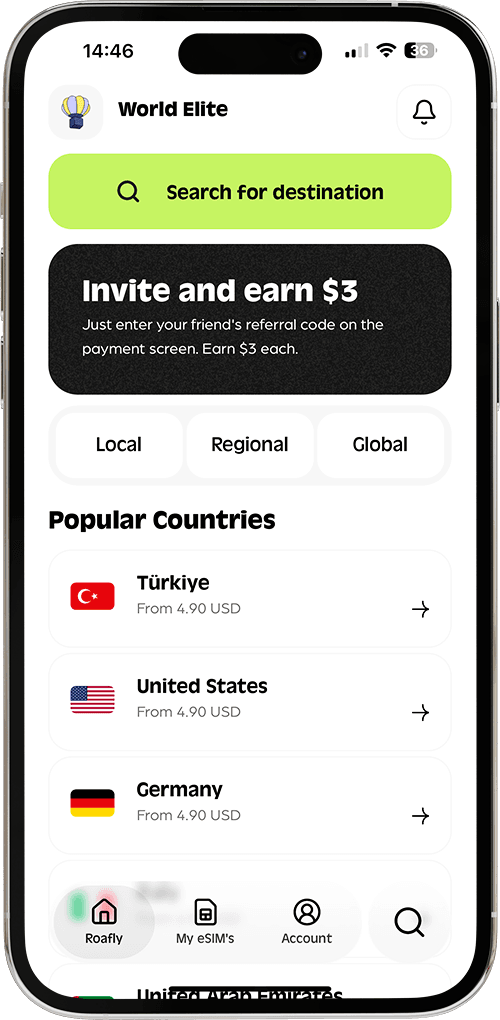
Create your order quickly
See your eSIM details
Track your remaining data
Download the App and manage your eSIMs easily
Create your order quickly
See your eSIM details
Track your remaining data
Paying in Mexico takes a mix of cards and peso cash. Know which currency to select, how to read ATM charges and what to prepare before relying on your phone.

Sophie Callahan
Updated Oct 20, 2026
10 min read
Save 15% on your Roafly eSIM
Stay connected on your next trip. Use the code below at checkout.
View All DestinationsJump to section
👇Save 15% on your Roafly eSIM
Stay connected on your next trip. Use the code below at checkout.
View All Destinations
Manage your eSIM in the app
Install, top up and track data.
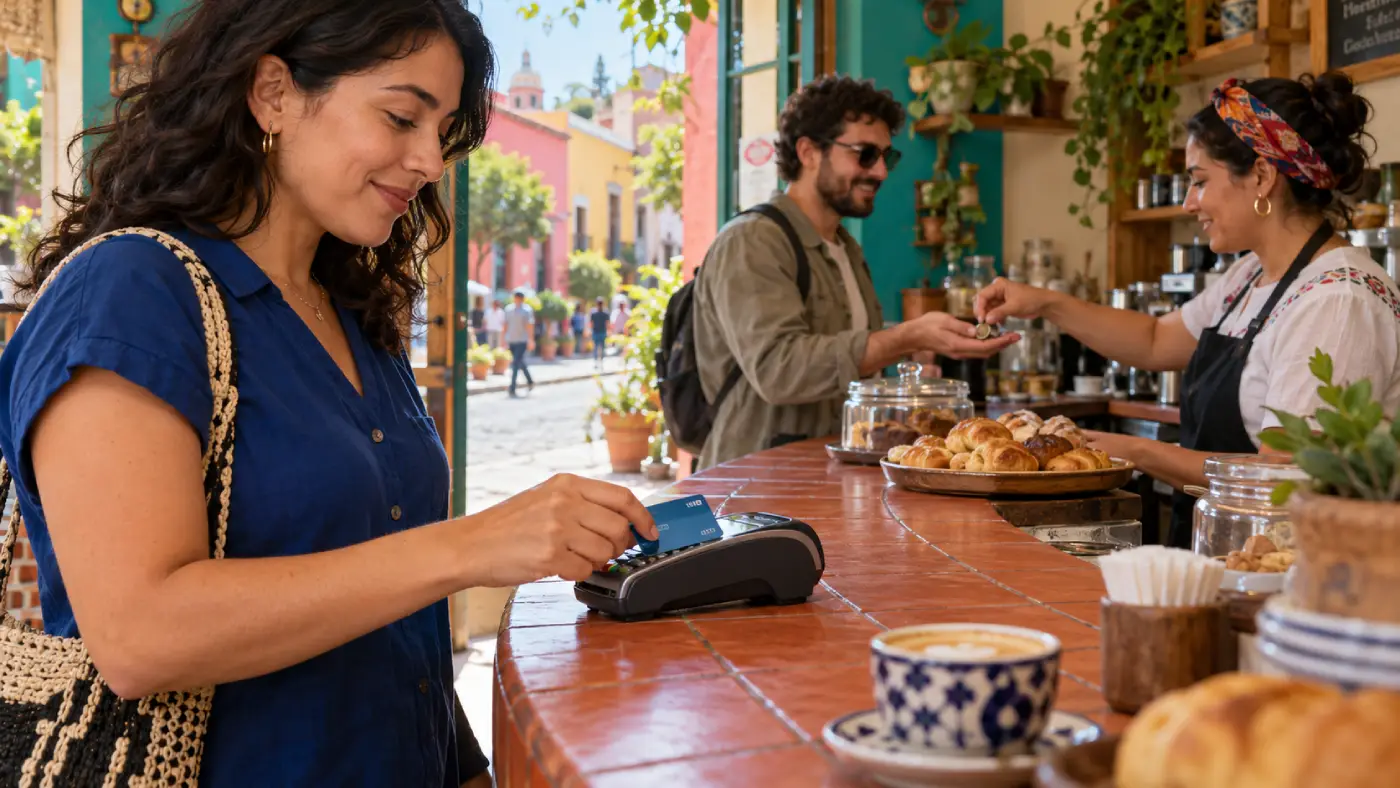
Mexico is easiest to navigate with a bank card for larger purchases and Mexican pesos for markets, small expenses and payment problems. Credit cards are widely accepted, but a day involving local stalls and smaller businesses needs a different cash plan from a prepaid hotel stay.
The most useful habit is to keep transactions in Mexican pesos (MXN) when a card terminal or ATM offers to convert them into your home currency. Then assess any separate fees charged by the ATM or your bank. Declining a conversion offer does not make the entire transaction free.
Use your card where it is accepted, while keeping enough pesos for purchases that cannot wait until you find another ATM. Carry a physical card even if you normally pay with your phone.
| Payment situation | Practical approach | What to establish before paying |
|---|---|---|
| Hotels and larger purchases | Use a card where accepted | Total price, transaction currency and any separate deposit hold |
| Restaurants, supermarkets and established shops | Card is convenient; retain cash as backup | Accepted card network and the amount on the terminal |
| Local markets and small vendors | Arrive with peso cash | Agreed price and available change |
| Taxis and local transport | Prepare the payment method for that service | Cash, prepaid ticket, transport card or app payment |
| Online bookings | Use a supported card and keep the confirmation | Billing currency and access to bank authentication |
| Tips and small incidental expenses | Keep some smaller peso notes and coins | Your chosen amount and whether anything has already been added |
Transport deserves its own preparation: being able to pay at a hotel says little about the next bus or taxi. Plan your transport and ticket options in Mexico before deciding how much cash you need on arrival.
Ask for smaller denominations when exchanging money, or keep change from ordinary purchases. Paying a small bill becomes easier when you can offer close to the correct amount.
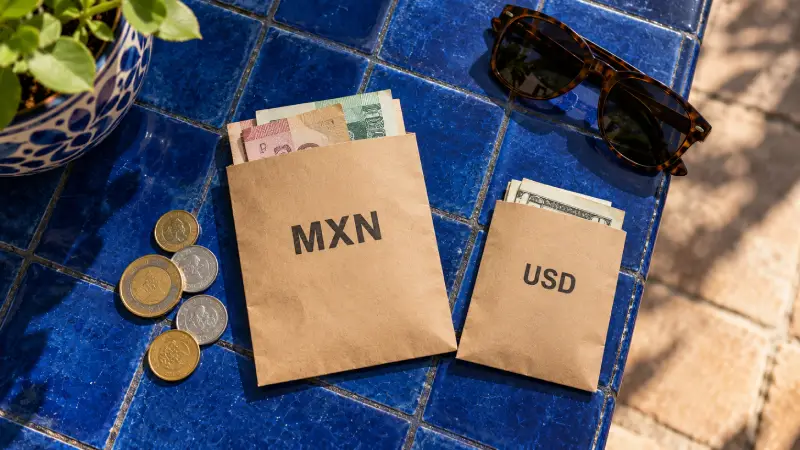
Mexico’s currency is the Mexican peso, abbreviated MXN. The $ symbol also represents pesos, so a menu showing “$200” should not automatically be read as US$200.
Look for MXN, Mex$ or USD when comparing prices. If the currency is unclear, ask “¿Pesos o dólares?” before agreeing to the purchase.
If a business offers a US-dollar price, compare it with the peso price and establish the currency of any change. Dollar acceptance and the exchange rate offered are separate questions. Keeping pesos available avoids depending on an individual business’s willingness to accept foreign cash.
Two different situations can also look deceptively similar:
A price originally quoted in USD: Review the seller’s payment terms and compare any peso alternative.
A peso purchase converted into your home currency at the terminal: This is a currency-conversion offer, which may include a markup.
For an ordinary peso-priced purchase, request the charge in MXN and let your card’s normal conversion arrangements apply.
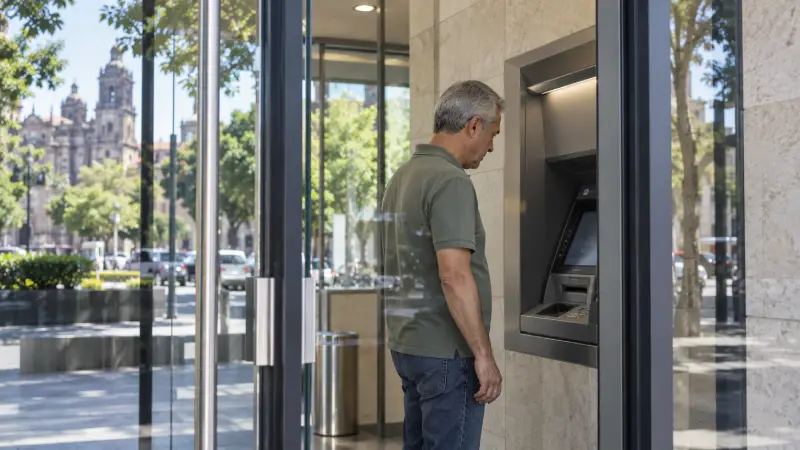
ATM withdrawals can involve several separate costs. Understanding who charges each one is more useful than memorizing a list of supposedly cheap banks.
The ATM operator’s fee is the charge for using that machine. Your card issuer’s fees may include overseas withdrawal or foreign-transaction charges. Dynamic currency conversion (DCC) is an optional conversion offered by the ATM, allowing your account to be billed in your home currency.
Your card’s exchange-rate terms still matter when you decline DCC. Rejecting the ATM’s conversion removes that particular conversion choice; it does not remove the other charges.
Find a suitable ATM. Prefer a well-lit location inside a bank where possible. Inspect the card slot and keypad, and shield your PIN.
Select a withdrawal in Mexican pesos. Read the currency label rather than relying only on the $ symbol.
Review the ATM fee. Decide whether the displayed charge is acceptable before continuing.
Read any conversion offer separately. Select the option that keeps the transaction in MXN without the ATM’s conversion.
Collect your card, cash and receipt. Check the transaction in your banking app when convenient.
The key distinction is that you may accept the machine’s withdrawal fee while declining its currency conversion. Button wording and screen order vary, so follow the meaning rather than a memorized sequence of colors or positions.
Visa’s dynamic currency conversion guidance confirms that accepting or declining DCC should not affect your ability to withdraw cash. Other problems, including insufficient funds, card restrictions or withdrawal limits, can still prevent a transaction.
Avoid assuming one bank is always cheapest for every foreign card. Compare the actual offer on the screen with your issuer’s terms. Repeated small withdrawals may accumulate fees, while withdrawing your whole holiday budget creates an unnecessary amount of cash to carry.
Compare exchange offers by asking one question: How many pesos will I receive after every charge?
A “zero commission” sign tells you only about the stated commission. The exchange rate can still make the offer less attractive than another counter’s total.
At a currency exchange counter:
State the currency and amount you want to exchange.
Ask for the final peso amount, including any fees.
Establish any identification requirements before handing over money.
Count the cash and retain the receipt before leaving.
Use the same comparison when ordering pesos before departure. Convenience may justify obtaining a small arrival reserve, particularly if your first transport payment requires cash. It does not automatically justify exchanging the entire trip budget in advance.
ATM withdrawals and cash exchange should be compared on their full costs. Your bank’s withdrawal fees, the machine’s charge and the exchange counter’s net offer all affect the result. There is no single cheapest method for every traveler.
If you plan to travel with a substantial amount of cash, review Mexico’s customs rules as part of your arrival preparation.
Base your cash reserve on the next part of your itinerary. Someone with prepaid accommodation and transfers needs a different amount from someone paying for local transport, market meals and small excursions along the way.
Work out the reserve in three steps:
List expenses likely to require cash before your next convenient ATM visit.
Remove payments already prepaid or arranged by card.
Add a modest backup for a declined card or unavailable terminal.
That calculation is more useful than a universal “pesos per day” recommendation. It also separates your cash requirement from your total travel budget.
Keep the amount needed for the day accessible, with any additional reserve stored separately and securely. Your backup card should also be separate from the wallet holding your main card.
Before leaving a larger town for a smaller destination, establish how you will pay for accommodation, transport and planned activities. Resolving those payments in advance helps you avoid searching for cash after arrival.
Phone payments can be convenient, but the different systems have different requirements.
Apple Pay uses an eligible card already supported by its issuer. The merchant must accept the card’s payment network and have contactless payments enabled. Seeing a contactless symbol is useful, but a physical card remains a sensible backup if the terminal or phone payment fails.
CoDi is a bank-account payment system. It uses electronic transfers and requires an appropriate account with a participating financial institution. It is not a general tourist wallet into which you can simply load any foreign credit card.
The CoDi requirements also distinguish between paying and collecting money: the CoDi Banxico app generates collection requests, while payments use the relevant financial institution’s app. Internet access is required, but connectivity alone does not establish eligibility.
Short-term visitors who already have working cards usually have little reason to make opening a local payment account part of their arrival routine.
Open your banking app before the trip, make sure you can sign in and establish how payment approvals work. Some banks use app notifications; others may require a code sent to your existing phone number.
Roafly’s Mexico eSIM provides mobile data for accessing banking apps and booking confirmations. It is data-only and does not supply a phone number or receive your bank’s SMS codes.
Keep access to whichever number or authentication method your bank requires. Our guide to using your phone in Mexico covers the wider phone and roaming preparation.
If you are still choosing a data service, compare Mexico eSIM plans before departure, while you have time to set up the phone and test your banking access.
Tipping in Mexico is voluntary. You decide whether to leave a tip and how much. An amount printed as a suggested tip should not be mistaken for a mandatory charge.
Review the itemized bill before presenting your card. If you want to tip through the terminal, make sure the final total reflects your intended amount. If you leave cash instead, avoid adding the same tip again electronically.
Profeco’s restaurant payment and tipping guidance also states that passing a card-payment commission to the customer violates consumer protection rules.
Keep that merchant surcharge separate from your own bank’s charges:
| Charge | Who applies it? | What it means |
|---|---|---|
| Extra fee solely for paying by card | The business | Profeco identifies this as a consumer protection violation |
| Foreign-transaction or currency-conversion fee under your card terms | Your card issuer | Depends on the agreement for your card |
| ATM withdrawal fee | The ATM operator | Relates to obtaining cash from that machine |
| Optional DCC markup | The conversion provider at the terminal or ATM | Relates to accepting its currency-conversion offer |
If the bill includes an unexpected charge, request an explanation and correction before authorizing payment. Keep the receipt and transaction record if you need to raise a complaint.
Deliberately misleading amounts or payment requests need a different response from an ordinary fee question. Our guide to payment scams to watch for in Mexico covers warning signs and what to do next.
A declined payment is easier to resolve when you have another card and a small peso reserve. Start by checking the transaction status before trying to pay again: a terminal error and a completed charge can occasionally need clarification.
If a purchase is declined: Ask whether another supported payment method is available, check for a bank approval request and use your backup card if needed. Contact your issuer through its official app or the number printed on your card.
If an ATM retains your card: Note the machine’s location and identifying details. Contact the bank operating it through an official channel and lock the card through your issuer if you cannot recover it securely. Do not give your PIN to someone offering help.
If money is debited but no cash appears: Keep the receipt if one was issued, record the time and amount, and report the failed withdrawal to your card issuer promptly.
If your wallet is lost: Lock the missing cards and contact the issuers about cancellation and replacement. Your separately stored backup card and cash reserve should cover immediate needs while you arrange the next steps.
Before leaving home, save your banks’ international contact details somewhere you can access without your wallet. Knowing how to reach the issuer—and having a second way to pay—is more useful than relying on one card, one phone or one ATM.
