

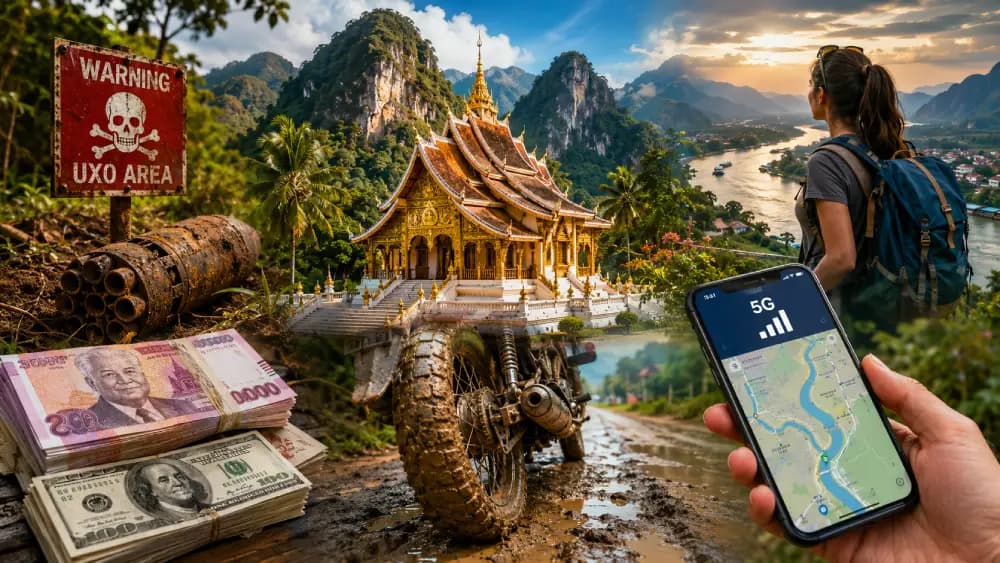

The short answer is yes, Laos is incredibly safe for the average tourist, but the definition of "danger" here is highly unique. You are exceptionally unlikely to be mugged, but you are very likely to encounter treacherous mountain roads or sophisticated rental scams. The country is currently battling double-digit inflation and a historic debt crisis in 2026. While the local people remain famously hospitable, this economic squeeze has triggered a slight uptick in crimes of opportunity. Knowing the specific rules of the road—and which border zones to avoid entirely—is essential for a seamless trip.
The Current Reality: Economic Strain & The Golden Triangle
Laos has long held a reputation as the safest, most laid-back country in mainland Southeast Asia. For the most part, this idyllic image holds true in 2026. Violent crime against foreigners is statistically negligible, and the atmosphere is radically calmer than in neighboring tourist hubs.
However, the nation is enduring a severe economic crisis. Inflation is hovering above ten percent, pushing the daily cost of living up for local families. This economic desperation means that tourists, carrying foreign currency, are increasingly viewed as walking ATMs.
While you will not be held up at gunpoint, bag snatchings from passing motorbikes in Vientiane have become a more common occurrence. You must keep a firm grip on your belongings when walking near busy roads.
The most critical safety warning in Laos involves the Golden Triangle Special Economic Zone (GTSEZ) in Bokeo Province. This area, located at the border of Myanmar and Thailand, operates largely outside of standard Lao legal jurisdiction. It has devolved into a notorious hub for transnational drug trafficking, illicit casinos, and human trafficking networks masquerading as legitimate employment scams.
Western governments explicitly warn citizens to exercise extreme caution or avoid this region entirely. For standard tourists sticking to the classic routes, you will never accidentally wander into these illicit zones. But it is vital to know they exist, especially if you receive a "too good to be true" job offer while backpacking.
Furthermore, always be hyper-aware of what you are carrying when you enter the country. Before you pack, make sure you understand the strict regulations by reading our Laos Airport Customs Rules guide. Ignorance of the law is not an excuse, and border fines can be financially devastating.
Regional Breakdown: The Safe Havens vs. The No-Go Zones
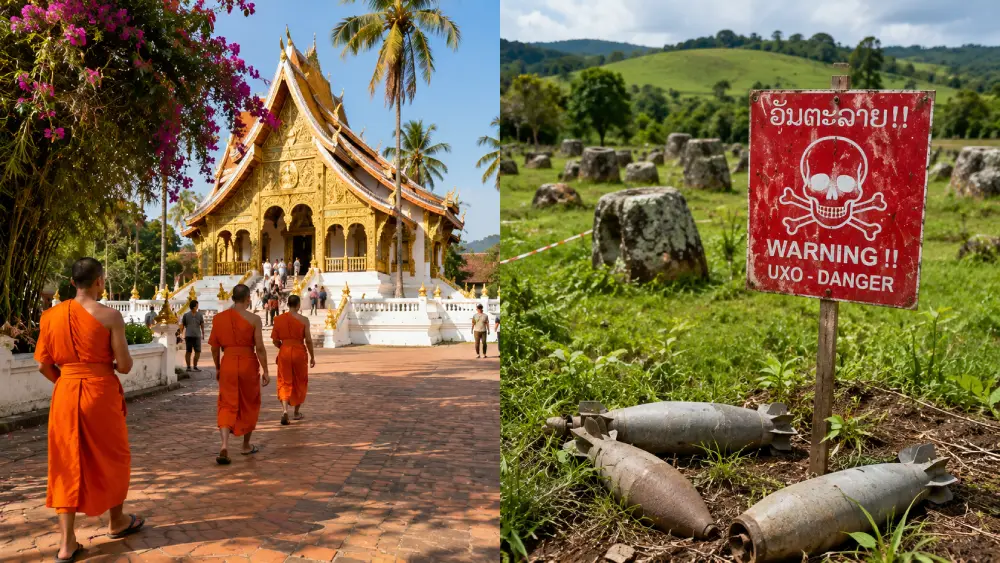
Laos is predominantly rural and highly welcoming, but personal safety varies wildly depending on exactly where you step. Knowing the difference between a pristine tourist route and a heavily mined forest is literally a matter of life and death. The country is geographically divided by dense mountains, meaning isolated areas have very different safety profiles.
The Safest Tourist Zones:
-
Luang Prabang: The cultural crown jewel of Laos is arguably of the safest cities in all of Asia. You can walk around at night with very little worry, though standard street smarts still apply.
-
Vientiane (Central Districts): The capital city is extremely relaxed compared to the manic energy of Bangkok or Hanoi. The riverside areas, night markets, and main restaurant districts are heavily patrolled and perfectly safe for evening strolls.
-
Vang Vieng: notorious for wild, highly dangerous river tubing parties, Vang Vieng has fully rebranded into a safer eco-tourism hub. It is generally safe today, though adventure sports accidents on zip-lines and buggies still happen frequently.
Areas with Specific Risks:
-
Bokeo Province (GTSEZ): As previously mentioned, the Golden Triangle border zone is a massive hotspot for cartel activity and cyber-scam compounds. Stay completely away from the illicit casinos and unverified border crossings here.
-
Xieng Khouang & Eastern Provinces: This is the home of the famous Plain of Jars. While the main archaeological sites are fully cleared and safe, the surrounding countryside is heavily contaminated with Unexploded Ordnance (UXO).
-
Xaisomboun Province: Certain foreign advisories still warn against travel here due to historical armed conflict and highly unpredictable security situations. It offers little for the average tourist anyway.
When exploring any rural area, you absolutely must stick to clearly marked paths. Millions of unexploded cluster bombs from the Vietnam War era remain active and lethal in the Lao countryside. Never hike into uncleared jungle without a certified local guide, and never pick up strange metal objects from the dirt.
For a comprehensive list of cultural boundaries and legal pitfalls, review our Laos Tourist Bans & Laws article before you arrive.
Transportation Safety: The Motorbike Menace
Getting around Laos requires extreme patience and a very strong stomach. The topography is almost entirely mountainous, and modern infrastructure is often lacking outside the main corridors. The biggest physical threat to your life in Laos is not a criminal; it is a traffic accident.
Motorbike Rentals:
Renting a scooter is a backpacker rite of passage, but it is also the leading cause of tourist injuries, road rash, and fatal accidents. The roads are heavily potholed, covered in loose gravel, and shared with massive, aggressive logging trucks. If you do not have a valid home motorcycle license and an International Driving Permit, your travel insurance will legally deny your hospital claim if you crash.
Buses and Minivans:
Overnight sleeper buses and cramped minivans are the traditional way to cross the country on a budget. While cheap, they are notorious for speeding on winding, unlit mountain roads with steep drops. If you have the budget, take the new Lao-China High-Speed Railway connecting Vientiane, Vang Vieng, and Luang Prabang. It is significantly safer, radically faster, and more reliable than risking your life on the highway.
Taxis and Tuk-Tuks:
Traditional tuk-tuks are generally safe, but the drivers will drastically overcharge you simply for being a foreigner. Always aggressively negotiate the fare before getting into the vehicle. Ride-hailing apps like Loca (the Lao equivalent of Uber) are highly recommended in major cities because the price is fixed, the route is GPS-tracked, and the driver is registered.
Tourist Scams: The New 2026 Threats
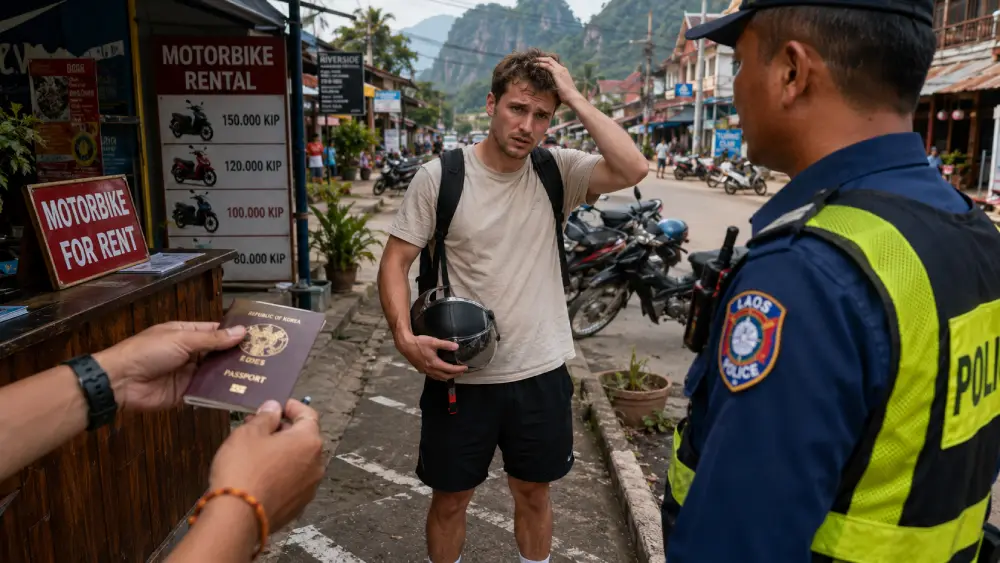
Scams in Laos are generally less aggressive than the intense hustles found in neighboring countries. However, they are becoming more sophisticated as the local currency continues to devalue against the dollar.
-
The Motorbike "Theft" Extortion: You rent a bike, and the shop insists on keeping your physical passport as a deposit. Someone with a spare key mysteriously "steals" the bike while you are parked at a waterfall. The shop owner then demands thousands of dollars for the lost bike, holding your passport hostage until you pay the ransom.
-
The Border Crossing Bribery: When crossing land borders from Thailand or Cambodia, immigration officials or fake "fixers" will often demand a fabricated "stamp fee" or "processing fee." It is a blatant bribe, but arguing usually results in your visa being intentionally delayed for hours in the sweltering heat.
-
Fake VIP Bus Tickets: Travel agents in tourist hubs may sell you an expensive ticket for a luxury "VIP" sleeper bus. When you actually arrive at the station, you are shoved into a cramped, non-air-conditioned local minivan with chickens. Always try to book directly at the bus station or through verified platforms.
-
Money Changing Sleight of Hand: Because the Lao Kip has such a high denomination, exchanging a hundred dollars will result in massive, confusing stacks of cash. Unscrupulous money changers will intentionally shortchange you, counting on you being too overwhelmed to count the zeros.
Women’s Safety & Solo Travel
Laos is incredibly safe for solo female travelers, often ranking as of the most comfortable destinations in Asia for women. The culture is deeply rooted in conservative Theravada Buddhism, which heavily promotes respect, non-violence, and emotional restraint. Catcalling, street harassment, and aggressive machismo are virtually non-existent here.
However, this deeply conservative culture demands strict respect in return. Modesty is absolutely paramount. Walking around town in a bikini top, sports bra, or extremely short shorts is considered highly offensive, even if the locals are too polite to confront you.
When visiting temples, your shoulders and knees must be completely covered without exception. Even when swimming in local waterfalls or rivers, it is customary for women to wear a T-shirt and shorts over their swimwear out of respect for local norms.
Nightlife in Laos is remarkably tame and ends early. Most bars are forced to shut down by midnight due to a strict national curfew, though some remote tourist spots push the limits. Walking home alone at night in places like Luang Prabang is generally safe, but you should always stick to well-lit main streets.
Health, Tap Water & Nature
The medical infrastructure in Laos is extremely limited, underfunded, and lacks modern equipment. If you suffer a serious medical emergency or severe trauma, the standard procedure is to be medically evacuated across the border to Bangkok or Udon Thani in Thailand. You absolutely must have comprehensive travel insurance that explicitly covers medical airlift evacuation.
Can you drink the tap water in Laos? Absolutely not under any circumstances. Even locals boil their water thoroughly or buy it in sealed jugs. Brushing your teeth with tap water is generally fine in high-end international hotels, but budget backpackers should stick to bottled water for dental hygiene.
Mosquito-borne illnesses are a significant and constant threat. Dengue fever is prevalent year-round but spikes dramatically during the wet season. Malaria is a risk in remote, rural jungle areas, though it is less common in the main urban tourist cities. You must wear high-quality insect repellent containing DEET and sleep under intact mosquito nets if you are staying in rustic, open-air guesthouses.
The Ultimate Safety Tool: Staying Connected
Having reliable internet access in Laos is not just about posting vacation photos to social media; it is a critical safety tool. Whether you need to translate an emergency medical symptom to a rural pharmacist, map your way out of a confusing jungle road, or hail a verified Loca taxi at night, being connected is your absolute best defense.
Need data in Laos? Get an eSIM!
Choose the perfect data plan for your trip

Manage your eSIM in the app
Install, top up and track data.
Relying on public Wi-Fi in cafes leaves your digital devices highly vulnerable to hacking and leaves you completely stranded the moment you walk out the door. The easiest way to ensure continuous, secure coverage across the mountainous terrain is to download a Laos eSIM before your flight even lands. This allows you to bypass the chaotic, overpriced SIM card kiosks at the airport and instantly access high-speed data the moment you touch down in Vientiane.
To understand the exact differences in network quality and data packages across the provinces, check out our comprehensive guide on How to Get Internet in Laos. You can also compare the top mobile providers directly by reading our detailed breakdown of the Best eSIM for Laos.
Official Travel Advisories (2026 Update)
Government agencies monitor the ground situation in Laos closely. Here is the official diplomatic consensus for 2026:
-
United States (State Department): Advises citizens to exercise normal precautions for most of the country. However, they strongly advise against travel to Bokeo Province due to severe crime and warn tourists to strictly stay on marked paths in rural areas to avoid lethal unexploded ordnance.
-
United Kingdom (FCDO): Warns against all but essential travel to the Xaisomboun Province due to historical armed conflict and highly unpredictable security situations. They also highlight the severe, risk of landmines across the eastern provinces.
-
Canada: Recommends that travelers exercise a high degree of caution due to unexploded ordnance and rising petty crime. They strictly warn against any travel to the Golden Triangle Special Economic Zone.
The Verdict: Is Laos Safe?
Laos remains of the safest and most profoundly rewarding destinations in Southeast Asia for travelers who exercise basic common sense. The threats here are rarely human; they are environmental, infrastructural, and historical. If you avoid the shady border economic zones, respect the highly conservative local culture, and stay off motorbikes unless you are heavily experienced, your trip will likely be characterized by absolute peace rather than peril.
-
Never leave your passport as a deposit. Pay a higher cash deposit for motorbike rentals to avoid the extortionate and common "stolen bike" scam.
-
Stay strictly on the beaten path. Unexploded cluster bombs are a lethal reality in rural forests and fields; do not go trekking without a registered local guide.
-
Take the train, not the bus. Use the new high-speed railway for long-distance travel to avoid the deadly mountain roads and exhausted bus drivers.
-
Cover your shoulders and knees. Respect the conservative Buddhist culture by dressing modestly, especially at temples and local swimming holes.
-
Get insured for medical evacuation. Lao medical facilities are incredibly basic; ensure your insurance covers a medical airlift to Thailand in case of a severe accident.
Note: Travel safety situations can change rapidly. This information is accurate as of May 2026. Always exercise street smarts and consult official advisories before your trip.