

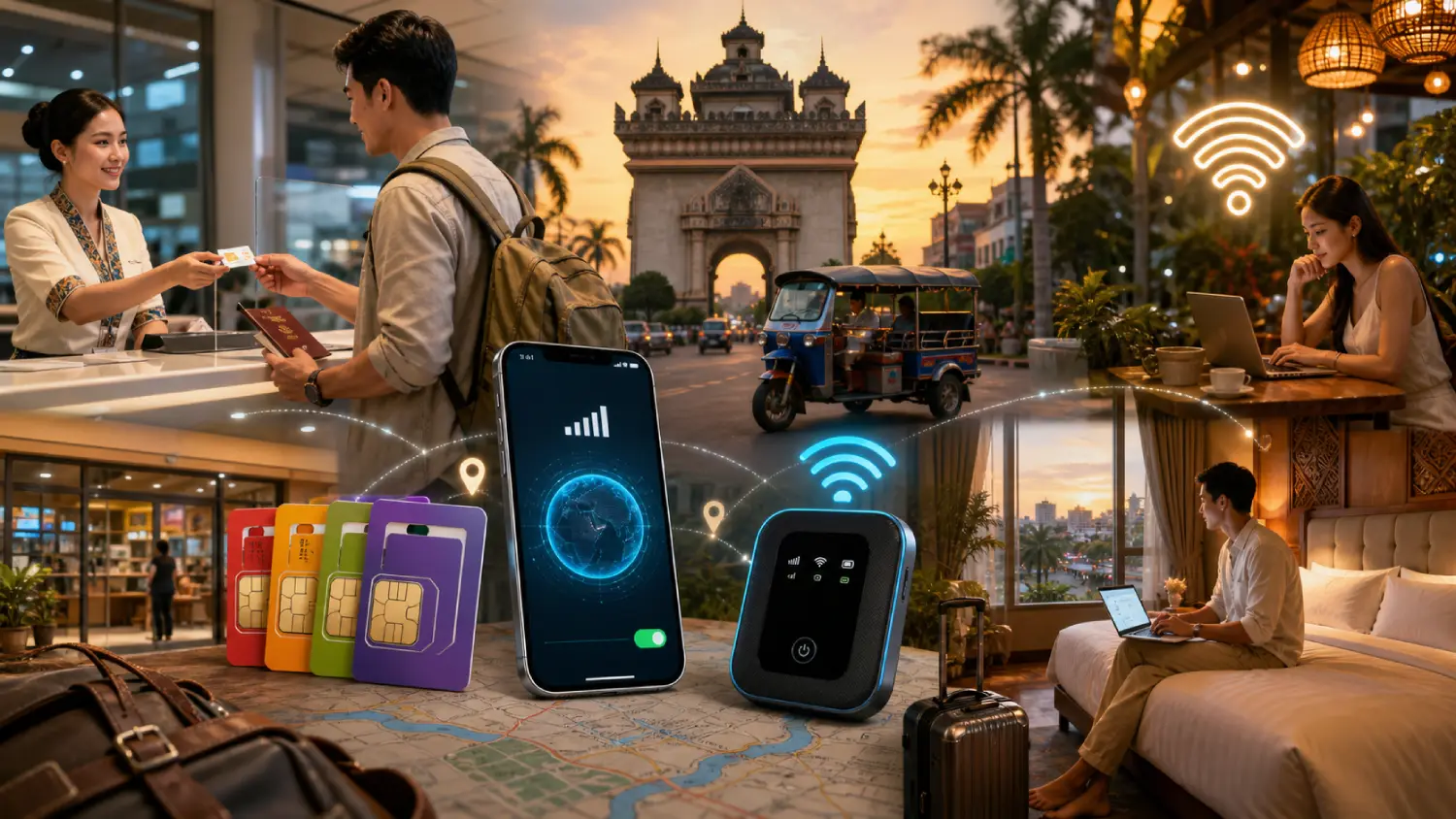

This guide covers the most practical ways to get internet in Laos in 2026: airport SIM cards, local tourist SIMs, Roafly eSIM, pocket WiFi, and airport or public WiFi. It also covers current prices, what kind of coverage to expect, and which option makes the most sense for short trips, longer stays, and multi-stop itineraries.
Quick answer: what is the best way to get internet in Laos?
For most travelers in 2026, there are five realistic ways to get in Laos:
- Buy a tourist SIM at the airport
- Buy a local prepaid SIM in the city
- Use a Laos eSIM
- Rent a pocket WiFi
- Rely on airport, hotel, or café WiFi
If you want the easiest setup, Roafly’s Laos eSIM is the most convenient option because you can install it before departure, activate it when you land, use hotspot, and skip airport SIM counters entirely.
If you want the cheapest local pricing and do not mind setup in person, a local prepaid SIM bought after arrival can cost less in pure data-per-dollar terms. Lao Telecom’s official tourist SIM is sold at Wat Tai Airport customer service and lists three current tourist packages, while its regular local prepaid packages are even cheaper in the city. ETL also publishes low-cost prepaid data bundles, though these are more useful for travelers focused on price than on the smoothest tourist experience. Coverage resources and current operator references also show that Laos now has broad 4G coverage in the main travel corridor, with 5G available in some areas and on some packages.
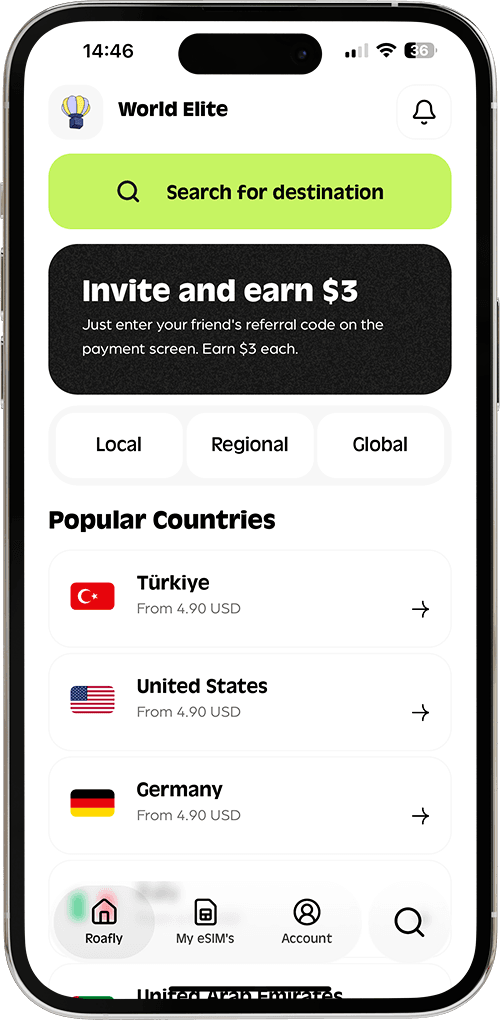
Need data in Laos? Get an eSIM!
Choose the perfect data plan for your trip
Exclusive Reader Bonus!
Enjoy an extra %10 OFF your first Roafly eSIM purchase as a thank you for reading.

Manage your eSIM in the app
Install, top up and track data.
Airport SIM cards in Laos
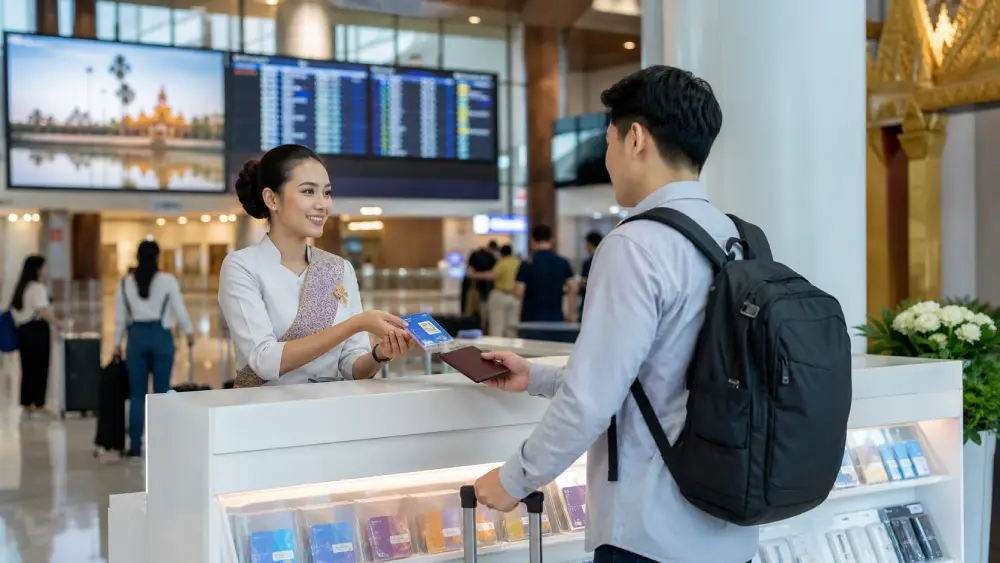
If you want a physical SIM right after landing, the airport route is straightforward, especially at Wattay International Airport in Vientiane. Lao Telecom officially states that tourist SIMs are available at Wat Tai Airport customer service, along with other customer service locations in the country.
Current airport tourist SIM prices
Lao Telecom’s current official tourist SIM page shows these airport-friendly tourist packages:
| Provider | Plan | Validity | Price |
|---|---|---|---|
| Lao Telecom | 10 GB + 10 domestic call minutes | 5 days | 80,000 LAK |
| Lao Telecom | 15 GB + 15 domestic call minutes | 15 days | 95,000 LAK |
| Lao Telecom | 30 GB + 30 domestic call minutes | 30 days | 125,000 LAK |
At the current mid-market exchange rate of about 1 USD = 21,921 to 21,979 LAK on May 5, 2026, those tourist SIM plans work out to roughly $3.65, $4.33, and $5.70 respectively.
That is a strong value if you are happy using a local physical SIM and can spend a few minutes buying and registering it after arrival.
Should you buy a SIM at the airport?
An airport SIM makes sense if:
- you want a local number
- you are staying in Laos for more than a few days
- you do not mind passport registration and in-person setup
- you prefer paying in local currency at a telecom counter
It is less convenient if you arrive late, have a tight transfer, or just want internet to work as soon as the plane lands.
Local tourist SIMs and prepaid SIM prices in Laos
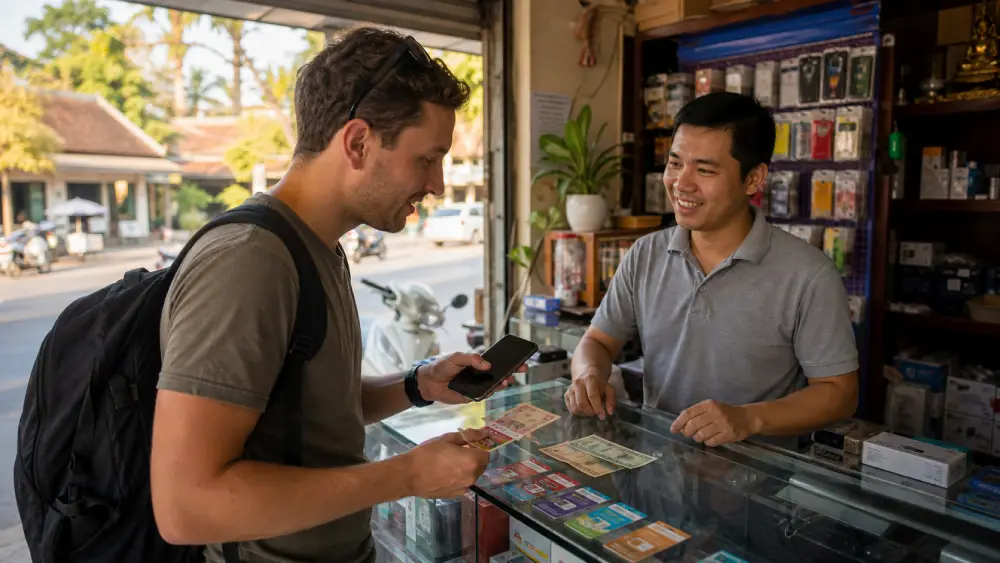
If you skip the airport and buy in town, local prepaid packages can be even cheaper. Lao Telecom’s current package page lists examples such as 5 GB for 3 days at 15,000 LAK and 15 GB for 30 days at 35,000 LAK, while ETL’s prepaid page shows very low-cost starter bundles including 25 MB for 1 day at 1,000 LAK and 250 MB for 1 day at 5,000 LAK. These are not airport tourist bundles. They are local prepaid examples that show how low Laos mobile data prices can be you are in the domestic market.
Local SIM price snapshot
Need data in Laos? Get an eSIM!
Choose the perfect data plan for your trip
Exclusive Reader Bonus!
Enjoy an extra %10 OFF your first Roafly eSIM purchase as a thank you for reading.
Manage your eSIM in the app
Install, top up and track data.
Roafly Laos eSIM features
- Works in Laos
- Network: Lao Telecom
- Plan type: Data
- Mobile hotspot available
- eKYC not required
- Validity starts when the eSIM connects to a supported network
That setup suits most leisure travelers very well. You can install the eSIM before departure and activate it when you land, instead of spending your first hour in Laos comparing counters, dealing with cash, or testing whether a shop is open.
Roafly also supports multiple installation methods, including Direct Install, QR Code, and Manual setup, which makes it a practical choice for travelers who want fewer moving parts on arrival.
Which Roafly plan should you choose?
- 1 GB / 7 days works for light users who mainly need maps, messaging, and ride-hailing.
- 3 GB / 30 days works for shorter trips with moderate daily use.
- 5 GB / 30 days is a safer pick for a typical Laos itinerary with navigation, social apps, and some video.
- 10 GB / 30 days is better for travelers who upload photos often, work remotely, or tether occasionally.
- 20 GB / 30 days makes sense for heavier users or longer multi-city trips.
If your trip includes Thailand before or after Laos, it is also worth checking the best eSIM for Thailand so you can plan your connectivity across both countries without scrambling at the border.
Coverage in Laos: what to expect
Laos has improved a lot, but coverage still depends heavily on where you go.

In Vientiane, Luang Prabang, Vang Vieng, and Pakse, mobile internet is generally good enough for maps, messaging, social media, and everyday travel tasks. Recent Laos-focused connectivity guides and coverage maps show broad 4G access in these main travel areas, with some 5G availability depending on device, location, and operator.
Once you move further into rural areas, mountain roads, river routes, or smaller towns, speeds can drop and signal consistency becomes less predictable. That is why choosing a strong local network or using a reliable eSIM profile matters more in Laos than in some neighboring destinations where coverage is denser.
A simple rule helps here:
- City-heavy trip: almost any mainstream option can work
- Remote or overland trip: prioritize coverage and convenience over chasing the absolute cheapest plan
Is pocket WiFi worth it in Laos?
Pocket WiFi is still an option, but it is rarely the best for solo travelers in Laos in 2026.
Current travel rental platforms list Laos-compatible portable WiFi products, including regional hotspot rentals around $3.65 to $4.05 per day on Klook, depending on pickup point and coverage area. Other global rental companies also market Laos-ready routers.
Pocket WiFi makes sense if:
- you are traveling as a group
- several people need to share connection
- your phone does not support eSIM
- you need a separate device for work or backup
Pocket WiFi is less attractive if:
- you are traveling alone
- you want the lightest setup possible
- you do not want to carry and charge another device
- you want internet the second you land without arranging pickup or delivery
For most travelers today, an eSIM or a local SIM is simpler than carrying a hotspot around Laos.
Can you rely on airport WiFi in Laos?
Not really.
Recent traveler-focused airport connectivity guides report that Wattay International Airport does not offer dependable free public WiFi in general terminal areas. Instead, internet access is typically tied to paid options such as business lounge access for about $10 or a pay-per-use internet café. Some general airport guides also note that lounges can include WiFi, which is useful but not the same as reliable terminal-wide free access.
That means airport WiFi should be treated as a backup, not as your main plan.
If you need maps, hotel directions, or transport apps immediately after arrival, it is smarter to have either:
- a ready-to-use eSIM, or
- a plan to buy a physical SIM right away
What about hotel and public WiFi in Laos?
Public WiFi in Laos is common, but it is not something to build your whole trip around.
Hotels with free WiFi are easy to find across Laos, and many guesthouses, cafés, and restaurants in major traveler hubs now advertise internet access. Luang Prabang in particular has a healthy café scene, and recent remote-work guides still point to cafés as a practical internet option there. At the same time, traveler resources also note that speeds and reliability vary a lot depending on the property and location.
So yes, you will often find WiFi in:
- hotels and guesthouses
- cafés
- restaurants
- some transport hubs
But no, you should not assume it will be fast, stable, or secure enough for everything.
Public WiFi is best for casual use. For navigation, payments, ride-hailing, translation, and travel-day flexibility, mobile data is still the safer choice.
Which internet option is best for your trip style?
Best for convenience
Roafly eSIM
This is the easiest option if you want to arrive ready, skip the SIM hunt, and stay connected from the first minute.
Best for the lowest local pricing
City-bought local prepaid SIM
If you are comfortable buying a SIM in person and managing local packages, local prepaid plans can be very cheap.
Best for a short stay
Airport tourist SIM or Roafly eSIM
Both work well. The better pick depends on whether you value cost or convenience more.
Best for groups
Pocket WiFi
Only really worth it when several travelers share device.
Best as a backup
Airport or public WiFi
Useful sometimes, but not reliable enough to be your main internet plan.
Final verdict
If you want the smoothest arrival in Laos in 2026, an eSIM is the most practical choice. If you are focused on the lowest local price, a physical SIM from a local operator can be cheaper. But for most travelers, the best balance of convenience, setup speed, and day-one reliability comes from using Roafly’s Laos eSIM and getting connected before the trip even starts.
Check the latest eSIM packages for Laos before you fly so your phone is ready the moment you land.