

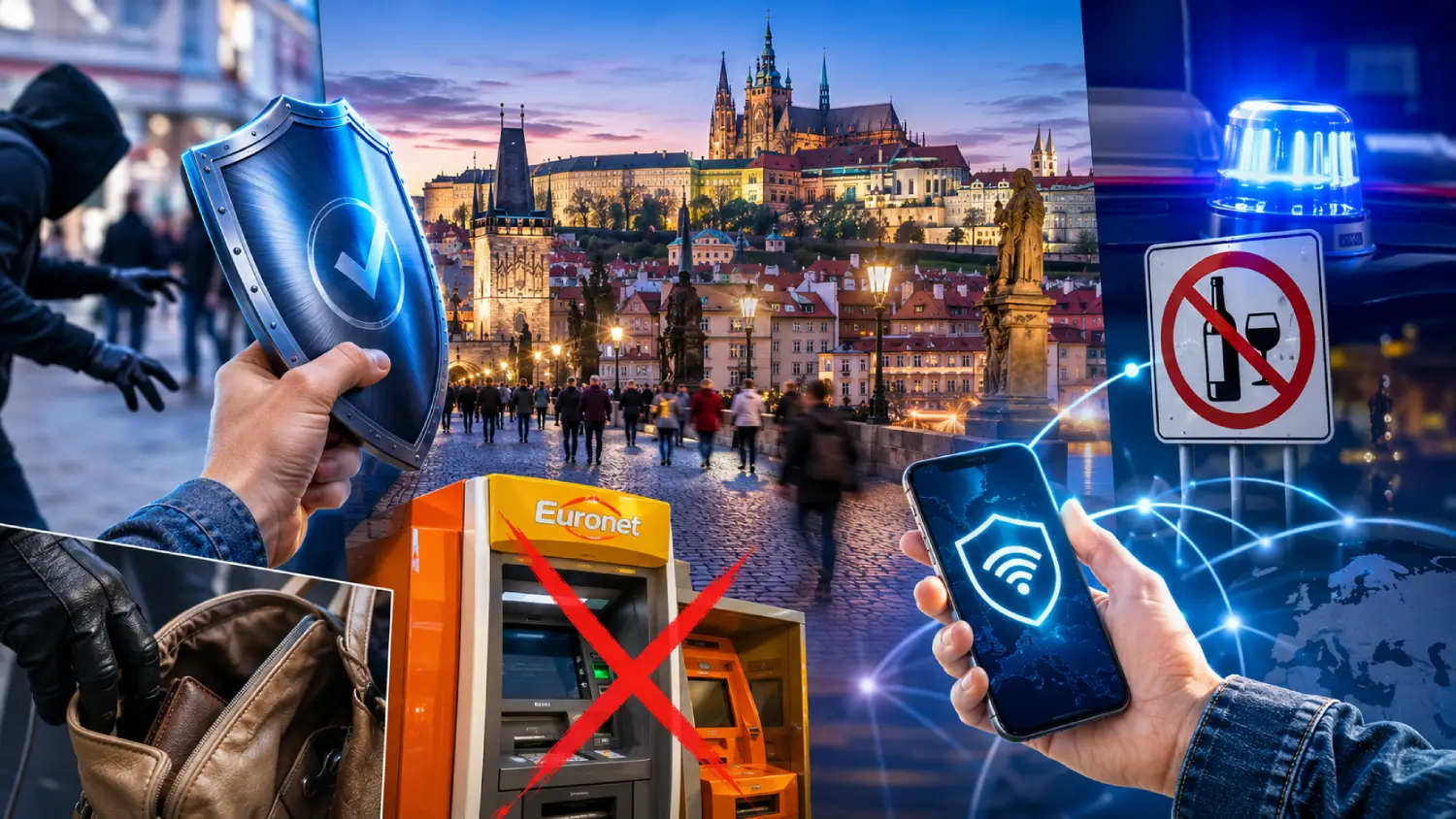

The short answer is yes, the Czech Republic is exceptionally safe for tourists. It consistently ranks high on global peace indexes, boasting excellent healthcare and reliable infrastructure. You can walk through most neighborhoods late at night without looking over your shoulder.
However, the nature of the "danger" here has shifted entirely toward sophisticated economic exploitation. Opportunistic petty crime and legally murky tourist traps are operating at peak efficiency. If you are not paying close attention to exchange rates, restaurant menus, and local laws, your fairy tale vacation can quickly become a financial nightmare.
The Current Reality: Safe Streets, Strict Rules & Hidden Fines
The Czech Republic is a highly regulated society with low rates of violent crime, but the police do not mess around when it comes to public order. While you don't need to worry about gang violence or cartels, you do need to worry about crossing the local authorities. The country has strict regulations regarding public behavior, especially concerning alcohol.
Police officers actively patrol tourist districts and have the authority to issue immediate, on-the-spot fines for infractions. If you are caught engaging in drunken or offensive behavior, officers can forcibly take you to a police "sober-up" facility. You will be held there until you are deemed sober, and you will be forced to pay a hefty bill for your involuntary stay.
Before you travel, it is crucial to understand these local regulations to avoid expensive encounters with law enforcement. You should definitely review our guide on Czech Republic Tourist Bans so you aren't caught off guard. You are also legally required to carry official photo identification, like a passport, at all times.
Regional Breakdown: Safe Zones vs. Areas to Avoid
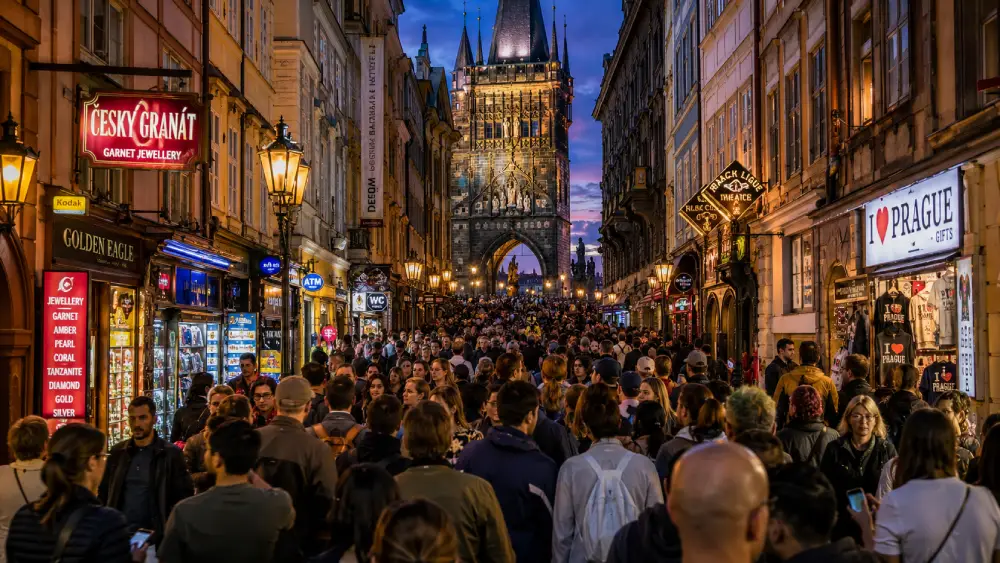
Prague is where 99% of tourist-targeted crime occurs in the Czech Republic. The rest of the country, including beautiful towns like Český Krumlov and Brno, remains remarkably safe with isolated incidents of petty theft. In Prague, the danger map is almost entirely drawn around the historic center.
The Safest Neighborhoods:
-
Vinohrady: A trendy, expat-heavy neighborhood with tree-lined streets, excellent cafes, and practically zero tourist crime.
-
Letná: Famous for its massive park and beer garden, this residential area is peaceful and highly secure day or night.
-
Karlín: A regenerated, modern district that feels incredibly safe and is largely ignored by pickpocket rings.
-
Smíchov: A bustling commercial hub that is highly regulated, well-lit, and very safe for visitors.
High-Alert Zones & Places to Avoid:
-
Karlova Street: This narrow, winding street connecting Old Town Square to Charles Bridge is the ultimate hunting ground for professional pickpockets.
-
Wenceslas Square at Night: While fine during the day, the bottom half of this square becomes a hotspot for shady characters, aggressive club promoters, and drug dealers after midnight.
-
Prague Main Train Station (Hlavní nádraží): The park just outside the station, dubbed "Sherwood" by locals, attracts petty criminals and should be avoided late at night.
-
Old Town Square: The crowds watching the Astronomical Clock are easy targets for organized bag-snatchers.
Transportation Safety: Trams, Unlicensed Taxis & Zero-Tolerance Roads
Getting around the Czech Republic is generally highly efficient, but there are massive blind spots for tourists. The public transportation system is world-class, yet it is also the primary workplace for the city's pickpockets. Always keep your bags zipped, in front of you, and your hands in your pockets when boarding crowded trams or the metro.
When it comes to pedestrian safety, you must unlearn everything you know about crosswalks. In the Czech Republic, trams always have the right of way over pedestrians. A massive metal tram will not stop for you if you step a zebra crossing; you must yield to them to avoid fatal accidents.
If you decide to drive, you are stepping into a regulatory minefield with a strict zero-tolerance policy for alcohol.
-
Zero-Tolerance DUI Laws: You cannot have a single drop of alcohol in your system when driving. Police administer breathalyzers during routine stops, and any trace leads to immediate, severe criminal charges.
-
Mandatory Gear: Your rental car must have a warning triangle, a reflective jacket for every passenger, and a first aid kit.
-
Winter Driving: Between November and March, winter tires are strictly mandatory if weather conditions are poor.
-
Lights On: Headlights must be turned on at all times, 24 hours a day, regardless of the weather.
Finally, never hail a cab directly from the street or the airport arrivals curb. Unlicensed taxis prey on exhausted tourists, sometimes overcharging by 300%. Always use ride-hailing apps like Uber or Bolt, where the route and price are tracked and guaranteed.
The New Threat: Prague’s Legal Tourist Scams
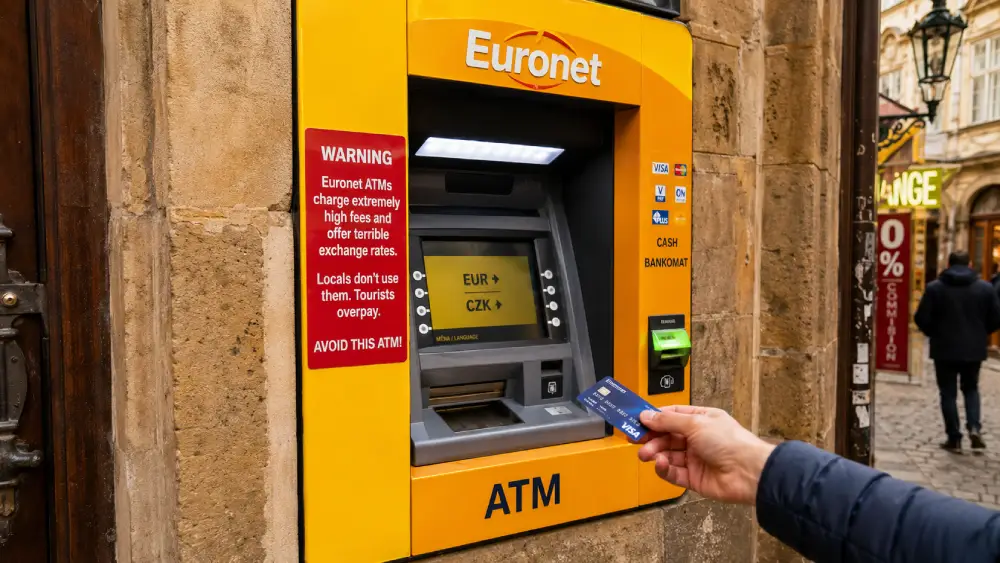
The true danger in the Czech Republic does not come from a weapon; it comes from a credit card terminal. A massive industry of legal and semi-legal traps has been built specifically to drain tourist wallets. Because these businesses operate in legal gray areas, the police cannot intervene to get your money back.
The "0% Commission" Exchange Offices
You will see neon signs everywhere screaming "0% Commission." While technically true, the scam lies in the catastrophic exchange rate they offer. You might hand over 200 Euros and receive 30% fewer Czech Crowns than the actual market rate. Always use a standard bank ATM and avoid private exchange booths entirely.
Euronet ATMs and Dynamic Currency Conversion (DCC)
Avoid the bright yellow and orange Euronet ATMs plastered across the tourist zones. They charge exorbitant withdrawal fees, often taking a massive cut of your money before it even leaves the slot. Furthermore, every card terminal and ATM will try to scam you using Dynamic Currency Conversion.
If a machine asks whether you want to pay in Czech Crowns (CZK) or your home currency, always choose Czech Crowns. If you choose your home currency, the machine applies a terrible exchange rate that instantly costs you 10% to 15% extra.
The Prague Ham Stands
The sizzling hams roasting in Old Town Square look delicious, but they are a notorious ripoff. The prices listed on the board are per 100 grams, not per serving. The vendor will casually slice off a massive 500-gram slab and demand the equivalent of $25 or more for a single plate of pork.
Old Town Menu Traps
Never eat at a restaurant directly on Old Town Square. These establishments routinely double or triple their prices simply because tourists don't know any better. Walk two streets away into a local neighborhood, and the price of a beer drops by 70%. Also, be aware of the laws when bringing your own alcohol into the country by reading our Czech Republic Airport Customs Rules guide.
Women’s Safety & Solo Travel
The Czech Republic is widely considered an excellent and secure destination for solo female travelers. "Machismo" culture is not prevalent here, and street harassment or catcalling is incredibly rare compared to Southern Europe. Women can comfortably dine alone and navigate public transport freely without drawing unwanted attention.
The primary safety concern for women centers around the nightlife in Prague. The city is a major destination for European stag parties (bachelor parties), which brings large groups of heavily intoxicated men to the center. While usually just loud and obnoxious, these groups can create an uncomfortable atmosphere in smaller bars.
Drink spiking remains a documented threat in crowded nightclubs and tourist bars. Never leave your drink unattended, and do not accept drinks from strangers unless you see the bartender pour it directly. If you feel dizzy or disoriented, immediately seek out bar staff or a trusted friend, and call the emergency number (112).
Health Alerts, Tap Water & The 2026 Hepatitis A Outbreak
In terms of everyday health, the Czech Republic is very safe, and the tap water is highly regulated and perfectly safe to drink. The medical facilities in Prague and other major cities are modern, well-equipped, and on par with the rest of Western Europe. However, you will likely need to pay upfront for emergency medical services if you do not have comprehensive travel insurance.
The biggest health concern right now is an active Hepatitis A outbreak currently affecting the Czech Republic, including central Prague in 2026. Health authorities are urging all visitors to practice rigorous hand hygiene and ensure their vaccinations are entirely up to date before traveling. Wash your hands frequently, especially before eating street food like Trdelník or drinking from public fountains.
If you plan to hike in the beautiful Bohemian Switzerland or the Moravian forests, be highly vigilant about ticks. Tick-borne encephalitis (TBE) and Lyme disease are prevalent in Czech forests during the warmer months. Use strong insect repellent, wear long pants, and always check your skin after a day in nature.
The Ultimate Safety Tool: Staying Connected
In 2026, navigating a foreign country safely requires constant access to the internet. If you wander into a sketchy neighborhood or encounter an aggressive scammer, pulling up Google Maps or calling a Bolt is your fastest way out. Relying on spotty public Wi-Fi is dangerous, as these open networks are prime targets for local hackers looking to steal your credit card data.
Need data in Czech Republic? Get an eSIM!
Choose the perfect data plan for your trip

Manage your eSIM in the app
Install, top up and track data.
Having a stable local connection means you can instantly translate warning signs, check real-time tram schedules, and use the emergency 112 app if needed. Czech Republic eSIM gives you instant, secure 5G data the second your plane touches down in Prague. It completely eliminates the need to expose your phone to unsecured cafe networks.
To figure out exactly which plan works best for your itinerary, check out our guide on the Best eSIM for Czech Republic. For a broader overview of how internet infrastructure works in the country, you can also read How to Get Internet in the Czech Republic.
Official Travel Advisories
Global governments consistently rank the Czech Republic as a low-risk destination, though they all highlight the specific financial traps operating in the capital. Here is what the major diplomatic bodies are currently advising:
-
United States (State Department): Currently lists the Czech Republic at Level 1 (Exercise Normal Precautions). The advisory heavily emphasizes vigilance against pickpocketing on public transit and warns about the potential for sudden, large-scale political demonstrations.
-
United Kingdom (FCDO): Advises standard safety precautions. They highlight strict zero-tolerance drunk driving laws, the current Hepatitis A outbreak, and advise tourists to be highly cautious of street exchange scams.
-
Canada (Travel.gc.ca): Advises normal security precautions. They specifically warn citizens about drink spiking in Prague's nightlife districts and the prevalence of ATM card skimming in tourist hubs.
The Verdict: Is the Czech Republic Safe?
Yes, the Czech Republic is an incredibly safe destination, provided you treat your wallet with the same caution you would treat your physical safety in other countries. You do not need to fear the streets, but you absolutely must fear the ATMs, the exchange booths, and the tourist restaurants. Armed with the right information and a healthy dose of skepticism, you can easily outsmart the traps and enjoy of Europe's most beautiful countries.
Golden Rules for Czech Republic Safety:
-
Always Choose CZK on Terminals: Never let an ATM or card reader convert the currency for you. Always press the button for Czech Crowns to avoid a 15% hidden fee.
-
Yield to the Trams: Trams are heavy, fast, and legally own the right of way. Never step a crosswalk without looking both ways for a tram first.
-
Ignore "0% Commission" Signs: pull cash from actual bank ATMs attached to physical bank buildings, and avoid the bright yellow Euronet machines.
-
Watch Your Pockets in Crowds: Keep your bags locked and in front of you while watching the Astronomical Clock, walking Charles Bridge, or riding the 22 Tram.
-
Don't Drink and Drive: The zero-tolerance policy is brutally enforced. Even half a beer will land you in serious legal trouble if you get behind the wheel.
Note: Travel safety situations can change rapidly. This information is accurate as of July 2026. Always exercise street smarts and consult official advisories before your trip.