

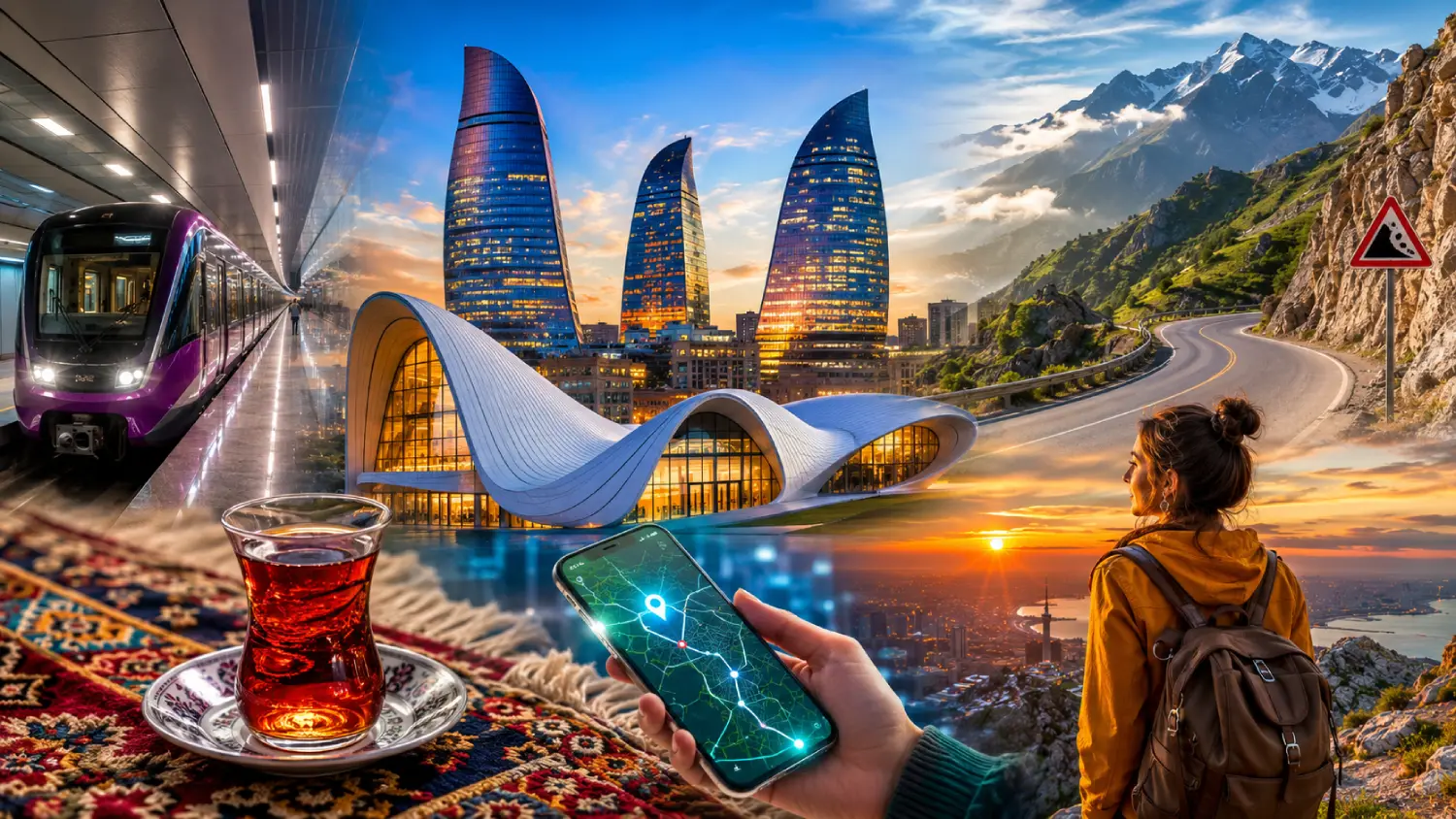

The short answer is yes, but if you stick strictly to the script. Baku is overwhelmingly safe from violent crime, operating as a highly monitored and secure metropolis that feels safer than many Western European capitals. The true danger in Azerbaijan does not come from street gangs or petty pickpockets.
The risks here are deeply tied to geography and geopolitics. Stepping outside the designated tourist bubbles introduces you to volatile border zones, strict state laws, and rural areas still recovering from recent conflicts. The country operates under absolute authority, meaning your safety is guaranteed as long as you follow their specific rules.
Before you even step off the plane, you must understand what you are walking into. Familiarize yourself with our guide on Azerbaijan Tourist Bans & Laws to avoid accidentally breaking a law that could result in immediate detention.
The Current Reality: Geopolitics, Borders & Strict Laws
Azerbaijan is a heavily policed state with an incredibly low tolerance for public disruption. This is phenomenal news for tourists looking to avoid muggings, but it requires a high level of situational awareness regarding local laws. You cannot fly a drone without explicit government permission, and taking photos of military buildings or metro stations will result in your camera being confiscated.
The most jarring reality for tourists in 2026 involves the land borders. The government largely sealed the borders for foot and vehicle entry back during the pandemic and has continuously extended the closure for national security reasons. As of mid-2026, you generally cannot just drive into Azerbaijan from neighboring countries like Georgia or Russia, though exiting overland is permitted.
However, the situation is incredibly dynamic. In a massive shift starting May 25, 2026, the railway border crossing between Georgia and Azerbaijan is officially reopening for citizens eligible for visa-free entry. This is the first major easing of restrictions in years, but standard land entry remains effectively closed until at least July 2026. To ensure a flawless arrival by air, review the Azerbaijan Airport Customs Rules so your luggage isn't flagged by the strict border guards.
Regional Breakdown: The Safe Havens vs. The Red Zones
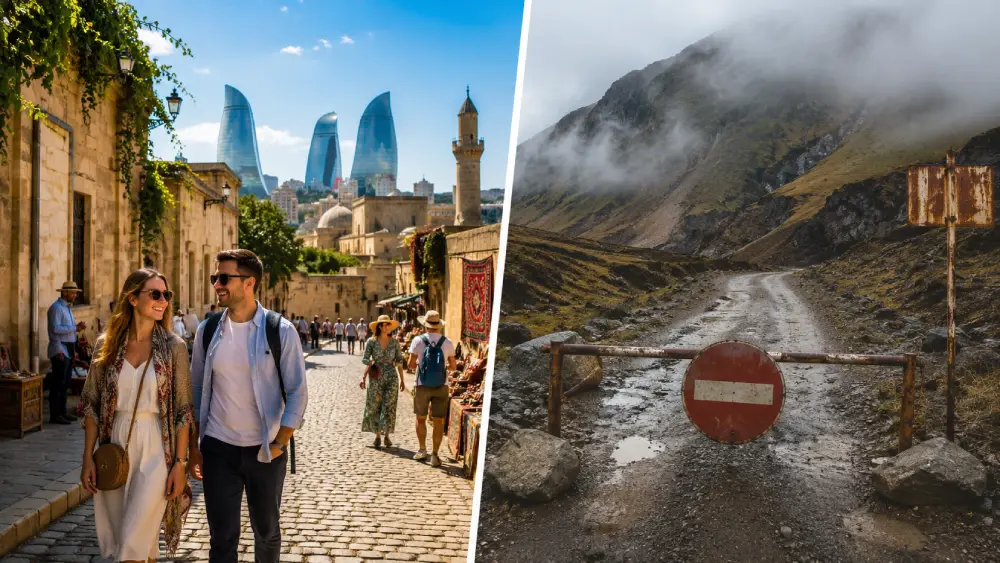
Azerbaijan is a country of extreme contrasts, and your physical safety depends entirely on your GPS coordinates.
The Utterly Safe Zones:
-
Baku: The capital is a fortress. Neighborhoods like Icherisheher (Old City), Nizami Street, and the Baku Boulevard are saturated with CCTV and patrolling police officers. You can confidently walk through the city center at midnight without glancing over your shoulder.
-
Sheki: Located in the forested northwest, this historic Silk Road city is incredibly peaceful. The locals are deeply hospitable, and violent crime is virtually nonexistent.
-
Gabala: A premier resort destination filled with luxury hotels and family-friendly attractions. Security here is top-tier, making it a perfect mountain retreat.
-
Ganja: The second-largest city is safe and welcoming, though it operates at a slower, more traditional pace than Baku.
The Absolute No-Go Zones:
-
The Border with Armenia: Tensions are critically high. You must never travel within 5 kilometers of the Armenian border, as the area remains highly militarized and unpredictable.
-
Nagorno-Karabakh & Surrounding Territories: Despite Azerbaijan reclaiming full control, the region is severely contaminated with unexploded ordnance and unmarked landmines. Travel here is strictly controlled by the military, and unguided tourist access is forbidden.
-
The Southern Border with Iran: Early 2026 saw massive geopolitical clashes and drone threats involving the US and Iran, spilling tension into the Azerbaijani southern border and the Nakhchivan exclave. Avoid this region entirely unless it is your absolute overland exit route.
Transportation Safety: Getting Around the Land of Fire
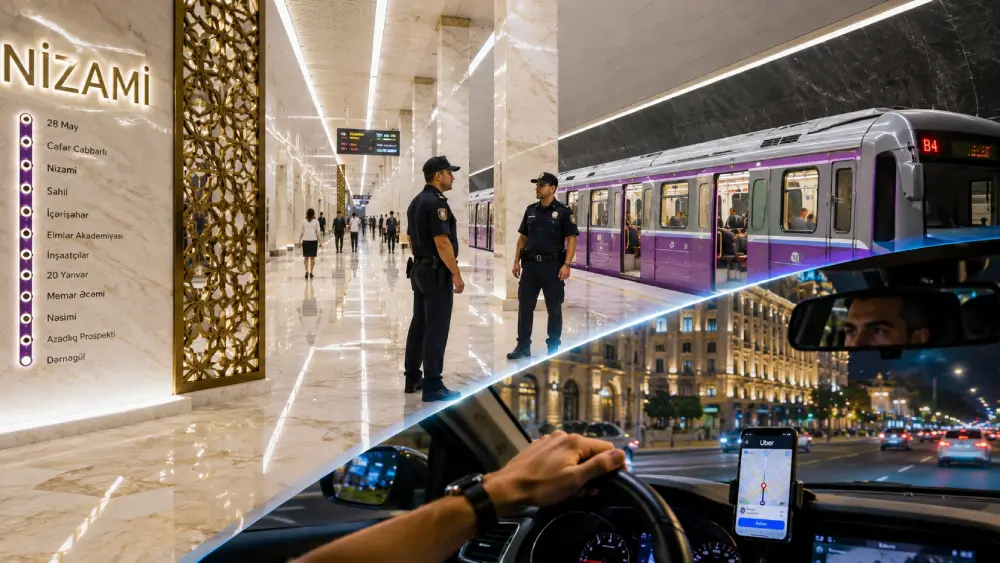
Navigating the country requires you to completely abandon some of your typical travel habits.
When moving around Baku, Bolt and Uber are your ultimate safety tools. They eliminate the massive language barrier and lock in your price before you get in the car. Hailing a standard street cab, especially near tourist landmarks, is a guaranteed way to get aggressively ripped off.
The Baku Metro is an engineering marvel that is cheap, fast, and remarkably safe. Heavily guarded by security personnel, it is immune to the pickpocketing plagues of Paris or Rome. However, you must remember that snapping photos or videos underground is strictly illegal and will trigger an immediate police response.
Leaving the capital changes the transportation game entirely.
-
BakuBus: The red city buses are modern, air-conditioned, and safe. You pay seamlessly with a BakuCard.
-
Marshrutkas (Minibuses): These dominate rural routes and are driven by men who view speed limits as mere suggestions. They are cheap but can be physically terrifying due to erratic driving.
-
Night Driving: Renting a car is fine for daytime exploration, but driving rural roads at night is incredibly dangerous. The roads are unlit, riddled with massive potholes, and frequently blocked by wandering herds of sheep or cows.
-
Trains: The modern ADY trains connecting Baku to regions like Gabala and Ganja are highly secure, punctual, and the absolute safest way to cross the country.
Tourist Scams: The 2026 Hustle
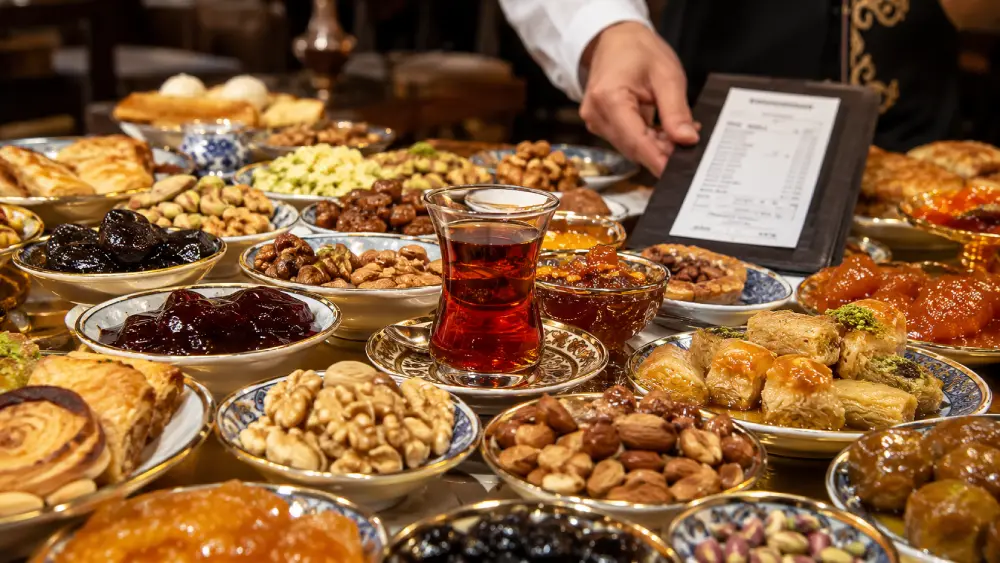
Violent crime against foreigners is nearly zero, but financial opportunism is alive and well. If you are going to be targeted in Azerbaijan, it will be an attack on your wallet.
-
The Airport Taxi Shake-Down: Drivers loitering outside Heydar Aliyev International Airport will claim their meter is broken or quote you a seemingly cheap price. Upon arrival at your hotel, they will demand that price in British Pounds or Euros instead of the local Manat.
-
The Unofficial Guide Trap: At remote sites like the Mud Volcanoes or Gobustan, locals may attach themselves to you and start narrating the history unprompted. When you return to your car, they will aggressively demand a massive cash tip for their "tour."
-
The Extortionate Tea House: You sit down for a simple cup of black tea, but the waiter brings plates of jams, nuts, and sweets you never ordered. When the bill arrives, you are charged upwards of 100 AZN for items you assumed were complimentary.
-
The Underground Bar Bill: A friendly local strikes up a conversation and invites you to a hidden basement bar in Baku. After ordering a few drinks, you are handed a violently inflated bill, and large bouncers will block the exit until you pay it.
-
Currency Exchange Sleight of Hand: Always use official bank ATMs or brightly lit exchange booths in malls. Independent street vendors will use rapid hand movements to shortchange you while counting out your Manat.
Women’s Safety & Solo Travel
Baku is a cosmopolitan, forward-thinking city where solo female travelers will feel completely comfortable. The streets are brightly lit, the nightlife is vibrant, and women walk alone at night without fear.
However, Azerbaijan remains deeply rooted in traditional Caucasian culture, and the atmosphere shifts drastically outside the capital. In rural areas, a heavy "machismo" culture is prevalent. Physical assaults are incredibly rare, but solo women can expect intense staring, catcalling, and overly intrusive questions about their marital status.
-
Dress Code Reality: In Baku, young locals wear modern Western fashion, including shorts and crop tops. you leave the city limits, you must dress conservatively by covering your shoulders and knees to avoid drawing unwanted attention.
-
Nightlife Vigilance: Baku has incredible bars and clubs, but solo women should never leave their drinks unattended. While drink spiking is not a massive epidemic, isolated incidents do occur.
-
Dating App Dangers: Exercise extreme caution if using Tinder or Bumble in Baku. Scam networks use fake profiles to lure foreign tourists into the exact extortionate bar traps mentioned in the previous section.
Health, Tap Water & The Elements
Your physical health is just as critical as avoiding street scams.
Do not drink the tap water. The water in Azerbaijan is heavily chlorinated and frequently carries old pipe rust and sediment. Consuming it will almost certainly ruin your stomach for days. You must rely exclusively on bottled water, and you should even use it when brushing your teeth.
Medical care in Baku is excellent, featuring modern private clinics with English-speaking doctors. However, if you travel into the mountains or rural villages, medical facilities revert to extremely basic standards. You must carry comprehensive travel insurance that covers emergency medical evacuation.
When dealing with nature, respect the Caucasus Mountains. The weather shifts violently without warning, and rescue services in remote areas are notoriously slow. If you plan to hike the rugged trails up north, always hire a certified local guide and never stray from marked paths.
Finally, be aware of the local stray dog population. Baku has a large number of street dogs that are generally tagged and vaccinated. While they are usually docile during the day, they form packs at night and can become highly aggressive, so give them a wide berth after dark.
The Ultimate Safety Tool: Staying Connected
In a country defined by closed land borders, sudden geopolitical shifts, and strict state police, internet access is not a luxury. It is your most vital safety requirement.
Need data in Azerbaijan? Get an eSIM!
Choose the perfect data plan for your trip

Manage your eSIM in the app
Install, top up and track data.
Relying on public Wi-Fi in Baku cafes is a massive cybersecurity risk and leaves you totally vulnerable on the streets. Having a reliable, private connection allows you to instantly summon an Uber to escape a shady neighborhood, translate complex conversations with border guards, and pull up offline maps when wandering through rural mountain villages.
Before your flight departs, read our comprehensive guide on How to Get Internet in Azerbaijan to understand your digital lifeline. The absolute safest and most efficient choice is an Azerbaijan eSIM. It guarantees you are connected the exact second your plane touches the tarmac, meaning you never have to negotiate with predatory airport taxi drivers. For an updated breakdown on pricing, check our guide to the Best eSIM for Azerbaijan.
Official Travel Advisories (2026 Update)
Global governments have drastically updated their stances on Azerbaijan due to shifting geopolitics and regional volatility.
-
United States (State Department): The US elevated Azerbaijan to a Level 3 "Reconsider Travel" advisory in early 2026. The warnings heavily cite the threat of terrorism, the risk of armed conflict spilling over the southern Iranian border, and the extreme danger of unmarked landmines in the Karabakh region.
-
United Kingdom (FCDO): The UK firmly advises against all travel within 5 kilometers of the Armenian border. They stress the absolute unpredictability of the land border closures and emphasize a need for vigilance against petty financial scams in Baku.
-
Canada: The Canadian government advises exercising a high degree of caution throughout the country. They strictly forbid any travel to the Nagorno-Karabakh area and the immediate border zones due to the persistent threat of unexploded ordnance and military skirmishes.
The Verdict: Is Azerbaijan Safe?
Azerbaijan is exceptionally safe if you understand the rules of the board. Baku is a glittering, highly secure metropolis where foreign tourists face almost zero physical danger. The risks here are entirely geopolitical, geographical, and financial. If you avoid the volatile border regions, brush off the street hustlers, and respect the absolute authority of the local police, your trip to the Land of Fire will be spectacular. The country is strictly controlled from the top down, a dynamic which works entirely in the average tourist's favor.
Golden Rules for 2026:
-
Fly, Don't Drive: Standard land borders remain effectively closed for entry. Unless you are using the specific newly reopened railway from Georgia, you must arrive by air.
-
Stick to the Apps: Never hail a street cab under any circumstances. use Bolt or Uber to guarantee fair pricing and safety.
-
Avoid the Borders: Do not travel near the Armenian or Iranian borders, and stay entirely out of the Nagorno-Karabakh region.
-
Fear the Tap Water: Stick strictly to bottled water for drinking and brushing your teeth to avoid severe stomach illness.
-
Stay Digitally Connected: Download your Azerbaijan eSIM before landing so you are never stranded offline in a country where you don't speak the language.
Note: Travel safety situations can change rapidly. This information is accurate as of May 2026. Always exercise street smarts and consult official advisories before your trip.