

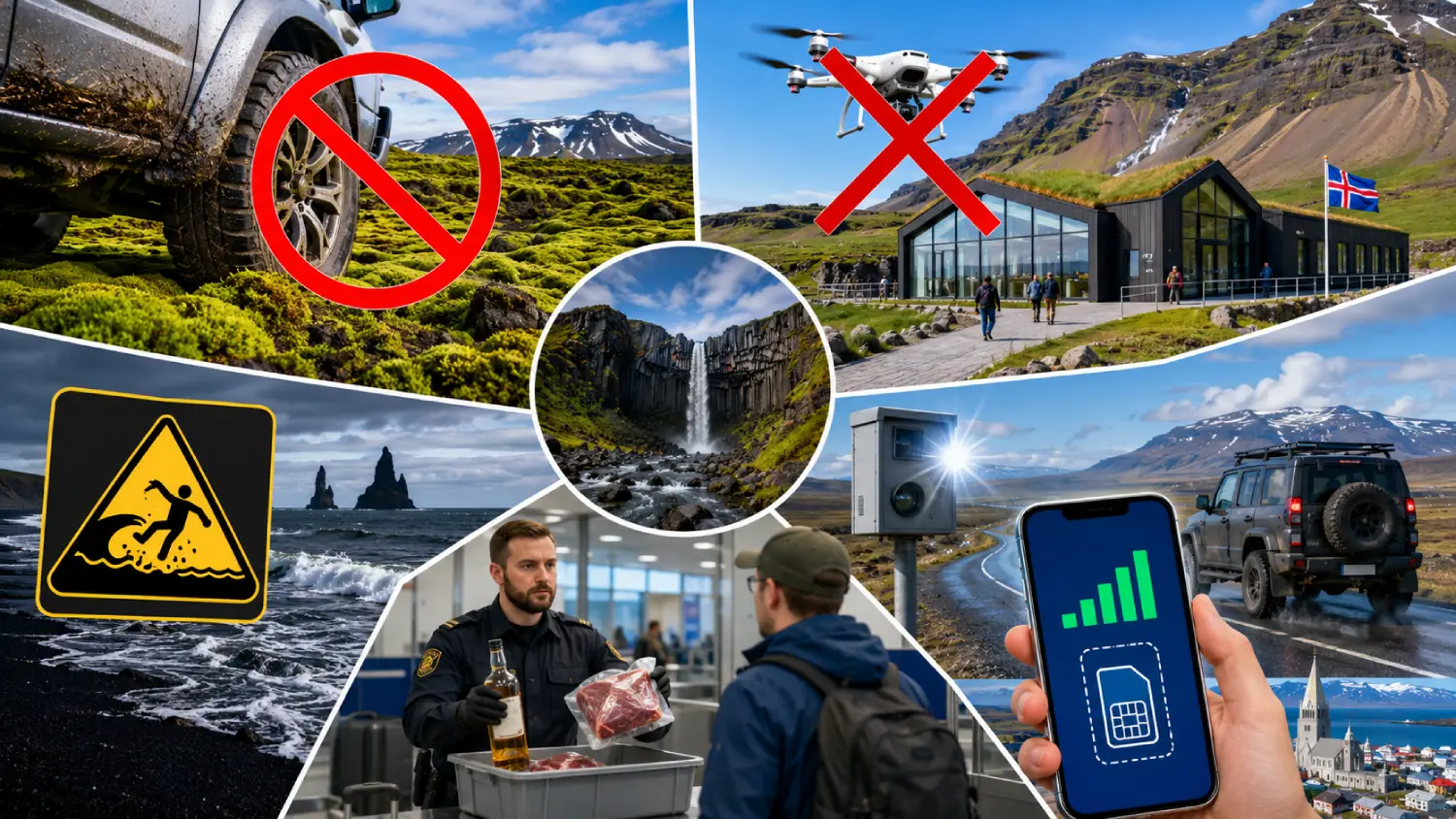

When traveling to Iceland, ignorance of the law is never an excuse. This country fiercely protects its fragile ecosystems and has severe penalties for tourists who disrespect the rules. From accidental off-road driving to flying a drone in the wrong airspace, a simple mistake can cost you thousands of dollars in fines or result in a criminal record.
The $7,000 Mistake: Off-Road Driving & Moss Destruction
Driving off marked roads is completely illegal in Iceland and carries some of the harshest fines in Europe. The Icelandic landscape is covered in fragile volcanic moss that takes centuries to grow back if crushed by vehicle tires. If you are caught driving off-road, the fines can reach up to 1,000,000 ISK (approx. $7,000 USD) depending on the environmental damage.
Police often track down tourists based on photos taken by locals or park rangers. Even if you are just pulling over to take a picture of a waterfall or if you are chasing auroras after reading our Norway vs. Iceland: The Ultimate Northern Lights Guide, your vehicle must stay on designated paths.
Keep these driving rules in mind:
-
F-Roads are not off-roading: F-roads are official, unpaved mountain roads that require a 4x4 vehicle, but they are strictly marked paths that are completely closed during winter.
-
No pulling the moss: If there is no designated parking spot or pull-out area, you cannot stop your car on the side of the road, no matter how beautiful the view is.
-
Rental car penalties: If police fine you for parking or off-roading, your rental car company will automatically charge your credit card for the penalty, plus a hefty administrative fee.
Strict Customs: Alcohol Limits & Banned Groceries
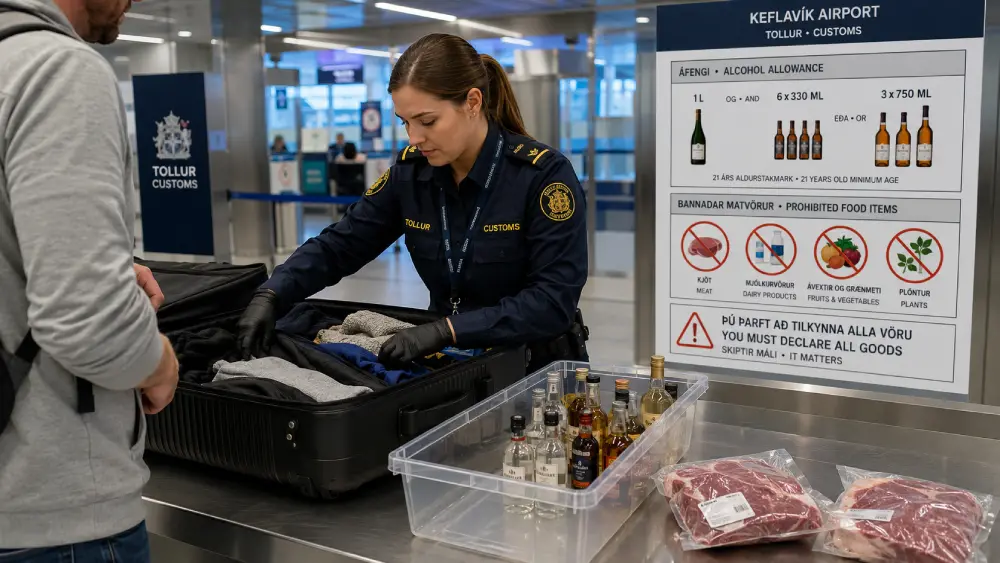
Iceland restricts the import of alcohol, tobacco, and certain foods to protect local agriculture and control liquor sales. You cannot bring raw meat, uncooked poultry, or dairy products from outside the European Economic Area (EEA) into Iceland. If you try to bring your favorite foreign cheeses or dry meats, they will be confiscated and destroyed at the border.
Alcohol imports are heavily regulated by Iceland Revenue and Customs, and exceeding your duty-free allowance will result in massive taxes. The drinking age for alcohol is 20, and the minimum age for tobacco is 18. Before packing your bags, be sure to read our complete breakdown on Iceland Airport Customs Rules: Alcohol, Tobacco, and Food Restrictions.
The current duty-free alcohol allowances require specific combinations, such as:
-
1 liter of spirits (over 21% alcohol), 0.75 liters of wine, and 3 liters of beer.
-
3 liters of wine and 6 liters of beer.
-
Maximum beer allowance: If you bring beer, the absolute maximum limit is 18 liters per adult.
Deadly Beaches & Environmental Fines: Sneaker Waves & Sand Theft
Iceland’s nature is breathtaking but highly dangerous and legally protected. At Reynisfjara Black Sand Beach, tourists frequently ignore warning signs and get dangerously close to the water. Sneaker waves are massive, unpredictable ocean surges that routinely sweep tourists out to sea, often with fatal consequences.
Additionally, taking "souvenirs" directly from nature is a punishable offense. It is illegal to remove sand, stones, or lava rocks from Reynisfjara or any protected nature reserve in Iceland. Customs agents can confiscate these items at Keflavik Airport, and you may face severe environmental fines before being allowed to board your flight.
Do not step on the moss or camp illegally:
-
Do not step on the moss: Just like driving on it, walking on the delicate volcanic moss destroys it and leaves lasting scars on the landscape.
-
No wild camping: You cannot pitch a tent or sleep in a campervan anywhere outside of a designated, paid campsite.
-
Geothermal pool hygiene: Before entering any public pool or hot spring, Icelandic culture strictly dictates that you must shower completely naked with soap.
Driving in Iceland: Headlights, Speed Cameras, & Single-Lane Bridges
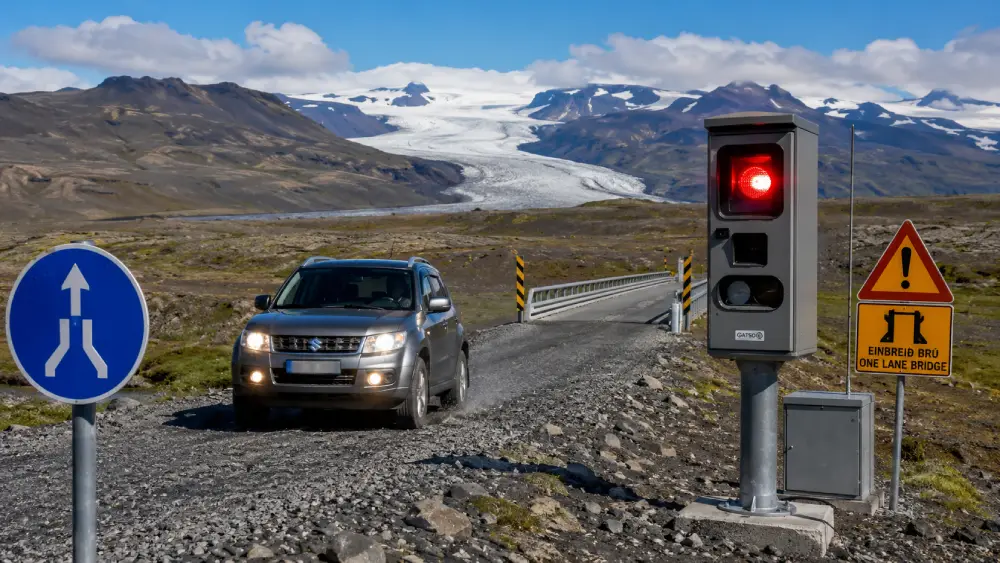
Renting a car is the best way to see the country, but Icelandic traffic laws are unforgiving and aggressively enforced. Headlights must be turned on 24 hours a day, 365 days a year, regardless of how bright the summer sun is. It is also illegal to turn right on a red light, a rule that frequently catches North American drivers off guard and results in immediate tickets.
Iceland operates a massive network of hidden speed cameras, and fines are brutally high. Going just 15 km/h over the speed limit can easily result in a fine exceeding $350 USD. Furthermore, Iceland has a virtually zero-tolerance policy for drinking and driving, with a blood alcohol limit of just 0.05%.
Avoid these common driving mistakes:
-
Single-lane bridges (Einbreið brú): The vehicle closer to the bridge has the right of way; failure to yield is both illegal and incredibly dangerous.
-
Mobile phone usage: Using a phone while driving without a hands-free device carries an instant fine of 5,000 ISK.
-
Wind damage: Holding your car door tightly when opening it is vital; the wind can literally tear it off the hinges, and rental insurance almost never covers this.
Drones in National Parks: Confiscation & Permit Traps
Iceland has aggressively tightened its drone regulations to protect wildlife and preserve the peaceful experience of visitors. Flying a drone in any of Iceland's major National Parks, such as Vatnajökull, Þingvellir, and Snæfellsjökull, is strictly prohibited without a written permit. According to the Environment Agency of Iceland, unauthorized drones can be confiscated and operators face immediate and substantial fines.
Drones are also banned near popular waterfalls like Skógafoss outside of very narrow, specific time windows. Furthermore, flying drones near bird cliffs, especially where puffins nest, is considered animal harassment and is heavily penalized by local authorities.
Drone operators must adhere to these strict limits:
-
Maximum altitude: Drones cannot fly higher than 120 meters (394 feet) from the ground anywhere in the country.
-
Weight limits: Drones flying in urban areas like Reykjavik must weigh under 3 kilograms unless special permission is granted.
-
Keep your distance: You must stay at least 50 meters away from private buildings (including summer cabins) and 150 meters away from public buildings.
Stay Connected to Stay Safe
Having a reliable internet connection in Iceland is not just for posting photos; it is a critical safety tool. The weather changes rapidly, and you need live access to road closures, weather alerts, and official SafeTravel guides to avoid getting stranded in a whiteout blizzard. Before you travel, check out our guide on How to Get Internet in Iceland to ensure you are always.
Need data in Iceland? Get an eSIM!
Choose the perfect data plan for your trip

Manage your eSIM in the app
Install, top up and track data.
An eSIM is the most secure and convenient way to get instant data the moment you land at Keflavik Airport. Using an Iceland eSIM allows you to translate complex parking signs, map out approved campsites, and look up local emergency numbers without paying outrageous roaming fees. For a detailed breakdown of your options, read our review of the Best eSIM for Iceland.
Summary Checklist (Don't Be That Tourist)
-
Never drive off-road: Stay on marked roads or face fines up to 1,000,000 ISK and permanent damage to the ecosystem.
-
Don't touch the moss: Never walk or drive on the fragile volcanic moss; it takes hundreds of years to recover.
-
Respect drone bans: Drones are strictly banned in National Parks and near bird cliffs without explicit written permits.
-
Shower naked before pools: You must wash thoroughly with soap and without a swimsuit before entering any public geothermal pool.
-
Leave the sand behind: It is illegal to take sand, stones, or lava rocks from protected areas and black sand beaches.
-
Headlights on always: Your vehicle's headlights must be turned on 24/7 by law, even in broad daylight.
Note: Travel laws and fines can change. This information is accurate as of July 2026. Always consult official local authorities before your trip.