Download the App and manage your eSIMs easily
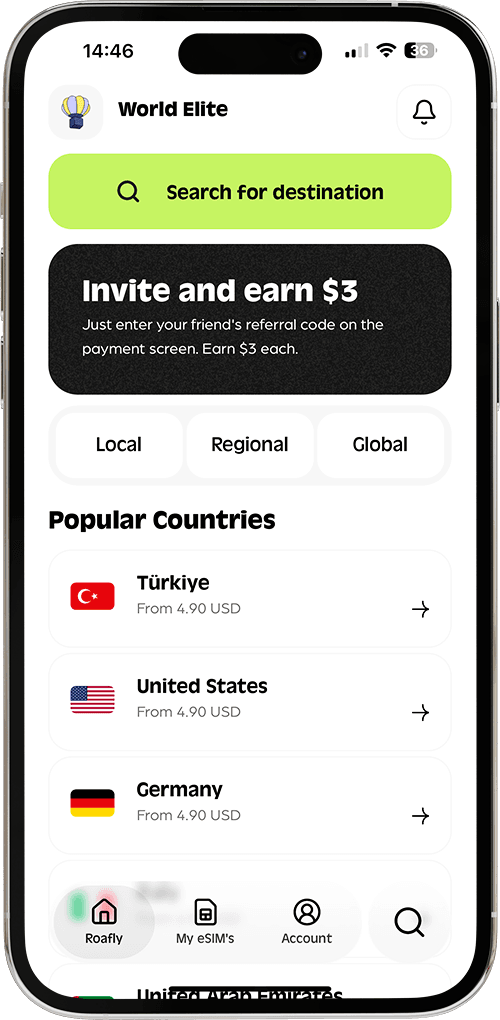
Create your order quickly
See your eSIM details
Track your remaining data
Download the App and manage your eSIMs easily
Create your order quickly
See your eSIM details
Track your remaining data
Greece follows Schengen entry rules. Depending on your nationality, a holiday may be visa-free or require a visa before departure. Your previous time in other Schengen countries also matters, especially when Greece is one stop on a longer European trip.

Lena Hartley
Updated Oct 22, 2026
8 min read

Save 15% on your Roafly eSIM
Stay connected on your next trip. Use the code below at checkout.
View All DestinationsJump to section
👇
Manage your eSIM in the app
Install, top up and track data.
Save 15% on your Roafly eSIM
Stay connected on your next trip. Use the code below at checkout.
View All DestinationsAs checked on 22 October 2026, EES border registration is operating, while ETIAS applications have not opened. Before booking, establish three things: which entry route applies to your passport, how long you can stay and whether your itinerary involves leaving and re-entering Schengen.
Start with your nationality and passport type. The examples below cover ordinary passports unless stated otherwise; they are not exhaustive country lists.
| Traveler group | Representative examples | Entry route for a short tourist visit |
|---|---|---|
| EU citizens | Germany, France, Ireland | Travel with a valid passport or national identity card under EU free-movement rules. |
| Visa-exempt non-EU visitors | United States, United Kingdom—British citizens, Canada, Australia, New Zealand, Japan | Usually up to 90 days in any 180-day period across Schengen, subject to the other entry conditions. |
| Visa-required non-EU visitors | India, China, Türkiye, South Africa, Philippines | Normally obtain a short-stay Schengen visa before departure. The visa’s permitted stay and entry conditions apply. |
Use Greece’s official visa requirements by nationality for passports not shown here and for distinctions involving diplomatic, service or special passports.
Nationality and residence are separate checks. Valid Schengen residence permits, long-stay visas and certain family-member documents can affect the applicable requirements. If you hold one, assess your passport and residence document together.
Türkiye’s limited island-entry arrangement is a separate route, explained below. It should not be treated as a general visa-on-arrival option for a flight to Athens.
Visa-exempt visitors generally share one allowance across the Schengen area: up to 90 days within any rolling 180-day period.
Greece does not provide a fresh allowance after a stay in Italy, France or another Schengen country. For example, 20 days in Italy, 10 in France and 14 in Greece add up to 44 Schengen days if they all fall within the relevant period.
Two separate limits matter if you hold a visa:
Permitted duration: the number of days your visa authorizes, within the applicable Schengen limit.
Number of entries: whether the visa allows one entry or multiple entries.
Visa validity is different again. A visa valid over several months does not necessarily authorize you to spend that entire period in Greece.
Leaving Schengen for a weekend in Türkiye does not reset the rolling day count. If your itinerary approaches the limit, calculate your previous visits before committing to additional dates. Longer stays require the appropriate permission rather than an assumption that a short trip abroad starts another allowance.
Non-EU visitors taking a short tourist trip should check two passport dates:
The passport must have been issued within the previous 10 years on the day of entry.
It must remain valid for at least three months after the intended departure from the Schengen area.
Use your final Schengen departure when calculating that second date. If you leave Greece for Italy before flying home, the relevant departure is from Italy.
EU citizens follow different travel-document rules and can generally travel with a valid passport or national identity card. Children need their own appropriate travel documents.
Border officials may also ask for evidence explaining the trip, including:
Accommodation reservations or details of your host.
Return or onward travel arrangements.
Evidence of sufficient funds.
A clear explanation of your itinerary and purpose of travel.
Keep the relevant documents accessible, including downloaded copies of bookings. Admission depends on meeting the applicable entry conditions, even if you already hold a visa.
Protect original documents separately from everyday spending cash, and include document security in your wider safety preparations for Greece.
Border admission and customs are separate procedures. What you may bring in your luggage, and what you must declare, belongs under Greece’s customs rules.
Apply through Greece when it is your sole destination or the Schengen country where you will spend the longest time. If stays in several countries are equal, the first country you will visit determines where to apply.
Applications normally go to the consulate responsible for your country of legal residence, sometimes through its appointed visa application center.
Under the current Schengen application rules, you can lodge an application up to six months before travel and should submit it at least 15 days before departure. Normal processing takes 15 days, but an application requiring further examination can take up to 45 days. Appointment availability adds a separate planning constraint.
The standard application fee is €90 for adults and €45 for children aged six to eleven. Reduced fees and exemptions apply to some applicants, and application centers may charge an additional service fee.
Your application will normally include:
A completed and signed application form.
A passport with at least two blank pages.
A suitable photograph.
Accommodation, financial and itinerary evidence.
Travel medical insurance.
Fingerprints, unless an exemption applies.
Visa applicants’ medical insurance must provide at least €30,000 of qualifying cover for emergency medical care, hospitalization and repatriation, including in the event of death. For a uniform Schengen visa, it must cover the Schengen area throughout the intended stay. This application requirement should not be presented as a universal insurance-document requirement for every visa-exempt visitor.
Follow your responsible consulate’s checklist for additional documents. Once the passport is returned, review the visa’s dates, permitted duration and number of entries before making any itinerary changes.
These systems perform different jobs. Neither replaces a Schengen visa when your nationality requires one.
EES records border crossings. The Entry/Exit System became fully operational across Schengen on 10 April 2026. It covers eligible non-EU visitors making short stays, including both visa-required and visa-exempt travelers.
If you fall within its scope, the border process records travel-document information, entry and exit details, and applicable biometric data. You do not apply for EES as an advance travel permit.
ETIAS is a future pre-travel authorization. At the October 2026 check for this guide, applications remained closed. The announced launch window was the final quarter of 2026, but a planned window is not an operational start date.
Once introduced, ETIAS will apply to eligible visa-exempt travelers. It will not become an alternative application route for people who need a Schengen visa.
Use the official ETIAS status notice before a future trip. Until applications officially open, there is no live ETIAS authorization to obtain.
Your route determines where you cross the external Schengen border.
Flying from New York through Paris to Athens normally means entering Schengen in France. Flying directly from Istanbul to Athens means entering in Greece. Carry the documents for the complete trip, including any onward journey.
Airport transit requires a separate assessment. Some nationalities need an airport transit visa even when remaining in an international transit area. That document does not authorize entry into Greece. Leaving the transit area, collecting baggage for a transfer that requires immigration clearance, or continuing onto a Schengen flight can require permission to enter.
A Greece–Türkiye–Greece itinerary involves leaving and re-entering Schengen. If you have already used a single-entry visa to enter Greece, you cannot use that same entry again for the return journey.
Review the visa’s entry allowance before buying a return ferry ticket. This remains important even when the visa has not expired and you have unused permitted days.
Türkiye has a special arrangement for Turkish citizens traveling by sea to designated Greek islands. Its geographical scope is restricted: it does not cover arrival at Greek airports or onward travel to mainland Greece.
Arrange the required application through the relevant ferry operator before departure. Confirm the participating destination, current operating dates and permitted itinerary for your sailing. A ticket alone is not the entry permission, and the arrangement should not be used to plan an unrestricted island-to-Athens journey.
Once the entry route is settled, organize the practical connections with our guide to transport in Greece.
Finish the administrative preparation before concentrating on airport transfers and island connections:
Match every booking to your travel documents. Keep accommodation details and onward reservations together so the itinerary is easy to explain.
Review the whole route. Account for previous Schengen visits and any planned trip outside the area.
Download essential information. Save bookings, your accommodation address and transfer instructions for offline access.
Plan mobile data before arrival. Compare eSIM options for Greece if you want to arrange connectivity before traveling.
Prepare for the stay itself. Entry permission and conduct during the trip are separate matters; review the local rules for visitors in Greece.
Roafly’s Greece eSIM provides prepaid mobile data for accessing reservations, contacting accommodation and checking onward transport after arrival. Keep essential documents downloaded as well, so retrieving a booking does not depend on having a connection.
