

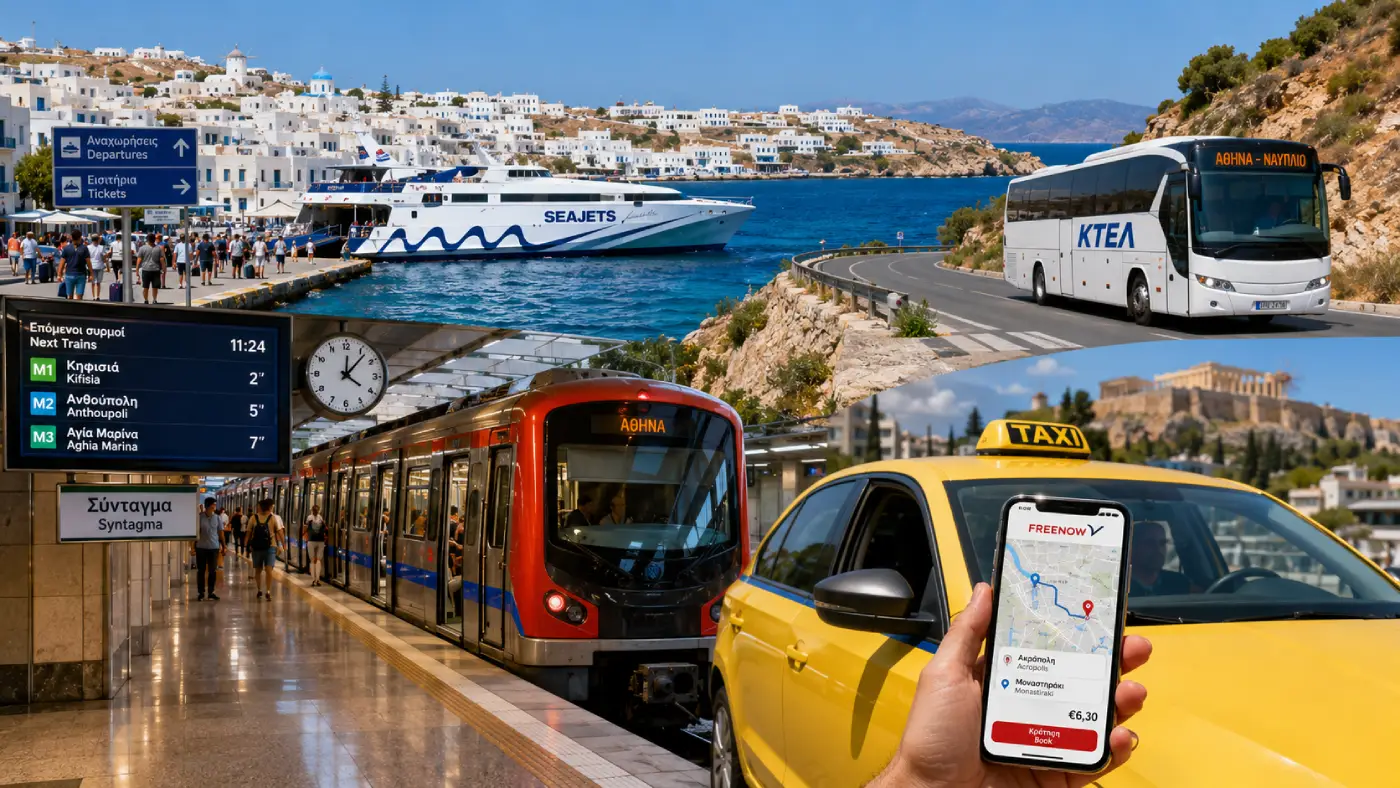

Greece operates a highly capable transit network that spans modern underground trains, extensive long-distance buses, and an iconic web of high-speed passenger ferries. While urban public transport in major hubs like Athens and Thessaloniki is remarkably efficient and affordable, moving between smaller villages or island hopping requires careful timing. Understanding the local transit landscape ensures you avoid common delays, seasonal overcrowding, and unexpected fare traps.
The Basics: Understanding the Network
Urban transit in Athens relies heavily on the STASY network, which combines three primary Metro lines, an extensive Tram network, and suburban rail links. Line 2 (Red) and Line 3 (Blue) connect major historical landmarks, central squares, and direct routes out to the airport and port.
For mainland regional travel, the national coach network known as KTEL serves as the backbone of Greek public transit. These regional bus co-operatives operate independently by prefecture, offering reliable long-distance routes where trains do not run.
Island transit presents an entirely different dynamic where high-speed catamarans and conventional car ferries replace trains. Popular ferry operators like Blue Star Ferries, Seajets, and Hellenic Seaways connect the Piraeus and Rafina ports to the Cyclades, Dodecanese, and Ionian islands. When planning your route across the archipelago, check seasonal weather patterns outlined in our Best Time to Visit Greece: Weather, Seasons & Crowds guide to avoid meltemi wind cancellations.
Payment & Tickets: Mobile Apps vs. Physical Cards
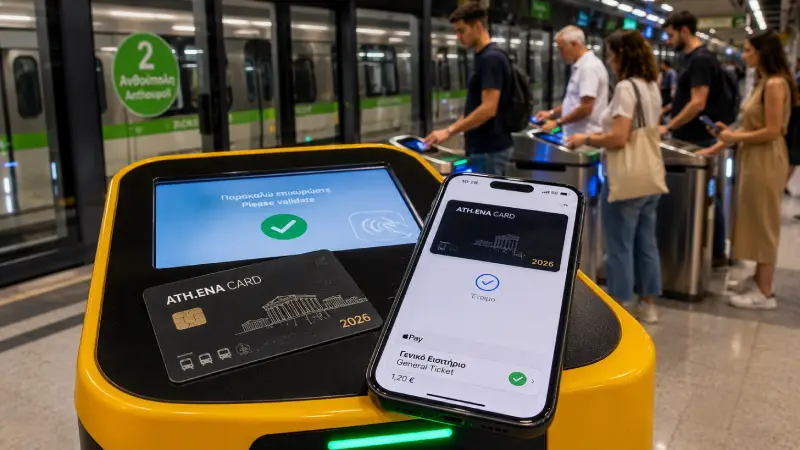
Athens uses the unified ATH.ENA Ticket system for all urban metro, bus, and tram lines. Passengers can choose between a rechargeable paper ATH.ENA Ticket, a personalized ATH.ENA Card, or direct contactless payment at metro turnstiles and bus validators using smart cards or mobile wallets.
-
Single Urban Ticket: Costs €1.20 and remains valid for 90 minutes across all standard buses, trams, and metro lines (excluding airport express routes).
-
24-Hour Pass: Costs €4.10 for unlimited city center travel.
-
3-Day Tourist Ticket: Costs €20.00 and includes round-trip airport travel via Metro Line 3 or Express Bus lines.
Always validate your physical paper ticket at the yellow validation machines before stepping metro platforms or boarding buses. Unvalidated tickets carry an immediate fine of 60 times the ticket value (€72.00), and transit inspectors actively enforce this rule on popular tourist routes.
Island bus systems on spots like Santorini or Mykonos generally operate on a cash-only basis, where you pay the conductor directly on board. Ensure you carry small Euro notes and coins when leaving major cities, as digital payments are rarely accepted on local island buses.
Airport Transfers: Getting to the City Safely
Arriving at Athens International Airport (ATH) gives you three primary transit options into the central city.
-
Metro Line 3 (Blue Line): Runs every 36 minutes directly from ATH to Syntagma and Monastiraki stations in roughly 40 minutes. A standard-way airport metro ticket costs €9.00.
-
Express Airport Buses (X95 & X96): Operate 24/7 right outside the arrivals terminal. The X95 heads straight to Syntagma Square, while the X96 connects directly to the Piraeus ferry port for €5.50.
-
Regional Trains (Proastiakos): Connect the airport terminal directly to Larissa Station (the main central train hub) and the port of Piraeus.
Warning: Beware of unmetered flat-rate taxi scams outside the terminal gates. Official yellow taxis operate on strict flat rates from ATH to the Athens city center ring: €40.00 during daytime hours (05:00–24:00) and €55.00 for nighttime transfers (00:00–05:00). Always confirm the flat rate before placing your luggage in the trunk.
Before departing the terminal, review essential customs regulations in our Greece Airport Customs Rules : Limits, Bans & Fines breakdown to prevent unexpected baggage delays.
Shifting Cities: Inter-City Trains, Shuttles & Domestic Flights
Mainland travel between major hubs like Athens and Thessaloniki relies on Hellenic Train intercity services or long-distance KTEL buses. High-speed passenger trains cover the Athens–Thessaloniki corridor in approximately 4 to 4.5 hours, with standard seats priced between €35.00 and €65.00.
For island transfers, ferries are the ultimate highway system. Conventional ferries (like Blue Star) offer steady, smooth travel with open decks, making them ideal for long crossings. High-speed vessels (like Seajets) cut transit times in half but charge premium fares and are prone to bumpy rides during high winds.
-
Booking Lead Times: Reserve ferry tickets 2 to 4 months in advance if traveling between June and August.
-
Luggage Rules: Standard ferry tickets include large luggage storage in the vessel’s lower car deck racks at no extra charge.
-
Domestic Flights: Airlines such as Aegean Airlines, Olympic Air, and Sky Express offer 45-minute flights connecting Athens to islands like Crete, Rhodes, and Corfu, often competing closely with high-speed ferry prices.
Taxis, Ride-Sharing & Local Driving Laws
Ride-Sharing & Local Apps
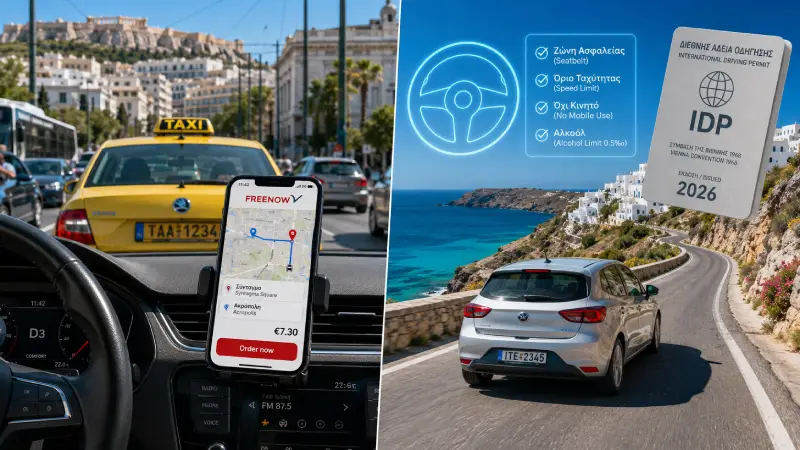
Standard global Uber operates in Greece under a specific local format. In Athens and Santorini, ordering an Uber dispatches a licensed yellow meter taxi rather than a private vehicle.
The most widely used local ride-hailing app is FREENOW (formerly Beat). It allows you to book licensed taxis, see upfront fare estimates, and pay securely via credit card, eliminating cash disputes with drivers.
Street Taxis
Street-hailed taxis must always use their taximeter (Tarifa 1 for daytime within city limits; Tarifa 2 for midnight to 05:00 or outside city boundaries). Refusing to switch on the meter is illegal. If a driver attempts to negotiate an arbitrary cash rate inside city limits, decline the ride.
Driving & Car Rentals
Renting a vehicle offers incredible freedom on larger islands like Crete, Naxos, or Rhodes. However, driving in dense urban areas like central Athens is notorious for heavy congestion and limited parking.
-
IDP Requirement: Non-EU drivers must hold an International Driving Permit (IDP) alongside their native driver's license.
-
Scooter & ATV Warnings: Quad bikes and small scooters are popular on islands, but they account for the highest tourist injury rates due to winding roads and loose gravel. Renting an ATV usually requires a full B-class driver's license.
-
Local Traffic Laws: Seatbelts are mandatory for all passengers, helmet laws for two-wheelers are strictly enforced, and blood alcohol limits are set at a low 0.05%. Review key local regulations outlined in our Greece Tourist Bans & Laws guide before hitting the road.
Transit Etiquette & Unwritten Rules
Public transport in Greece is generally relaxed, but following local etiquette ensures a respectful journey.
-
Eating & Drinking: Consuming hot meals or open alcohol on metro trains, trams, and buses is strictly taboo. Bottled water is permitted.
-
Priority Seating: Always yield marked priority seats at the front of metro cars and buses to elderly passengers, pregnant travelers, or individuals with disabilities.
-
Backpack Courtesy: Remove bulky backpacks and hold them at your feet when entering crowded metro cars to prevent blocking doors or bumping into fellow passengers.
-
Ferry Boarding Chaos: Boarding a ferry involves high-speed foot-passenger ramps and active vehicle decks. Move swiftly, keep your physical or digital ticket handy, and follow deck crew instructions immediately.
-
Personal Safety: While violent crime is exceptionally rare, pickpocketing remains a concern on crowded Line 1 and Line 3 metro trains. Check safety recommendations in our Is Greece Safe for Tourists to Travel? Truth & Tips overview for simple protection habits.
Navigation Apps & The Best Route Tools
Navigating Greek cities and regional transit networks is straightforward when using the right digital tools.
-
Google Maps: Provides accurate, real-time schedules for the Athens Metro, city buses, and tram lines, including walking directions through complex pedestrian zones.
-
Moovit: Exceptional for urban buses across Athens, Thessaloniki, and regional hubs, offering live vehicle tracking and step-by-step stop alerts.
-
Ferryhopper: The single best tool for island hopping. It allows you to compare ferry operators, view direct and indirect island routes, track real-time vessel positions, and download digital boarding passes.
-
OASA Telematics App: Tracks real-time arrival times for municipal bus stops across the greater Athens metropolitan area.
Staying Connected: Your Ultimate Navigation Tool
Navigating underground metro hubs, tracking live ferry arrivals at noisy ports, or calling a ride-hailing app on a quiet island beach requires unbroken mobile data connectivity. Underground stations and ferry car decks often block public Wi-Fi signals, making a personal connection essential for safety and navigation.
Need data in Greece? Get an eSIM!
Choose the perfect data plan for your trip

Manage your eSIM in the app
Install, top up and track data.
Having instant internet access allows you to top up digital transit passes, check live ferry delays caused by high sea winds, and translate road signs in real time. Equipping your smartphone with a dedicated Greece eSIM gives you instant high-speed data as soon as your plane touches down on the tarmac.
For a complete look at local connectivity options, pricing plans, and activation steps, read our detailed [How to Get Internet in Greece: SIM Cards, eSIMs, and Real Costs] breakdown and compare options in our Best eSIM for Greece guide.
Summary Checklist: Essential Transport Tips
-
Validate Every Ticket: Always stamp your paper ticket or tap your contactless card before boarding the Athens Metro to avoid a €72.00 fine.
-
Confirm Flat Airport Rates: Standard daytime taxi rides from Athens Airport to the city center cost a fixed €40.00 (€55.00 at night).
-
Use Local Taxi Apps: Download FREENOW or use Uber to book licensed, metered taxis and eliminate cash negotiations.
-
Pre-Book Summer Ferries: Reserve island ferry passes 2 to 4 months ahead via Ferryhopper if traveling during peak summer months.
-
Carry Small Euro Cash: Keep coins and small banknotes handy for local island buses, as digital card readers are rarely available outside major cities.
-
Secure an IDP: Ensure you obtain an International Driving Permit before arriving if you plan to rent a car, scooter, or quad bike.