Download the App and manage your eSIMs easily
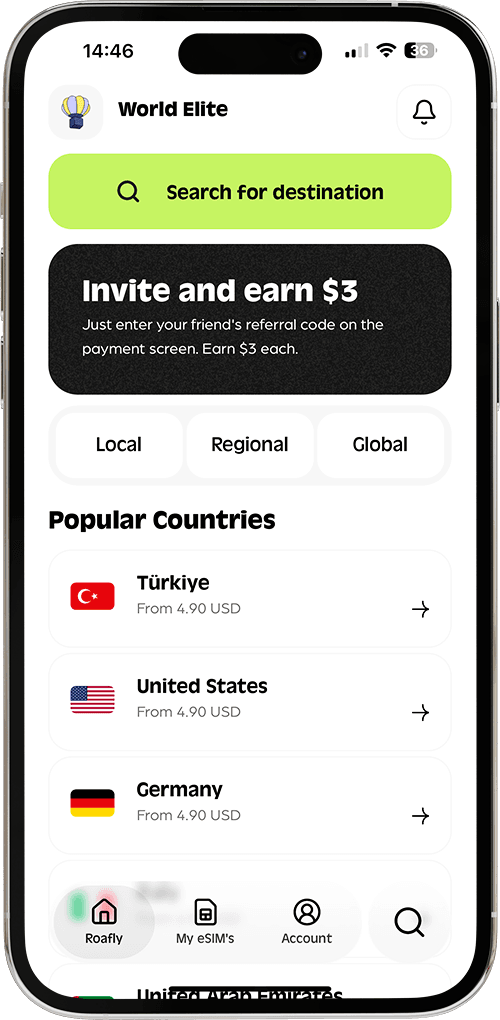
Create your order quickly
See your eSIM details
Track your remaining data
Download the App and manage your eSIMs easily
Create your order quickly
See your eSIM details
Track your remaining data
Germany’s entry requirements depend on your passport and your whole Schengen itinerary. Eligible tourists can visit without a visa, while others need a Schengen visa before travelling. The standard short-stay allowance is up to 90 days in any 180-day period across the Schengen area.

Lena Hartley
Updated Nov 6, 2026
8 min read

Save 15% on your Roafly eSIM
Stay connected on your next trip. Use the code below at checkout.
View All DestinationsJump to section
👇Save 15% on your Roafly eSIM
Stay connected on your next trip. Use the code below at checkout.
View All Destinations
Manage your eSIM in the app
Install, top up and track data.
As of 6 November 2026, the Entry/Exit System (EES) is operating, while ETIAS has not started accepting applications. Airport connections need a separate decision: remaining in Frankfurt’s international transit area and entering Germany follow different rules.
Start with the passport you will use for the journey. The examples below cover ordinary passports and short tourist visits; they are not a complete nationality list.
| Your situation | Representative examples | Tourist entry route |
|---|---|---|
| EU, EEA or Swiss citizen | France, Spain, Poland, Norway, Switzerland | No tourist visa; travel with a valid passport or recognised national identity card under the applicable free-movement rules |
| Visa-exempt non-EU visitor | United States, United Kingdom, Canada, Australia, Japan | Generally up to 90 days in any 180-day period across Schengen, subject to entry conditions |
| Visitor requiring a visa | Türkiye, India, China, South Africa | Obtain a Schengen visa before travel, unless a separate exemption applies |
Use the official German visa-requirement list for your nationality and its footnotes. Special passports and family members travelling under free-movement rules can have different arrangements.
Holding a valid residence permit or long-stay visa from another Schengen state can allow a short visit to Germany without a separate German visa. Carry your passport and the relevant permit or visa, and respect the limits for visits outside your country of residence.
Your nationality and where you live answer different questions: nationality usually determines the visa requirement, while your place of lawful residence normally determines which consulate handles an application.
Germany shares its short-stay allowance with the rest of the Schengen area. Days in France, Italy, Spain or another Schengen country count towards the same limit.

Count both the day you enter and the day you leave. Each day of your stay must fit within the rolling 90-days-in-180-days rule, including earlier visits that fall inside that period.
Imagine a holiday with 12 days in France, eight in Germany and five in Austria: that uses 25 Schengen days. Moving between those countries does not create a new allowance.
Visa holders must also follow the conditions printed on their visa:
Validity dates: the period during which the visa can be used.
Duration of stay: the permitted number of days.
Number of entries: whether the visa allows one, two or multiple entries.
Six months of visa validity does not grant six months of continuous residence. Plan around the permitted stay and your remaining Schengen allowance, as well as the visa’s expiry date.
Germany should normally handle your Schengen application if it is your only destination or the main destination of the trip. For a holiday involving several countries, that is usually where you will spend the most time.
Suppose you fly into Paris, spend three days in France and then spend seven days in Germany. Germany is the main destination of that tourism itinerary, even though France is your first entry point.
If you spend equal time in several countries and there is no other main destination, apply through the country you enter first. The purpose of a visit can also determine the main destination, so a trip centred on visiting family should be assessed on that basis.
Submit the application through the responsible German mission or its authorised application centre where you normally reside. The German visa application guidance explains the process and provides routes to the relevant missions.
Schengen applications can generally be submitted up to six months before departure and should normally be lodged at least 15 calendar days before the journey.
The usual decision period is 15 calendar days, but some applications take up to 45 days. Appointment availability is separate from that processing time, so start arranging the application well before your preferred departure.
The standard adult Schengen visa fee is €90. Reductions and exemptions apply to some applicants, and application-centre service charges may be additional.
If your trip centres on Christmas markets in Germany, settle the cities and dates early enough to present a consistent itinerary, accommodation plan and insurance period.
Completing an online form is only one part of the application process. Germany’s Consular Services Portal currently serves specified long-stay visa routes; it does not yet accept Schengen visa applications.
Most non-EU tourists need a passport issued within the previous ten years on the day they enter Schengen, with at least three months of validity remaining after their planned departure from the Schengen area. The relevant departure is the end of your Schengen trip, even if you leave Germany earlier.
Keep these items accessible during the journey:
Passport and visa or residence permit, where required.
Accommodation details, such as hotel reservations or your host’s address and invitation.
Return or onward travel arrangements showing how the trip ends.
Evidence of sufficient funds for your stay and return journey.
Travel medical insurance documents, particularly when travelling on a Schengen visa.
Schengen visa applications require travel medical insurance covering the whole Schengen area and the full stay, with at least €30,000 of cover for the required medical and repatriation risks. Applicants also need at least two blank passport pages.
Border officers can ask about your itinerary, finances and purpose of travel even after a visa has been issued. Keep the answers and documents consistent with the trip you are actually making.
Download essential bookings before departure. Keep your passport and valuables secure while handling luggage, and put the originals away once each check is finished.
These systems have different jobs.
EES records entry and exit at the external Schengen border. It became fully operational on 10 April 2026. Covered short-stay visitors have their travel-document details and entry or exit information recorded, with biometric checks as applicable.
You do not submit a separate EES travel-authorisation application before departure. Registration forms part of the border procedure. Allow time for it, especially when connecting onwards after entering Schengen.
ETIAS will be a pre-travel authorisation for eligible visa-exempt visitors. As of 6 November 2026, it is not operating and applications are not being accepted. You do not currently need to obtain ETIAS for a holiday in Germany.
The EU’s current EES and ETIAS status is the useful reference for a later departure. Follow the confirmed launch information for your travel date rather than treating an announced future system as an existing requirement.
The decisive question is whether your connection requires you to cross the Schengen border.
If you connect from one non-Schengen country to another and remain within the airport’s international transit area, the airside-transit rules apply. Most nationalities benefit from transit privileges, but some need an airport transit visa unless an exemption applies.
Ordinary-passport holders from countries including Pakistan, Nigeria and Türkiye can fall into that airport-transit-visa group. Qualifying visas or residence permits can create exemptions; use the responsible German mission’s checklist for your documents.
Germany has international transit facilities at Frankfurt, Munich, Hamburg, Düsseldorf and Berlin Brandenburg. Operating-time or handling restrictions apply at some airports, so establish that your particular connection can remain airside.
Germany removed the airport transit visa requirement for Indian nationals on 3 June 2026. Indian passengers making a qualifying airside connection to a non-Schengen destination therefore no longer need that visa.
Entering Germany remains a separate matter. An Indian ordinary-passport holder who wants to leave the airport for a hotel or city visit still needs the appropriate Schengen entry permission.
Flying from a non-Schengen country through Frankfurt to Paris involves entering Schengen in Frankfurt. The flight to Paris is then within the Schengen area.
The same entry issue arises if your onward flight is to Berlin, or if your transfer requires collecting baggage and passing through immigration. An airport transit visa only covers the international transit area.
Before buying a self-transfer itinerary, establish where you must collect baggage and whether you must pass passport control. A short connection time cannot compensate for missing entry permission.
Arriving from another Schengen country does not remove the need to carry the documents supporting your stay.
Germany’s notified temporary land-border controls run from 16 September 2026 to 15 March 2027, covering its borders with France, Luxembourg, Belgium, the Netherlands, Denmark, Austria, Switzerland, Czechia and Poland.
Keep your passport and any required visa or residence permit accessible on international trains, coaches and road journeys. These checks take place within an existing Schengen trip; they do not restart your permitted stay.
Passport control concerns your right to enter or remain. Goods, food, tobacco and cash can involve separate declaration requirements, so review Germany’s airport customs rules when preparing luggage for an arrival by air.
Save your accommodation address, onward ticket and transfer details offline before leaving home. Keep enough battery to display the documents you need and navigate once you have cleared the arrival formalities.
Compare the best eSIM for Germany while planning your mobile-data allowance. If you want prepaid data for booking access, maps and messaging after arrival, a Germany eSIM can cover that part of the trip on a compatible device.
Once your entry arrangements are settled, review the local rules for tourists in Germany before planning activities.
