Download the App and manage your eSIMs easily
Create your order quickly
See your eSIM details
Track your remaining data
Download the App and manage your eSIMs easily
Create your order quickly
See your eSIM details
Track your remaining data
Before landing in Chile, check every bag for food, seeds, plants and animal products—including snacks left over from the flight.

Ethan Brooks
Updated Nov 6, 2026
8 min read
Save 15% on your Roafly eSIM
Stay connected on your next trip. Use the code below at checkout.
View All DestinationsJump to section
👇Save 15% on your Roafly eSIM
Stay connected on your next trip. Use the code below at checkout.
View All Destinations
Manage your eSIM in the app
Install, top up and track data.
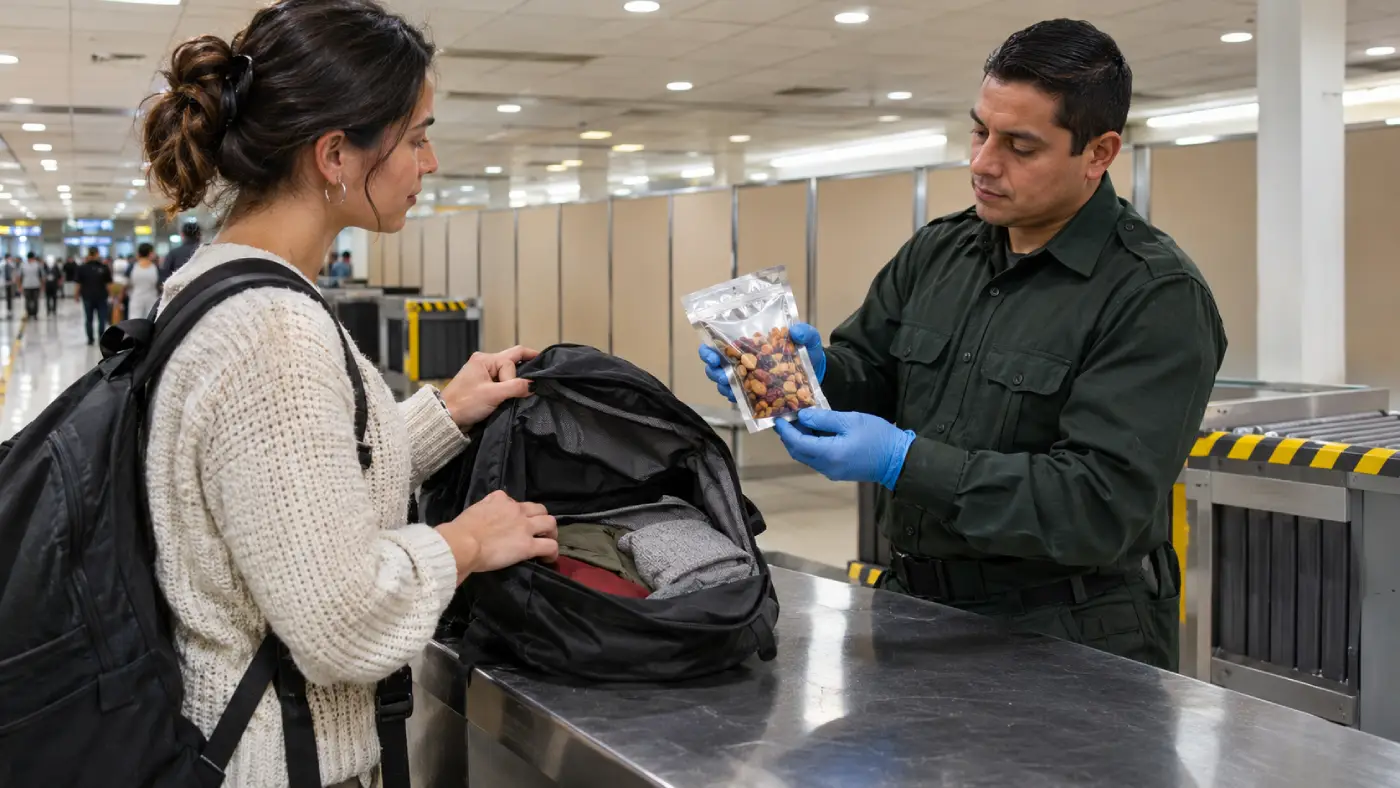
Declare them to SAG, Chile’s agricultural and livestock service, and keep them accessible for inspection. Some packaged foods can enter under specific conditions; others must be surrendered. Alcohol, tobacco, gifts and cash follow separate customs rules.
| Item | Current rule | Best action |
|---|---|---|
| Food, plants and animal products | Declare; admission depends on the product | Keep items accessible |
| Alcohol | 2.5 litres per adult traveler | Add up your bottles |
| Tobacco | 400 cigarettes, 50 cigars and 500 g pipe tobacco per adult | Check each category |
| Personal gifts | Up to US$300 FOB per traveler over 14 | Keep purchase receipts |
| Chilean arrival duty-free purchases | Up to US$675 per passenger, per trip | Keep purchases sealed with receipts |
| Personal medicines | Prescription quantities; OTC medicines for personal needs | Carry your prescription |
| Cash and bearer instruments | Declare a combined value above US$10,000 | Complete the cash declaration |
These rules concern entry into Chile. Alcohol and tobacco allowances are for adults aged 18 and over; the gift allowance has its own age condition. Buying an item duty-free does not remove its food, plant or animal-health requirements.
Rules checked on November 5, 2026. Requirements can change; verify the linked official guidance before travel.
Buying ordinary snacks after arrival keeps packing simple. Specialist dietary products and trekking meals deserve a closer look before you travel, especially if they contain meat, dairy, seeds or other plant ingredients.
SAG assesses the contents, processing and, where relevant, country of origin.
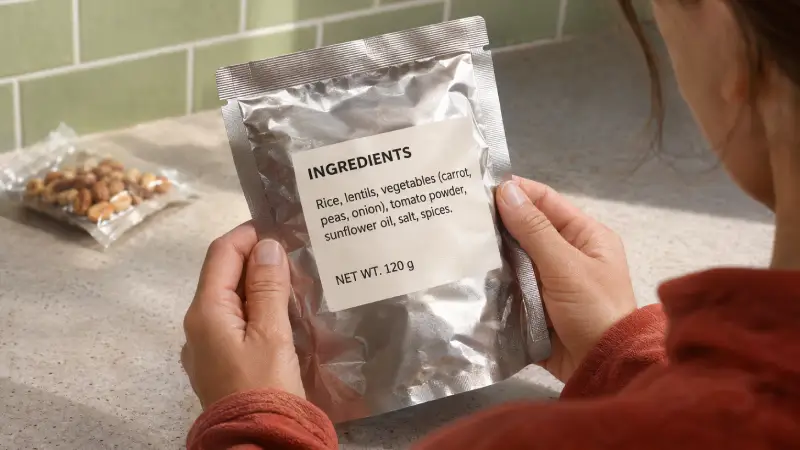
Roasted or salted nuts and eligible processed trail mixes can be admitted after inspection. Bring them in their original, factory-sealed packaging, with labels that identify the contents and processing.
Dehydrated camping meals need the same ingredient check. Meat or dairy ingredients bring their own requirements, so a “freeze-dried” label alone is not enough to establish that the whole meal is admissible. If your trek depends on a particular product, check its ingredients against SAG’s product guidance before buying a trip’s worth.
Leave fresh fruit and raw meat out of your luggage. Some processed meat products can enter, subject to conditions such as industrial preparation, readable labelling, sealed packaging, removal of bones and the producing country’s animal-health status.
Dairy rules also vary by product and processing. Certain cheeses and commercially packaged dairy products can be admitted; they should still be declared. Honey has specific treatment and labelling requirements, while honey used as an ingredient in products such as cereal bars is treated differently from a jar of honey.
Plants, seeds, wooden handicrafts and items containing soil also belong in your pre-flight bag check. Clean soil from outdoor equipment and footwear before packing.
Declaration brings the items forward for inspection. SAG decides whether they meet entry conditions and can refuse and dispose of products that pose a biosecurity risk.
The SAG declaration is free and can be completed online from the day before your arrival. Save the completed declaration on your phone; you do not need to print the digital version. Paper forms are available at the border if you cannot use the online service.
Each adult must complete a declaration, even when the answer is that they have no relevant products. The adult responsible for a child must include the contents of that child’s luggage.
At Santiago Airport, have the declaration ready after immigration and baggage collection. Use the red declaration channel when carrying declarable food or agricultural products, goods outside the baggage allowance, or cash above the reporting threshold. If you are unsure about an item, tell an officer before leaving the control area.
Inspection can involve X-ray screening, detector dogs or a manual bag check. Passing through the green channel does not exempt baggage from inspection.
Crossing back from Argentina? Complete a new SAG declaration every time you enter Chile, including overland crossings on a Patagonia itinerary. The form covers the arrival date you specify, not your entire holiday.
If you plan to buy mobile data after clearance, compare the SIM cards at Santiago Airport before deciding where to buy.
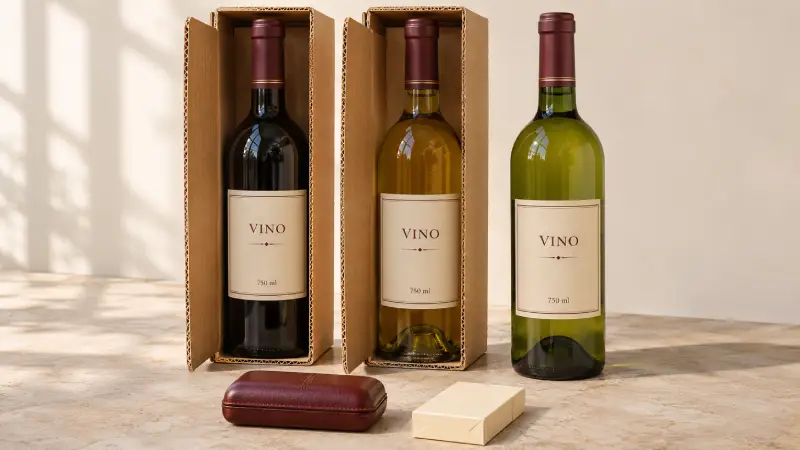
The alcohol allowance is a combined total across drinks. Three standard 750 ml bottles of wine contain 2.25 litres and fit within it; four contain 3 litres and exceed it. Keep that calculation in mind when packing wine, spirits or a mixture of both.
The adult tobacco allowances cover up to 400 cigarettes, 50 cigars and 500 grams of pipe tobacco. These are separately listed quantities, not an instruction to choose only one of the three categories.
Declare goods exceeding the personal-baggage allowances to Customs. A duty-free receipt from a shop abroad does not, by itself, make an excess quantity exempt on entry into Chile.
The gift allowance is US$300 FOB—the value of the goods before international freight and insurance—or its equivalent in another currency, for each traveler over 14. It cannot be pooled with another traveler’s allowance.
Two people cannot combine their allowances to treat one US$450 gift as exempt. Keep receipts for gifts and other purchases so Customs can establish their value if necessary.
Purchases from Chile’s eligible airport arrival duty-free shops have a separate US$675 allowance per passenger, per trip. This is distinct from the allowance for gifts brought from abroad.
The purchases must be noncommercial, and no individual item can exceed one person’s allowance. Keep the shop’s sealed packaging closed until you have passed customs, with the sales receipt attached. The person named on that receipt must present the goods.
This specific allowance does not extend to purchases from overseas duty-free shops or items bought aboard an international flight. It is not a general US$675 shopping allowance for everything in your suitcase.
Ordinary personal electronics are covered by the baggage rules. The listed items include two mobile phones, one portable camera and its accessories, and a personal laptop and/or tablet.
Keep the distinction between equipment for your trip and goods intended for resale. Quantities or values suggesting commercial activity fall outside ordinary personal baggage.
Personal sports equipment is also included, but bicycles are expressly excluded from that category. If you are flying with a bicycle, arrange the appropriate customs treatment separately.
Prescription medicines can form part of your baggage when the quantities match the prescription and they are for your own use or that of immediate family members. Over-the-counter medicines should be limited to your personal needs.
Keep the prescription with the medicines. Retaining labelled original packaging is a practical way to make the product and strength easy to identify.
If your treatment contains a controlled substance, check the exact active ingredient and quantity with Chile’s Instituto de Salud Pública before departure, along with any transit-country requirements.
Declare cash and negotiable instruments payable to the bearer when their combined value exceeds US$10,000, or the equivalent in other currencies. The reporting requirement applies both when entering and leaving Chile.
This is a declaration threshold, not a maximum amount of money you may carry. Add together the relevant currencies and instruments rather than assessing each currency separately.
Tell Customs that you need to complete the Declaración de Porte y Transporte de Efectivo, or DPTE. Completing the SAG food declaration does not replace this cash declaration.
Failure to declare qualifying amounts can lead to seizure and criminal proceedings under Chilean customs law.
Check every suitcase, backpack and pocket for leftover food, plant material and animal products.
Keep foods you intend to declare together, with their labels readable and accessible.
Put prescriptions and purchase receipts somewhere you can reach without unpacking everything.
Save your completed SAG declaration on your phone.
Prepare a fresh declaration for any later re-entry from Argentina or another country.
Compare the best eSIM for Chile before departure if you want to choose your provider and data allowance in advance.
Keep your accommodation address and onward travel instructions available for the journey out of the airport. Roafly’s Chile eSIM provides prepaid mobile data for maps and messages during your trip.
