

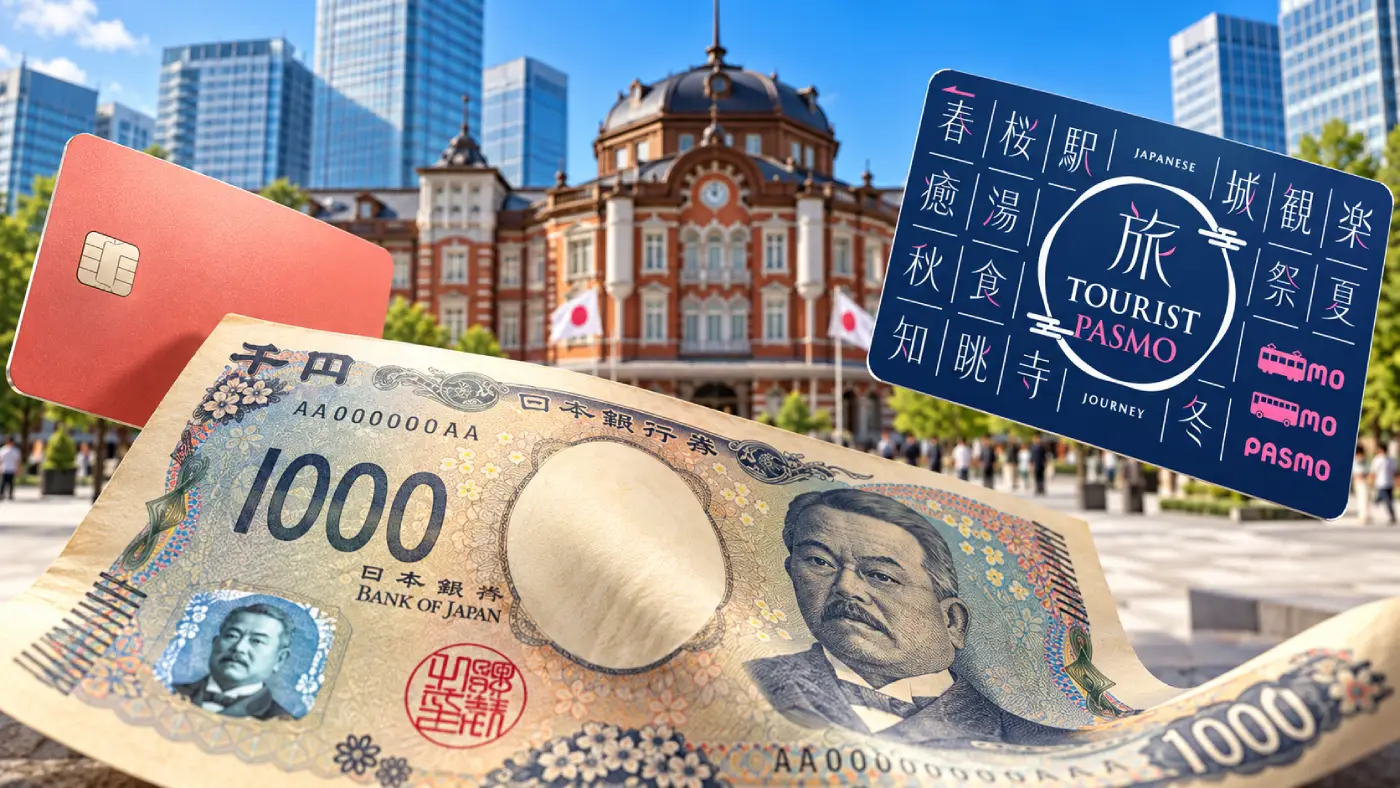

Use a bank card for larger purchases, an IC card such as Suica for compatible transport and small payments, and yen cash for places that need it. That combination gives you more flexibility than relying entirely on cash or your phone.
Japan’s payment systems overlap, but they have different requirements. You can pay cashlessly with a physical Suica while still needing cash to reload it. Your phone may handle contactless bank-card purchases but lack support for a Japanese transit card. Getting those distinctions right matters more than finding payment method for the whole trip.
Cash or Card in Japan? The Practical Answer
International credit and debit cards are commonly accepted at major hotels, department stores, shopping centres and many urban restaurants. Smaller businesses and rural accommodation can still require cash.
Suica, PASMO and ICOCA are prepaid IC cards used on participating transport networks and at shops displaying the relevant acceptance marks. Their balances sit separately from your bank account.
| Where you are paying | Useful first option | What to prepare |
|---|---|---|
| Major hotels, department stores and larger shops | International credit or debit card | Your physical card and its PIN |
| Participating local trains and buses | Compatible IC card | Enough balance for the journey |
| Convenience stores and participating vending machines | IC card or an accepted bank card | Look for the payment logos |
| Small businesses, rural stays and services outside IC coverage | Yen cash | Enough for the payments due before your next ATM visit |
Keep your bank card available even if you prefer paying by phone. At the counter, identify the method you want to use: Suica and a contactless Visa card are different payment options, even when both live in the same Wallet app.
Where You Still Need Cash—and How Much to Carry
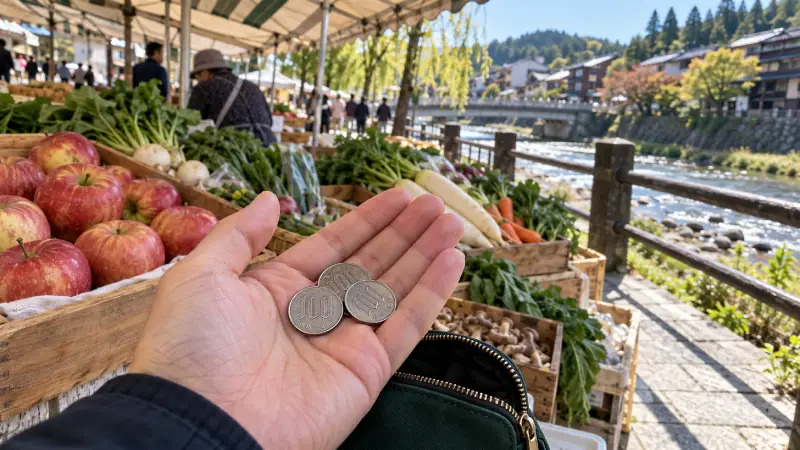
Your cash reserve should reflect the next part of your itinerary. Shopping and dining around central Tokyo creates a different need from staying at a rural guesthouse that takes payment in cash.
Before withdrawing money, add up:
-
Known cash-only bills due before your next convenient ATM stop.
-
Small purchases you expect to pay for in cash.
-
Cash needed to reload a physical IC card.
-
Some room for a card payment failing or an unplanned stop.
Subtract the yen already in your wallet. That gives you a more useful withdrawal target than a fixed percentage of your holiday budget.
Accommodation is the biggest detail to settle before heading somewhere remote: whether the stay is prepaid, payable by card or due in cash changes how much you need. Separate this decision from your overall spending estimate when you plan your Japan travel budget.
Japan uses the yen, shown as JPY, ¥ or 円. Keep some ¥1,000 notes and coins accessible for smaller payments rather than carrying large notes.
Bringing substantial cash also raises a separate arrival question. Cash and other covered means of payment exceeding ¥1 million in total, or the foreign-currency equivalent, require a declaration when entering or leaving Japan. Review Japan’s customs and cash-declaration rules if you are carrying a large amount.
Withdrawing Yen: Seven Bank vs Japan Post Bank
Seven Bank and Japan Post Bank both support cash withdrawals with various overseas-issued cards. Seven Bank ATMs are commonly found at 7-Eleven stores; Japan Post Bank ATMs are available at post offices and other locations, including some convenience stores.
| ATM operator | Published limit per withdrawal | ATM-side fee information |
|---|---|---|
| Seven Bank | ¥100,000; ¥30,000 for magnetic-stripe transactions | Fees vary by card brand |
| Japan Post Bank | ¥50,000 | ¥220 may apply to certain overseas-issued cards |
Operator terms checked on September 26, 2026. Your card issuer may impose lower limits and additional charges.
These are transaction limits, not suggested withdrawal amounts. Card acceptance also depends on the individual card and issuer. Opening hours vary by location, and maintenance or holiday schedules can affect availability.
Read the total cost in three parts
First, there may be an ATM operator fee. Second, your own bank may charge for an overseas withdrawal. Third, converting the transaction into your account currency can involve exchange-rate costs.
The fee shown by an ATM answers the first part. Review your card’s overseas withdrawal terms before the trip, especially if you intend to withdraw using a credit card.
Making a withdrawal
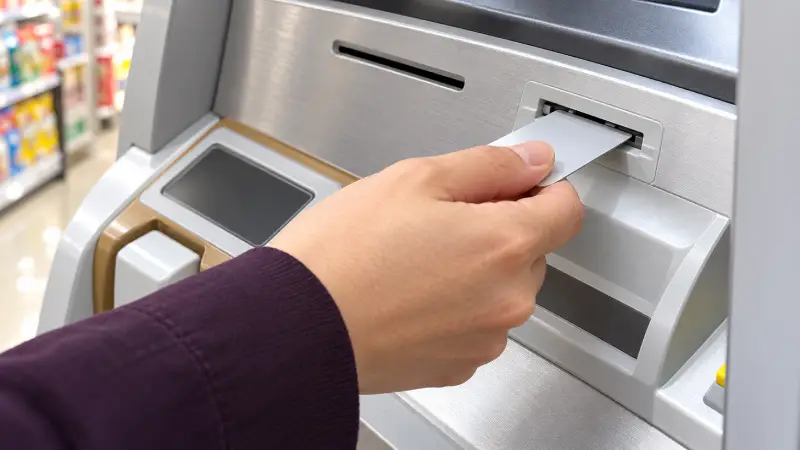
At a Seven Bank ATM, the foreign-card withdrawal steps take you through language selection, the withdrawal account, PIN and amount. If offered a choice of billing currency, select Japanese yen to leave conversion to your card provider.
Read the fee screen before approving. Collect your cash, card and receipt.
If the amount exceeds a limit, try a smaller withdrawal. If the machine reports an incorrect PIN, contact your card issuer rather than repeatedly guessing. Keep a second payment card available in case your main card cannot complete the transaction.
Exchange Money or Withdraw Cash? Choose JPY at Checkout
Both exchanging foreign cash and withdrawing yen can work. The better value depends on the exchange quote and your card’s fees.
Buying some yen before departure gives you cash immediately on arrival. Airport exchange counters are another option, although the currencies handled and opening hours depend on the counter. ATMs let you replenish cash during the trip without bringing the whole budget in banknotes.
Compare the yen you receive for the total amount you pay. A “no commission” sign does not tell you whether the exchange rate is competitive, and a low ATM fee does not include every charge your bank might apply.
What the currency-choice screen means
At a card terminal or ATM, you may be offered a charge in your home currency. This is dynamic currency conversion, or DCC: the payment provider converts the yen amount using its offered rate and any associated markup.
Selecting JPY avoids that provider’s conversion. Your card network or issuer then handles conversion under your card’s terms. Overseas transaction fees may still apply.
The ATM dispenses yen either way. The choice changes how the withdrawal is billed, not which banknotes come out.
Suica, PASMO and ICOCA: Paying and Topping Up
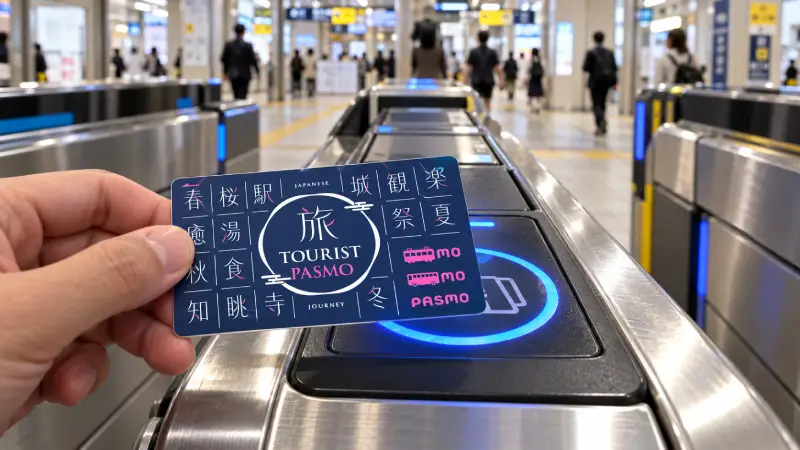
IC cards are useful for repeated small payments: participating trains and buses, convenience stores, vending machines and other shops with the appropriate logo. Their usefulness extends beyond the city where you obtained them, through compatible networks.
They are not universal tickets for every journey. Some routes fall outside coverage, and certain trains require additional tickets. Check the fare and ticket requirements for long-distance travel separately.
Physical cards: cashless spending, cash reloads
Physical Welcome Suica and TOURIST PASMO cards are designed for visitors. Both are valid for 28 days from purchase, and ordinary unused balances are not refunded when you finish your trip.
Welcome Suica can be reloaded with yen cash at compatible machines and locations, including Seven Bank ATMs. Credit cards cannot be used for these top-ups. Its maximum stored balance is ¥20,000.
TOURIST PASMO purchase and top-up options include selected sales points at Haneda and Narita airports. Certain Haneda ticket machines accept credit cards for the initial purchase; subsequent cash reloads follow the available machine or shop’s conditions. The maximum stored balance is also ¥20,000.
Load manageable amounts as you go, particularly near the end of your stay.
Standard physical cards have their own refund rules. For example, a regular JR East Suica has a ¥500 deposit; returning it involves a deduction of up to ¥220 from the remaining balance, with the deposit returned separately. Refunds must be handled through an appropriate JR East location. These conditions should not be applied to visitor cards or another operator’s IC card.
iPhone: set up a transit card in Wallet
With a compatible iPhone, an eligible payment card in Wallet and the required Apple account settings, you can add Suica, PASMO or ICOCA directly.
The Apple Wallet setup instructions guide you through:
-
Opening Wallet and tapping the add button.
-
Selecting the transit or travel card option.
-
Choosing your card.
-
Selecting an initial amount and completing payment.
Test a small load before depending on the setup. A payment card already stored in Wallet may still be unsuitable for funding a particular transit card.
Once configured, Express Mode allows supported transit-card payments with a tap, without opening an app each time. At a shop, tell the cashier which IC card you are using.
Welcome Suica Mobile is a separate iOS option. It has a 180-day validity period, unlike the 28-day physical Welcome Suica. Its remaining balance becomes invalid at expiry and cannot then be refunded. App availability and supported software vary, so keep the specific product’s rules in mind when choosing.
Android: check for Osaifu-Keitai support
Google Wallet’s Japanese e-money functions require an Android device that supports Osaifu-Keitai. Ordinary NFC or the ability to tap a bank card through Google Wallet does not establish this compatibility.
If your handset lacks the required support, a physical IC card is the straightforward choice. You can still use other supported phone payments where the merchant accepts them.
Apple Pay, Google Wallet and PayPay for Visitors
Think of your phone as a place that can hold several different payment methods. Paying with a bank card in Apple Pay or Google Wallet depends on that card and the merchant’s supported payment system. Paying with Suica uses the Suica balance.
Look at the acceptance logos and name the method at checkout. This helps avoid presenting an IC card when the terminal is expecting a bank card, or the reverse.
Should you download PayPay?
Most short-term visitors do not need to build their payment plans around a new PayPay account. Registering for Japan’s PayPay requires a Japanese mobile number that can receive SMS; an overseas number cannot be used.
There is another route for some visitors: supported overseas wallets can be used at participating PayPay merchants. Eligibility depends on the wallet you already use and the merchant’s support. This is separate from opening a Japanese PayPay account.
Mobile data helps you access services, but it cannot supply missing account eligibility, a supported funding card or a required Japanese phone number.
Before You Fly—and If a Payment Fails
Prepare your payment methods while you can still access your bank easily:
-
Check overseas use and limits. Know the PIN for each physical card and how your issuer charges for purchases and withdrawals.
-
Keep a backup card separately. A second card gives you another option if the first is declined or lost.
-
Test your banking app. Make sure you can sign in and approve payments.
-
Arrange any required SMS access. If your bank sends codes to your home number, plan how you will receive them abroad.
-
Set up your chosen IC option. Test mobile funding or plan where to obtain a physical card.
Compare eSIM options for Japan before departure if you want mobile data for banking apps, ATM searches and top-ups.
During the trip, a Japan eSIM can provide that data connection. Roafly’s Japan plans are data-only and do not include a local phone number, so keep your bank’s SMS requirements separate from your data setup.
If your card or phone is declined
Ask whether the shop accepts the specific payment method you are presenting. If a phone payment fails, try the physical card using the method the terminal supports, then your backup card or cash.
If an ATM rejects your card, distinguish a withdrawal-limit message from an incorrect-PIN message. Contact your issuer when the problem points to the card itself.
Unexpected charges need a different response. Ask for an itemised bill, retain receipts and contact your bank promptly about transactions you do not recognise. Bar billing traps and deceptive payment requests are covered in common tourist scams in Japan.
Paying for meals and leaving Japan
When ordering food in Japan, expect to pay the stated bill without adding a routine tip. Tipping is not customary at restaurants, cafes, bars, taxis or hotels. Private guides and some traditional hospitality arrangements can have different customs.
Before your last day, look at the balances on your IC cards and the yen in your wallet. Use remaining visitor-card credit for accepted purchases and avoid a large final reload. Keep enough accessible money for the journey to the airport, including any ticket your IC card does not cover.