


'%3e%3cg id='d'%3e%3cg id='c' transform='translate(0 -75)'%3e%3cg id='b'%3e%3cpath id='a' d='M0-15V0h7.5' transform='rotate(18 0 -15)'/%3e%3cuse xlink:href='%23a' transform='scale(-1 1)'/%3e%3c/g%3e%3cuse xlink:href='%23b' transform='rotate(72)'/%3e%3cuse xlink:href='%23b' transform='rotate(144)'/%3e%3cuse xlink:href='%23b' transform='rotate(216)'/%3e%3cuse xlink:href='%23b' transform='rotate(288)'/%3e%3c/g%3e%3cuse xlink:href='%23c' y='150'/%3e%3c/g%3e%3cuse xlink:href='%23d' transform='rotate(72)'/%3e%3cuse xlink:href='%23d' transform='rotate(144)'/%3e%3cuse xlink:href='%23d' transform='rotate(216)'/%3e%3cuse xlink:href='%23d' transform='rotate(288)'/%3e%3c/g%3e%3c/svg%3e)
Traveling across Cape Verde is an adventure that blends modern air travel with traditional, cash-in-hand local transit. Forget everything you know about seamless European rail networks. Here, the elements—especially the wind—dictate the schedules.
Whether you are navigating the steep mountain roads of Santo Antão or catching a quick flight to Sal, flexibility is your greatest asset. You must adapt to "island time" and understand how the locals move. Those who prepare will experience the breathtaking beauty of this country without the logistical headaches.
The Basics: Understanding the Network
Cape Verde does not have a train or metro network. Public transport relies entirely on road vehicles and sea vessels. The true lifeline of local transport is the aluguer (also known as a collectivo).
These are shared minibuses, typically Toyota Hiaces, or open-back pickup trucks with bench seats. They have no fixed timetables and operate on a strict "fill-up-and-go" basis. The driver will simply wait at the main square until every single seat is taken before departing.
Taking an aluguer is an authentic cultural experience and the most budget-friendly option. Fares are extremely low, usually ranging from 50 CVE to 600 CVE depending on the distance. If you are in a rush, you can pay a premium to hire the entire aluguer as a private taxi, but otherwise, you must embrace the wait.
Payment & Tickets: Mobile Apps vs. Physical Cards

If you are expecting to tap your Apple Pay or Google Wallet on a bus reader, think again. Cape Verde runs almost entirely on hard currency when it comes to local transport. You must carry cash.
There are no digital transit cards or rechargeable city passes. Always keep small change—like coins and 200 or 500 CVE notes—on hand. Drivers rarely have change for large bills, and presenting a high-denomination note for a cheap aluguer ride will cause major frustration.
Ferry tickets and domestic flights are the exceptions. You can and should book these in advance using a credit card. For ferries, always bring a physical or downloaded digital copy of your ticket and your passport, as identification checks are strictly enforced before boarding. To ensure you have the data needed to pull up these documents on the go, check our How to Get Internet in Cape Verde.
Airport Transfers: Getting to the City Safely
Arriving at Amílcar Cabral International Airport (SID) in Sal or Nelson Mandela International Airport (RAI) in Praia is usually straightforward, but you need to know the taxi rules. There are no public airport buses waiting to whisk you to your resort. You will need to take an official taxi.
Before stepping into any vehicle, make sure you understand the local entry protocols by reading our Cape Verde Airport Customs Rules. Taxis in Praia and most main islands are tan or cream-colored. However, on the tourist-heavy islands of Sal and Boa Vista, official taxis are painted blue with yellow stripes.
Airport transfers usually operate on fixed rates rather than meters. A ride from Sal's airport to the popular hub of Santa Maria will cost approximately €15 to €18. Always confirm the final price with the driver before loading your luggage to avoid sudden "tourist taxes" upon arrival.
Shifting Cities: Inter-Island Ferries & Domestic Flights
Because Cape Verde is an archipelago, "inter-city" travel actually means crossing the ocean. Your two choices are flying or taking a ferry. BestFly Cabo Verde and Cabo Verde Express handle the domestic flight routes. Flights are fast and reliable, but baggage limits are strict, often capping at 15 kg for checked bags and 5 kg for carry-ons.
If you prefer the sea, CV Interilhas is the main ferry operator connecting all nine inhabited islands. The route from São Vicente to Santo Antão runs daily and takes about 60 minutes. Longer routes, like Praia to Fogo, take around four hours. Always book ferry tickets in advance on their official website, especially during peak travel seasons.
Mother Nature frequently disrupts both air and sea travel. High winds or rough seas can ground flights and cancel ferries without much notice. To understand when these disruptions are most likely, consult our Best Time to Visit Cape Verde guide. Crucial rule: Never book an inter-island transfer on the same day as your international flight home.
Taxis, Ride-Sharing & Local Driving Laws

Let us set the record straight: Uber is not available in Cape Verde. There is no Grab, Lyft, or reliable nationwide ride-sharing app. You will rely entirely on traditional, registered taxis.
In major towns, taxis are plentiful, clean, and safe. While some have meters, many operate on negotiated fares. A short trip across town usually costs around €1.50 to €3.00, but always agree on the price before getting in. For deep insights into staying secure while transiting, review our Is Cape Verde Safe for Tourists?.
Renting a car offers freedom but demands immense confidence. Mountain roads—especially on Santo Antão—are steep, winding, and often paved with challenging cobblestones. You will need a valid International Driving Permit (IDP) to rent a vehicle. Also, watch out for roaming livestock and lack of street lighting if you plan to drive after dark.
Transit Etiquette & Unwritten Rules
Cape Verdeans are warm and welcoming, but they appreciate respectful behavior in shared spaces. When riding in an aluguer, expect cramped conditions and loud, lively Krio music. Do not complain about the lack of personal space; it is simply part of the communal transit culture.
Eating a heavy meal or drinking alcohol inside an aluguer is frowned upon. Keep your luggage compact, as bags are often strapped to the roof or shoved under seats. To ensure you do not accidentally offend locals while navigating the islands, brush up on our Cape Verde Tourist Laws guide.
When you reach your destination in a shared minibus, loudly say "Para!" (Stop!) to let the driver know you want to get off. Do not wait for designated bus stops, as they rarely exist outside of the major capital zones.
Navigation Apps & The Best Route Tools
Google Maps works reasonably well in Cape Verde's main cities like Praia, Mindelo, and Santa Maria. However, it can be highly unreliable for tracking rural roads or hiking trails on islands like Fogo and Santo Antão. Do not blindly trust Google Maps to estimate driving times in the mountains, as it rarely accounts for steep cobblestone terrain.
For hiking and rural navigation, offline map tools like Maps.me or Komoot are vastly superior. Locals have updated these open-source maps with hidden trails and accurate pathways that major tech companies ignore. Download your island maps over hotel Wi-Fi before you head into the valleys.
Do not expect live transit tracking for alugueres on any app. You will need to ask locals where the current departure points are, as the "stations" are often just specific street corners or market squares. Asking a shop owner or your hotel receptionist is always more reliable than an algorithm.
Staying Connected: Your Ultimate Navigation Tool
Having continuous, high-speed internet is a massive safety advantage when traversing Cape Verde. You will need data to check last-minute ferry cancellations, translate Portuguese or Creole phrases for taxi drivers, and load your hiking maps in remote valleys. Relying on spotty cafe Wi-Fi will leave you stranded when you need to book a domestic flight on the fly.
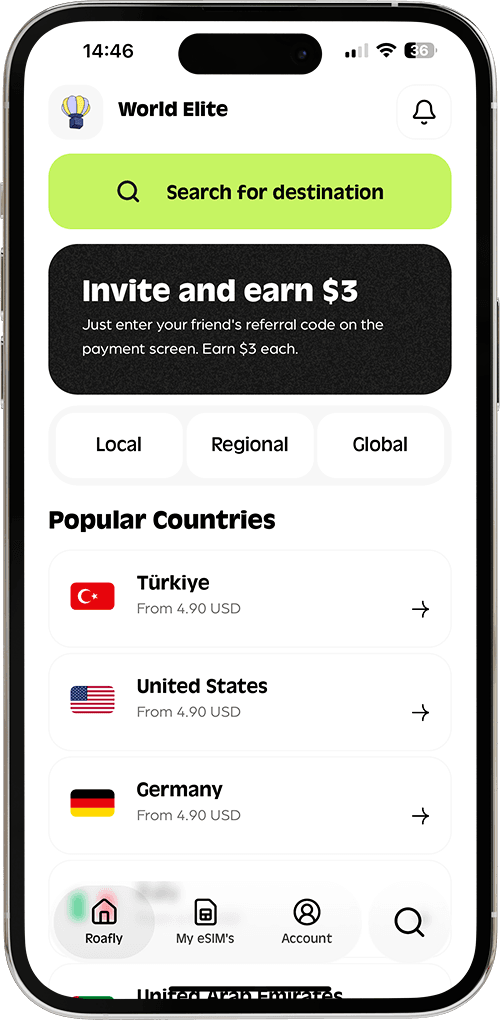
Need data in Cape Verde? Get an eSIM!
Choose the perfect data plan for your trip

Manage your eSIM in the app
Install, top up and track data.
The smartest move is to secure your connection before you even land. Setting up a Cape Verde eSIM gives you instant data freedom the second your plane touches down. You can bypass the chaotic airport SIM kiosks and immediately message your hotel for an airport transfer.
For a complete breakdown of the top data packages and network coverage across the archipelago, check out our Best eSIM for Cape Verde. Do not let a dropped connection ruin your island-hopping itinerary.
Summary Checklist: Transport Tips
-
Cash is King: Always carry small CVE coins and notes; public transport and taxis do not accept credit cards or mobile payments.
-
Expect to Wait: Alugueres (shared minibuses) depart when every single seat is full.
-
Buffer Your Flights: Never schedule an inter-island ferry or flight on the same day as your international departure due to frequent weather delays.
-
Forget Uber: Ride-sharing apps do not exist here; rely on official yellow/blue local taxis and agree on the fare upfront.
-
Pack Light for Flights: Domestic airlines like BestFly enforce strict 15 kg checked baggage and 5 kg cabin limits.
-
Download Offline Maps: Google Maps struggles in the mountains; use Maps.me for hiking and rural driving.