Download the App and manage your eSIMs easily
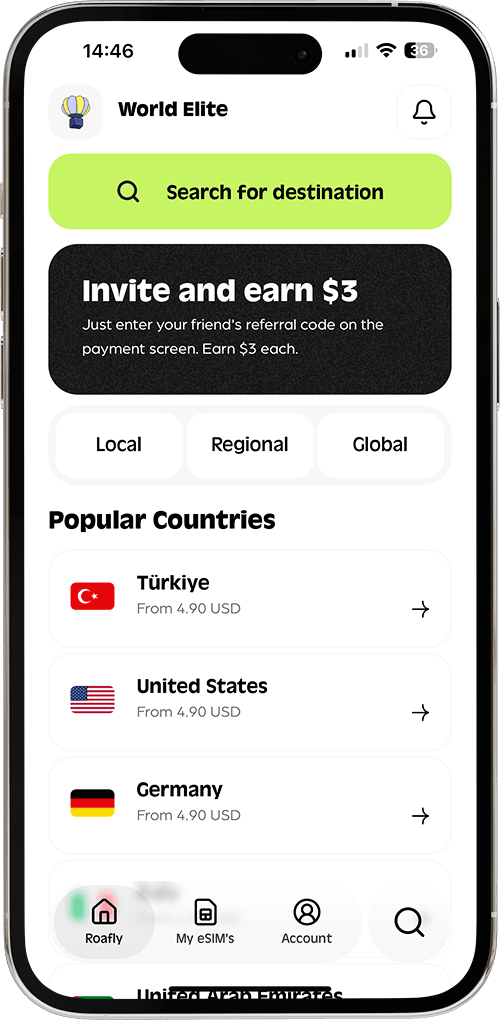
Create your order quickly
See your eSIM details
Track your remaining data
Download the App and manage your eSIMs easily
Create your order quickly
See your eSIM details
Track your remaining data
Staying connected in Cape Verde is easier than many travelers expect. Whether you are landing in Sal, Boa Vista, or Santiago, there are several reliable ways to access mobile internet during your trip.
Unitel T+
Instant delivery
From 12.90 USD

Lena Hartley
Updated Dec 31, 2025
8 min read

Jump to section
👇Best for most trips
Unitel T+
Cape Verde
3 GB · 30 days
Enough for maps, bookings and everyday travel.
Hotspot supported
$34.90
From 12.90 USD
Tourists typically choose between airport SIM cards, local SIM cards, international eSIMs, or pocket WiFi devices. Each option has its own advantages and drawbacks depending on trip length, device compatibility, and how much convenience you want.
This guide explains all available internet options in Cape Verde for tourists, with updated pricing, operator comparisons, and practical tips to help you choose the best solution for your trip.
Travelers visiting Cape Verde have four main ways to access mobile internet. Each option suits a different travel style, budget, and level of convenience.
Airport SIM Card
SIM cards are available at major airports such as Sal and Praia. They are easy to buy, often activated on the spot, and ideal for travelers who want internet immediately after landing. Prices are similar to city shops, but plan options may be limited.
Local SIM Card
Local prepaid SIM cards from Cape Verde operators can be purchased in town at mobile stores, supermarkets, and hotels. They are affordable and work well for longer stays, but require a physical SIM swap, passport registration, and manual top-ups.
eSIM (Digital SIM)
eSIMs allow travelers to activate mobile internet digitally without changing their physical SIM card. Setup is done via QR code or direct install, and the connection works as soon as you arrive. This is the most convenient option for short and mid-length trips.
Pocket WiFi (Portable Hotspot)
Pocket WiFi devices provide internet to multiple devices through a portable router. They usually need to be rented before arrival and require daily charging. Availability in Cape Verde is limited compared to other destinations.
Choose the perfect data plan for your trip
Buying a SIM card at the airport is one of the most popular options for tourists who want immediate connectivity after landing.
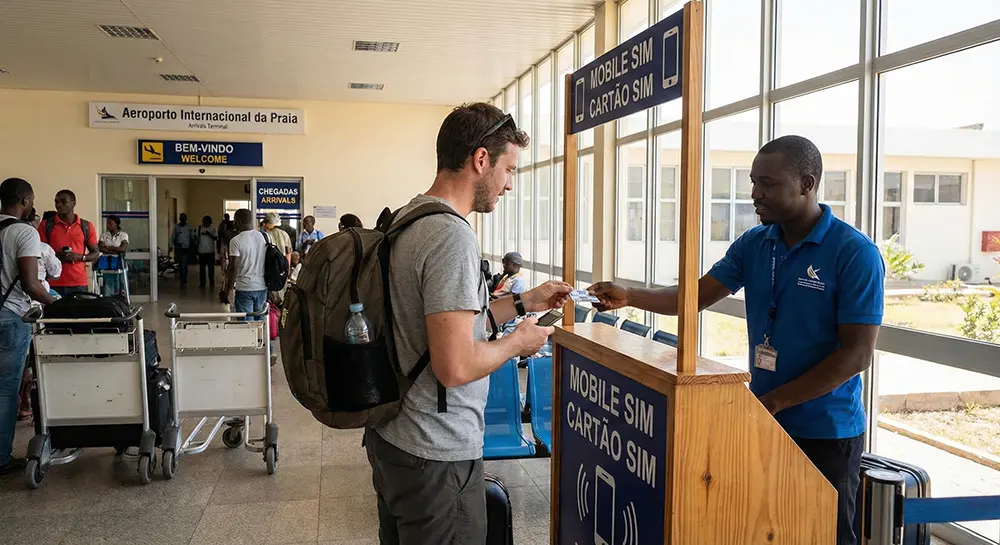
You can find SIM card kiosks or counters at:
Amílcar Cabral International Airport (Sal)
Nelson Mandela International Airport (Praia, Santiago)
Both Alou and Unitel T+ typically have representatives or authorized sellers inside or just outside the arrivals area.
Airport SIM cards usually cost:
SIM card: 100–200 CVE (approximately 1–2 USD)
Data bundles: from 50 CVE for small daily packages up to 1,250 CVE for 5 GB monthly plans
In some cases, SIM cards are offered for free during promotions, with only a top-up required.
Pros:
Instant internet access after landing
Staff often speak English
Setup and activation assistance included
Cons:
Limited choice of plans compared to city stores
Potential waiting time during peak hours
For short trips or first-time visitors, airport SIM cards are a convenient and reliable option.
Buying a local SIM card in town is often slightly cheaper and gives you more flexibility, especially for longer stays.
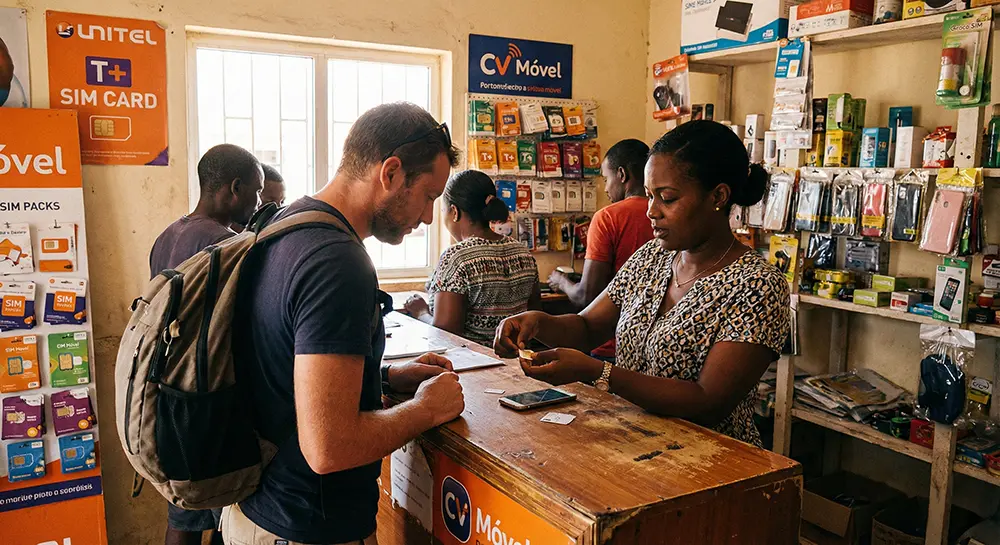
Local SIM cards are widely available at:
Official Alou and Unitel T+ stores
Supermarkets and electronics shops
Hotel reception desks in tourist areas
Mobile shops in towns like Santa Maria (Sal)
Most shops can help with installation and activation.
Local SIM prices are similar to airport pricing:
SIM card: 100–200 CVE
Monthly data bundles:
1 GB: around 450–500 CVE
3 GB: around 850 CVE
5 GB: around 1,250 CVE
Prices may vary slightly due to promotions.
| Feature | Alou (CV Móvel) | Unitel T+ |
|---|---|---|
| Network coverage | Strong on most islands | Very good in cities |
| Typical 1 GB price | ~490–500 CVE | ~500 CVE |
| 5 GB monthly plan | ~1,250 CVE | ~1,250 CVE |
| Setup help | Yes | Yes |
| Tourist friendliness | High | High |
Prices are indicative and based on late-2025 market data. Always confirm current rates in-store.
Requires swapping your physical SIM
Passport may be required for registration
Top-ups and USSD codes can be confusing
Risk of high pay-as-you-go charges without a bundle
While local SIM cards are affordable, tourists may face a few challenges:
Language barriers outside tourist areas
Manual APN configuration on some phones
Auto-renewing data bundles
Limited customer support outside business hours
Carrying a SIM eject tool and storing your home SIM safely
These inconveniences lead many travelers to consider digital alternatives like eSIMs.
eSIM is the easiest and most reliable way to get internet in Cape Verde without visiting a shop or changing physical SIM cards.
An eSIM lets you activate mobile data digitally before or after arrival. There is no need for a physical SIM, passport verification, or local top-ups.
For Cape Verde, Roafly is the recommended eSIM provider due to its balance of price, coverage, and ease of use.
Roafly offers data-only eSIM plans that work across Cape Verde using trusted local networks. Travelers can check full coverage details, compatibility, and available packages directly on the Cape Verde eSIM page before their trip.
Available packages include:
1 GB – 7 days – $12.90
2 GB – 15 days – $24.90
3 GB – 30 days – $34.90
5 GB – 30 days – $49.90
Coverage includes major islands and tourist destinations, with stable 4G access.
Instant activation via QR code or direct iOS install
No physical SIM swap
No passport or ID requirement
Works immediately after landing
Predictable pricing in USD
Ideal for short and medium-length trips
If you want a deeper comparison, you can also check the detailed guide on the best eSIM for Cape Verde.
Pocket WiFi devices allow multiple devices to connect to a single portable router.
Pocket WiFi is not widely available locally in Cape Verde. Most travelers would need to rent a device internationally before arrival.
Pros:
Connects multiple devices
No phone compatibility issues
Cons:
Daily rental fees
Device pickup and return required
Battery charging needed
Less convenient for island hopping
For most solo travelers or couples, eSIMs are more practical than pocket WiFi.
Cape Verde’s mobile internet infrastructure is simple and easy to understand for travelers. The country has two nationwide mobile network operators, both offering prepaid services suitable for tourists. While Cape Verde is an island nation, mobile coverage across the main islands is generally reliable, especially in areas popular with visitors.
Cape Verde is served by two operators:
Alou (formerly CV Móvel, operated by Cabo Verde Telecom)
Unitel T+ (also known locally as T-Mais)
Both networks provide voice and mobile data services and support prepaid SIM cards commonly used by tourists. There are no major MVNOs or alternative consumer networks, which keeps the market straightforward.
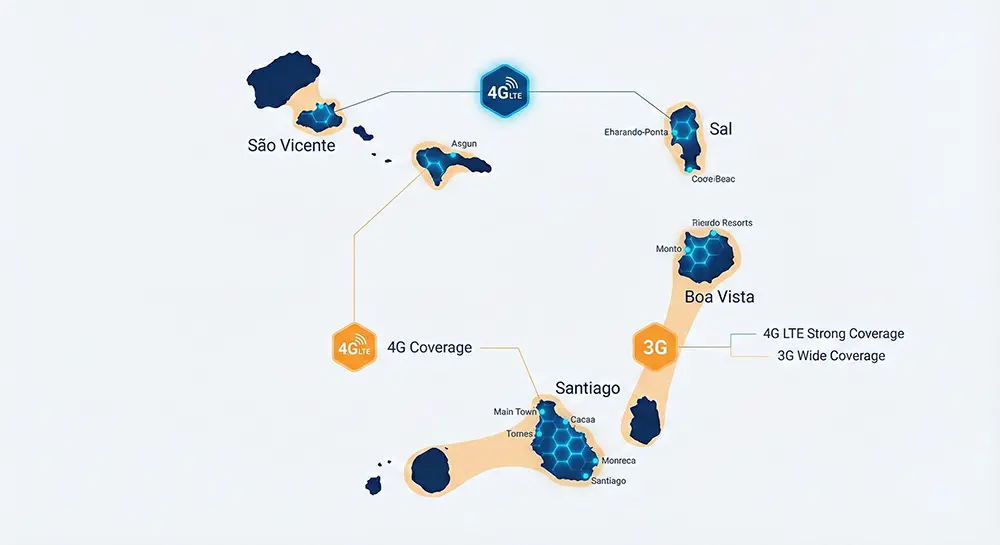
Mobile coverage is strongest on the most visited islands:
Sal (Santa Maria, airport, resorts)
Boa Vista (main towns and beaches)
Santiago (Praia and surrounding areas)
São Vicente (Mindelo)
In these locations, travelers can expect stable 4G/LTE coverage, suitable for navigation apps, messaging, social media, and general browsing. Hotels, restaurants, and beach areas typically fall well within coverage zones.
On smaller or less populated islands, coverage may drop to 3G, especially outside towns or along rural roads. However, complete signal loss is rare in inhabited areas.
Average mobile internet speeds in Cape Verde are sufficient for most tourist needs:
Browsing and maps work smoothly
Video calls are generally stable on 4G
Light video streaming is possible, though HD streaming may buffer during peak hours
There is currently no widespread 5G network in Cape Verde. All tourist connectivity relies on 3G and 4G infrastructure.
Between the two operators, performance differences are usually minor. Some travelers report slightly stronger signals from Alou on certain islands, while Unitel T+ performs very well in urban centers. In practice, both networks are suitable for short-term visitors.
While coverage is good overall, there are a few limitations:
Network speeds can slow down during evenings and weekends
Remote beaches or hiking areas may have weaker signals
International roaming is expensive without a local SIM or eSIM
Out-of-bundle data charges on local SIMs are high if no data pack is active
Because of these factors, choosing the right internet option and having a valid data bundle is important to avoid unexpected costs.
Short stays (up to 7 days): eSIM or airport SIM
Medium stays (7–14 days): eSIM or local SIM
Long stays (30+ days): local SIM with monthly bundles
Multiple devices: consider pocket WiFi or hotspot from eSIM-enabled phone
For most travelers, eSIM offers the best balance of simplicity, speed, and reliability.
Always disable data roaming on your home SIM
Monitor data usage to avoid overage charges
Download offline maps before remote island visits
Confirm your phone is eSIM-compatible before purchase
Staying connected in Cape Verde does not have to be complicated. If you prefer a hassle-free solution, check the latest Cape Verde eSIM packages and activate your connection before you travel.
Best for most trips
Unitel T+
Cape Verde
3 GB · 30 days
Enough for maps, bookings and everyday travel.
Hotspot supported
$34.90
From 12.90 USD

Manage your eSIM in the app
Install, top up and track data.
Choose the perfect data plan for your trip
Manage your eSIM in the app
Install, top up and track data.
