


Quick Answer / The Practical Takeaway
-
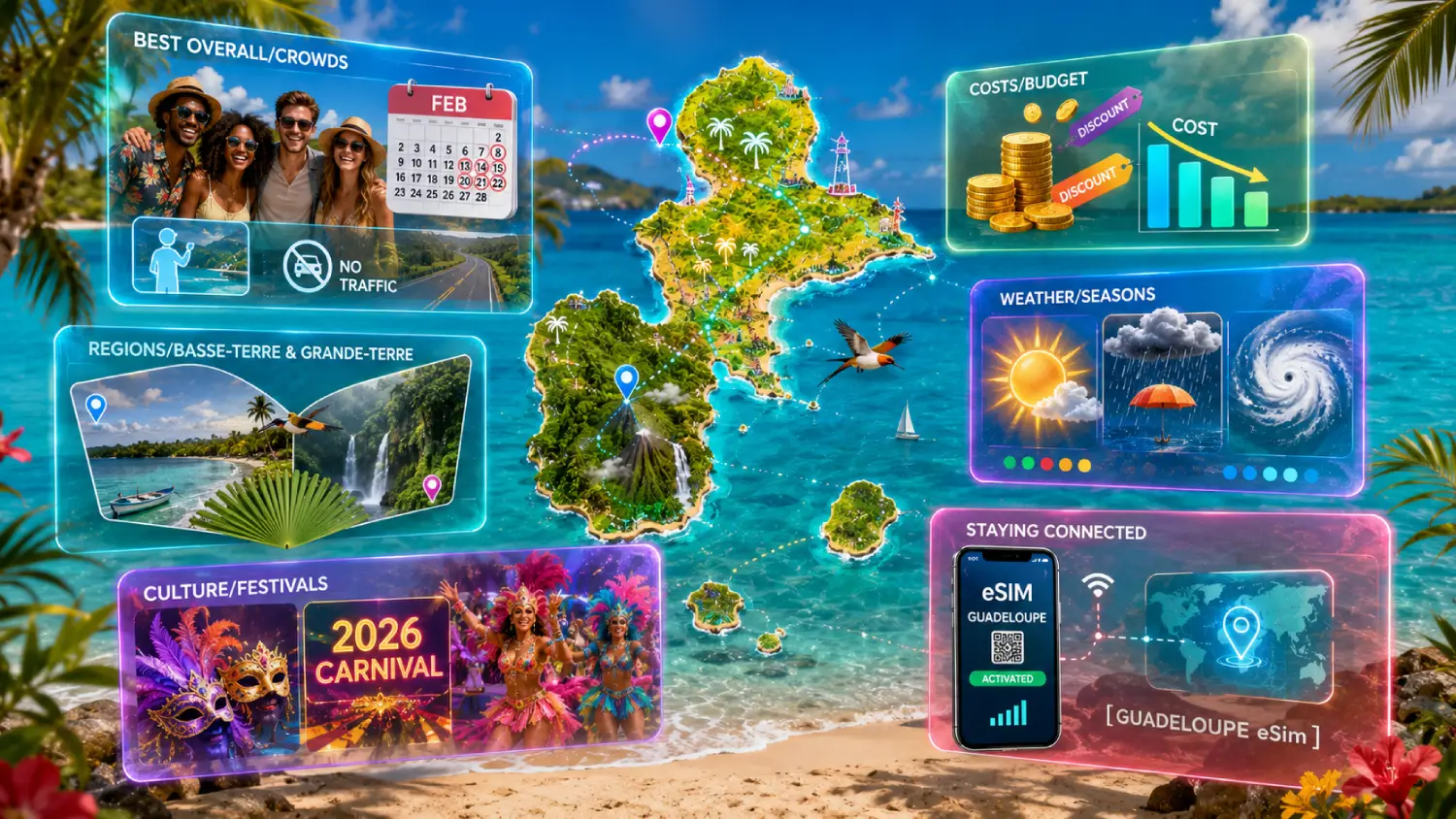
Best Overall Time (First-Timers): December through May. This is the dry season (Carême), offering glorious sunshine, calm seas, and vibrant cultural energy.
-
Best Time for Budget Travelers: September to November. Flights and villas drop significantly in price during the height of the wet season (Hivernage), though rain is frequent.
-
Best Time to Avoid Crowds: May and June. You catch the tail end of the dry season with excellent weather, but the winter snowbirds have already flown home.
-
Best Time for Culture: January and February 2026. The island erupts into celebration for the annual Guadeloupe Carnival.
Guadeloupe by Season: What You Really Get
Guadeloupe experiences two distinct seasons rather than four. The trade winds keep temperatures comfortably warm year-round, but rainfall and humidity vary drastically.
Regional Differences (Microclimates & Geography)
Guadeloupe is shaped like a butterfly, and its two main wings offer totally different climates. Where you choose to stay will dictate the kind of weather you experience.
Grande-Terre (The Eastern Wing)
This is the flatter, drier side of the island. Because it lacks high mountains, rain clouds blow right over, making it much sunnier than the west. If your priority is white-sand beaches, calm resort lagoons, and constant sunshine, Grande-Terre is your best bet year-round.
Basse-Terre (The Western Wing)
Dominated by the La Grande Soufrière volcano, this wing is incredibly mountainous and covered in lush rainforest. The high elevation traps passing clouds, resulting in significantly more rainfall, especially in the afternoons. The payoff is spectacular waterfalls, dense jungle hiking, and black-sand beaches.
Marie-Galante & Les Saintes (The Southern Islands)
These smaller outer islands are relatively flat and dry, mimicking the climate of Grande-Terre. They offer a much quieter, step-back-in-time vibe. Because they rely heavily on ferries, visiting during peak hurricane season (August to October) is risky as rough seas can cancel boat schedules.
Month-by-Month Cheat Sheet
-
January: Peak dry season begins. The weather is flawless, and the energy builds as early Carnival parades take over the streets on weekends.
-
February: The absolute peak of high season and Carnival madness. Expect maximum crowds, high hotel prices, and non-stop vibrant celebrations leading up to Mardi Gras (Feb 15-18, 2026).
-
March: Excellent weather continues with crystal clear waters. This is a brilliant month for diving and snorkeling without the intense Carnival crowds.
-
April: Easter holidays bring a spike in local tourism as families head to the beaches. The weather remains incredibly sunny and pleasant.
-
May: The ultimate sweet spot for a 2026 trip. Prices drop, the ocean is wonderfully warm, and the Terre de Blues festival hits Marie-Galante late in the month.
-
June: The transition month into the wet season. You will see more afternoon showers, but mornings are generally sunny and perfect for exploring.
-
July: Humidity rises noticeably and European school holidays bring a wave of summer vacationers. Expect frequent, heavy, but short-lived tropical downpours.
-
August: The ocean is exceptionally warm, but this marks the beginning of peak hurricane risk. It is a fantastic month for local food festivals, but pack a sturdy raincoat.
-
September: The quietest, wettest, and cheapest month to visit. Many hotels and restaurants close for annual maintenance, so plan carefully.
-
October: Still firmly in hurricane season with highly unpredictable weather. However, the island is brilliantly green, and the waterfalls are at their most powerful.
-
November: The rain begins to taper off as the month progresses. In 2026, the legendary Route du Rhum sailing race kicks off on November 1st, bringing a massive influx of visitors to Pointe-à-Pitre.
-
December: The dry season returns just in time for the holidays. Expect beautiful weather, festive Christmas markets, and rapidly climbing prices.
Best Time to Visit by Traveler Type
For Beaches & Swimming
If you want flawless beach days, aim for February to April. The Caribbean Sea is calm, the trade winds provide a perfect breeze, and the risk of rain ruining your tan is at its lowest. Stick to Grande-Terre for the most reliable sunshine.
For Sightseeing & Culture
To experience the true soul of the island, January and February are unbeatable. The 2026 Guadeloupe Carnival is a massive cultural phenomenon featuring spectacular costumes and pulsating rhythms. If you are exploring local norms, it is smart to brush up on the Guadeloupe Tourist Bans & Laws before you arrive.
For Budget Travelers
May, June, and November are the prime months for budget hunters. You avoid the peak winter pricing but still dodge the highest risk of tropical storms. You can score excellent deals on car rentals and boutique accommodations during these shoulder months.
For Wildlife & Nature
If you want to hike the volcano or see the Carbet Falls at their absolute most dramatic, visit between July and October. The heavy rains fuel the rivers and turn Basse-Terre into a vibrant, emerald paradise. Just ensure you pack serious waterproof gear.
Festivals & Special Dates to Plan Around (2026)
Timing your trip around local events can make or break your vacation. Some festivals offer the experience of a lifetime, while others might just mean fully booked hotels and heavy traffic.
Guadeloupe Carnival (January 6 – February 18, 2026)
This is the most important cultural event of the year. The island essentially shuts down for massive street parties, drum circles, and parades. If you travel during this window, book your accommodation and rental cars months in advance.
Terre de Blues Festival (May 22–25, 2026)
Held on the sleepy island of Marie-Galante, this world-renowned music festival draws huge crowds. It is an incredible time to visit, but ferry tickets and local guesthouses will sell out completely.
Route du Rhum (Starts November 1, 2026)
This legendary transatlantic solo sailing race happens every four years, and 2026 is a race year! The boats arrive in Pointe-à-Pitre throughout November. The atmosphere is electric, but expect major crowds, intense traffic, and skyrocketing accommodation prices in central areas. Before flying in for the chaos, double-check your luggage against the Guadeloupe Airport Customs Rules.
A Quick Note on Staying Connected
Navigating Guadeloupe requires constant connectivity. You will need mobile data to use GPS on winding mountain roads, translate French menus, and check live ferry schedules to the smaller islands.
Need data in Guadeloupe? Get an eSIM!
Choose the perfect data plan for your trip

Manage your eSIM in the app
Install, top up and track data.
Relying on your home carrier often results in devastating roaming fees. For the easiest and cheapest solution, a Guadeloupe eSIM is the way to go. You can buy it, install it before you fly, and connect to local Caribbean networks the second you land.
If you are weighing your connectivity choices, review our guide on How to Get Internet in Guadeloupe. For a deeper dive into the top providers, check out the Best eSIM for Guadeloupe.
FAQ: Best Time to Visit Guadeloupe
What is the absolute cheapest month to visit Guadeloupe?
September is typically the cheapest month for flights and accommodation. It falls right in the middle of peak hurricane season, so crowds are nonexistent and prices hit rock bottom.
When is hurricane season in Guadeloupe?
The official Atlantic hurricane season runs from June 1st to November 30th. However, the highest risk for severe tropical storms in Guadeloupe is between mid-August and late October.
Is it worth visiting Guadeloupe in the summer (July/August)?
Yes, but you must adjust your expectations. It is very hot and humid, and you will likely experience heavy afternoon rain showers. It is a great time for lush jungle hikes, but not ideal for uninterrupted beach lounging.
When is the water warmest for swimming and diving?
The Caribbean Sea is comfortably warm year-round, but it peaks between August and October, reaching up to 29C (84F). For diving, March and April offer the best combination of warm water and excellent visibility.
Do things close down during the low season?
Yes. In September and October, many smaller hotels, beach bars, and tour operators close for annual vacations and renovations. If you visit during this time, you will need to be self-sufficient and double-check operating hours.
When is the best time to avoid Sargassum seaweed?
Sargassum seaweed washing ashore is notoriously unpredictable, but it tends to be worse during the warmer months (May to September). It primarily affects the eastern coast of Grande-Terre and Marie-Galante, while the western coast of Basse-Terre remains largely clear.
Are there safety concerns during peak tourist season?
Like any busy tourist destination, petty theft can spike during crowded events like Carnival. For a complete breakdown of what to watch out for, read our guide: Is Guadeloupe Safe.