

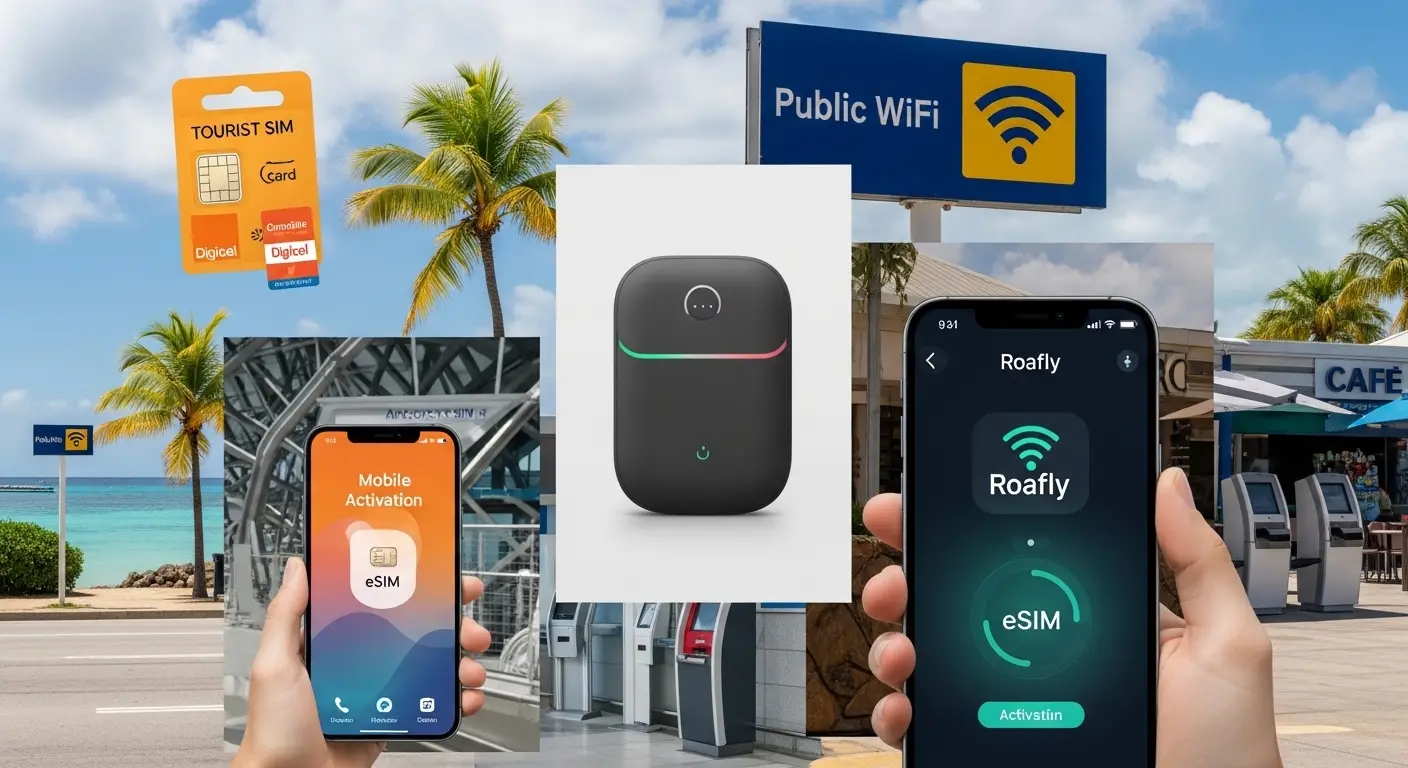

The best choice depends on how you travel. If you want internet the second you land, eSIM is the easiest route. If you want a local number and do not mind visiting a shop, a local SIM can still work. And if you are traveling with family or multiple devices, a pocket Wi-Fi router may be worth considering.
The quickest answer: what is the best way to get internet in Guadeloupe?
For most travelers in 2026, there are three realistic choices:
| Option | Best for | Typical cost | Main downside |
|---|---|---|---|
| Airport or near-airport SIM purchase | Travelers who want a physical SIM after landing | Usually around €10 to €20 for the starter SIM, then extra for data top-ups | Limited convenience, possible stock issues, setup takes time |
| Local prepaid SIM in town | Longer stays or travelers who want a local number | Top-ups commonly start from about €2 to €20+, with larger bundles costing more | You need to visit a store and sometimes deal with activation in French |
| Roafly eSIM | Most short-term travelers who want data immediately | From $4.90 to $49.90 based on package | Data, so no local phone number |
| Pocket Wi-Fi | Families, groups, or travelers with several devices | Around $6 to $12.90 per day depending on provider and delivery | Extra device to carry and charge |
| Airport or public Wi-Fi | Very light users | Usually free | Speed, security, and reliability vary a lot |
Physical SIM pricing in Guadeloupe is still tied to French Caribbean operators and prepaid recharge systems. Orange Caraïbe sells Card recharges such as €20 for 5GB and €50 for 10GB, while Digicel’s prepaid recharge system includes amounts such as €2, €5, €10, and €20. Tourist reports also suggest starter SIMs are often sold in the €10 to €20 range depending on operator and point of sale.
Need data in Guadeloupe? Get an eSIM!
Choose the perfect data plan for your trip

Manage your eSIM in the app
Install, top up and track data.
Can you buy a SIM card at Guadeloupe airport?
Yes, but you should not expect the airport experience to be as simple as in major hubs like Paris, Madrid, or Bangkok.
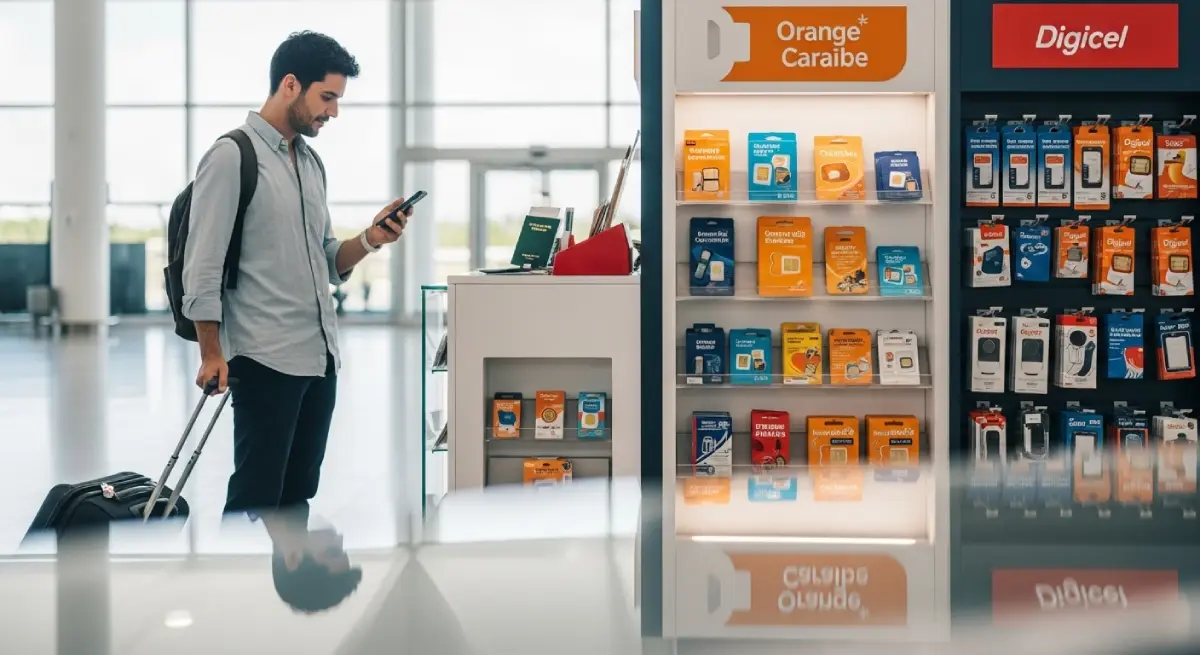
Travel reports and SIM-card guides indicate that you may find SIM options at or near Pointe-à-Pitre airport, but availability is inconsistent and many travelers end up buying from nearby retail locations instead of a clearly dedicated telecom kiosk inside arrivals. The airport itself offers shops and services, but not the kind of telecom-heavy arrivals hall you see in larger international gateways.
That means airport SIM shopping in Guadeloupe is possible, but not always the most efficient plan. If your flight lands late, if your French is limited, or if you simply want navigation working before you leave the terminal, you are better off arriving with data already set up.
In practice, travelers usually handle airport internet in of three ways:
1. Buy a SIM right after landing if stock is available
Some traveler reports mention Orange or Digicel access at or near the airport area, with starter SIM pricing around €10 to €20 before data top-ups. Because stock and activation conditions can vary, this is not the most predictable option for a first-time visitor.
2. Go to a shop near the airport
A more realistic route is to leave the airport and buy a SIM at a nearby shopping area. traveler report specifically mentions buying a Digicel SIM at the Milénis shopping center close to PTP airport.
3. Use airport Wi-Fi just long enough to get moving
Airport Wi-Fi is available, which is useful for downloading a map, messaging your hotel, or calling a driver through a travel app. But it is not something you should rely on beyond the terminal.
Local tourist SIM cards in Guadeloupe
If you prefer a physical SIM and do not mind visiting a local store, Guadeloupe’s main names are Orange Caraïbe and Digicel. Coverage is generally strongest in the main populated areas, while speeds and consistency can drop in more rural or mountainous parts of Basse-Terre. Orange highlights 4G, 4G+, and 5G availability in covered parts of Guadeloupe, while Digicel states that 4G/LTE service is supported across its markets.
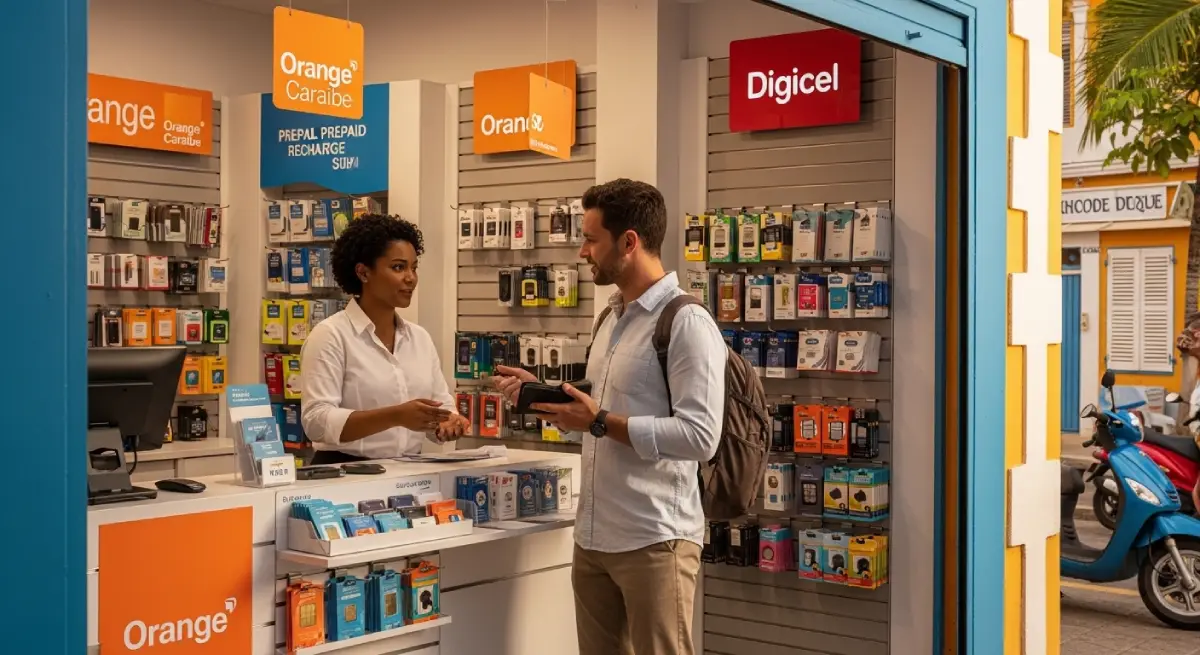
Orange Caraïbe prepaid pricing
Orange Caraïbe’s prepaid Card and recharge system remains of the clearest references for local pay-as-you-go data pricing in Guadeloupe. Current published recharge examples include:
-
€20 recharge with 5GB
-
€50 recharge with 10GB
Orange also markets prepaid Card offers in Guadeloupe as no-commitment products. Using an exchange rate around EUR 1 = USD 1.15 in mid-March 2026, those two examples are roughly $23 and $58.
For a short trip, Orange can work well if you want a physical SIM and local operator support. The issue is value. For travelers who need data for maps, rides, WhatsApp, and light browsing, local prepaid can feel more expensive and slower to set up than an eSIM.
Digicel prepaid pricing
Digicel’s French West Indies prepaid structure shows classic recharge amounts such as:
-
€2
-
€5
-
€10
-
€20
-
€40
That does not always translate into simple tourist bundles at the counter, but it does show that Digicel remains active as a local prepaid option with flexible recharge values. traveler report from the airport area also mentioned paying €20 for the SIM itself before adding service.
Digicel can make sense if you are already familiar with Caribbean prepaid systems or if you find a nearby store with staff who can activate everything quickly. For a first-time leisure traveler, though, it is not the most friction-free solution.
Are local SIMs worth it for tourists?
They can be, but mostly in these situations:
-
You are staying several weeks
-
You want a local number for calls
-
Your phone does not support eSIM
-
You are comfortable visiting a store after arrival
For everyone else, the setup time is the biggest drawback. You land, you collect bags, you sort transport, then you still need to find a store, compare top-ups, and activate the line. That is why many travelers now choose eSIM first and look at physical SIMs as a backup.
Using an eSIM in Guadeloupe
If your phone supports eSIM, this is usually the easiest way to get internet in Guadeloupe.
You install it before you fly, activate it when you land, and start using data right away. That means no searching for a mobile shop, no swapping tiny plastic cards in the airport, and no wasting your first hour on the island trying to get Google Maps working.
For a deeper breakdown of what to choose, our best eSIM for Guadeloupe guide is the natural next step if you want to compare how much data makes sense for your trip.
Roafly eSIM for Guadeloupe
For this article, the eSIM option is Roafly.
Roafly’s Guadeloupe eSIM includes:
Need data in Guadeloupe? Get an eSIM!
Choose the perfect data plan for your trip
Manage your eSIM in the app
Install, top up and track data.
That pricing is especially practical for typical tourist usage. A traveler using maps, messaging, email, ride apps, and moderate social media can usually get through a-week trip on 3GB to 5GB. Someone working remotely, sharing hotspot data, or uploading a lot of photos may want 10GB or more.
The biggest advantage is convenience. You can arrive in Guadeloupe already connected, which matters more than people expect. The airport is small, taxis move fast, and your first mobile needs are usually immediate: directions, accommodation messages, rental car details, and restaurant searches.
How much data do you actually need in Guadeloupe?
A lot of travelers overbuy mobile data for island trips. Guadeloupe is not a place where most visitors are streaming 4K video all day from the beach. In many cases, your needs are simpler:
1GB to 3GB
Good for light travelers using Google Maps, WhatsApp, email, and occasional browsing.
5GB
A safer option for a- to two-week vacation with social media, restaurant research, and some hotspot use.
10GB to 20GB
Best for heavy users, digital nomads, people doing video calls, or travelers sharing data with another device.
50GB
Usually necessary for long stays, constant tethering, or remote work without stable hotel Wi-Fi.
If you are unsure, it is smarter to estimate usage before you go. That is also where a data usage calculator can help you avoid paying for far more data than you will actually use.
Pocket Wi-Fi in Guadeloupe
Pocket Wi-Fi is still an option, especially for families and small groups.
A pocket Wi-Fi router creates a private wireless connection that multiple devices can share. France’s official tourism site notes that travel Wi-Fi hotspot rentals can support up to 10 devices, and providers such as My Webspot publicly list daily pricing around $12.90. Older France tourism guidance also references pricing starting around €6 per day for travel Wi-Fi services.
This can make sense if:
-
You are traveling with kids
-
You have several phones, tablets, and laptops
-
Your phone is carrier-locked
-
You do not want to use your phone battery for hotspot sharing
But for solo travelers or couples, pocket Wi-Fi is often harder to justify. You need to order it, receive it, carry it, keep it charged, and sometimes return it. you compare that against a simple eSIM already installed on your phone, pocket Wi-Fi usually becomes the more complicated solution.
Airport Wi-Fi and public Wi-Fi in Guadeloupe
Free Wi-Fi at the airport is useful, but as a short-term backup.
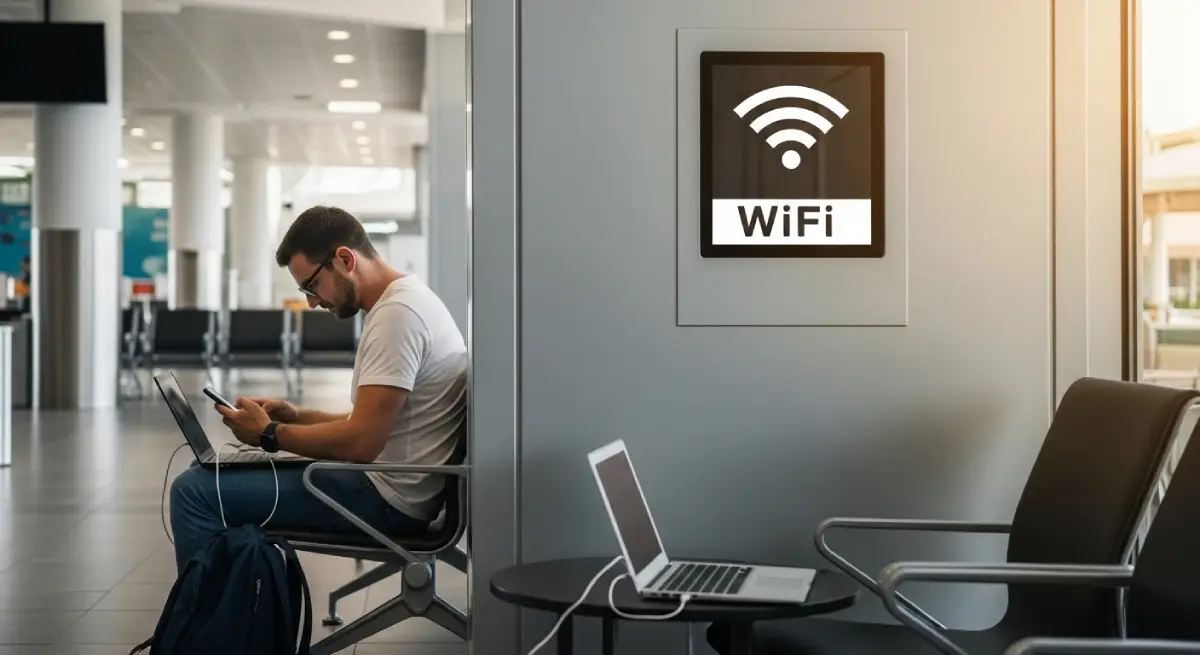
Airport guides for Pointe-à-Pitre report that Wi-Fi is available in the terminal, and lounge access also includes free Wi-Fi. That is enough for quick tasks like checking in, messaging your host, or opening directions.
Public Wi-Fi beyond the airport is more mixed. In hotels, guesthouses, cafés, and restaurants, Wi-Fi is common, but the quality can vary significantly. That is especially true you leave the main urban zones and spend more time driving, beach-hopping, or exploring quieter parts of Basse-Terre and Grande-Terre.
There are also two practical problems with relying on public Wi-Fi:
Security
Open networks are not ideal for banking, private logins, or anything sensitive.
Coverage gaps
Public Wi-Fi helps when you are sitting still. It does nothing when you are in a rental car trying to reach a waterfall trailhead or your next accommodation.
That is why public Wi-Fi works best as a supplement, not as your main internet plan.
So, what should you choose?
The right answer depends on your trip style.
If you want the easiest setup, choose eSIM and arrive connected.
If you need a local number and are staying longer, a local SIM from Orange Caraïbe or Digicel can still work.
If you are traveling as a group with many devices, pocket Wi-Fi may be worth the extra hardware.
If your usage is extremely light, airport and hotel Wi-Fi may cover part of your needs, but it should not be your plan.
For most travelers heading to Guadeloupe in 2026, the most balanced option is simple data that works as soon as the plane lands. That is why eSIM is usually the most practical choice, and why many travelers start with Roafly instead of hunting for a prepaid shop after arrival.
Check the latest eSIM packages for Guadeloupe before your trip so you can land connected and skip the airport SIM-card hassle.