Download the App and manage your eSIMs easily
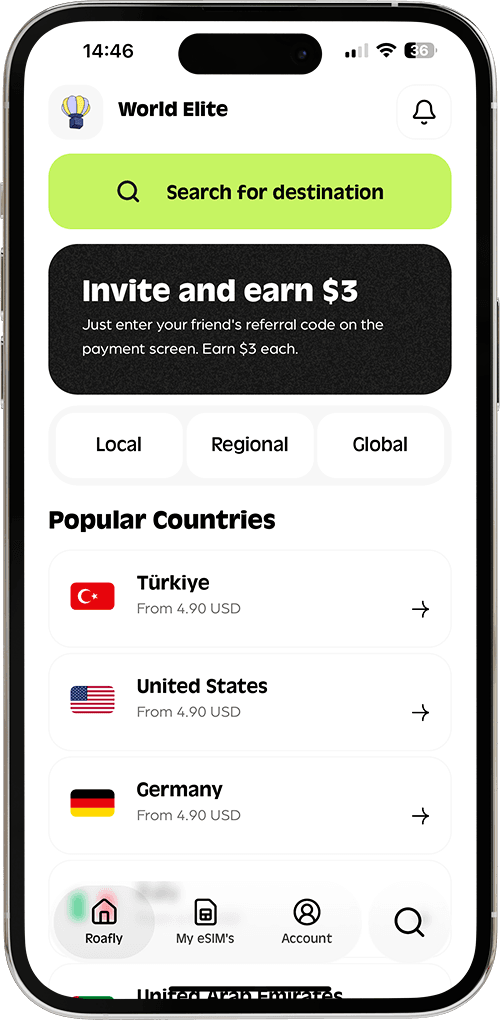
Create your order quickly
See your eSIM details
Track your remaining data
Download the App and manage your eSIMs easily
Create your order quickly
See your eSIM details
Track your remaining data
Is Marrakech a ghost town? Will I be arrested for drinking water? Did my phone just change time zones automatically?
Orange Morocco
Instant delivery
From 4.00 USD

Lena Hartley
Updated Jan 26, 2026
6 min read
Jump to section
👇Best for most trips
Orange Morocco
Morocco
10 GB · 30 days
Enough for maps, bookings and everyday travel.
Hotspot supported
$19.90
From 4.00 USD
f you are traveling to Morocco between February 17th and March 19th, 2026 (approximate dates), you are arriving during the Holy Month of Ramadan.
Unlike Dubai (which has become very relaxed) or Istanbul (where life flows normally), Morocco takes Ramadan seriously. The rhythm of the country changes completely. The days are slow and sleepy, the sunset (Ftour) is chaotic, and the nights are electric.
For the unprepared tourist, it can be frustrating. For the prepared traveler, it is the most culturally rich time to visit.
In this 2026 survival guide, we answer the hard questions about alcohol, food, the infamous "Ramadan Time Change," and how to survive the daily 7:00 PM shutdown.
Before we talk about food, we must talk about time. This is the #1 reason tourists miss flights in Morocco during Ramadan.
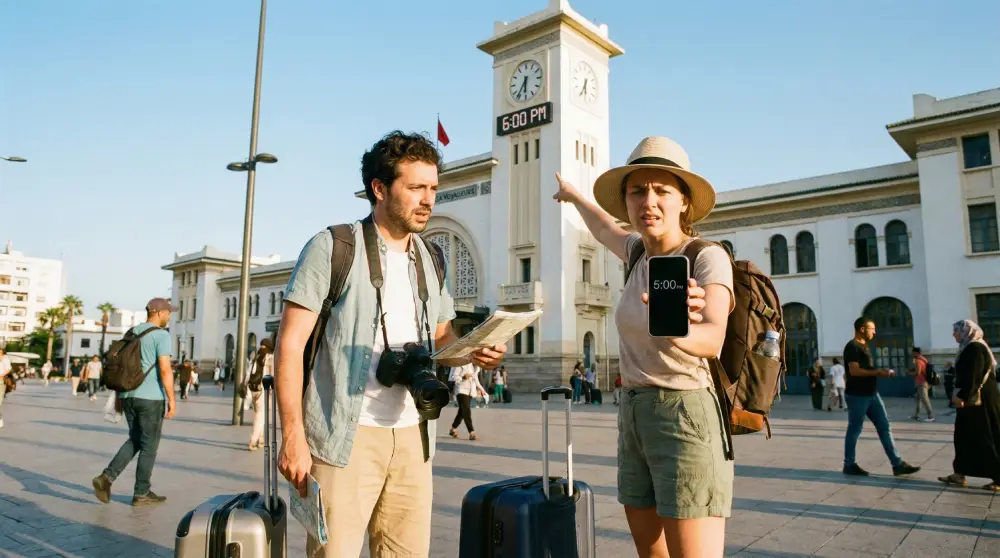
The Rule: A few days before Ramadan starts, Morocco usually suspends Daylight Saving Time, moving the clock BACK one hour (from GMT+1 to GMT+0).
The Chaos:
Your smartphone might update automatically... or it might not.
Your paper flight ticket might show the "old" time.
Hotel wake-up calls get confused.
The Fix: As soon as you land, ask a local: "What time is it right now?" and force-set your phone to that time. Double-check your flight departure times on the airline's app, not just your PDF ticket.
"Can I eat in the street?" In Morocco, Article 222 of the Penal Code theoretically punishes locals for breaking the fast in public. While this law doesn't apply to tourists, the social pressure is real.
The Reality: Walking through the Medina in Marrakech while chomping on a sandwich or chugging a 1.5L water bottle is considered highly disrespectful. You will get dirty looks.
Where to Eat:
Tourist Restaurants: In Marrakech (Medina/Guéliz), Fes, and Chefchaouen, restaurants catering to tourists remain open. However, they might cover their windows with curtains.
Hotels: Business as usual.
Street Food: Closed. The famous stalls of Jemaa el-Fnaa don't really fire up until sunset.
💡 Insider Tip: Plan a "big breakfast" at your hotel and a "late lunch" indoors. Carry snacks in your backpack, but be discreet. If you need a sip of water, step into a shop or alleyway; don't do it in the middle of a crowded square.
Compared to Egypt, Morocco is stricter with alcohol during this month.
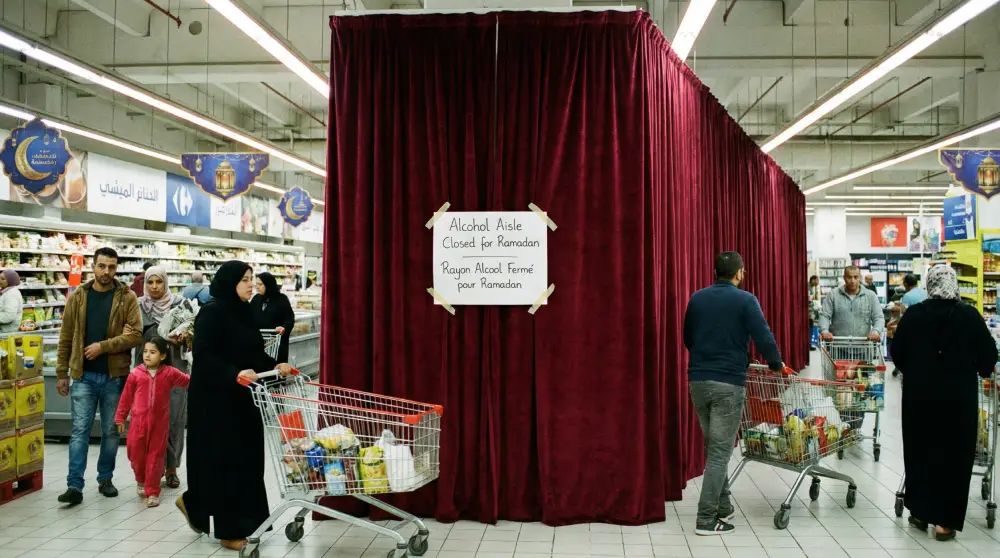
Supermarkets: Large chains like Carrefour or Marjane often stop selling alcohol entirely to locals. You might find the alcohol aisle physically blocked off with huge curtains or chains. Foreigners might be allowed in with a passport, but often sales are completely suspended for the month.
Bars & Nightclubs: Many bars close for the entire month.
Hotels: 4 and 5-star hotels will mostly largely continue serving alcohol to non-Muslim guests in their bars/rooms.
The Solution: If a glass of wine is essential to your vacation, you must bring it with you.
Check the limits first: Read our Morocco Airport Customs Rules 2026 to see exactly how many liters of alcohol you can legally bring into the country duty-free. Do not rely on buying it locally.
This is the most magical and most logistically difficult hour of the day. "Ftour" is the breaking of the fast.
The Ghost Town: Around 30 minutes before sunset, everyone rushes home. Taxis vanish. Shops slam their shutters shut. The streets become eerily empty.
The Transport Crisis: You will NOT find a taxi during this window. Uber/Careem drivers will cancel on you to go eat.
The Strategy: Do not plan to travel between 6:00 PM and 7:30 PM. Be at your destination (restaurant or hotel) by 5:30 PM and stay put.
If you are an early riser, Morocco in Ramadan will frustrate you.
Mornings: Locals stay up late (until 3 AM) for Suhoor, so they wake up late.
Souks/Shops: Don't expect much to be open before 11:00 AM or Noon.
Museums/Sites: Usually open earlier (9:00 AM or 10:00 AM) but close much earlier (3:00 PM) to let staff go home.
Nights: This is when the city wakes up. After Ftour, the streets are packed, cafes are full, and kids play soccer in the streets until 1:00 AM.
Trying to decide if the vibe matches your style? Compare the atmosphere in our guide Egypt vs. Morocco: Which is for You?
In Ramadan, Google Maps is unreliable.
The Problem: A cafe might say "Open 9 AM - 10 PM" on Maps, but in Ramadan, they actually open at 2 PM and close for Iftar breaks.
The Fix: You need to check their Instagram stories or call them via WhatsApp to confirm.
The Tool: Since regular calls can be expensive, most businesses in Morocco use WhatsApp.
Worried about bans? Read Is WhatsApp Blocked in Morocco? to understand how calls work.
The Data: Don't get stuck without a connection when trying to find an open restaurant. Secure your Best eSIM for Morocco before you fly to have instant access to updated hours.
Don't just observe; participate. Many Riads and restaurants offer a "Special Ftour Menu" for roughly 150-300 MAD ($15-$30). It is a feast.
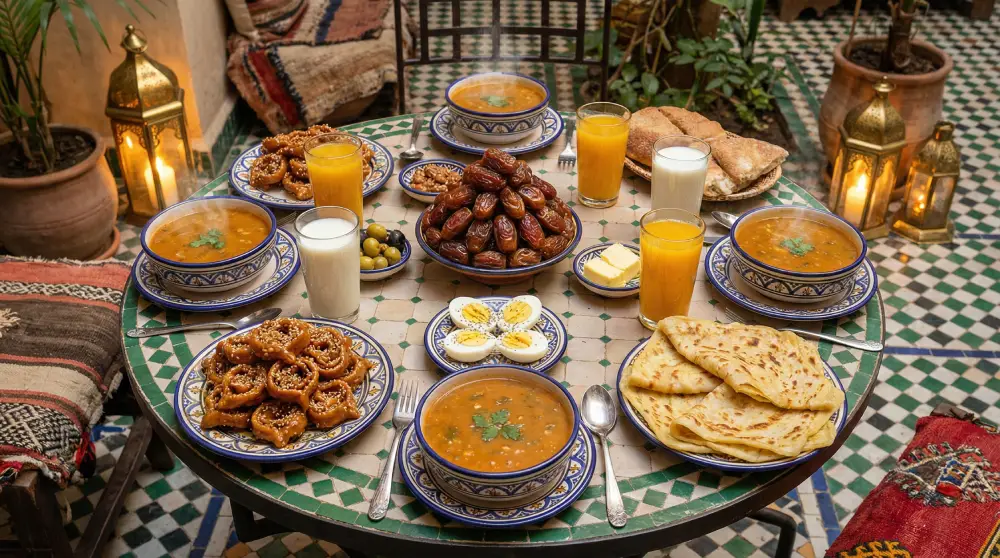
Harira: The famous lentil and chickpea soup.
Chebakia: Sesame cookies soaked in honey (Sugar rush alert!).
Dates & Milk: The traditional starter.
Msmen: Buttery, flaky pancakes.
💡 Pro Tip: If you are staying in a Riad, ask if you can join the staff for Ftour one evening. It’s often more authentic than the tourist restaurants.
If you are traveling between cities (e.g., Casablanca to Marrakech):
Schedule Change: The national train operator (ONCF) releases a special "Ramadan Schedule." The regular trains you see on blogs might not exist.
The Gap: There is usually a long break in trains around sunset time.
Booking: Book tickets a few days in advance, as locals travel heavily to visit family.
YES, IF:
You want to see the "real" culture and experience the festive night atmosphere.
You are okay with a slower pace of travel (starting your day at 11 AM).
You want to try special seasonal foods like Chebakia.
NO, IF:
You want to party, drink heavily, and go clubbing.
You get impatient when service is slow (staff are fasting and tired).
You have a tight schedule that requires 8 AM starts.
Morocco during Ramadan is quieter, deeper, and more spiritual. Just remember to set your watch correctly, respect the public eating rules, and download your Roafly Morocco eSIM to navigate the changing schedules.
Ramadan Mubarak!
Best for most trips
Orange Morocco
Morocco
10 GB · 30 days
Enough for maps, bookings and everyday travel.
Hotspot supported
$19.90
From 4.00 USD
Choose the perfect data plan for your trip

Manage your eSIM in the app
Install, top up and track data.
