Download the App and manage your eSIMs easily
Create your order quickly
See your eSIM details
Track your remaining data
Download the App and manage your eSIMs easily
Create your order quickly
See your eSIM details
Track your remaining data
South Korea’s entry paperwork starts with your passport: you may qualify for a visa-free visit, need K-ETA approval before departure, or need a visa in advance. Your arrival declaration is a separate step.

Sophie Callahan
Updated Nov 9, 2026
8 min read

Save 15% on your Roafly eSIM
Stay connected on your next trip. Use the code below at checkout.
View All DestinationsJump to section
👇Save 15% on your Roafly eSIM
Stay connected on your next trip. Use the code below at checkout.
View All Destinations
Manage your eSIM in the app
Install, top up and track data.
As of 9 November 2026, the temporary K-ETA exemption for designated nationalities runs through 31 December 2026, Korean Standard Time. Using that exemption usually means completing an arrival card instead. Holding a valid K-ETA and entering under the visa-free route removes the arrival-card requirement.
Your nationality, passport type, purpose and length of stay determine the route. Living in a visa-exempt country does not give you the same entry rights as holding its passport.
These examples cover ordinary passports and short tourist visits. They are representative groups, not the complete eligibility list.
| Passport examples | Visa-free tourist stay | What to arrange before travel |
|---|---|---|
| United States, United Kingdom — British citizen passport, Australia, Japan | Up to 90 days | Temporarily exempt from K-ETA through 31 December 2026; complete an arrival card unless separately exempt |
| Canada | Up to six months | Same temporary K-ETA exemption; complete an arrival card unless separately exempt |
| Türkiye, Thailand | Up to 90 days | K-ETA for visitors aged 18–64 unless another exemption applies |
| Malaysia | Up to three months | K-ETA for visitors aged 18–64 unless another exemption applies |
| India, Philippines, Indonesia | An advance visa is normally required for independent tourism on the Korean mainland | Obtain the appropriate visa and complete an arrival card; special Jeju and transit arrangements have separate conditions |
The official K-ETA country list gives eligible passport countries and their permitted stays. Keep the units shown there: three months and 90 days are not interchangeable, and Canada’s allowance should not be applied to other passports.
Permission to enter and the admitted stay are decided at immigration. Visa-free tourism also does not authorize employment in Korea.
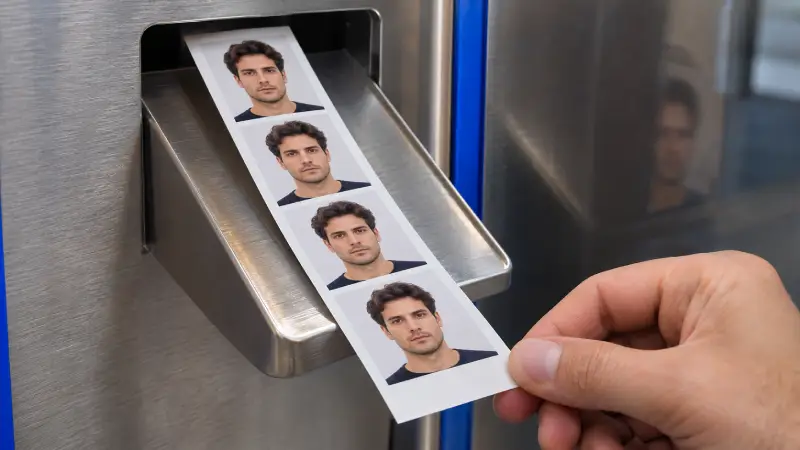
Apply through the official K-ETA website or app before boarding your flight or ship. The application requires passport information, an email address, a photograph and a payment card.
The government fee is KRW 10,000, with an online payment fee charged separately. It is non-refundable, including when an application is refused. Assessment typically takes 72 hours or less, but it can take longer and there is no expedited service. Apply well ahead of departure.
Approval normally lasts three years, or until your passport expires if sooner, and can cover multiple visits. That validity is separate from the permitted stay on each visit. Renewing your passport requires a new K-ETA; changes to travel details, including your accommodation address, should be updated through the portal.
Nationals of K-ETA-eligible countries aged 17 or younger, or 65 or older, are exempt from applying. Their arrival-card requirement remains a separate question.
If your nationality is temporarily exempt, you can still apply voluntarily and pay the fee to obtain the arrival-card exemption. Otherwise, use the free arrival declaration. For arrivals from 1 January 2027, check the exemption status again before departure: the current extension ends on 31 December 2026.
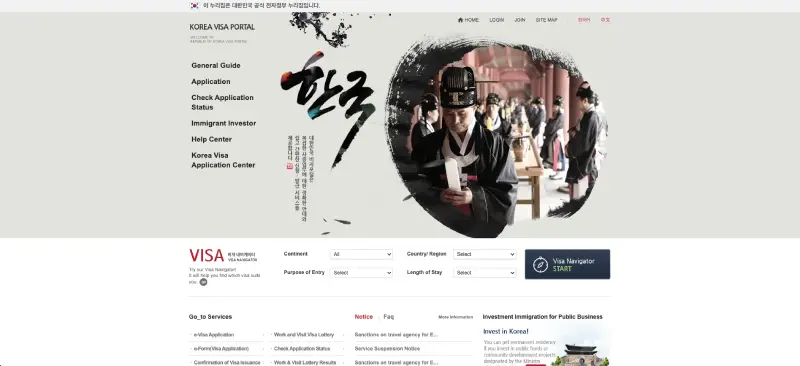
Start with the Korea Visa Portal and the Korean embassy, consulate or designated visa centre responsible for your place of residence. General tourist visits commonly use the C-3-9 category.
The required documents, submission method, fees and processing time depend on the responsible mission and your circumstances. Follow that mission’s checklist rather than a document list written for another country.
K-ETA is not a substitute for a visa when your nationality or trip requires one. Completing an electronic application form also does not, by itself, mean that you have received an eVisa. Special group-tour and other electronic visa routes have their own eligibility rules.
Most short-term visitors entering without a valid K-ETA must complete an arrival declaration, including visitors using the temporary K-ETA exemption and ordinary tourist-visa holders. Valid Korean residence-card holders and certain other categories are exempt.
The official e-Arrival Card is free. Submission opens three days before arrival, based on Korean time. Prepare your passport, email address, arrival flight details, accommodation information and planned departure details.
Once submitted, the declaration is valid for 72 hours. If you do not enter Korea within that period, submit a new one. You can edit relevant trip details before immigration inspection; a later visit requires a new declaration unless you qualify for an exemption.
Paper arrival cards remain an alternative. Submitting the electronic version removes the need to complete the paper version as well. Keep the emailed issuance number accessible, although carrying a printed e-Arrival Card is not required.
If you hold both a visa and K-ETA, entry is normally processed under the visa, so do not assume the K-ETA removes your declaration requirement.
Arrival information and baggage declarations also serve different purposes. Review South Korea’s customs rules separately for goods you plan to bring.
South Korea does not impose a universal six-month remaining-validity rule on short tourist entry. Your passport must remain valid throughout your stay. Visa applications and any countries on your transit route can have different document requirements, so apply the rules relevant to the whole journey.
Keep the following together and accessible:
Your valid passport and the visa or K-ETA approval required for your route.
Your return or onward travel booking.
Your first accommodation’s address and contact details.
Your trip dates and itinerary.
Your arrival-card issuance details, if you submitted the form online.
Save essential bookings and addresses offline before departure. Mobile data is useful for retrieving a changed reservation or coordinating your arrival; Roafly’s South Korea eSIM provides a data option for compatible, unlocked devices.
Use the stay granted at entry when planning your departure.
Remaining in the international transit area is different from passing through immigration. Many passengers can make an airside connection without a Korean visa or K-ETA, but passport-specific transit restrictions apply, including for Egyptian, Sudanese, Syrian and Yemeni nationals.
If your connection requires collecting baggage, changing airports or entering Korea for an overnight stay, assess the journey as an entry into Korea. A booking described as a “transit” or “self-transfer” does not establish that you can remain airside.
Special visa-free entry schemes exist for qualifying transfer passengers. Their conditions must match your passport, documents and itinerary; holding a visa for another destination alone is not a universal exemption.
Jeju has separate visa-free arrangements for eligible visitors from countries that normally require a Korean visa. The route must reach Jeju from overseas without first entering another part of Korea, and some nationalities are excluded.
Connections through another country can still fit that route: Singapore–Shanghai–Jeju is different from Singapore–Seoul–Jeju. Passing through Seoul or Busan before a domestic flight to Jeju does not qualify for the direct-entry exception.
Nationals of K-ETA-eligible countries must still meet the applicable K-ETA rules when visiting Jeju. Those covered by the temporary nationality exemption can use that exemption until its stated end date. Treat Jeju’s special arrangements as a distinct itinerary choice, not a shortcut into mainland Korea.
Q-CODE concerns health and quarantine screening. It is separate from your visa, K-ETA and arrival card.
Recent travel through a Strict Quarantine Inspection Required Area, including transit, triggers health reporting even without symptoms. Visits to other designated quarantine inspection areas can trigger reporting when symptoms are present. The relevant countries and regions change, so use the Korea Disease Control and Prevention Agency’s current list for your itinerary.
Q-CODE information can be entered from seven days before arrival. Save the resulting code for quarantine screening and follow the current instructions for the places you have visited or transited. Completing an arrival card does not complete this health declaration.
Once your entry documents are settled, prepare the first few hours of the trip. Compare the best eSIM for South Korea options before choosing a provider and data allowance, and plan your airport-to-hotel journey using the guide to getting around South Korea.
Your final check should cover four things:
Your passport and travel permission match your nationality, purpose and route.
Any required K-ETA or visa has been approved before departure.
Your arrival declaration is ready within the correct submission window.
Your departure booking, accommodation address and any required health information are accessible.
Entry permission covers admission to the country. Before the trip, also familiarize yourself with the tourist laws in South Korea that apply during your stay.
