

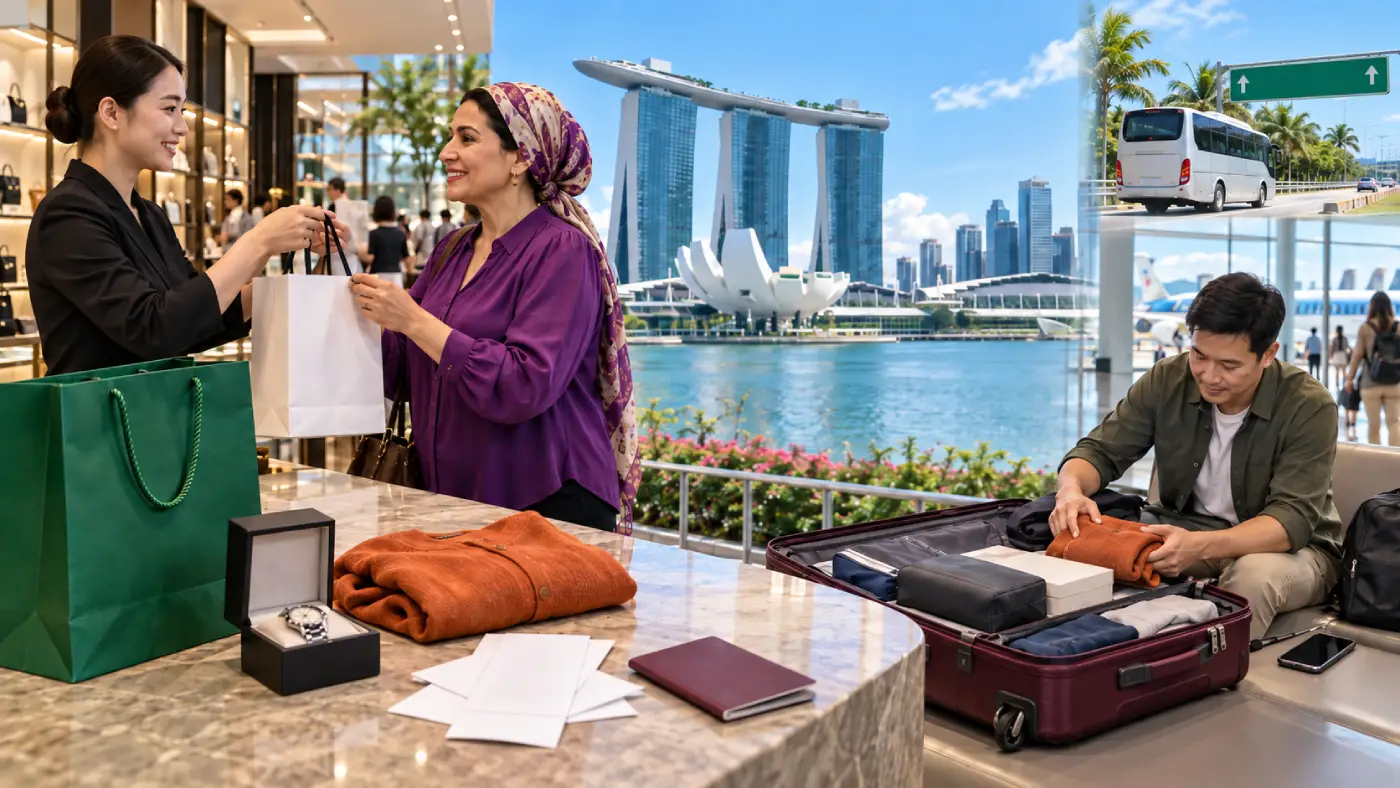

Plan your departure before building a shopping budget around the refund. Flying out with purchases in your suitcase creates a different process from carrying them, while leaving for Malaysia by land falls outside the scheme’s permitted departure routes.
If you searched for a Singapore VAT refund, GST is the local tax you are looking to recover. These export procedures are separate from Singapore’s arrival customs rules, which govern what you bring into the country.
Who Can Claim a GST Refund in Singapore?
Your age, citizenship and immigration status determine whether you meet the tourist eligibility rules. You must be at least 16 on the purchase date, neither a Singapore citizen nor permanent resident, and not crew on your departing aircraft.
You must also be outside the scheme’s “Specified Person” categories on the purchase date, throughout the preceding three months, and when claiming. These include holders of work passes, Dependant’s Passes, Long-Term Visit Passes and Student’s Passes, plus specified diplomatic and foreign-office personnel and dependants with relevant MFA identification.
Someone who recently finished working or studying in Singapore should examine that three-month lookback before shopping. Changing to a short visit does not immediately erase an earlier disqualifying status.
Check the Store and Your Purchases Before Paying
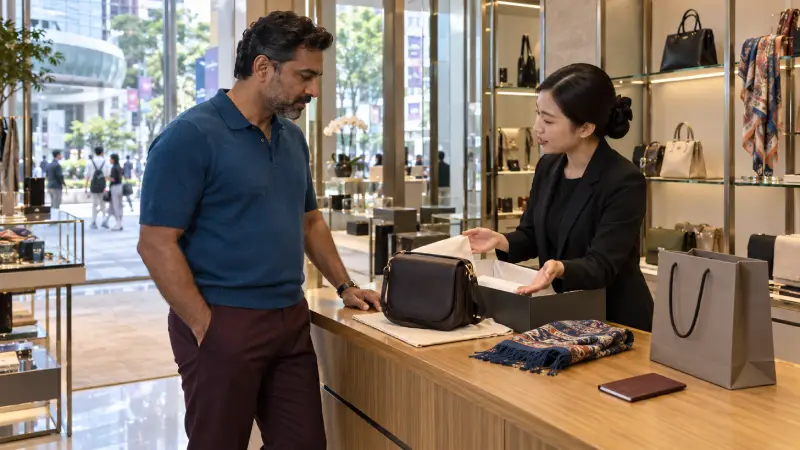
Ask whether the retailer participates in eTRS before committing to a purchase. Charging GST and offering tourist refunds are separate matters; a regular sales receipt alone is insufficient.
The minimum is S$100 including GST. Up to three receipts can be combined when they share the same purchase date, shop name and GST registration number.
That makes the receipt details more useful than the shopping centre’s name. Two purchases of S$60 and S$45 could reach the threshold if they meet those conditions. Spending the same amounts in unrelated shops would not create qualifying S$105 claim. Purchases on different days cannot be combined under this rule either.
At the checkout:
-
Show your original physical passport and electronic Visit Pass in person.
-
Have the retailer create the eTRS transaction using your passport details.
-
Keep the original receipt or invoice.
Passport photographs and photocopies are not accepted. Put the physical document somewhere accessible before setting off for the shops, then return it to a secure place after the transaction.
Qualifying purchases must leave with you in personal luggage. Goods consumed or partly consumed locally, commercial exports and freight shipments are excluded. Hotels, restaurant meals and other services are also outside the refund.
Think of the scheme as a refund attached to eligible goods you export. It is not a rebate on the whole cost of your Singapore holiday.
How Much GST Can You Get Back?
Singapore’s standard GST rate is 9%, but the tax inside a GST-inclusive price is calculated as:
GST included = price paid × 9 ÷ 109
Consider a qualifying item priced at S$1,090 including GST. Its pre-tax price is S$1,000, and the GST component is S$90. Multiplying the full S$1,090 by 9% would produce S$98.10 and overstate the tax paid.
The refund is smaller again after the handling fee. Treat the calculated tax component as the amount before deductions, not the sum you will receive.
Ask the retailer for the expected refund on the actual transaction before deciding whether an expensive purchase is worthwhile. The handling deduction matters more than a headline tax rate when comparing the final cost with another shop or country.
Separate the shopping decision from the refund decision. If you would not buy the item at a sensible total price, the prospect of recovering part of its tax is a weak reason to add it to your suitcase.
Claiming Your Refund at Changi or Seletar Airport
Keep your purchases accessible until you have completed any required inspection. The airport claim location depends on how you carry the goods:
| Where the purchases will travel | Where to start the claim |
|---|---|
| Checked baggage | eTRS kiosk in the Departure Check-In Hall, before handing over the purchases |
| Hand baggage | eTRS kiosk in the Departure Transit Lounge, after departure immigration |
Use the terminal you are departing from. If purchases are split between checked and hand baggage, sort them before reaching the airport so you know which items belong to each stage.
The practical consequence is simple: leave the relevant suitcase openable and avoid burying purchases beneath everything else. You need to be able to present the goods if directed.
Complete the kiosk process
-
Scan your physical passport. The kiosk retrieves the eTRS transactions associated with it.
-
Make the declarations and select your purchases. Include the eligible goods you are taking out.
-
Choose the refund method and read the result. Follow any instruction to attend the Customs Inspection Counter.
If selected for inspection, bring the goods, original receipts or invoices, physical passport, and boarding pass or confirmed air ticket. Receipts should identify the goods and include serial numbers where applicable.
Customs inspection and payment are separate stages. Singapore Customs checks the claim; it does not create missing shop transactions or pay the refund.
Leave room in your airport schedule for an inspection as well as the kiosk. Keep the refund process ahead of boarding preparations, especially when purchases are spread across several bags.
Keep the three deadlines separate
-
Take the goods out within two months of purchase.
-
Depart with them within 12 hours of refund approval.
-
Claim payment within two months of approval.
The purchase window is for completing the export. It is not permission to leave Singapore and arrange the airport validation later.
Leaving Singapore for Malaysia by Land or by Sea
The tourist refund scheme covers departures through Changi and Seletar. It does not provide a claim route at a land border or seaport.
This matters when you travel from Singapore to Kuala Lumpur. If you take your purchases overland into Malaysia and fly home from Kuala Lumpur, that flight does not turn the earlier Singapore purchases into a Singapore airport refund claim.
Compare the complete itinerary before changing transport solely to recover tax. An airfare difference, baggage charge or extra transfer can cost more than the refund after deductions.
The useful decision comes before payment: identify where the goods will actually leave Singapore and calculate whether a refund belongs in your budget.
Tracking Your Refund and Fixing Common Problems
Review recorded transactions through the eTRS service while the shop is still easy to contact. If you use a Singapore eSIM for mobile data, you can access those records between stores and keep purchase details together.
If a transaction is missing, contact the retailer that should have created it. Waiting until departure gives you fewer opportunities to resolve a checkout error.
Available payment methods differ by airport:
-
Changi: credit card, Alipay or cash.
-
Seletar: credit card or Alipay.
IRAS gives a timeframe of up to 10 days for approved credit-card refunds and immediate payment for Alipay. Cash at Changi is collected at the refund counter after departure immigration, using your passport.
Keep the refund reference and supporting receipts until payment arrives. If a payout needs investigation, contact the retailer or refund provider handling the transaction; the Customs inspection counter does not handle payments.