Download the App and manage your eSIMs easily
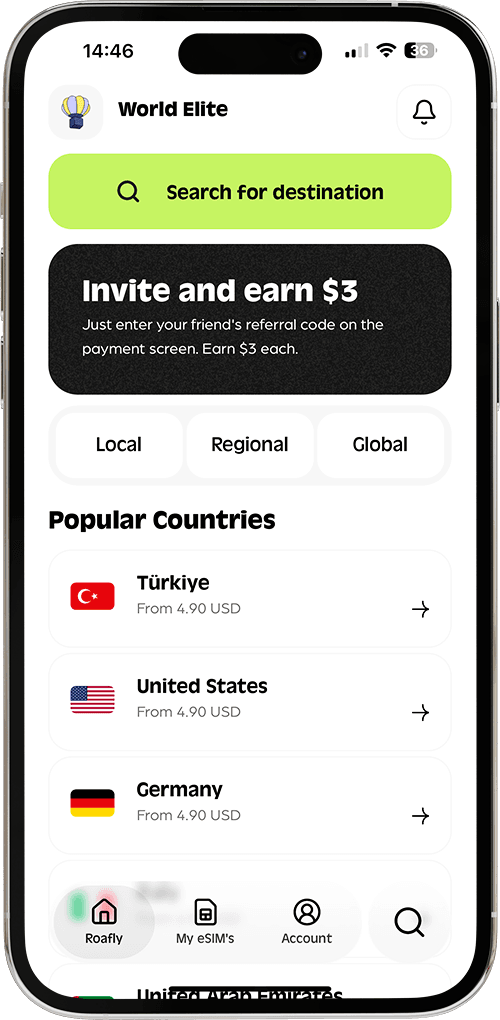
Create your order quickly
See your eSIM details
Track your remaining data
Download the App and manage your eSIMs easily
Create your order quickly
See your eSIM details
Track your remaining data
Serbia allows many visitors to travel without a visa, but the permitted stay depends on the passport. Some nationalities need a visa in advance, while a qualifying foreign visa or residence permit can provide a separate exemption.

Ethan Brooks
Updated Nov 9, 2026
9 min read
Save 15% on your Roafly eSIM
Stay connected on your next trip. Use the code below at checkout.
View All DestinationsJump to section
👇Save 15% on your Roafly eSIM
Stay connected on your next trip. Use the code below at checkout.
View All Destinations
Manage your eSIM in the app
Install, top up and track data.
Your route matters too. Flying into Kosovo and then heading directly to Serbia creates a different entry situation from arriving in Belgrade first. Once you reach your accommodation, your stay also needs to be registered within 24 hours.
Start with your nationality and passport type, rather than the country where you live. The examples below cover short tourist visits on ordinary passports.
| Passport examples | Tourist entry route | Permitted stay |
|---|---|---|
| United States, United Kingdom, Germany, Canada, Australia and Türkiye | Visa-free | Up to 90 days within a six-month period |
| China, ordinary PRC passport; Russia | Visa-free | Up to 30 days |
| Hong Kong SAR passport | Visa-free | Up to 14 days |
| Macao SAR passport | Visa-free | Up to 90 days |
| India, Pakistan and Egypt | Visa required unless a separate exemption applies | As authorised by the visa, within the short-stay limit |
These examples were checked on 9 November 2026. Use the official visa regime by nationality for the full rules, particularly if you hold a diplomatic, emergency or other non-standard travel document.
The distinction between Chinese passport types is consequential: the ordinary PRC, Hong Kong SAR and Macao SAR allowances differ. Similarly, a visa exemption for diplomatic passport holders does not establish eligibility for ordinary passport holders.
German citizens can also travel to Serbia with a valid national identity card. Identity-card entry is available only under the relevant arrangements, so do not assume that every visitor can replace a passport with an ID card.
Even if your nationality normally requires a Serbian visa, you may qualify through another document.
Serbia’s foreign-visa and residence-permit exemption covers holders of national passports with:
A valid Schengen, UK, EU member-state or US visa.
A valid residence permit issued by a Schengen country, an EU member state or the United States.
The visa and residence-permit lists are different. The UK appears in the visa list, but not in the residence-permit list. Do not treat a UK residence permit alone as equivalent to a UK visa.
Qualifying visitors can enter, transit and stay for up to 90 days during a six-month period, within the validity of the supporting visa or permit. If that document expires sooner, the exemption does not give you the remaining days beyond its expiry.
Carry the supporting document with your valid passport. Serbia permits a valid visa in an expired passport to be presented alongside a current national passport; a separate residence-permit card must also be accompanied by a valid passport. Emergency and convention-issued travel documents fall outside this particular exemption.
The short-stay C visa covers tourism and private visits, with a maximum of 90 days in any 180-day period. The visa issued to you determines the actual authorised stay and number of entries.
Applications can be submitted online or through the Serbian embassy or consulate responsible for your place of lawful residence. The earliest application date is three months before the intended journey.
Serbia issues electronic visas, also called Digital Travel Authorizations, for eligible national passports. Other applicants receive a visa sticker in their passport.
Submitting an application online therefore does not settle how the approved visa will be delivered. Follow the instructions for your nationality and application: where a sticker is required, arrange passport submission or collection with the responsible mission. Travel with the issued visa, rather than an application receipt.
The official C visa application guidance sets out the documents and links to the application service. Prepare:
A completed application and applicant photograph.
A passport issued within the previous ten years, valid for at least 90 days after your intended departure, with two consecutive blank pages.
Proof of accommodation or a travel-agency itinerary for tourism; a certified invitation letter for a private visit.
Valid travel medical insurance.
Payment of the applicable visa fee.
Financial evidence, transport reservations and evidence of your intention to return home or continue elsewhere can support the application. The mission may request additional documents.
The standard C visa application fee is €90, payable through the online service in Serbian dinar equivalent. Nationality-based exemptions can apply; use the amount assessed for your application.
Arrange a required visa before departure. Exceptional border-issued visas are not a routine visa-on-arrival option for a holiday.
Visa-free entry removes the advance visa application, but border officers can still ask about your accommodation, finances, onward journey and purpose of travel.
Keep these accessible:
Your passport or an identity card accepted for your nationality.
Your Serbian visa or supporting foreign visa/residence permit, where applicable.
Your accommodation address and booking confirmation, or details of your private host.
Evidence of sufficient funds.
Your return or onward travel arrangements.
Your travel medical insurance policy.
Serbia’s stated financial threshold is €50 per day of stay. Cash or a bank statement can demonstrate the funds; the rule does not require you to carry your entire holiday budget in banknotes.
Cash declarations and restrictions on goods are separate from proving that you can afford the trip. Review Serbia’s customs rules before packing or carrying a substantial cash amount.
The ten-year issue limit, two blank pages and 90-day validity after departure listed above are C visa application requirements. Avoid applying that entire checklist indiscriminately to every visa-free visitor.
British passport holders should have at least 90 days of validity beyond their planned departure. Canadian travel guidance specifies validity throughout the expected stay for regular Canadian passports. For other passports, use the requirements applicable to your nationality and account for any onward destination.
Carry travel medical insurance covering your stay. Serbia’s entry guidance recommends at least €20,000 in medical cover, and border officers may request the policy and proof of payment.
Save your bookings and travel documents offline before leaving home. If you are comparing mobile-data plans for booking changes and arrival transport, our guide to the best eSIM for Serbia covers that preparation separately.
Serbian authorities do not treat the crossing points from Kosovo as official international entry points into Serbia. That makes the order of your journey important.
Arriving in Belgrade, travelling to Kosovo and returning to Serbia is possible with the relevant Serbian entry record and valid admission conditions.
Flying into Kosovo first and then travelling directly into Serbia can lead to refusal if you lack a valid Serbian entry stamp. The same concern applies if you entered Kosovo from another country without first entering Serbia.
If Kosovo is your first stop, plan onward travel through a third country, such as North Macedonia or Montenegro, before entering Serbia at a recognised international crossing. You must also meet that third country’s entry requirements.
Get your passport stamped when entering Serbia and retain the entry record. Crossing availability can change with tensions, so check the specific route close to departure. Our guide to safety in Serbia covers the broader travel considerations beyond admission rules.
Remaining in the international transit area is different from entering Serbia. Serbian law generally exempts passengers who remain airside from a visa, while allowing nationality-specific airport-transit requirements.
If you need to pass immigration to collect baggage, check in again or leave the airport, the normal entry rules apply. Before booking separate tickets, establish whether the connection can actually be completed airside and whether your passport needs transit permission.
Hotels, hostels, apartments and private hosts have an obligation to register foreign guests within 24 hours of providing accommodation or arrival for a private visit. Accommodation businesses normally handle this electronically through Serbia’s eTourist system.
At check-in, ask the property to confirm that your registration has been completed. If you are staying with friends or family, discuss it with your host in advance; a private visit still carries the registration obligation. Ask for confirmation you can retain with your travel documents.
Save your host’s address and contact details before arrival. Roafly’s Serbia eSIM provides mobile data for retrieving booking updates and messaging your host on a compatible phone.
Registration is one part of your obligations during the visit. Familiarise yourself with the other local laws in Serbia before heading out.
Serbia’s general short-stay framework allows up to 90 days in any 180-day period unless an applicable international agreement sets a different allowance. Use the limit for your passport or issued visa, including any shorter period shown in the table.
Both your arrival and departure days count. If your route allows multiple entries, add the days from separate visits within the relevant period; crossing the border does not give the general 90-day allowance a fresh start.
C visa extensions are exceptional, covering circumstances such as humanitarian reasons, professional reasons or force majeure. Apply to the competent authority before the authorised stay expires if such circumstances arise. An ordinary wish to extend a holiday is not a basis for planning an extra stay.
Keep your passport, entry record, accommodation-registration confirmation and onward booking together for departure. Those documents make it easier to show when you arrived, where you stayed and that you are leaving within your permitted period.
