Download the App and manage your eSIMs easily
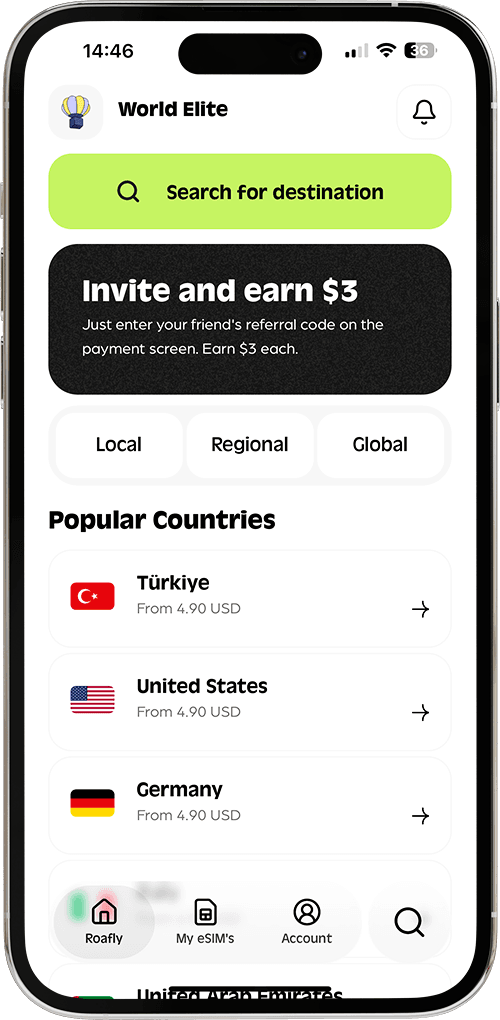
Create your order quickly
See your eSIM details
Track your remaining data
Download the App and manage your eSIMs easily
Create your order quickly
See your eSIM details
Track your remaining data
Saudi Arabia’s tourism reforms have opened new places to visitors, while strict laws still govern relationships, alcohol, public behaviour and online speech.

Ethan Brooks
Updated Oct 21, 2026
11 min read
Save 15% on your Roafly eSIM
Stay connected on your next trip. Use the code below at checkout.
View All DestinationsJump to section
👇Save 15% on your Roafly eSIM
Stay connected on your next trip. Use the code below at checkout.
View All Destinations
Manage your eSIM in the app
Install, top up and track data.
Foreign tourists are subject to these laws. Understanding the difference between a hotel’s admission policy, a public-decency rule and a criminal offence is essential: permission in one situation does not extend to every part of your trip.
Travel advisory: As checked on 21 October 2026, Australia’s Smartraveller advice for Saudi Arabia advises against all travel, including religious travel, because of the volatile security situation. Review your own government’s current advice before making travel arrangements.
| Topic | Current status | What visitors need to know | Safest action |
|---|---|---|---|
| Public affection and relationships | Public-conduct restrictions and separate criminal laws apply | Hotel room sharing is a distinct permission | Avoid romantic kissing and intimate touching in public |
| Clothing | Modest public dress is required | Religious sites and individual venues may impose additional requirements | Pack loose, opaque clothing with generous coverage |
| Alcohol | Prohibited for ordinary tourists | Turning 18 or 21 does not create permission to drink | Plan an alcohol-free visit |
| Drugs and controlled medicines | Illegal drugs are prohibited; some medicines require clearance | A prescription from home may need supporting approval | Review medication requirements before departure |
| Social media and photography | Speech, privacy and security restrictions apply | Older online activity can also create legal exposure | Avoid political commentary and restricted filming |
| Makkah and Madinah | Access restrictions differ by location | Non-Muslims cannot enter Makkah; Madinah has restricted religious premises | Follow the correct routes and site boundaries |
| Ramadan | Public daytime eating, drinking and smoking are restricted | These expectations also affect non-Muslim visitors | Use appropriate private dining arrangements |
| Smoking and vaping | Extensive location restrictions apply | Being outdoors does not establish permission | Use authorised smoking areas |
Rules checked on 21 October 2026. Laws, local restrictions and penalties can change; verify the linked official guidance before travel.
Saudi Arabia’s public-decency rules and penalties cover conduct such as inappropriate clothing, unauthorised photography and certain sexual behaviour in public. Those administrative penalties do not set the maximum punishment for every criminal offence. More serious charges can involve imprisonment, deportation or, for specified offences, the death penalty.
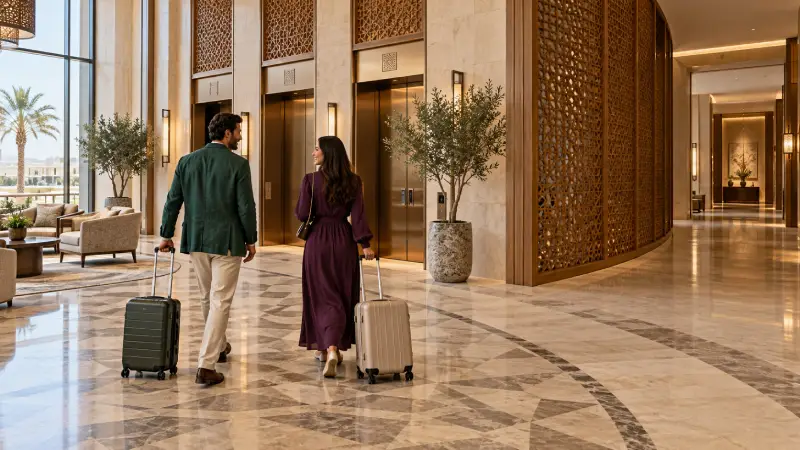
Keep romantic kissing and intimate touching out of public settings, including restaurants, shopping centres, hotel common areas and religious sites. Being married does not exempt a couple from public-conduct requirements.
Unmarried foreign tourists may share a hotel room. Sex outside marriage remains illegal, including for tourists. These rules address different situations: accommodation arrangements and sexual conduct.
The hotel-room exception should therefore be understood narrowly. It does not remove the laws concerning adultery, public intimacy or sexual relationships. Circumstances involving a Saudi citizen or a person with Saudi dual nationality can also involve different documentation requirements.
Pregnancy outside marriage can create additional legal and administrative complications, including during maternity care and birth registration. Couples whose circumstances raise these issues should obtain qualified advice before travelling.
Avoid treating reports about individual criminal cases as a universal penalty chart. A viral caption describing an execution “for kissing” does not establish the underlying facts, charges or sentence that would apply to another person.
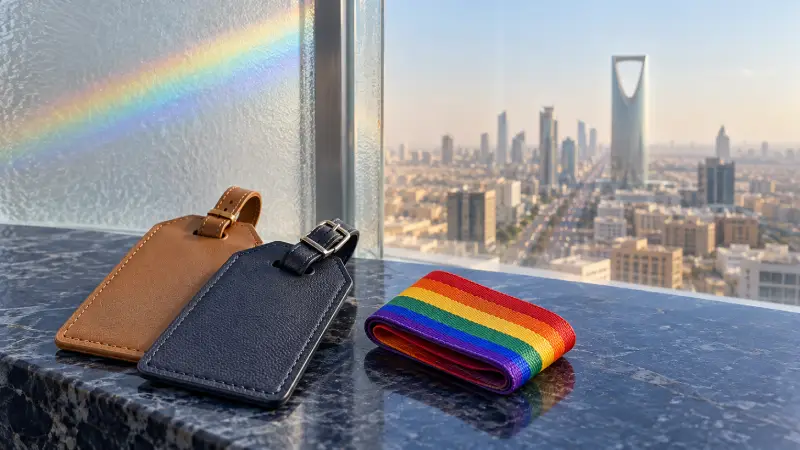
Same-sex sexual relationships are criminalised in Saudi Arabia, and same-sex marriages are not recognised. Restrictions also affect gender expression. Penalties can be severe, including imprisonment and deportation; some offences can carry the death penalty.
Official tourism messages welcoming visitors do not provide an exemption from these laws. Similarly, being admitted to a hotel or entering the country successfully offers no assurance about how a later incident would be handled.
LGBTQ+ visitors should assess these risks before deciding whether to travel. Privacy and discretion cannot be presented as guarantees of safety. Anyone with a concern involving their documents, relationship or gender expression should seek advice that addresses their specific circumstances.
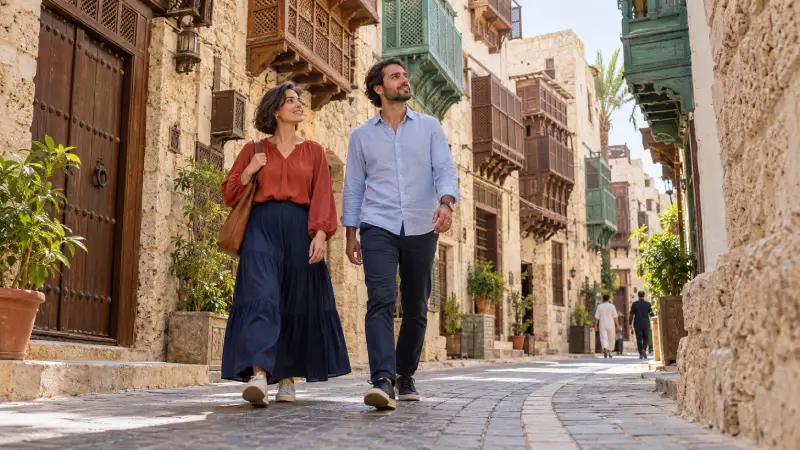
Modest dress is required in public, but women visiting Saudi Arabia are not generally required to wear an abaya or cover their hair in ordinary public settings.
Loose, opaque clothing that covers the shoulders, elbows and knees is a practical baseline. Long trousers, longer skirts and comfortable tops with sleeves make it easier to move between streets, restaurants and attractions without repeated changes.
Men should wear a shirt in public. Shorts can create access problems at some venues, while clothing carrying obscene, discriminatory or drug-promoting images or wording can breach public-decency rules.
Religious sites have their own requirements. Bring a scarf if such visits are part of your itinerary, and follow the clothing instructions for the specific site.
Pool and beach arrangements are also venue-specific. Wear swimwear only in settings where it is permitted, and cover up before moving into other public areas. Permission at a resort pool does not establish a dress standard for the surrounding town.
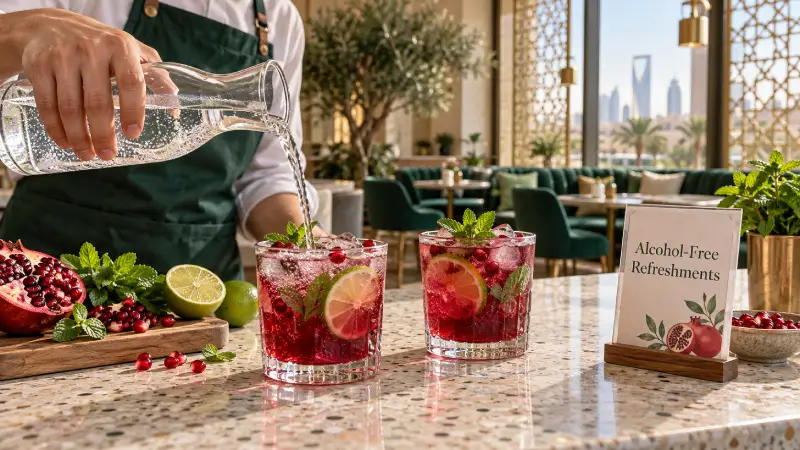
Ordinary tourists cannot legally buy, possess or consume alcohol in Saudi Arabia. This applies to travel plans built around hotels and private accommodation as well as public spaces.
There is no tourist drinking age at which alcohol becomes permitted. Being 18, 21 or accompanied by a parent does not create an exception to the prohibition.
Reports about limited alcohol access require careful reading. Restricted arrangements for certain non-Muslim diplomats and eligible foreign residents are not a general tourist entitlement. Do not assume that a luxury property, international restaurant brand or special tourism zone can serve alcohol to visitors.
Admission to an entertainment event is a separate question. An alcohol-free concert or venue may have its own ticket age, identification and accompaniment conditions. Read those conditions for the specific event; there is no useful universal “Saudi club entry age” to apply to every venue.
Illegal-drug offences carry severe consequences. Possession can lead to imprisonment, while drug trafficking and smuggling can result in a death sentence. Do not assume that a small quantity, personal use or legality in your home country makes a substance acceptable.
Cannabis and CBD products are also prohibited. Include oils, gummies and other wellness products when reviewing what you carry.
Prescription medicines need a separate assessment. Certain narcotic and psychotropic medicines require clearance from the Saudi Food and Drug Authority, even when prescribed legitimately abroad.
Applications can be made through the SFDA’s Controlled Drugs System. The process requires patient and journey details with supporting documents such as a prescription, medical report and identification. Resolve the requirements for the actual medicine before departure.
Keep medicines clearly identifiable and retain the documentation supporting your treatment. Our Saudi Arabia customs rules explain the border side of travelling with restricted items; permission to carry a medicine should be established before you pack it.
Saudi restrictions on public speech extend to social media. Criticism of the authorities, royal family or religion, and content considered disruptive to public order, can lead to prosecution.
Posts made outside Saudi Arabia or years before a visit can still create legal exposure. Foreign nationals have been detained over previous online activity, including comments and interactions with other people’s posts.
Avoid political demonstrations, slogans and banners. These are particularly sensitive at religious sites. Do not assume that expressing support for a foreign political cause falls outside local restrictions.
The public practice of religions other than Islam and attempts to convert others are also restricted. Personal belief, private observance and public religious activity are different situations; avoid turning a personal visit into public preaching or distribution of religious material.
If previous public activity raises a specific concern, obtain qualified advice before travelling. Account privacy settings should not be treated as legal protection.
Ask permission before photographing identifiable people. Public-decency rules also restrict unauthorised photography or filming of traffic accidents, crimes and other incidents.
Government buildings, diplomatic premises, military installations and palaces are restricted subjects. Security activity requires particular caution: do not film or circulate footage of missile launches, interceptions, drone activity or sensitive infrastructure.
An incident being visible from a hotel window does not make recording and sharing it permissible. Put the phone away where a security restriction applies.
Drone use requires separate consideration. AlUla’s official visitor guidance states that tourists are not permitted to fly drones, while approved permits are available to citizens and residents. Do not build recreational drone flights into a tourist itinerary or assume that owning a small drone establishes permission to operate it.
Non-Muslims are not permitted to enter Makkah. Follow designated routes and access signs rather than relying solely on a navigation app’s shortest journey.
Madinah has a different framework. Non-Muslims may visit the city, but cannot enter the Prophet’s Mosque or its immediate surrounding premises. Treat the religious boundary as an access restriction, not simply a recommendation about respectful behaviour.
Muslim visitors must also distinguish ordinary tourism, Umrah and Hajj. A tourist visa is not a Hajj authorisation, and seasonal restrictions can limit access to Makkah. Obtain the permissions applicable to your visit, including Nusuk reservations where required.
Keep copies of permits and booking details available offline. Mobile data from a Saudi Arabia eSIM can help you access maps and online services while travelling, alongside those saved documents.
During Ramadan, avoid eating, drinking, smoking or chewing gum in public during daylight hours. This also affects non-Muslim visitors and can include being visible inside a vehicle.
Arrange meals in appropriate private settings or the facilities designated by your hotel. Some properties provide dining arrangements away from public view.
Opening hours and meal service can change during the month, so organise daytime food and water access before setting out. Anyone who needs regular medication, food or fluids should make suitable arrangements rather than delaying necessary care.
Keep music and public behaviour restrained, particularly around worship. Ramadan dates change each year, so use the dates relevant to your trip.
Smoking is restricted across many public settings, and the implementing regulations also cover electronic smoking systems.
Prohibited locations include mosques and their surroundings, educational and healthcare facilities, heritage sites and museums, public transport and transport stations. Restaurants and cafés also fall within the regulatory framework.
Standing outdoors is not sufficient to establish permission. Restrictions extend to specified surrounding areas, including a 10-metre zone around places where people enter, sit, gather or pass in the settings covered by the regulations, subject to licensed exceptions.
Use designated, authorised smoking areas. Those areas must meet specific conditions, including separation and ventilation; under-18s are excluded. A restaurant terrace, hotel balcony or ashtray should not be treated as proof of an exemption.
Hotels, airports and attractions may impose additional property rules. Ask where their permitted smoking area is, and follow the signs. Apply the same caution to vaping and heated-tobacco products rather than treating them as unrestricted alternatives.
Courtesy still matters where no specific criminal prohibition is involved. Keep the distinction clear: a cultural preference, a venue’s admission policy and a legal requirement do not all carry the same consequences.
At religious sites, follow the designated entrances and instructions about clothing, belongings and visitor movement. Give worshippers space and avoid obstructing access while taking permitted photographs.
At restaurants, tipping is generally appreciated rather than automatically expected; AlUla’s official guidance suggests leaving small change or rounding up if you wish.
Public-decency regulations separately address behaviour such as queue jumping, littering and certain disruptive noise. Treat these as actual conduct rules rather than optional local customs.
Keep identification accessible. UK travel guidance advises tourists to carry copies of their passport and visa. Store a second set securely so you can retrieve the details if your phone or bag is lost.
Some transactions involve separate identity checks. If you intend to buy a local mobile line, our guide to buying a local SIM in Saudi Arabia covers the available options and purchase process.
If detained, request a lawyer and ask officials to notify your embassy or consulate. Saudi criminal procedure recognises access to legal assistance, but foreign-government guidance warns that practical access and consular notification can be delayed.
Ask for an interpreter before signing documents you do not understand. If you can contact family or a lawyer, ask them to notify your consulate as well. Consular staff can provide assistance within their remit, but cannot cancel local charges or guarantee release.
Review current travel advice and decide whether the journey should proceed.
Check controlled medicines and other restricted belongings before packing.
Prepare clothing suitable for public places and your intended religious visits.
Confirm site access, pilgrimage permissions and any event admission conditions.
Save identification, bookings, permits and consular contact details offline.
Arrange connectivity for essential updates; compare eSIMs for Saudi Arabia before choosing a plan.
During the trip, keep public intimacy, political activity and prohibited substances out of your plans. Follow access boundaries and photography restrictions, and obtain specific legal advice when your circumstances fall beyond ordinary tourist arrangements.
