

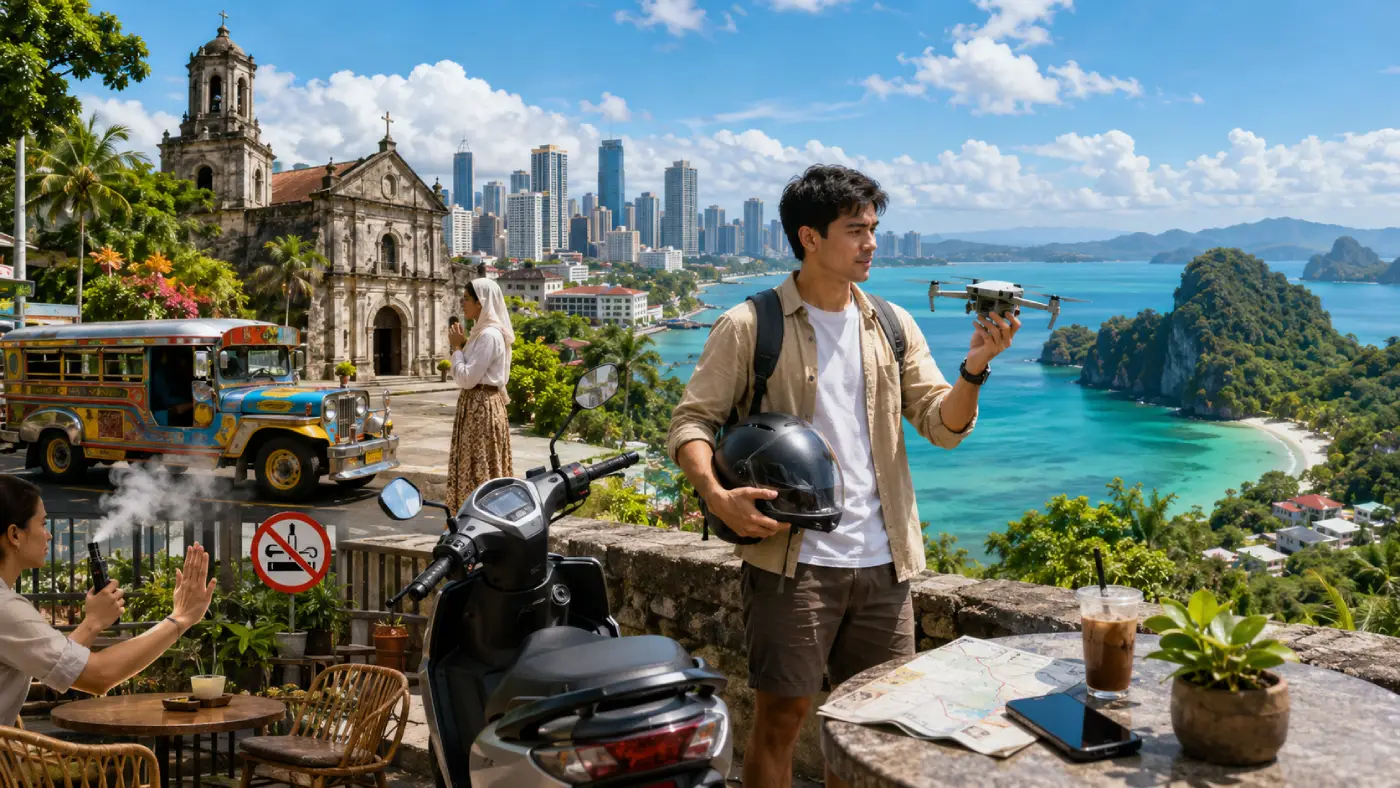

The biggest practical mistakes are assuming vaping is allowed anywhere, treating cannabis laws as relaxed, driving too long on a foreign licence, or flying a drone without checking the location first.
Philippines tourist laws at a glance
| Topic | Current status | What visitors need to know | Safest action |
|---|---|---|---|
| Vaping | Restricted in public places | Indoor public use is generally prohibited outside designated vaping areas, with additional places where vaping is not allowed | Use where the venue clearly permits it |
| Cigarette smoking | Restricted in public and enclosed places | Smoking is prohibited in enclosed public places and public transport except compliant designated smoking areas | Follow posted smoking-area signs |
| Cannabis | Illegal for unauthorized possession and use | Recreational cannabis has not been legalized for tourists | Do not possess or use cannabis |
| Other dangerous drugs | Prohibited without lawful authorization | Philippine drug law covers possession, use, sale and other activities involving controlled drugs | Avoid controlled recreational drugs entirely |
| Foreign driving licence | Valid for a limited period | Bona fide tourists may generally drive for up to 90 days from arrival if properly licensed in their home country | Confirm your licence covers the vehicle class |
| Motorcycles | Helmet rules apply | Drivers and passengers must wear compliant motorcycle helmets | Use a proper helmet even for short rides |
| Mobile phones while driving | Restricted | Handheld phone use while driving, including while temporarily stopped at a red light, is prohibited | Pull over legally before using your phone |
| Recreational drones | Allowed with conditions | Ordinary recreational flying has operating limits, while larger drones and certain flight situations trigger additional requirements | Check CAAP rules and local restrictions before takeoff |
Rules checked on September 3, 2026. Laws, local restrictions and penalties can change; verify the linked official guidance before travel.
The important distinction is that “legal in the Philippines” does not necessarily mean “allowed in this exact place.” Establishments can adopt stricter smoke- or vape-free policies, local governments can regulate drone locations, and protected or sensitive sites may have their own access and photography rules.
Vaping and smoking are restricted, not universally banned
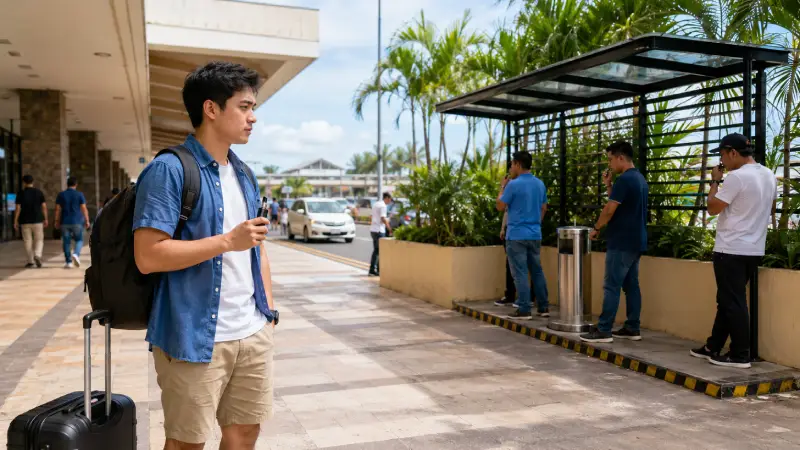
Vaping is regulated under Republic Act No. 11900. For visitors, the most important rule concerns where a vape can be used after arrival, rather than whether vaping exists legally as a consumer product.
Vaping is prohibited in indoor public places unless you are inside a compliant designated vaping area. The law also identifies places where use is prohibited, including youth facilities, elevators and stairwells, healthcare premises, food-preparation areas and places of worship. Public transport facilities and restaurants are also restricted except where an authorized designated vaping area is provided.
A venue is not required to provide a designated vaping area and may impose stricter rules. That means seeing other people vape outside a hotel, bar or terminal is not reliable evidence that the location permits it.
For practical use:
-
Look for a clearly marked designated vaping area rather than choosing an empty corner.
-
Do not assume an outdoor restaurant, resort or transport terminal automatically permits vaping.
-
Treat a venue’s stricter no-vaping policy as controlling while you are on that property.
-
Keep vaping separate from the question of bringing devices or liquids into the country.
Import limits, declarations and border treatment belong to customs rather than post-arrival law. See Philippines Customs Rules: Vapes, Cash & Alcohol before packing devices, liquids or related products.
Traditional cigarette smoking is governed separately, including Executive Order No. 26. Smoking is prohibited in enclosed public places and public conveyances outside compliant designated smoking areas, and some locations cannot have such areas at all.
Safest approach: if you cannot identify an authorized smoking or vaping area, do not light or activate the device there.
Cannabis and dangerous drugs remain a serious legal issue
Recreational cannabis is not legalized in the Philippines. Republic Act No. 9165 defines cannabis or marijuana as a dangerous drug and criminalizes unauthorized possession, alongside other prohibited activities involving dangerous drugs.
This is an area where developments elsewhere in Asia can create the wrong expectation. A tourist should not interpret medical-cannabis policy debates, proposed legislation or changes in international drug scheduling as permission to possess or use recreational cannabis in the Philippines.
For visitors, the actionable rule is simple:
-
Do not possess recreational cannabis.
-
Do not buy, share or use it.
-
Do not rely on claims that small amounts are informally “tolerated.”
-
Treat other prohibited dangerous drugs the same way unless you have a lawful medical basis and have separately verified the relevant requirements.
This section concerns possession and conduct inside the country. Bringing controlled medicines or substances across the border raises separate ingredient, prescription and customs questions and should not be inferred from the domestic rules above.
Driving in the Philippines: the 90-day rule is the starting point
The Land Transportation Office states in its guidance for motorists that bona fide tourists or transients who are properly licensed in their own countries may operate a motor vehicle in the Philippines for no more than 90 days from their date of arrival. After that period, a Philippine driver’s licence is required.
The foreign licence must also be appropriate for the vehicle you intend to operate. Being able to rent a scooter, motorcycle or car does not itself prove that your licence legally covers that vehicle class.
Several nationwide road rules are especially relevant to short-term visitors:
-
Motorcycle helmets: drivers and back riders must wear standard protective motorcycle helmets while riding, including on short journeys.
-
Phone use: holding a phone to text, call, browse or perform similar activities while driving is prohibited, including while temporarily stopped at a red light. Hands-free use is permitted within the law’s conditions and without obstructing the driver’s line of sight.
-
Alcohol and drugs: driving under the influence of alcohol, dangerous drugs or similar substances is unlawful under the Anti-Drunk and Drugged Driving Act.
A rental shop’s willingness to hand over a motorcycle should never replace your own licence check. This is particularly important for travelers whose home licence covers cars but not motorcycles.
Reliable mobile data also helps when checking official guidance, navigation and transport information while moving between islands or cities. Philippines eSIM is the direct country option; if you want to compare networks and pricing first, see Best eSIM for Philippines.
Recreational drones are allowed, but location changes the answer
The Philippines permits recreational drone flying under Civil Aviation Authority of the Philippines rules, but “recreational” does not mean unrestricted.
CAAP’s types of drone operations guidance states that non-commercial recreational operations generally do not require drone registration or a controller certificate unless the drone weighs 7 kg or more. Commercial operations follow separate certification and registration requirements.
For ordinary private or recreational flights, CAAP requires operators to keep the aircraft within visual line of sight and sets a normal operating ceiling of 120 meters or 400 feet. Recreational pilots should not fly at night, over crowds, in prohibited or restricted areas, during emergency operations or within 10 km of an airport without the required authorization.
Flights that go beyond ordinary recreational limits can require a special flight permit. These include:
-
night operations;
-
beyond-visual-line-of-sight flights;
-
operations above 400 feet;
-
flights over populated areas; and
-
operations within 10 km of an airport reference point.
CAAP also tells recreational operators to coordinate with the relevant local government unit about local drone ordinances. A legal aircraft and a legal type of flight therefore still do not guarantee permission at every beach, island or attraction.
Before launching a drone, check:
-
whether the location lies near an airport or another restricted airspace area;
-
whether CAAP authorization is required for the planned operation;
-
whether the local government unit has its own drone ordinance; and
-
whether the attraction, resort, protected area or property owner separately prohibits takeoff, landing or photography.
For changing flight restrictions, use current Civil Aviation Authority of the Philippines guidance rather than relying solely on a manufacturer’s app, rental operator or old travel forum.
Local rules, venues and etiquette: know what is actually law
The Philippines has thousands of local government units, and some visitor restrictions are municipal, property-specific or site-specific rather than national. That distinction matters most at beaches, resorts, nightlife areas, religious sites and places where photography or drone use may be controlled locally.
Posted venue rules can also be stricter than the national baseline. A hotel, restaurant or attraction does not have to provide a smoking or vaping area simply because national legislation allows compliant designated areas.
Cultural etiquette should not be confused with criminal law. Conservative dress at a church, asking permission before photographing people, keeping noise down around places of worship and following a host venue’s dress expectations are sensible conduct, but they should not automatically be described as nationwide legal prohibitions.
When a sign, local authority or site operator gives a specific instruction, follow the rule that applies to that location rather than relying on a general country guide.
Philippines tourist-law checklist
Before and during your trip:
-
Use cigarettes or vapes where the location clearly allows them.
-
Do not possess or use recreational cannabis or other prohibited dangerous drugs.
-
Count the 90-day foreign-licence period from your arrival date if you plan to drive.
-
Confirm that your licence covers motorcycles before renting a scooter or motorbike.
-
Wear a compliant helmet and keep handheld phones out of use while driving.
-
Check CAAP restrictions, airport proximity and local rules before every drone flight.
-
Treat venue dress, photography and conduct requirements as location-specific unless an official source confirms a broader legal rule.
What matters most before you travel
Three checks prevent most avoidable legal mistakes in the Philippines: separate vape use rules from customs rules, confirm that your driving licence covers both the length of your stay and the vehicle you rent, and check the exact location before launching a drone.
For changing rules, rely on the Philippine authority responsible for the subject—not rental availability, another traveler’s experience or an outdated forum post.