

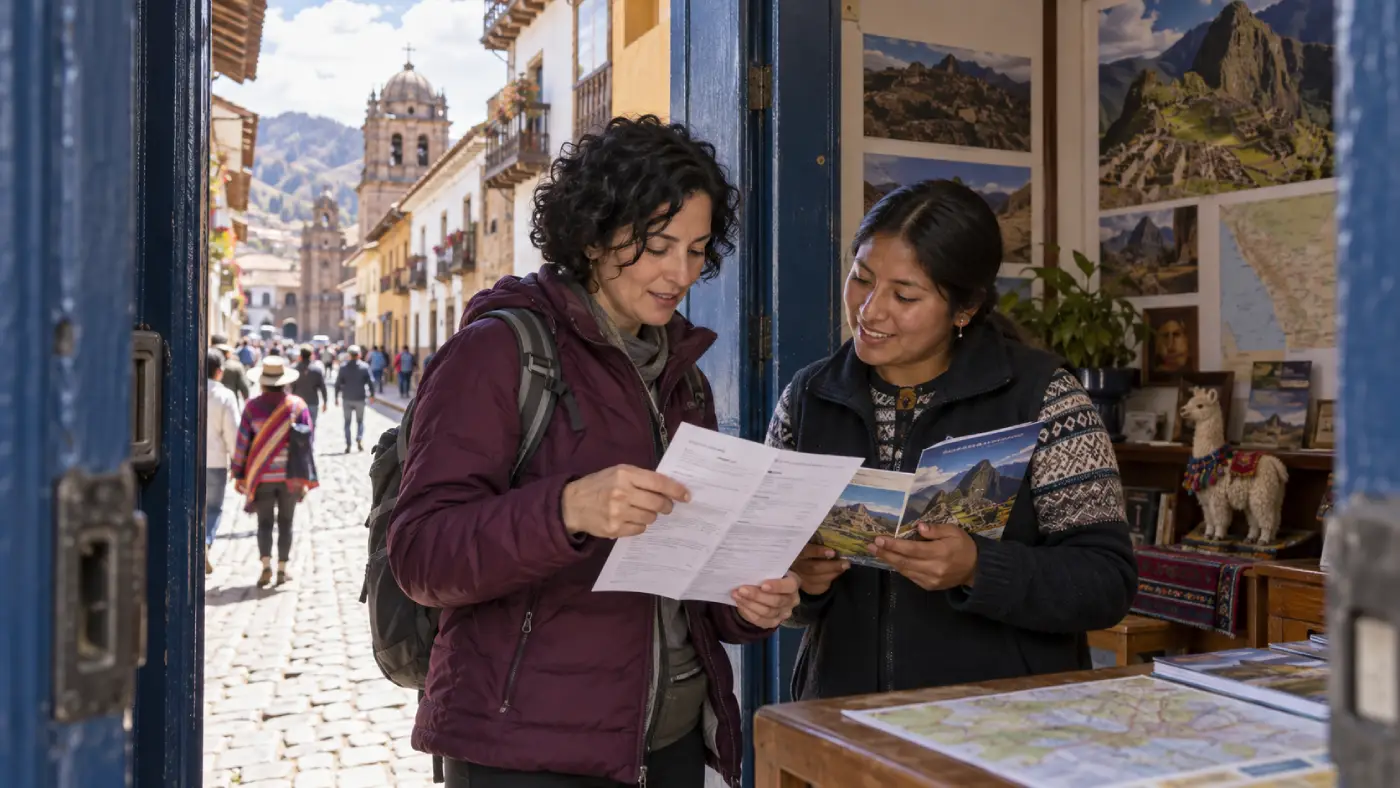

Keep your arrival transport traceable, get the exact ticket details before paying, and take a moment over cash transactions. Lima and Cusco need different examples, but the same habit helps in both: use a contact or booking channel you found independently when someone pressures you to change arrangements.
Airport Pickups and Taxi Prices That Change
Jorge Chávez International Airport and bus terminals are places where criminals have approached passengers while posing as taxi drivers or tour operators. Someone offering a ride may also claim to represent a service you already booked.
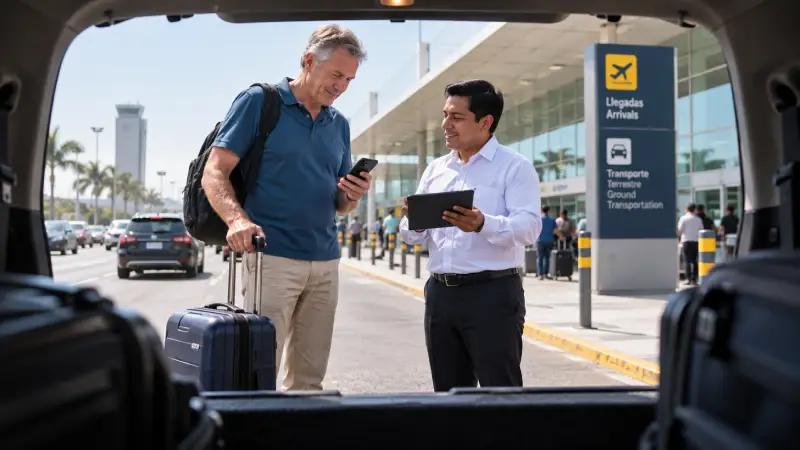
Arrange your pickup through your accommodation, a reputable transport company or an established app. At the airport, approach an official transport desk yourself. If someone approaches you instead, contact your booked provider through the original conversation before following them.
Match the driver and vehicle to your booking before handing over your luggage. Knowing your hotel name or showing you a company logo is not enough to establish that someone is your driver.
Fare disputes involve a different decision. Reports include a price changing after departure or an amount understood as soles being demanded in US dollars. Get the total, currency and destination clear before the journey begins. For a private transfer, establish whether the amount covers the whole vehicle or each passenger.
Ask: “¿El precio total es en soles?” — “Is the total price in soles?”
If an app driver wants a different price, resolve it before setting off rather than accepting an unclear arrangement. Keep any report within the app’s support channel. Threats or physical intimidation change the priority: avoid confrontation and seek help you are somewhere safe.
Our guide to getting around Peru explains the transport alternatives for journeys involving taxis, buses and trains.
Machu Picchu Tickets: Check the Circuit, Not Just the PDF
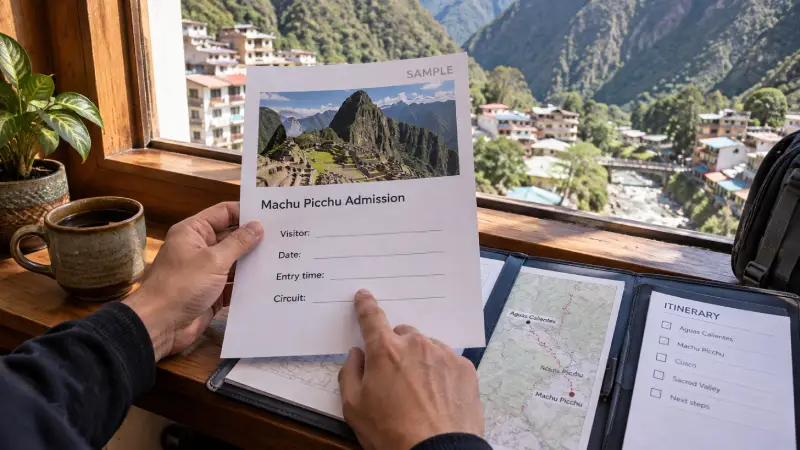
Machu Picchu ticket fraud can involve an altered genuine ticket. In July 2026, RPP reported a police investigation after a visitor attempted to enter Circuit 2 with a ticket originally issued for Circuit 1. The circuit number had allegedly been changed, and the visitor said a guide had promised entry.
That distinction matters. Receiving a polished PDF is not the same as receiving the admission you paid for.
Before committing to a tour, get these details in writing:
-
Your visitor name and identification details.
-
The visit date, entry time and exact circuit or route.
-
Whether the package includes admission, transport and guiding.
-
What happens if the advertised circuit cannot be secured.
Use the Ministry of Culture’s ticket platform as the official starting point for direct bookings. If an agency handles the purchase, ask for the issued admission ticket and compare it with the itinerary you agreed to.
Treat “we can change the circuit on the ticket” very differently from a properly issued booking for another circuit. An edited document does not create a new admission entitlement.
Agency service fees can be legitimate, and a higher package price may include transport or a guide. The problem is misrepresenting the ticket or promising access that the booking does not provide. Keep the advertisement, written inclusions and issued ticket together so any mismatch is clear.
Counterfeit Money and Obsolete Notes in Cusco
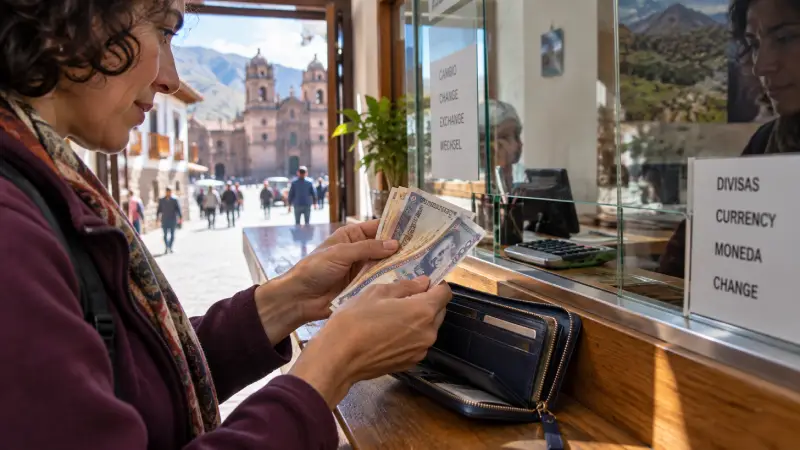
Counterfeit soles and US dollars circulate in Peru. Cusco has also had reports of street money changers passing off intis, the former currency, to visitors unfamiliar with local cash.
Count the money you receive before leaving an exchange counter. Look at the currency and denominations, not just the total number of notes. Avoid spontaneous exchanges with strangers offering to break a large bill or proposing an unusually attractive rate.
Using smaller notes for everyday purchases also makes the transaction easier to follow. State the denomination you are handing over, keep the payment visible and count your change.
If someone rejects a note, avoid an escalating argument or repeatedly handing over replacement cash without understanding the dispute. Keep any receipt and seek assistance if you believe money has been deliberately substituted or withheld.
Unfavorable exchange rates are a separate issue. Compare the amount you will actually receive after fees; an openly quoted expensive service is not the same as counterfeit currency.
Police Impersonators and Cash Demands
Police impersonation is included in Canada’s official warnings about scams in Peru. If someone claims to be an officer, ask to see identification. Where safe, note the name, badge number and district. For a traffic violation, request a written fine rather than accepting an unexplained cash demand.
Genuine officers may require identification, so a document check alone is not evidence of a scam. Our guide to local rules in Peru covers the wider obligations visitors should understand. Keep your response calm and avoid physical resistance.
The Stain-and-Help Distraction
One documented distraction involves someone spraying a substance on you, then pretending to help clean it while an accomplice steals your belongings. Questions or commotion can serve the same purpose.
If something suddenly lands on your clothes, secure your bag and move to a staffed public place before dealing with the stain. Keep your possessions with you while cleaning up. The warning sign is the coordinated distraction, not an ordinary stranger offering assistance.
Card Payments and ATM Interference
Card and ATM fraud are reported in Peru. Keep your card in sight, shield your PIN and avoid a machine with an unusual attachment or signs of interference.
At a payment terminal, read the amount and currency before authorizing. If a payment appears to fail, ask for the transaction status or receipt before trying again. A pending bank notification and a completed charge are different, so the notification alone does not settle whether a second payment is needed.
Report suspected unauthorized charges through your bank’s own app or established contact number. Keep the receipt and describe exactly what you authorized.
Accommodation Listings That Misrepresent the Host
Scammers may pose as rental-property owners. Before paying for accommodation, make sure the address, room description, cancellation terms and payment recipient fit the booking you intend to make.
Verify any message requesting an unexpected deposit independently, especially if it moves you away from your original booking channel. Open the platform yourself and contact the property through the details already attached to your reservation.
Keep a copy of the listing. It records what was offered if the accommodation later differs materially from what you bought.
False Kidnapping Claims After a Phone Is Stolen
Phone theft can lead to a second deception: criminals contact the owner’s relatives, claim the traveler has been kidnapped and demand money.
Set up an alternative way to reach someone at home before your trip. If your phone is stolen, use another device to tell a trusted contact promptly and warn them that messages from your number may not be yours.
Anyone receiving a ransom demand should seek police help and try to verify your whereabouts independently. A message arriving from your phone does not establish that the caller’s story is true. Avoid circulating your detailed itinerary publicly; share it directly with someone you trust.
Keep Your Bookings and Contacts Accessible
Save your pickup confirmation, accommodation address and admission tickets offline. That gives you a reference when someone claims your arrangement has changed, even without a connection.
Compare internet options in Peru before arrival if you expect to use transport apps and contact providers during the trip. Keep original booking conversations available instead of relying on contact details supplied by someone who approaches you.
Using a Peru eSIM gives you a mobile data option for messaging your accommodation or opening a reservation on a compatible, unlocked phone. Roafly’s plan is data-only: it does not include a local number or ordinary voice calls. Downloaded copies remain useful where reception is limited.
What to Do If You Have Been Scammed in Peru
Start with your immediate situation. If someone threatens you, prioritize getting to safety over recovering money or collecting evidence. For urgent police assistance, call 105.
Once you are safe:
-
Preserve what you already have. Keep receipts, booking confirmations, messages and transaction details. Write down the time, location and sequence while they are fresh.
-
Report suspected crime to the police. Ask about obtaining a record of your report if your bank or insurer needs it.
-
Contact the relevant payment or booking provider. Explain whether the problem was an unauthorized payment, a misleading service or a service that was never supplied.
-
Seek tourism assistance for service disputes. iPerú’s free visitor assistance service offers guidance when tourism services were not delivered as offered. Its WhatsApp number is +51 944 492 314.
Refunds depend on the transaction, evidence and applicable terms. Report promptly, but do not accept a stranger’s promise to recover your money in exchange for another payment.
Read our guide to travel safety in Peru for regional risks, disruptions and the wider travel decision.